2026 Value Guide: Is a Solid Gold G Necklace Worth It?
Discover if a solid gold G necklace is worth the investment in 2026. We compare vermeil, plated, and 14k gold initial pendants for true value.

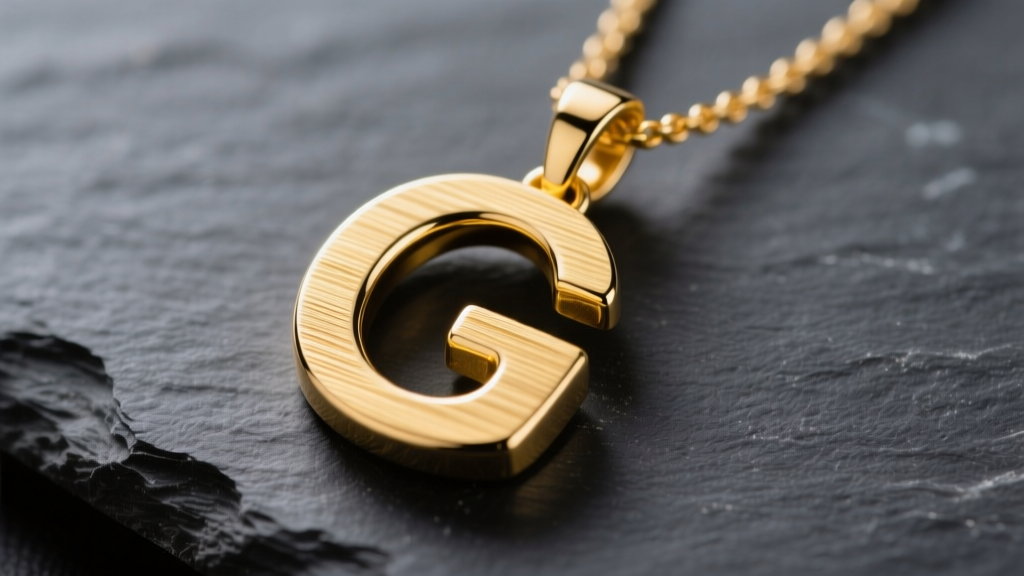
The Initial Jewelry Boom: Why the 'G' Necklace Dominates
Personalized jewelry has transitioned from a fleeting trend to a permanent staple in modern wardrobes, and initial pendants remain at the forefront of this movement. Among the alphabet, the letter G is consistently one of the highest-selling initials globally, representing names like Grace, Gabriel, George, and Gabriella. But as demand has surged, the market has become flooded with options ranging from $15 fast-fashion trinkets to $2,000 luxury designer pieces. For the savvy consumer in 2026, the challenge is no longer finding a g necklace; it is determining which price point actually delivers long-term value.
When assessing the budget and true value of an initial necklace, we must look past the brand name and examine the metallurgy, the plating thickness, and the structural integrity of the casting. In this comprehensive value assessment, we break down the exact cost-per-wear and material failure modes of the three primary tiers of G necklaces on the market today.
Material Breakdown: What You Are Actually Paying For
To understand value, we must first understand the raw materials. The price disparity in initial necklaces is almost entirely driven by the base metal and the thickness of the gold exterior.
Tier 1: Brass Base & Flash Plating (The $20–$50 Trap)
At the lowest end of the spectrum, you will find necklaces made from brass or zinc alloys with a "flash plating" of gold. Flash plating is an electrochemical process that deposits a microscopic layer of gold—typically between 0.1 and 0.5 microns thick. The Failure Mode: Brass is an alloy of copper and zinc. When exposed to the natural acidity of human sweat (which has a pH between 4.5 and 7.0), the copper in the brass oxidizes and reacts with chlorides to form copper chloride. This is the exact chemical compound responsible for the dreaded green stain on your skin. Furthermore, a 0.1-micron flash plate will wear off completely within 4 to 12 weeks of daily wear, exposing the reactive brass beneath. From a value perspective, a $30 flash-plated necklace that lasts three months has a terrible cost-per-wear ratio and is essentially disposable.
Tier 2: Sterling Silver & Gold Vermeil (The $80–$150 Sweet Spot)
Gold vermeil (pronounced ver-may) is the industry standard for high-quality, accessible demi-fine jewelry. According to the Federal Trade Commission (FTC) Jewelry Guides, for a piece to be legally sold as vermeil in the United States, it must have a base of Sterling Silver (925) and be plated with at least 10k gold that is a minimum of 2.5 microns thick. The Value Proposition: Because the base metal is sterling silver, even if the gold eventually wears down after 3 to 5 years of heavy daily use, the underlying silver will not turn your skin green. High-end demi-fine brands in 2026 are pushing the boundaries by offering 3.0 to 5.0 microns of 18k gold plating, which can easily last a decade with proper care. This tier offers the best balance of upfront cost and long-term aesthetic retention.
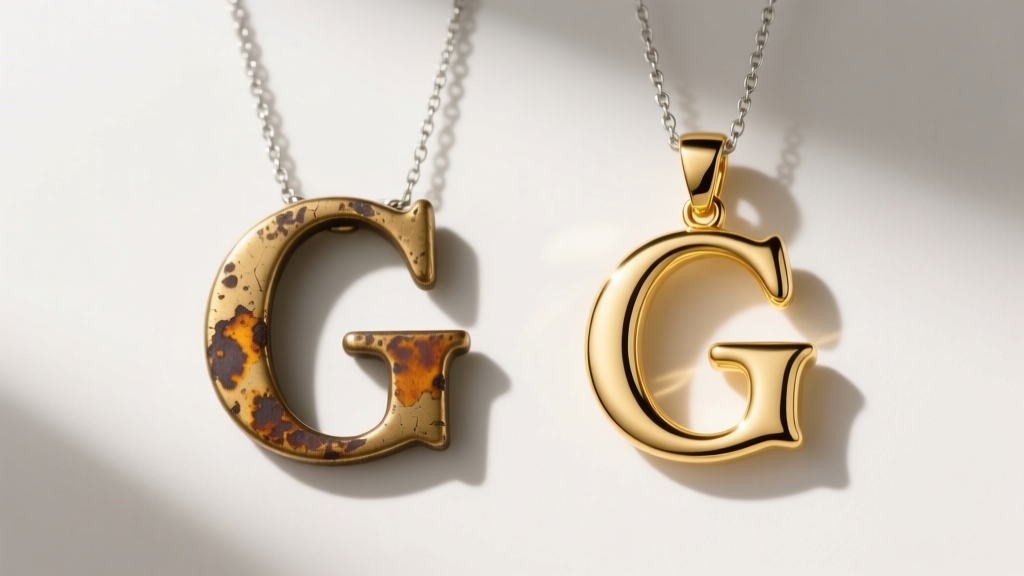
Tier 3: Solid 14k & 18k Gold (The $250+ Investment)
Solid gold is the undisputed king of longevity. As noted by the Gemological Institute of America (GIA), 14k gold consists of 58.5% pure gold mixed with strengthening alloys like copper, silver, and zinc, while 18k gold is 75% pure gold. The Value Proposition: A solid gold G necklace will never tarnish, never flake, and can be worn in the shower, the ocean, and the gym without degrading. However, you are paying a premium for the craftsmanship. With gold spot prices remaining historically high in 2026, a 2.5-gram solid 14k gold pendant contains roughly $95 in raw melt value. When a retailer charges $320 for that same pendant, you are paying a 3x markup to cover 3D CAD modeling, resin printing, investment casting, hand-polishing, and brand overhead.
Cost-Per-Wear Analysis: A Data-Driven Approach
To truly assess the budget impact of your jewelry purchase, we must calculate the Cost-Per-Wear (CPW). The formula is simple: Total Cost ÷ Estimated Number of Wears. Below is a comparative matrix based on a consumer wearing their initial G necklace 4 times a week (208 wears per year).
| Material Tier | Avg. Retail Price | Expected Lifespan (Daily Wear) | Total Wears | Cost-Per-Wear |
|---|---|---|---|---|
| Brass / Flash Plated | $35 | 6 Months | 104 | $0.33 |
| Gold Vermeil (3.0 microns) | $120 | 4 Years | 832 | $0.14 |
| Solid 14k Gold | $320 | Lifetime (50+ Years) | 10,400+ | $0.03 |
As the data illustrates, while the solid gold G necklace requires the highest initial capital outlay, it is mathematically the cheapest option over a lifetime. Vermeil is the undisputed champion for budget-conscious buyers who want a premium look without the four-figure price tag, provided they verify the micron thickness before purchasing.
Red Flags & Value Killers When Shopping
When evaluating a g necklace for purchase, beware of deceptive marketing terminology designed to inflate the perceived value of cheap materials.
- "Gold Dipped" or "Gold Washed": These are unregulated industry terms that usually indicate a flash plate of less than 0.5 microns. Avoid these if you want longevity.
- Hollow Castings: Some brands sell "solid 14k gold" initial pendants that are actually hollowed out in the back to save on gold weight. While this lowers the price, hollow pendants are highly susceptible to denting if dropped or snagged, and they cannot be easily repaired or polished by a jeweler.
- Misleading "Gold Filled" Claims: Gold-filled wire (which must contain at least 5% gold by weight) is excellent for chain links, but it is physically impossible to create a complex, 3D-cast initial pendant using gold-filled techniques. If a brand claims a 3D cast G pendant is "gold filled," they are likely misusing the term to describe heavy electroplating.
Chain Pairing: Don't Neglect the Weak Link
A common budget mistake is investing in a solid 14k gold G pendant, only to string it on a cheap, brass-based cable chain to save $50. The friction between the solid gold pendant bail and the plated chain will act like sandpaper, wearing away the chain's plating at the clasp and jump rings within months. Furthermore, a weak brass chain is highly prone to snapping, risking the loss of your valuable pendant. Always ensure the chain's metallurgy matches or exceeds the pendant. A solid 14k gold pendant demands a solid 14k gold chain—specifically a durable style like a cable, box, or wheat chain in the 1.0mm to 1.5mm thickness range.
Final Verdict: Which Tier Should You Buy?
Your budget and lifestyle should dictate your purchase. If you are buying a g necklace as a temporary fashion accessory for a specific event or seasonal trend, a $40 flash-plated brass piece is acceptable, provided you remove it before sweating or swimming.
For the vast majority of buyers seeking a meaningful gift or a reliable daily-wear staple, Gold Vermeil (minimum 2.5 microns over sterling silver) is the smartest budget allocation. It provides the exact visual warmth and weight of solid gold at a fraction of the cost. However, if you are purchasing an initial necklace to commemorate a major life milestone, or if you have highly acidic skin chemistry that destroys plating, bypass the middle tier entirely. Invest in a solid 14k gold G necklace. The upfront sting of the 2026 gold market markup will be entirely forgotten after a decade of effortless, tarnish-free wear.


