The Titanic Necklace Name & Gemstone Material Comparisons
Discover the titanic necklace name, the Heart of the Ocean, and compare gemstone and metal materials for modern replicas and historical inspirations.

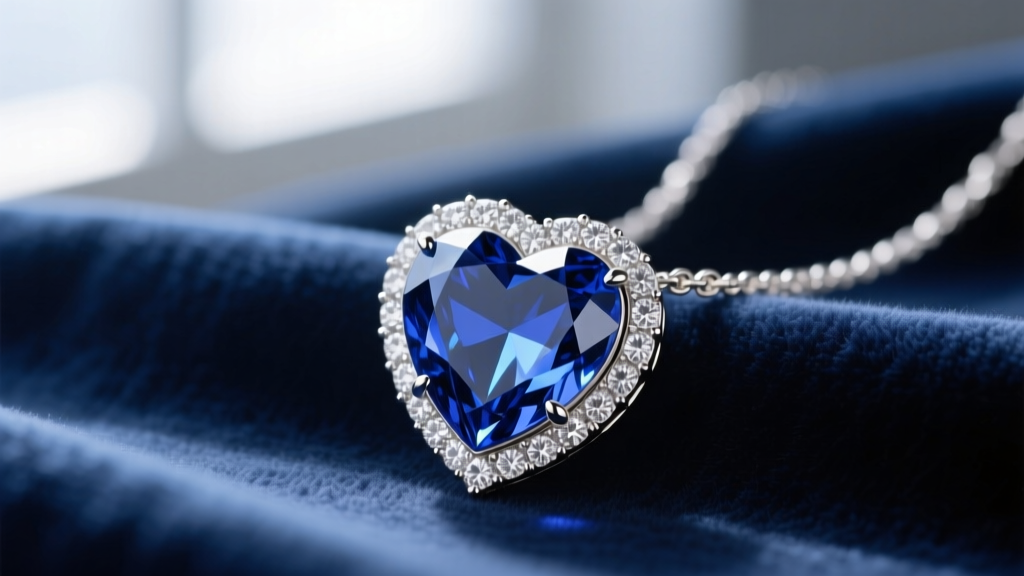
When film enthusiasts and jewelry collectors search for the titanic necklace name, they are almost exclusively referring to the "Heart of the Ocean" (or Le Cœur de la Mer). This iconic piece of cinematic jewelry was not a historical artifact from the 1912 shipwreck, but rather a masterfully crafted prop designed for James Cameron’s 1997 blockbuster. However, the cultural footprint of the necklace was so massive that it sparked a permanent demand for high-quality replicas. Today, understanding the material properties of both the original props and the historical gems that inspired them is crucial for anyone looking to invest in a premium Heart of the Ocean reproduction.
The Origin: What is the Titanic Necklace Name?
The official titanic necklace name is the Heart of the Ocean. The original prop used in most of the film's close-up shots was created by the prestigious London-based jewelers Asprey & Garrard. It featured a heart-shaped cubic zirconia set in 18k white gold. Following the film's unprecedented success, Asprey & Garrard were commissioned to create a "real" version using a 170-carat Ceylon sapphire and 103 diamonds. Furthermore, the jeweler Harry Winston created a separate, multi-million-dollar replica featuring a 15-carat blue diamond, which actress Gloria Stuart wore to the 1998 Academy Awards. This layered history means that when you shop for a replica today, you are choosing between materials that mimic the movie prop, the Asprey sapphire version, or the Winston diamond piece.
Material Breakdown: The Movie Prop vs. The Hope Diamond
The fictional Heart of the Ocean was heavily inspired by the Hope Diamond, a 45.52-carat Fancy Deep Grayish-Blue diamond currently housed in the Smithsonian Institution. While the Hope Diamond's lore involves a supposed curse and French royalty, its material properties are what truly set it apart from cinematic props. The blue color in the Hope Diamond is caused by trace amounts of boron within the carbon crystal lattice, a rarity that cubic zirconia simply cannot replicate without looking artificial. Below is a gemological comparison of the materials most commonly associated with the necklace's legacy.
| Material | Mohs Hardness | Refractive Index | Specific Gravity | Average Price/Carat |
|---|---|---|---|---|
| Hope Diamond (Blue Diamond) | 10.0 | 2.417 | 3.52 | Priceless / $3M+ |
| Blue Sapphire | 9.0 | 1.762 - 1.770 | 4.00 | $800 - $3,000+ |
| Tanzanite | 6.5 - 7.0 | 1.691 - 1.700 | 3.35 | $300 - $800 |
| Cubic Zirconia (Prop Material) | 8.0 - 8.5 | 2.15 - 2.18 | 5.6 - 6.0 | $5 - $20 |
Modern Replica Gemstones: Sapphire vs. Tanzanite vs. Moissanite
If you are commissioning or purchasing a high-end Heart of the Ocean replica in 2026, the center stone is the most critical decision. The deep, velvety blue of the movie prop requires a gemstone with high color saturation and specific pleochroic properties.
Blue Sapphire: The Asprey Standard
According to the Gemological Institute of America (GIA), blue sapphires derive their color from iron and titanium trace elements. For a Heart of the Ocean replica, a Ceylon or Kashmir sapphire with a medium-dark tone and strong saturation is ideal. Sapphires rate a 9 on the Mohs scale, making them exceptionally durable for everyday wear. They lack cleavage planes, meaning they are highly resistant to chipping if struck. Expect to pay between $1,500 and $4,000 per carat for an unheated, gem-quality blue sapphire large enough to serve as a centerpiece (typically 15 to 30 carats for this specific pendant design).
Tanzanite: The Vivid Alternative
Tanzanite is a popular choice for replicas due to its intense violet-blue hue, which closely mimics the cinematic lighting used on the movie prop. However, as noted by the GIA's tanzanite guidelines, this gemstone is highly pleochroic, showing different colors when viewed from different crystal directions. It also rates only 6.5 to 7 on the Mohs scale and possesses perfect cleavage in one direction. This makes tanzanite highly susceptible to chipping during the setting process or from accidental impacts. If you choose tanzanite for your replica, a protective bezel setting or a heavy diamond halo is mandatory to shield the girdle of the stone.
Lab-Grown Blue Moissanite
For buyers prioritizing brilliance and durability over natural origin, lab-grown blue moissanite offers a Mohs hardness of 9.25 and a refractive index of 2.65, which is significantly higher than sapphire. This results in an intense "fire" or dispersion. While it lacks the deep, velvety absorption spectrum of a natural sapphire, it provides a striking, highly reflective blue that performs exceptionally well in low-light environments.
Chain and Setting Metallurgy: Platinum vs. White Gold vs. Titanium
The Heart of the Ocean is a heavy, substantial pendant. The metallurgy of the chain and the setting's prongs must be engineered to support significant weight without suffering from metal fatigue or clasp failure.

950 Platinum: The Premium Choice
Platinum (specifically the 950 grade, alloyed with ruthenium or iridium) is the premier choice for the setting. Unlike white gold, platinum does not require rhodium plating to maintain its bright white color. More importantly, platinum is a malleable but incredibly dense metal. When a platinum prong is bent, it displaces rather than cracks, ensuring that a heavy 20-carat sapphire remains secure over decades of wear. The density of platinum also provides the necessary counterweight to balance a large heart-shaped pendant against the chest.
18k White Gold: The High-Maintenance Standard
18k white gold (75% pure gold, alloyed with palladium, nickel, or silver) is lighter and less expensive than platinum. However, its natural color is a faint yellowish-gray, necessitating a microscopic layer of rhodium plating. For a necklace that rests against the skin and clothing, this plating will wear off within 12 to 18 months, requiring re-dipping. Furthermore, white gold prongs are more brittle than platinum and can snap under severe stress, making them less ideal for ultra-heavy center stones.
Grade 5 Titanium: The Modern Anomaly
Titanium (Ti-6Al-4V) is occasionally used in modern, avant-garde replicas. It is 45% lighter than steel and highly hypoallergenic. However, titanium cannot be soldered using traditional jeweler's torches, meaning the chain links must be laser-welded. It is virtually impossible to resize or repair a titanium setting using standard bench tools, making it a risky choice for an heirloom-quality piece.
Structural Engineering: Chain Gauges and Bail Sizing
A common failure point in replica necklaces is the bail (the loop that connects the pendant to the chain) and the chain's structural integrity. The original movie prop used a relatively delicate chain, but real-world physics requires a different approach for heavy gemstones.
- Pendant Weight Thresholds: If your center stone and setting exceed 25 grams, you must abandon delicate chains like the 1.0mm cable or box chain.
- Optimal Chain Gauges: For a 30-gram pendant, utilize a 2.5mm to 3.0mm rope chain or a 2.0mm wheat chain. These structures distribute tensile stress across multiple interlocking vectors, preventing the chain from snapping at the clasp ring.
- The Bail Connection: Ensure the bail is cast as a single, solid piece with the pendant's basket, rather than soldered on post-production. A hidden bail (drilled through the top of the gemstone) is not recommended for heart-shaped stones, as it compromises the structural integrity of the stone's culet and point.
- Clasp Security: Avoid standard spring-ring clasps. A heavy pendant requires a lobster clasp with a reinforced jump ring, or ideally, a custom tongue-and-groove box clasp with a figure-eight safety latch.
Conclusion
Understanding the titanic necklace name is just the beginning of appreciating this iconic piece of jewelry. The true magic of the Heart of the Ocean lies in the complex interplay of light, gemological properties, and metallurgical engineering. Whether you opt for the historical accuracy of a Ceylon sapphire set in 950 platinum, or the vivid, accessible beauty of a bezel-set tanzanite on a reinforced wheat chain, prioritizing material durability and structural integrity will ensure your replica remains as timeless as the film that inspired it.


