Synopsis of The Necklace by Guy de Maupassant: A Gemologist's Take
Read our synopsis of The Necklace by Guy de Maupassant, analyzed by a jewelry expert. Discover the history of 1880s paste diamonds and modern alternatives.

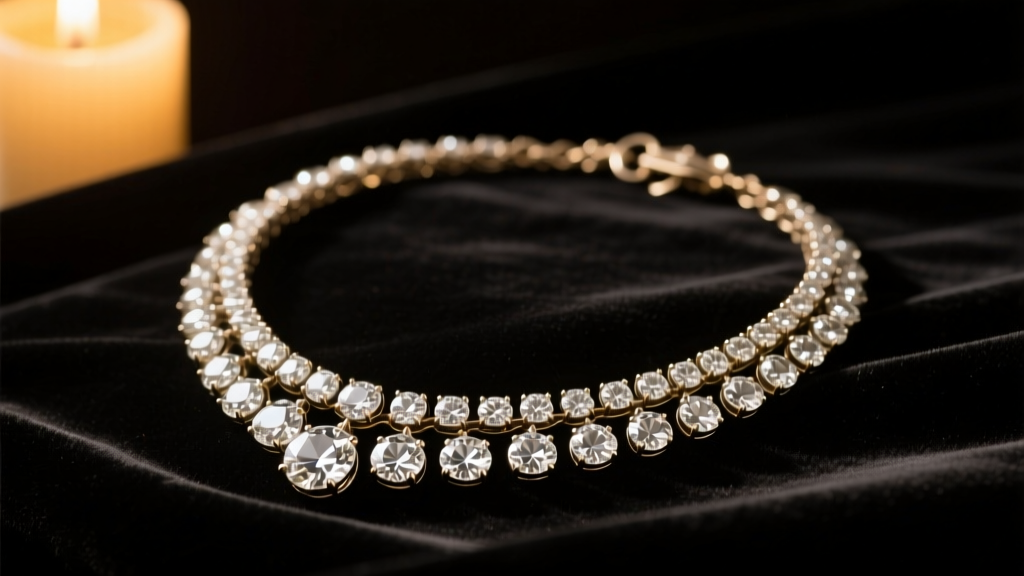
When we discuss iconic jewelry in literature, few pieces carry the cultural and emotional weight of the diamond riviere featured in Guy de Maupassant’s 1884 masterpiece. As a jewelry historian and gemologist, I often find that readers are captivated not just by the tragic narrative, but by the tangible reality of the jewels themselves. How could a fake necklace fool a Parisian socialite? What exactly did 19th-century 'paste' jewelry look like? To answer these questions, we must bridge the gap between literary analysis and gemological science.
Below, you will find a comprehensive synopsis of the necklace by guy de maupassant, followed by a deep-dive expert analysis of the historical jewelry market, the science of diamond simulants, and how modern buyers can avoid making the same catastrophic mistakes as Mathilde Loisel.
The Literary Synopsis of The Necklace by Guy de Maupassant
For those seeking a clear synopsis of the necklace by guy de maupassant, the story follows Mathilde Loisel, a charming but discontented woman born into a middle-class Parisian family. Mathilde believes she was destined for a life of luxury and high society, but is instead married to a modest clerk at the Ministry of Education.
When her husband secures a highly coveted invitation to an exclusive gala at the Palais du Ministère, Mathilde is devastated by her lack of fine attire. After exhausting their savings on a new dress, she still lacks jewelry. She visits her wealthy childhood friend, Jeanne Forestier, and borrows what she believes to be a stunning, authentic diamond necklace from Jeanne’s collection.
At the ball, Mathilde is the star of the evening, draped in her borrowed diamonds. However, upon returning home, she discovers the necklace is missing. Terrified of confessing the loss to Jeanne, the Loisels decide to replace it in secret. They find a seemingly identical diamond necklace in a Palais-Royal jewelry shop priced at 36,000 francs. Using a meager inheritance and a web of ruinous, high-interest loans, they purchase the replacement and return it to Jeanne, who never notices the swap.
The Loisels then spend the next ten years living in crushing poverty, working multiple grueling jobs to pay off the debt. Aged prematurely and hardened by labor, Mathilde eventually runs into Jeanne in the Champs-Élysées. When Mathilde finally confesses the truth about the lost necklace and the decade of misery spent replacing it, Jeanne is stunned. She takes Mathilde’s hands and delivers the story's infamous, devastating twist: the original necklace was made of paste (fake glass) and was worth no more than 500 francs.
The Historical Jewelry Context: Paris in the 1880s
To understand how Jeanne’s necklace could be so easily mistaken for the real thing, we must look at the state of Parisian jewelry in the late 19th century. During the Belle Époque, the demand for diamonds among the burgeoning bourgeoisie vastly outstripped supply. South African diamond mines had only recently opened (circa 1870), and high-quality, large-carat natural diamonds were still largely reserved for the aristocracy and the ultra-wealthy elite shopping at the prestigious houses on the Rue de la Paix, such as Boucheron and Mellerio.
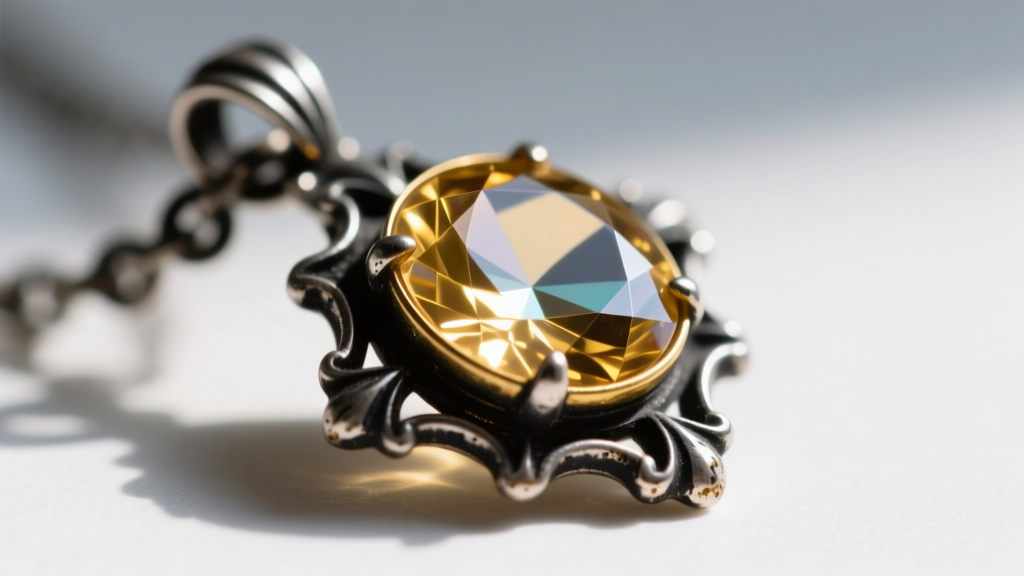
For the middle and upper-middle classes, 'paste' jewelry was not considered cheap costume jewelry as it is today. According to the Project Gutenberg archives and historical jewelry texts, high-end paste was an accepted, respectable alternative for travel or daytime wear to avoid the risk of theft. Paste jewels were often set in real silver or gold, utilizing meticulous craftsmanship that rivaled fine jewelry.
Furthermore, the diamond cutting techniques of the 1880s played a role in the deception. The modern round brilliant cut—engineered by Marcel Tolkowsky in 1919 to maximize light return—did not yet exist. Diamonds in Mathilde’s era were cut in the 'Old Mine' or 'Old European' styles. These cuts featured high crowns, small tables, and large culets. In the dim, flickering gaslight and candlelight of a Parisian ballroom, the optical difference between a well-cut Old Mine diamond and a high-quality piece of leaded glass was nearly imperceptible to an untrained eye.
The Science of 'Paste': Why the Fake Fooled Mathilde
The term 'paste' in 19th-century gemology refers to a specific type of high-lead-content glass. Invented and perfected by Georges Frédéric Strass in the 1730s, 'Strass' glass contained up to 40% lead oxide. This lead content drastically increased the glass's refractive index (RI) and dispersion, giving it a fiery, diamond-like sparkle.
- Refractive Index (RI): Natural diamond has an RI of 2.42. Standard crown glass is around 1.52. However, 19th-century leaded paste glass boasted an RI of approximately 1.70 to 1.80, which, when paired with metallic foil-backing, created a blinding brilliance.
- Foil-Backing: Jewelers of the era often placed thin sheets of silver or tinted foil behind the paste stones in closed-back settings. This reflected light back through the top of the stone, mimicking the 'scintillation' of a natural diamond.
- The Girdle and Polish: Paste stones were hand-polished with metal oxides, giving them a surface luster that closely resembled the adamantine (diamond-like) luster of real carbon crystals.
Jeanne Forestier’s necklace was likely a masterclass in this specific type of French paste work, which is why Mathilde, lacking formal gemological training, assumed its heavy silver setting and brilliant sparkle equated to the 36,000-franc price tag of natural diamonds.
Modern Equivalents: Avoiding the Mathilde Loisel Trap
Today, the jewelry market offers a vast array of diamond alternatives. If Mathilde were shopping in 2026, she would have access to materials that far surpass 19th-century paste in both durability and optical performance. However, the risk of misidentifying a stone's value remains if buyers do not understand the gemological hierarchy of modern simulants and synthetics.
As the Gemological Institute of America (GIA) frequently notes in their educational bulletins, consumers must distinguish between simulants (stones that look like diamonds but have different chemical compositions) and lab-grown diamonds (stones that are optically, chemically, and physically identical to mined diamonds).
Comparison Chart: Modern Diamond Alternatives
| Material | Chemical Composition | Mohs Hardness | Refractive Index | Estimated Price (per Carat) |
|---|---|---|---|---|
| Natural Diamond | Carbon (C) | 10 | 2.42 | $3,000 - $15,000+ |
| Lab-Grown Diamond | Carbon (C) | 10 | 2.42 | $800 - $2,500 |
| Moissanite | Silicon Carbide (SiC) | 9.25 | 2.65 - 2.69 | $300 - $600 |
| Cubic Zirconia (CZ) | Zirconium Dioxide (ZrO2) | 8.0 - 8.5 | 2.15 - 2.18 | $20 - $50 |
| Modern Leaded Glass | Silica & Lead Oxide | 5.0 - 6.0 | 1.70 - 1.80 | $1 - $10 |

A Gemologist’s Guide to Spotting Real vs. Simulated Diamonds
Unlike the 1880s, where a visual inspection in a dimly lit room was the only tool available, modern buyers have access to precise verification methods. If you are purchasing a diamond necklace, whether it is an antique Old Mine cut piece or a modern brilliant tennis necklace, you must implement the following verification frameworks to ensure you are paying the correct price for the correct material.
1. Demand Independent Certification
Never purchase a high-value diamond necklace without a grading report from a top-tier, independent laboratory. The GIA (Gemological Institute of America) and AGS (American Gem Society) are the industry gold standards. These reports include a laser inscription on the diamond's girdle, which can be verified under a 20x or 30x jeweler's loupe. A certificate guarantees the stone's 4Cs (Cut, Color, Clarity, Carat) and definitively states whether the stone is natural or laboratory-grown.
2. The Moissanite 'Double Refraction' Test
If you are evaluating a piece of jewelry and suspect it might be moissanite (a very common and beautiful modern simulant), look closely through the crown facets with a 10x loupe. Moissanite is doubly refractive. This means that light splits into two rays as it passes through the stone, causing the facet edges to appear 'doubled' or slightly blurry. Diamond is singly refractive; its facet edges will always appear sharp and singular.
3. Thermal and Electrical Conductivity Testing
The 'fog test' (breathing on the stone to see if the fog dissipates quickly) is an outdated myth that will not save you from modern simulants. Instead, jewelers use dual-testers that measure both thermal and electrical conductivity. Diamonds are exceptional heat conductors, while CZ is a thermal insulator. Moissanite conducts heat similarly to diamond but also conducts electricity, which allows advanced dual-testers to instantly differentiate between the three materials.
Conclusion: The True Value of a Necklace
The enduring power of Maupassant’s story lies in its brutal irony. Mathilde Loisel did not lose her youth and financial stability because she was inherently vain; she suffered because she lacked the specialized knowledge to appraise the true material reality of the object around her neck. In the 1880s, the line between a 36,000-franc natural diamond and a 500-franc piece of masterfully crafted Strass paste was obscured by the limits of contemporary gemology and the dim lighting of Parisian high society.
Today, the jewelry market is more transparent than ever, but the burden of knowledge still rests on the consumer. Whether you are investing in a natural diamond heirloom, opting for a sustainable lab-grown alternative, or proudly wearing high-end cubic zirconia for its sheer aesthetic brilliance, the key is informed intentionality. Know exactly what you are buying, understand the science behind the sparkle, and ensure your jewelry's value aligns with your reality. By doing so, you guarantee that the necklace you wear will always be a source of joy, rather than a decade of hidden debt.


