Pink Shell Necklace Materials: Natural vs Dyed Comparison
Compare natural conch and dyed mussel pink shell necklaces. Learn material properties, grading, durability, and how to spot treated jewelry.

The Allure of the Pink Shell Necklace
The pink shell necklace has surged in popularity, transitioning from a niche coastal souvenir to a staple in high-end organic gemstone jewelry. However, the term "pink shell" is a broad commercial umbrella that covers vastly different materials with distinct gemological properties, price points, and care requirements. As consumers become more educated in 2026, distinguishing between naturally pigmented marine shells and chemically treated freshwater alternatives is critical for both collectors and casual buyers. This guide dissects the material science, structural integrity, and sourcing ethics behind the most common pink shell necklaces on the market.
Material Breakdown: Natural vs. Treated Pink Shells
To understand the value and durability of a pink shell necklace, we must examine the microstructural composition of the shell itself. All shells are biomineralized composites of calcium carbonate (either aragonite or calcite) and an organic protein matrix called conchiolin. The ratio and crystalline arrangement of these components dictate the shell's color, iridescence, and toughness.
Queen Conch (Lobatus gigas): The Premium Standard
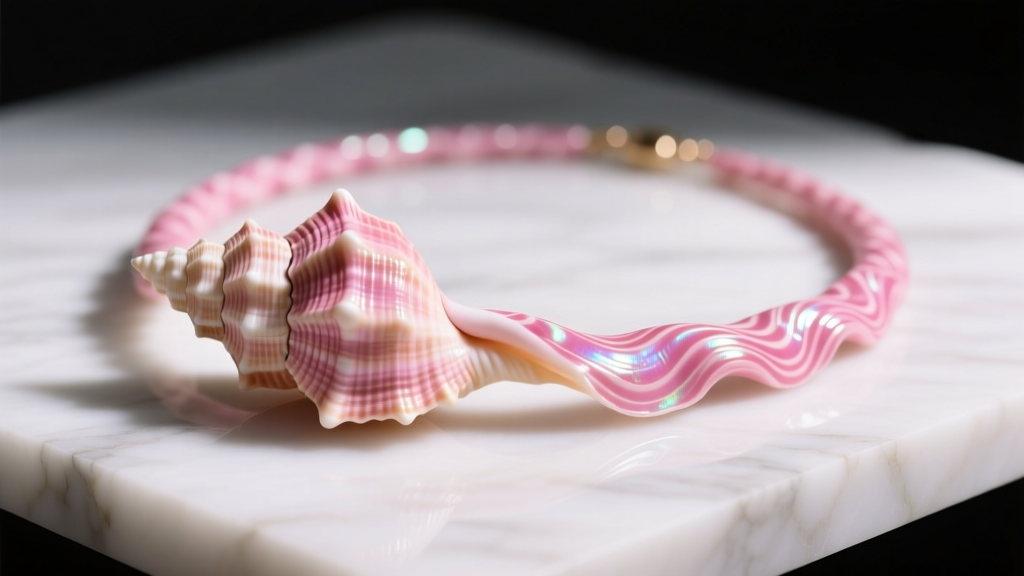
The most coveted natural pink shell in jewelry is derived from the Queen Conch. Unlike nacreous pearls, conch shell is non-nacreous. Its color ranges from pale blush to deep magenta, often featuring a striking "flamboyant" or "flame" pattern. This pattern is caused by the shell's crossed-lamellar microstructure, where microscopic aragonite needles intersect in a way that creates a chatoyant, 3D visual effect. Natural conch shell is dense, with a specific gravity of approximately 2.85, and polishes to a high, porcelain-like luster. Because the pink color is intrinsic to the conchiolin-protein matrix, it does not fade under normal wear, though prolonged UV exposure can cause slight muting over decades.
Dyed Freshwater Mussel Shell: The Accessible Alternative
The vast majority of affordable pink shell necklaces are crafted from the thick, white shells of freshwater mussels (family Unionidae). In their natural state, these shells are predominantly white or pale cream with faint brown growth bands. To achieve a vibrant pink hue, the shells are bleached and subsequently submerged in organic acid dyes or azo dyes. While this process yields uniform, highly saturated pinks, the dye only penetrates the porous outer layers and the conchiolin-rich growth bands. The interior nacreous layers often remain white, revealing the treatment when the shell is cut or deeply carved.
Pink Mother of Pearl (Pinctada maxima): The Iridescent Option
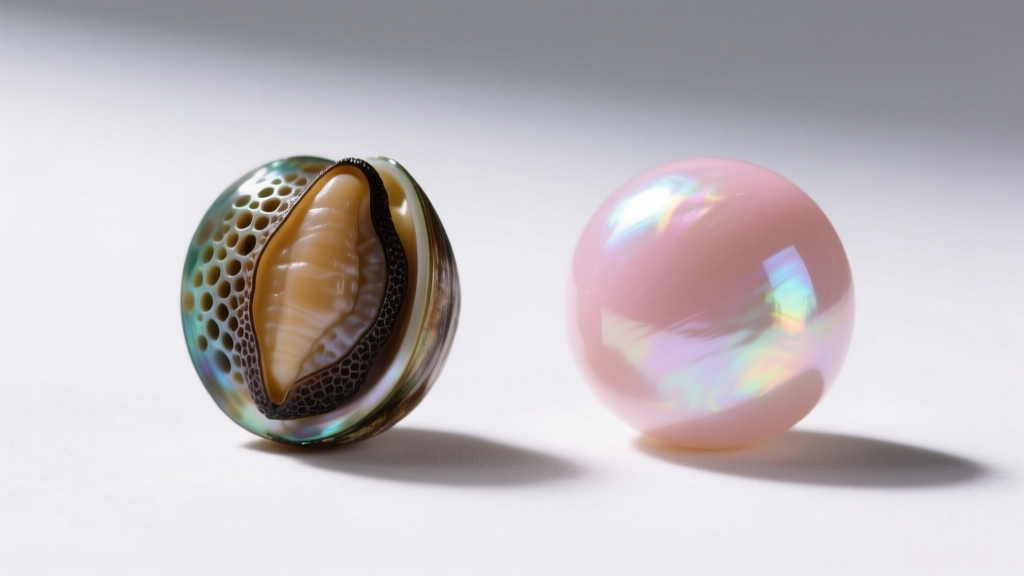
Sometimes marketed as pink shell, the silver-lipped oyster (Pinctada maxima) produces a thick nacre that can exhibit natural pink, silver, and green overtones. This material is characterized by its "brick-and-mortar" aragonite platelet structure, which creates a deep, mirror-like iridescence. While naturally pink MOP exists, much of the commercial "pink MOP" on the market is actually white MOP that has been lightly tinted or backed with pink foil to enhance the overtone.
Comparative Properties Matrix
When evaluating a pink shell necklace, gemologists and bench jewelers rely on specific physical properties to identify the material. The table below outlines the key gemological data points for the three primary pink shell types.
| Property | Queen Conch (Natural) | Freshwater Mussel (Dyed) | Pink Mother of Pearl |
|---|---|---|---|
| Primary Mineral | Aragonite (Crossed-lamellar) | Aragonite/Calcite (Nacreous) | Aragonite (Nacreous) |
| Mohs Hardness | 3.5 - 4.0 | 3.0 - 3.5 | 3.5 - 4.0 |
| Specific Gravity | 2.80 - 2.85 | 2.70 - 2.78 | 2.78 - 2.85 |
| Refractive Index | 1.48 - 1.66 | 1.53 - 1.68 | 1.53 - 1.68 |
| Color Origin | Natural (Conchiolin pigments) | Artificial (Azo/Acid dyes) | Natural / Tinted |
| Market Price (Strand) | $150 - $800+ | $15 - $45 | $60 - $250 |
For a deeper understanding of how organic gems are classified and tested, the Gemological Institute of America (GIA) provides extensive gemological profiles on calcium carbonate-based jewelry materials.
Identifying Dyed vs. Natural Pink Shell Necklaces
Because dyed mussel shell can closely mimic the look of natural conch or pink MOP to the untrained eye, bench jewelers employ several non-destructive testing methods to verify authenticity.
- The Acetone Swab Test: A cotton swab lightly dampened with acetone or nail polish remover is rubbed against an inconspicuous area or the inside of a drill hole. If the swab picks up pink residue, the shell is dyed. Natural conch shell will not release pigment.
- Magnification of Drill Holes: Under a 10x jeweler's loupe, dyed shells often show "color concentration" around the drill holes, micro-cracks, and natural growth bands. The dye pools in the more porous conchiolin layers, creating a spiderweb or striped effect. Natural conch color is homogenous and follows the crossed-lamellar structure smoothly.
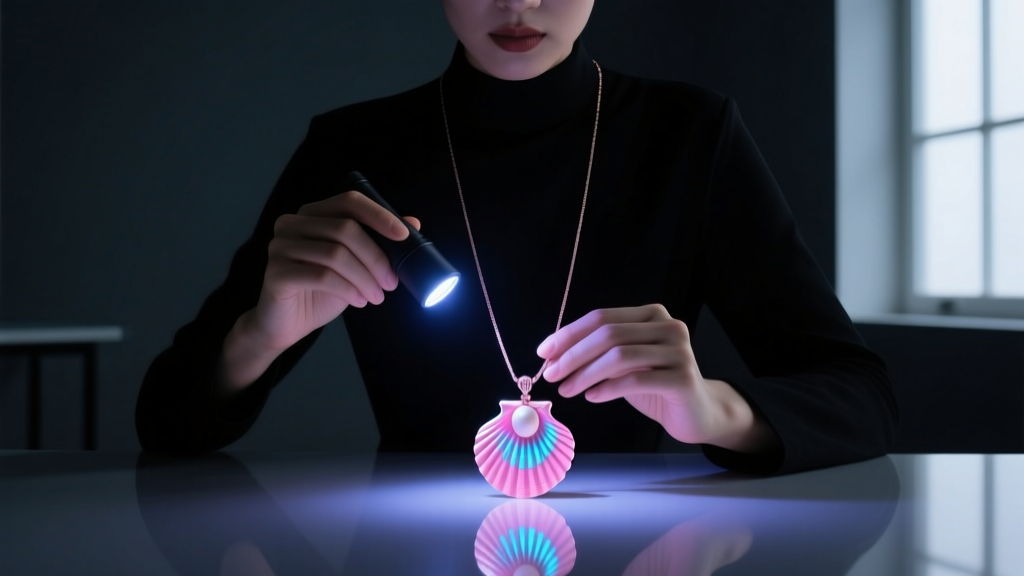
- Ultraviolet (UV) Fluorescence: Many organic dyes used on freshwater mussels fluoresce a chalky blue or bright white under long-wave UV light (365nm), whereas natural conch shell typically exhibits a weak, natural chalky blue or inert reaction.
Durability and Failure Modes in Daily Wear
Shell is an organic gemstone, meaning it is inherently softer and more reactive than crystalline minerals like quartz or sapphire. With a Mohs hardness hovering around 3.5, a pink shell necklace is highly susceptible to scratching from everyday dust (which contains quartz particles at Mohs 7). However, the primary failure modes differ based on the material treatment.
Chemical Etching: All calcium carbonate shells are highly reactive to acids. Exposure to chlorinated pool water, harsh household cleaners, or even highly acidic skin pH and heavy perspiration can cause the polished surface to etch, resulting in a dull, chalky finish. This is particularly aggressive on dyed mussel shells, where the acid can break down the dye bonds, causing the pink color to bleed or fade unevenly.
Delamination and Chipping: Mother of pearl and dyed mussel shells possess cleavage planes along their nacreous layers. If a shell pendant is dropped on a hard tile floor, it is prone to chipping or delaminating along these microscopic layers. Conch shell, due to its interlocking crossed-lamellar structure, is actually slightly more resistant to chipping and cleavage, making it the most durable option for daily-wear rings and pendants, provided it is protected from scratches.
Sourcing and Ethical Considerations
When purchasing a natural pink shell necklace, provenance is not just a matter of quality; it is a legal and environmental imperative. The Queen Conch (Lobatus gigas) is listed under Appendix II of CITES regulations, meaning international trade is strictly monitored to prevent overharvesting. Legitimate natural conch jewelry must be accompanied by documentation proving it was harvested from managed, sustainable fisheries, primarily in the Caribbean.
Conversely, freshwater mussel shells used for dyed necklaces are largely a byproduct of the freshwater pearl farming industry in China. While this makes them an abundant and highly sustainable upcycled material, the chemical bleaching and dyeing processes can carry environmental impacts if wastewater is not properly managed by the manufacturing facilities. Buyers prioritizing eco-friendly jewelry should look for brands that certify their dyeing facilities use closed-loop water systems.
Final Verdict: Choosing Your Pink Shell Necklace
The ideal pink shell necklace depends entirely on your budget, aesthetic preferences, and wearability requirements. If you seek a rare, investment-grade piece with a unique, naturally occurring flame pattern and superior chip resistance, a natural Queen Conch pendant is the undisputed choice. For fashion-forward, trend-driven layering where vibrant, uniform color and affordability are paramount, a high-quality dyed freshwater mussel shell strand offers excellent value. Regardless of the material, always store your shell necklaces separately in a soft pouch, away from harder gemstones, and apply perfumes and hairsprays before putting on your jewelry to preserve the delicate organic luster for years to come.


