Anatomy of a Chunky Jewel Necklace: Metals, Clasps, and Settings
Discover the engineering behind a chunky jewel necklace. Learn about weight distribution, clasp tensile strength, and secure gemstone settings.

The Physics of Statement: Static vs. Dynamic Load
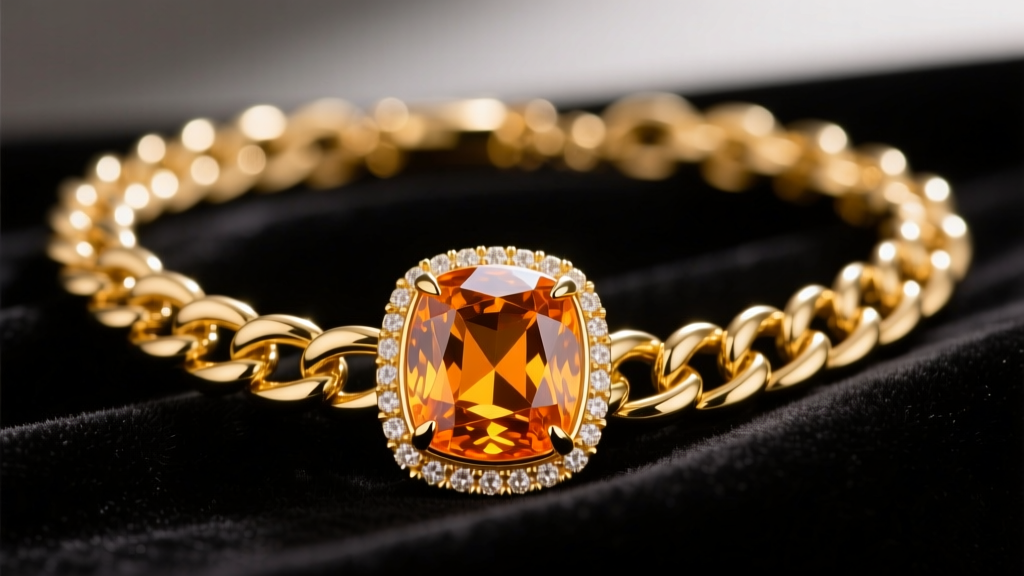
When evaluating a chunky jewel necklace, aesthetic appeal is only half the equation; structural engineering is the other. In jewelry design, 'chunky' typically denotes a piece with a mass exceeding 45 grams and link widths surpassing 5mm. However, the true test of these oversized pieces is not their static weight, but their dynamic load. When a wearer walks, the necklace acts as a pendulum. This kinetic movement multiplies the static weight by a factor of 1.5x to 2.2x at the point of maximum tension—usually the clasp and the bail. Therefore, a 60-gram statement necklace routinely exerts over 130 grams of dynamic pull force during normal wear. Understanding this physics principle is critical for selecting the appropriate chain gauge, which should never be thinner than 12 AWG (2.05mm) for the structural links in heavy pieces.
Metallurgy in Heavy Jewelry: Alloys and Hardness
The sheer mass of a chunky jewel necklace demands metals with high tensile strength and resistance to deformation. Pure 24k gold is entirely unsuitable due to its low Vickers Hardness (HV) of roughly 25, making it prone to severe stretching under heavy loads. Instead, expert jewelers rely on precisely calibrated alloys. As of 2026, advancements in metallurgical CAD software allow for micro-alloying that maximizes durability without sacrificing the rich color of high-karat gold.
For heavy chains and pendant bails, 18k gold (75% pure gold) alloyed with copper and silver provides an optimal balance, achieving a Vickers Hardness of approximately 125 HV. However, for the structural components bearing the most stress, such as the clasp mechanisms and pendant bails, platinum 950 (alloyed with ruthenium or cobalt) is the industry standard, offering superior yield strength and a hardness rating up to 135 HV. Beware of 'electroformed' hollow gold chains; while they offer massive visual volume with minimal weight, their thin walls (often under 0.2mm) are highly susceptible to irreversible denting and catastrophic crushing if snagged.
| Metal Alloy | Composition | Vickers Hardness (HV) | Best Application in Heavy Necklaces |
|---|---|---|---|
| 18k Yellow Gold | 75% Au, 15% Cu, 10% Ag | ~125 HV | Main chain links, decorative bezels |
| Platinum 950/Ru | 95% Pt, 5% Ru | ~135 HV | Clasps, bails, high-stress prongs |
| 14k White Gold | 58.5% Au, Ni/Pd alloys | ~140 HV | Internal clasp springs, safety catches |
| Grade 5 Titanium | Ti-6Al-4V | ~349 HV | Modern avant-garde structural cores |
Clasp Engineering: Preventing Catastrophic Failure
The clasp is the most critical failure point on any heavy necklace. Standard lobster clasps, while ubiquitous, are a massive liability on a chunky jewel necklace. The internal spring mechanism of a typical lobster clasp is rated for mere grams of static tension; under the dynamic pendulum load of a 50g+ chain, the trigger can easily depress against the collarbone, leading to instant loss. Furthermore, the soldered ring connecting the clasp to the chain often shears under lateral torque.
Tensile Strength Requirements and Modern Solutions
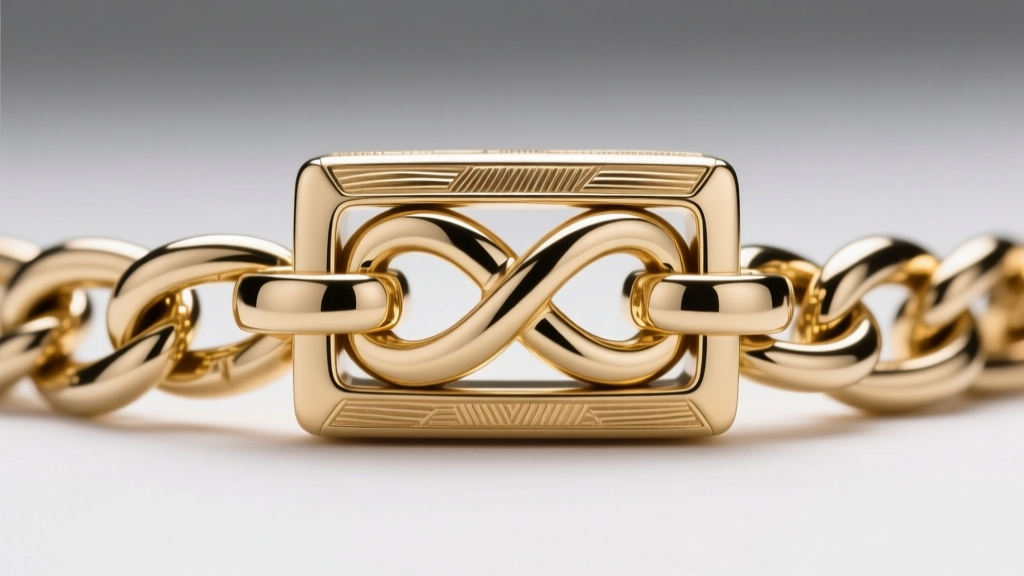
For heavy statement pieces, experts mandate a box clasp (also known as a tongue-and-groove clasp) equipped with dual figure-eight safety catches. The internal 'tongue' must be forged from spring-hardened 14k white gold or platinum to ensure it retains its tension over thousands of articulation cycles. Alternatively, modern magnetic clasps have revolutionized heavy jewelry. According to Rio Grande jewelry supply technical guidelines, neodymium rare-earth magnets (specifically N52 grade) encased in steel or precious metal housings can provide a pull force exceeding 15kg. When paired with a secondary mechanical locking sleeve, these magnetic systems offer both unparalleled ease of use and absolute security for high-mass necklaces.
Gemstone Setting Security in High-Mass Pendants
When a chunky jewel necklace features a large, heavy center stone, the setting must withstand significant inertial forces. Traditional prong settings, while excellent for maximizing light return, are inherently vulnerable in oversized pendants. A heavy pendant swinging outward and striking a surface can easily bend a standard 1mm prong, resulting in the loss of a valuable gemstone. The Gemological Institute of America (GIA) consistently highlights the importance of matching setting styles to the wearer's lifestyle and the physical mass of the jewelry.
The Supremacy of the Bezel and Channel Settings
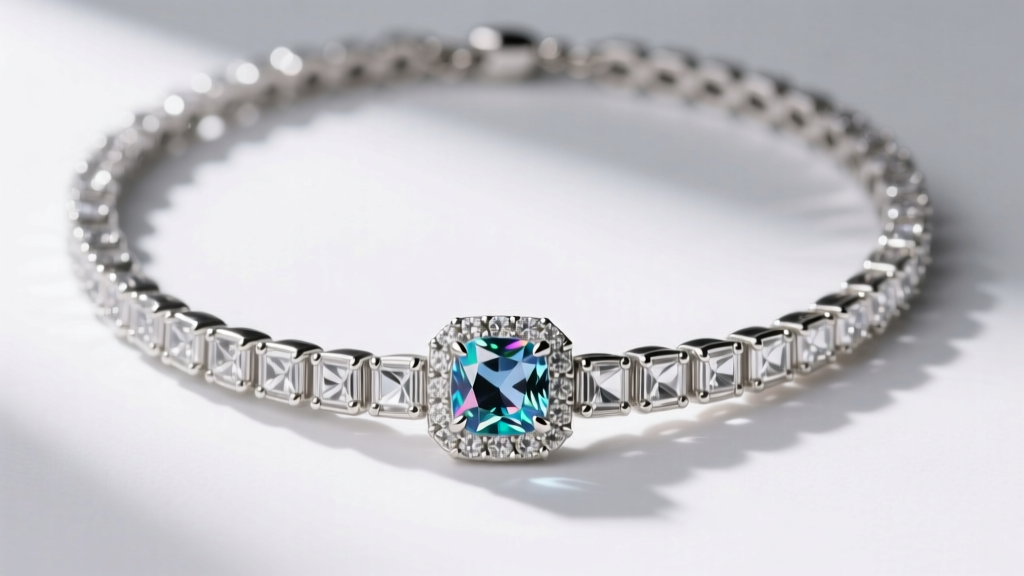
For stones exceeding 3 carats in heavy pendants, a full rub-over bezel setting is non-negotiable for daily wear. A properly engineered bezel features a metal wall at least 0.5mm thick that completely encapsulates the girdle of the stone, distributing impact forces across the entire metal framework rather than concentrating them on four or six microscopic prong tips. For chunky necklaces featuring multiple smaller accent stones, channel settings with laser-welded top lips provide superior protection against lateral impacts compared to pavé or shared-prong layouts, which are prone to stone loss when the heavy metal chain flexes.
The 2026 Expert Inspection Framework
Purchasing or appraising a high-end chunky jewel necklace requires a rigorous, multi-point physical inspection. Do not rely solely on visual weight; use the following technical checklist to verify structural integrity:
- Link Soldering Inspection: Use a 10x triplet loupe to examine the seams of every chain link. High-quality heavy chains utilize laser welding, which leaves a smooth, uniform seam without the heat-discoloration or brittle flux residue associated with traditional torch soldering.
- Bail Articulation Test: The bail (the loop connecting the pendant to the chain) must move freely. If the pendant is rigidly fixed to a massive chain, the lateral torque will eventually snap the bail or deform the top link of the chain. Look for a hinged or oversized stationary bail lined with a platinum sleeve to prevent friction wear.
- Clasp Spring Tension: Depress the safety catch mechanisms. They should offer firm, audible resistance. A mushy or loose figure-eight safety catch indicates poorly tempered metal that will fail to deploy correctly in an emergency.
- Hallmark and Weight Verification: Ensure the piece is stamped with its precise metal purity (e.g., 750, 950Pt). Weigh the piece on a digital jeweler's scale; discrepancies between the stated weight and actual weight often indicate hollow electroforming or internal resin filling, which severely compromises the piece's longevity.
Conclusion
A masterfully crafted chunky jewel necklace is a triumph of both art and mechanical engineering. By prioritizing dynamic load calculations, selecting high-tensile alloys, utilizing reinforced box or magnetic clasps, and opting for impact-resistant bezel settings, you ensure that your statement piece remains secure and structurally sound for generations. True luxury in heavy jewelry is defined not just by the carat weight of the gems or the purity of the gold, but by the uncompromising integrity of its hidden architecture.


