Vintage Purse Necklace Guide: 2026 Trends & Styling Tips
Discover the 2026 vintage purse necklace trend. Learn how to style miniature handbag pendants, authenticate vintage mesh lockets, and layer chains.

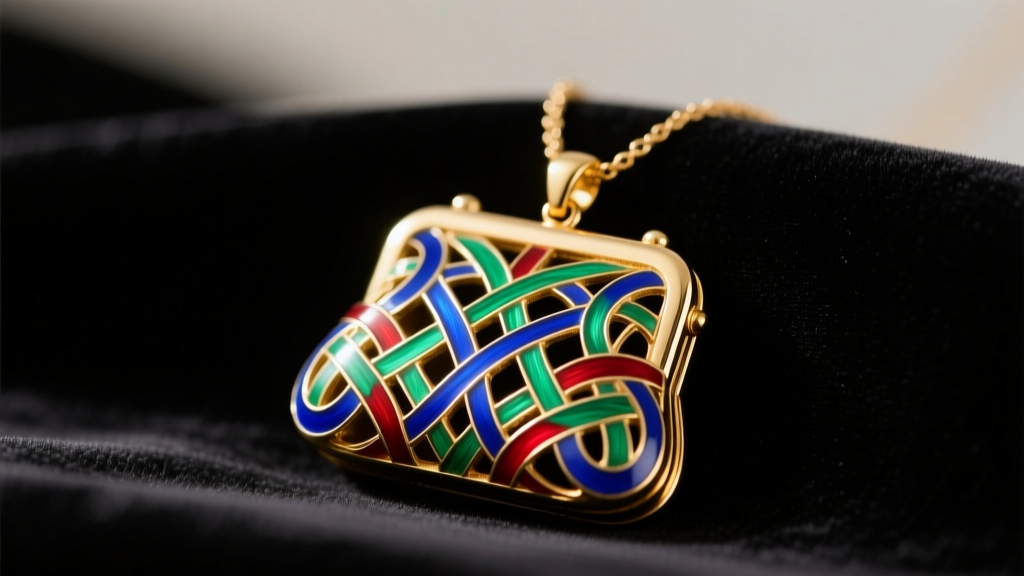
The Resurgence of the Miniature Handbag Pendant
In the ever-evolving landscape of 2026 jewelry trends, the vintage purse necklace has emerged as a definitive statement piece, bridging the gap between historical novelty and modern heirloom maximalism. Originally popularized in the Victorian era as chatelaine accessories and later adapted into 1950s charm bracelet pendants, the miniature handbag locket and mesh pouch pendant are now being reclaimed as standalone focal points on the neckline. Unlike generic novelty jewelry, authentic vintage purse pendants demand a keen eye for craftsmanship, material integrity, and historical provenance. According to the archival experts at Lang Antiques, the transition of functional miniature vessels into purely aesthetic necklaces represents a fascinating evolution in wearable art, particularly as collectors seek out pieces with hidden compartments and intricate metallurgy.
The modern appeal lies in the juxtaposition of scale and detail. A meticulously crafted 1920s Art Deco mesh purse pendant, measuring barely an inch in height, features the same complex link-weaving as a full-sized Whiting & Davis handbag. In 2026, stylists are moving away from delicate, barely-there chains and instead suspending these weighty, historical artifacts from substantial vintage chains that can support their 10-to-20-gram mass without warping.
Material & Craftsmanship: What to Look For
When evaluating a vintage purse necklace, the material composition dictates not only the value but the longevity and care requirements of the piece. Here is a breakdown of the primary materials you will encounter in the secondary market:
- Guilloché Enamel over Sterling Silver: Predominantly found in mid-century European pieces, this technique involves layering translucent vitreous enamel over engine-turned (guilloché) silver. The result is a shimmering, three-dimensional optical effect on the miniature purse body. Warning: The enamel is essentially glass and will shatter if dropped or subjected to ultrasonic cleaning.
- Brass and Silver Mesh: Popularized in the 1920s and 30s, mesh pouch pendants feature hundreds of interlocking micro-rings. Look for pendants where the bottom fringe (if present) is fully intact, as missing mesh links are nearly impossible to repair without altering the drape.
- Carved Lucite and Bakelite: 1940s novelty handbag pendants were often carved from early plastics. Bakelite will have a distinct, slightly heavy feel and a deep, oxidized patina in the carved grooves, while Lucite is lighter and can be found in vibrant, translucent pastel hues.
- Gold-Filled vs. Vermeil: Many 1950s purse lockets from brands like Trifari or CoroCraft were made with heavy gold-filled plating (often marked '1/20 12K GF'). This is vastly superior to modern gold vermeil, as the gold layer is mechanically bonded and significantly thicker, resisting wear on the high-friction hinge areas.
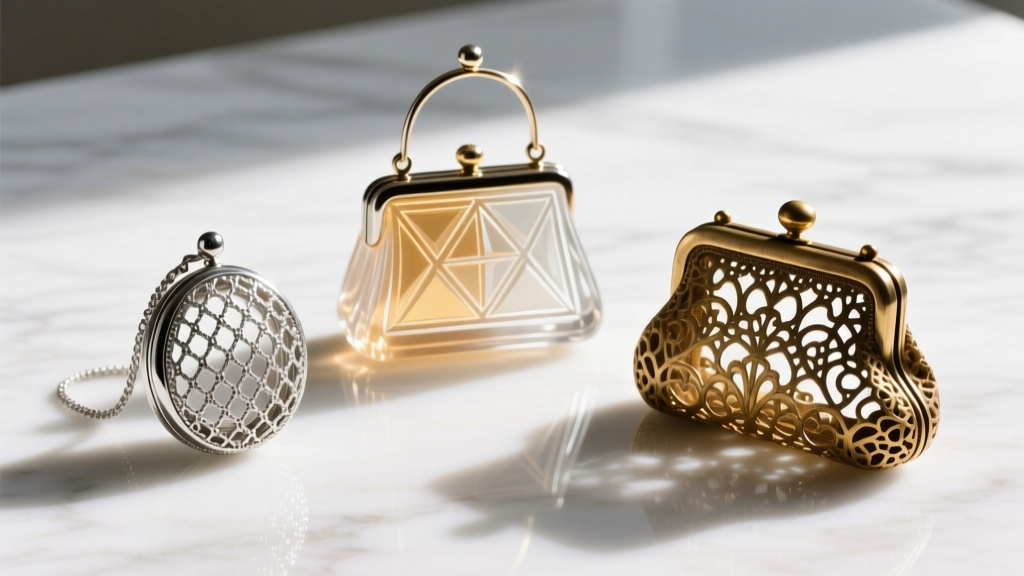
2026 Pricing & Authentication Matrix
Navigating the vintage market requires understanding the intersection of era, material, and brand markings. The following matrix reflects current 2026 market valuations for authenticated pieces in excellent condition.
| Era / Style | Primary Material | Avg. Market Price (2026) | Key Authentication Marker |
|---|---|---|---|
| Victorian Chatelaine Purse | Pinchbeck / Enamel | $180 - $350 | Lacks a modern jump ring; features a chatelaine hook or bolt-ring clasp. |
| 1920s Art Deco Mesh Pouch | Sterling Silver Mesh | $250 - $600 | Interior stamped 'Sterling'; intricate geometric link patterns; original silk lining remnants. |
| 1950s Mid-Century Charm Locket | Gold-Filled Brass | $85 - $180 | Marked '1/20 12K GF'; features a functional pillbox interior with original perfume wafer. |
| 1980s Designer Novelty | Gold-Plated Base Metal | $60 - $120 | Heavy casting; brand stamps (e.g., 'Miriam Haskell' or 'Monet') on the bale or clasp. |
Styling the Vintage Purse Necklace in 2026
The key to styling a vintage purse necklace today is to treat it as a piece of functional sculpture rather than a costume accessory. Because these pendants are inherently detailed and visually "loud," the supporting chain and the garment neckline must provide adequate negative space.
Chain Selection and Gauge Sizing
A common mistake collectors make is threading heavy vintage purse pendants onto flimsy modern chains. A solid brass mesh locket from the 1930s can easily weigh 18 grams. To prevent chain snap and bail distortion, you must use a chain with a minimum wire gauge of 1.2mm (approx. 16-gauge). A 1.4mm Figaro chain or a 1.5mm rounded box chain provides the necessary tensile strength while complementing the vintage aesthetic. Ensure the pendant's bail (the loop connecting it to the chain) is smoothly filed; if it has sharp interior edges from decades of wear, have a jeweler insert a seamless gold-filled jump ring to protect your chain from friction sawing.
Neckline Pairings
The architectural shape of a miniature handbag pendant demands specific necklines to frame it correctly:
- The Cowl Neck: A deep silk cowl neck creates a draped backdrop that mimics the fluidity of a mesh purse pendant. Keep the chain length at exactly 18 inches so the pendant rests in the center of the draped fabric.
- The Asymmetrical Slash: For structured, carved Lucite purse pendants, an asymmetrical slash neckline provides a modern, geometric contrast to the vintage novelty shape.
- The Sweetheart Neckline: The traditional pairing for Victorian and Edwardian guilloché enamel lockets. The curved neckline mirrors the rounded bottom edges of the antique purse.

Advanced Layering Techniques
In 2026, the "quiet luxury" movement has evolved into "curated eclecticism," where vintage pieces are layered with contrasting textures. To layer a vintage purse necklace successfully, utilize the Rule of Descending Weight. Start with a 14-inch lightweight pearl or seed-bead choker (2mm thickness). Follow with your 16-inch vintage purse pendant on a 1.2mm gold-filled cable chain. Finish with an 18-inch or 20-inch matte-finished snake chain that sits below the purse pendant, anchoring the visual weight without competing for attention. Avoid layering with other charm-heavy chains, as the intricate details of the purse will become lost in the visual clutter.
Care and Maintenance for Antique Purse Pendants
The functional nature of these pendants—many of which open on tiny hinges—makes them uniquely vulnerable to damage. The most common failure mode in vintage purse lockets is the snapping of the piano hinge or the loss of the microscopic tension pin that holds the clasp shut.
Archivist's Note: Never use ultrasonic cleaners or harsh chemical dips on any vintage purse necklace featuring enamel, mesh, or early plastics. The high-frequency vibrations of ultrasonic tanks will instantly shatter guilloché enamel and can unravel the microscopic tension of 1920s mesh links. Instead, use a soft-bristled makeup brush dipped in a mild solution of distilled water and pH-neutral soap to gently agitate dirt from the filigree grooves, followed by a microfiber polish.
For pendants with functional interiors (often originally designed to hold solid perfume, snuff, or tiny keepsakes), ensure the interior is completely dry before closing the latch to prevent internal oxidation, particularly in gold-filled or silver-plated pieces. If the clasp tension has weakened over the decades, a master jeweler can carefully apply pressure to the tension spring using specialized nylon-jaw pliers, restoring the satisfying "snap" of a mid-century closure without marring the soft gold exterior.
Final Verdict
The vintage purse necklace is far more than a whimsical nod to the past; it is a masterclass in miniature metallurgy and historical design. Whether you are hunting for a 1920s sterling mesh pouch on the Victoria and Albert Museum's digital archives for inspiration, or scouring estate sales for a heavy 1950s gold-filled locket, these pieces offer unparalleled conversational value and enduring style. By prioritizing structural integrity, selecting the appropriate heavy-gauge chains, and respecting the delicate nature of vintage enamels and plastics, you can seamlessly integrate these miniature masterpieces into your 2026 wardrobe.


