14 vs 16 Inch Necklace: Troubleshooting Length & Fit Issues
Struggling with necklace fit? We troubleshoot the 14 vs 16 inch necklace dilemma, offering exact measurements, neckline fixes, and layering solutions.

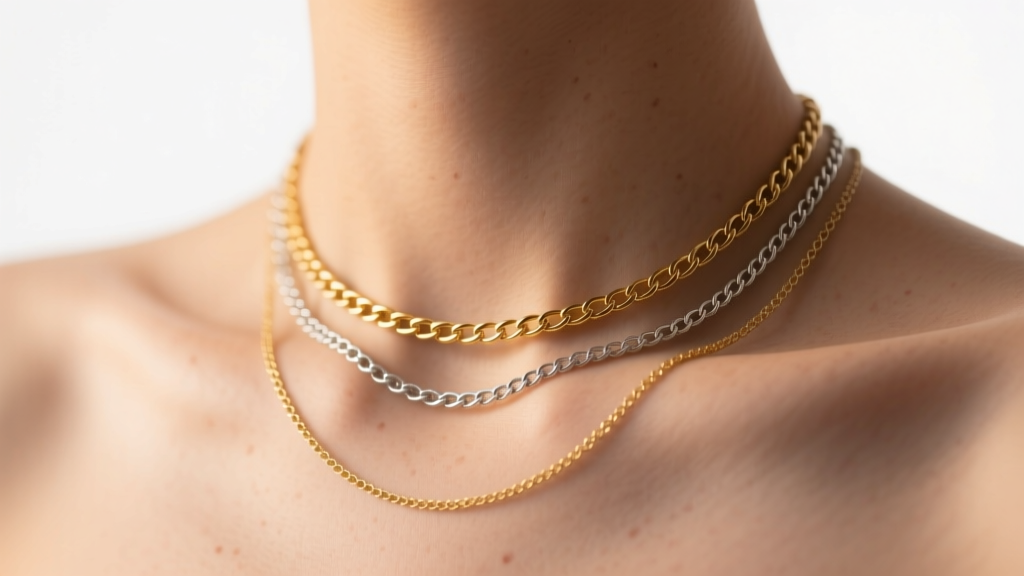
Ordering jewelry online often leads to a frustrating unboxing experience: the chain you envisioned resting elegantly on your chest is suddenly choking you, or the delicate pendant you bought is getting lost in your collarbone. The debate of 14 vs 16 inch necklace lengths is the most common point of failure in online jewelry shopping. While two inches might seem negligible on a tape measure, on the human neck, it represents the difference between a snug choker and a standard princess-length drape.
As a troubleshooting guide, this article bypasses generic styling advice to diagnose exactly why your necklace fit is failing, how anatomical variables skew standard sizing, and the hardware hacks you can use to salvage a chain that doesn't quite sit right.
The Core Problem: Why Standard Lengths Fail Real Necklines
The jewelry industry operates on standardized chain lengths, but human anatomy is highly variable. According to anthropometric data, the average adult female neck circumference ranges from 13.0 to 14.5 inches. When you purchase a 14-inch chain, you are working with less than an inch of negative ease on an average neck. This means a 'standard' 14-inch choker will fit like a tight collar on many women, while a 16-inch chain might hit the collarbone awkwardly rather than resting below it.
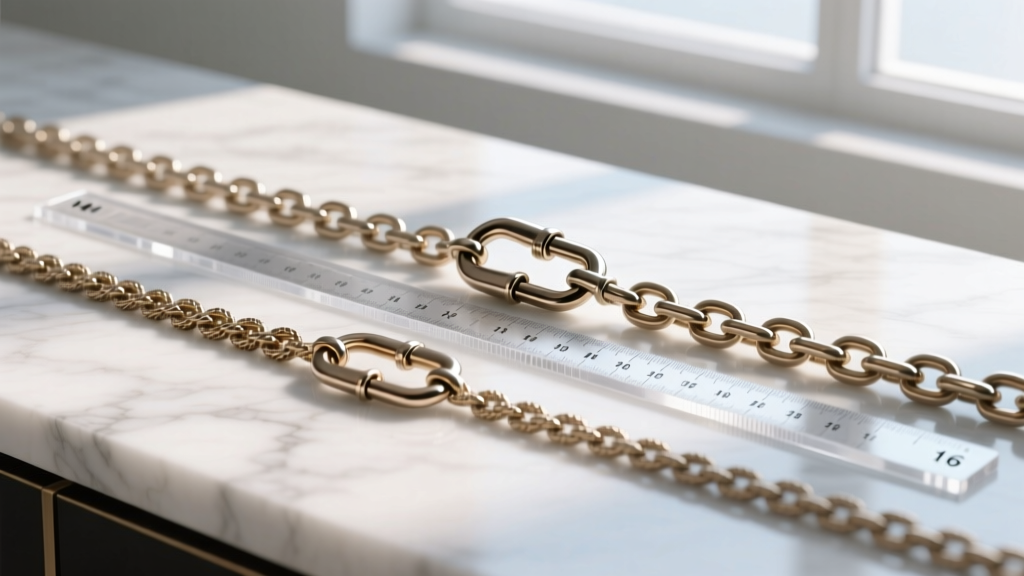
Furthermore, brands measure necklaces differently. Some include the clasp in the total 14 or 16-inch measurement, while others measure only the chain links. A heavy lobster clasp can add up to 0.6 inches to the overall drop, completely altering the intended silhouette. To solve your fit issues, you must first understand the exact geometry of your chain.
14 vs 16 Inch Necklace: The Exact Measurement Breakdown
Before attempting to fix a fit issue, map your current jewelry against this diagnostic matrix. This data helps you identify whether your problem is a length issue, a pendant weight issue, or a clasp hardware issue.
| Specification | 14-Inch Necklace | 16-Inch Necklace |
|---|---|---|
| Metric Length | 35.5 cm | 40.6 cm |
| Industry Style Name | Choker / Collar | Princess / Standard |
| Average Drop from Base of Neck | 0.5 to 1.5 inches | 2.0 to 3.0 inches |
| Ideal Pendant Weight | Under 2 grams (micro) | 3 to 6 grams (standard) |
| Best Chain Gauge | 0.9mm - 1.2mm | 1.2mm - 1.8mm |
For a deeper understanding of how chain gauges affect drape and durability, the GIA Gem Encyclopedia provides excellent foundational metrics on precious metal structural integrity. A 14-inch chain requires a finer gauge to remain flexible around the tight curve of the neck, whereas a 16-inch chain can support heavier, thicker links without kinking.
Troubleshooting Common Fit Disasters
When your necklace isn't sitting right, it usually falls into one of two specific failure modes. Here is how to diagnose and fix them.
The 'Strangulation' Effect (When 14 Inches is Too Tight)
The Symptom: The chain leaves a red mark on your neck, the clasp constantly rotates to the front, and you feel restricted when swallowing or turning your head.
The Diagnosis: Your neck circumference exceeds 13.5 inches, leaving zero negative ease. Additionally, if the chain is a rigid style (like a snake chain or herringbone), it will resist the natural oval shape of your neck and push outward, causing the clasp to migrate forward.
The Fix: Do not force a tight 14-inch chain. Purchase a 2-inch, 1.2mm sterling silver or gold-filled extender chain. Attach it to the existing jump ring. This converts your 14-inch choker into a customizable 14-to-16-inch hybrid, allowing the chain to find its natural resting point without tension.
The Awkward Collarbone Clash (When 16 Inches Hits the Bone)
The Symptom: The pendant constantly flips upside down, or the chain bunches up on one side of your collarbone instead of laying flat.
The Diagnosis: A 16-inch chain is designed to hit the collarbone or rest just below it. If your pendant is too light (under 2 grams), it lacks the gravitational pull to keep the chain anchored, causing the lightweight links to slide across the smooth skin and bone of the upper chest.
The Fix: You need to add drag. You can either swap the pendant for a heavier stone or metal piece (minimum 4 grams), or use a silicone necklace stay-node. These tiny, invisible rubber beads slide onto the chain behind your neck, creating friction against the skin to prevent the chain from sliding forward and flipping the pendant.

Neckline Pairing Matrix: Fixing Wardrobe Conflicts
A major reason a 14 or 16-inch necklace looks 'wrong' is due to a clash with the garment's neckline. Use this troubleshooting matrix to pair your chain with the correct wardrobe cut.
- Crew Neck (High & Tight): A 14-inch chain will tangle with the fabric seam. Solution: Use a 16-inch chain with a pronounced drop pendant to break up the heavy fabric line.
- V-Neck: The gold standard for layering. Solution: A 14-inch choker sits above the V-line, while a 16-inch chain mimics the V-shape. Avoid 16-inch chains with wide horizontal pendants that clash with the fabric's diagonal.
- Scoop Neck: Solution: A 14-inch chain perfectly frames the exposed collarbone without touching the fabric hem. A 16-inch chain risks getting lost under the garment's edge.
- Boat Neck / Bateau: Solution: Strictly 14-inch. The wide horizontal line of the boat neck requires the tight vertical contrast of a choker. A 16-inch chain will visually widen the torso and clash with the shoulder seams.
Pro-Tip: When troubleshooting a layered look, always maintain a minimum 2-inch gap between chains. A 14-inch and 16-inch necklace pair perfectly, but only if the 14-inch chain is a delicate cable (under 1.5mm) and the 16-inch chain features a heavier link pattern or pendant to anchor the eye.
Hardware Hacks: Extenders, Clasps, and Chain Swaps
Sometimes the chain length is technically correct, but the hardware is ruining the fit. According to Angara's Jewelry Education Guide, understanding clasp mechanics is crucial for maintaining the intended drape of fine jewelry.
1. The Clasp Weight Imbalance:
Lobster clasps are heavy. If you have a 16-inch, ultra-fine 0.8mm chain, the lobster clasp will constantly drag the back of the neck down and pull the front up. Fix: Take the piece to a local jeweler and swap the lobster clasp for a lightweight spring-ring clasp, which weighs roughly 60% less.
2. The Jump Ring Gap:
Many mass-produced 14-inch necklaces use a 5mm open jump ring to attach the clasp. Over time, this ring pulls open, adding 2-3mm of unintended slack and altering the symmetry. Fix: Replace open jump rings with soldered closed rings to maintain exact millimeter precision in your chain length.
3. Adding a Permanent Extender:
If you consistently find 14 inches too tight but 16 inches too long, buy a 1.5-inch length of matching chain (e.g., 1.2mm rolo). Have a jeweler solder it permanently between the chain and the clasp. This gives you a custom 15.5-inch 'in-between' length that sits perfectly in the hollow of the throat without choking.
Expert Verdict: Which Length Should You Actually Buy?
When deciding between a 14 vs 16 inch necklace, the solution relies on your primary wardrobe and neck anatomy. If your neck measures over 13.5 inches and you primarily wear high-necked or crew-neck garments, the 16-inch princess length is the safest, most versatile investment. It avoids the strangulation effect and provides enough drop to accommodate standard 3-gram pendants.
However, if you favor scoop necks, off-the-shoulder tops, or modern minimalist layering, the 14-inch choker is indispensable. Just be prepared to invest in a 2-inch extender chain to troubleshoot the inevitable days when your neck feels slightly more swollen or your collar feels too tight. By treating necklace length as a customizable hardware equation rather than a rigid standard, you can eliminate fit frustrations and ensure your jewelry always sits exactly where it should.


