Fixing & Troubleshooting a Solid Gold Anchor Chain Necklace
Is your solid gold anchor chain necklace tangling, breaking, or losing its luster? Learn expert troubleshooting tips to fix clasps, links, and tangles.

The Anatomy of an Anchor Chain: Why Problems Occur
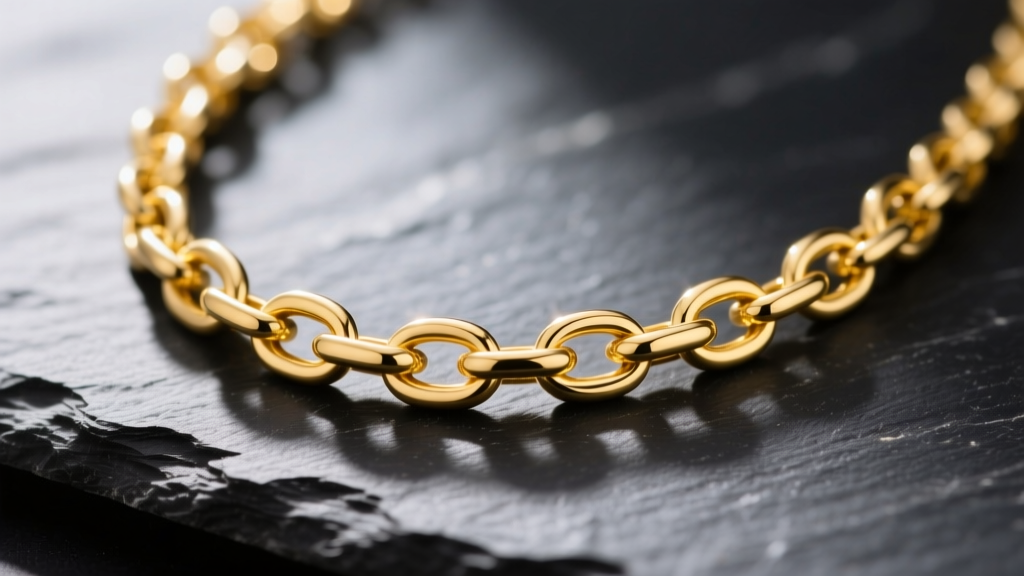
The solid gold anchor chain necklace—often referred to as a marine chain—is a staple in fine jewelry, celebrated for its nautical heritage and robust aesthetic. However, its defining feature, the horizontal crossbar bisecting each oval link, introduces unique structural vulnerabilities. Unlike standard cable or curb chains, the anchor chain's crossbar creates multiple friction points and stress concentrations. When a solid gold anchor chain fails, tangles, or stretches, the issue almost always traces back to how these crossbars are soldered and how the gold alloy behaves under tension.
Troubleshooting these necklaces requires an understanding of jewelry metallurgy and mechanical stress. Whether you are dealing with a vintage 18k piece or a modern 14k everyday chain, identifying the exact failure mode is the first step toward a permanent repair.
Troubleshooting Common Anchor Chain Failures
When your chain misbehaves, it is rarely a random occurrence. Here is how to diagnose and resolve the three most frequent issues plaguing solid gold marine chains.
1. Severe Tangling and Crossbar Snags
The horizontal crossbar acts as a natural hook. When stored loosely in a jewelry box, the crossbar of one link can easily slip through the oval gap of another, creating complex, multi-point knots. Pulling on these knots will permanently warp the crossbar or snap the solder joint.
- The Fix: Lay the necklace on a flat, non-porous surface. Apply a single drop of mineral oil or specialized jewelry detangler to the knot. Use two fine-point sewing needles or gemological tweezers to gently work the crossbars outward from the center of the knot. Never use your fingernails, as the oils and uneven pressure can bend the gold.
- Prevention: Always store anchor chains hanging vertically or laid completely flat in a segmented, anti-tarnish jewelry box. Never coil them tightly.
2. Link Stretching and Crossbar Displacement
If you notice your chain elongating or individual oval links looking distorted, you are experiencing plastic deformation. This is highly dependent on the karat weight and the manufacturing method of the gold.

According to metallurgical standards referenced by the Gemological Institute of America (GIA), 18k gold (75% pure gold) has a Vickers hardness (HV) of roughly 70-90, making it significantly softer and more prone to stretching than 14k gold (58.5% pure gold), which boasts an HV of 120-140. If an 18k solid gold anchor chain is made with a gauge thinner than 2.5mm, it will stretch under the weight of a heavy pendant.
- The Fix: Stretched links cannot be simply "squeezed" back into shape without risking work-hardening and subsequent snapping. A professional jeweler must use a laser welder to reinforce the solder joints at the crossbar, or replace the deformed links entirely. Traditional torch soldering is too risky for marine chains, as the heat required to flow the solder will often melt the delicate crossbars.
3. Clasp Failures and Swivel Fatigue
Anchor chains are inherently heavy and rigid. Pairing a thick, solid gold marine chain with a standard spring-ring clasp is a recipe for failure. The repetitive twisting motion of the rigid chain against a small, hollow spring ring causes metal fatigue at the clasp's jump ring.
- The Fix: Upgrade the clasp. For chains over 4mm in width, replace the spring ring with a solid cast lobster clasp or, ideally, a box clasp with a figure-8 safety latch. Ensure the jump ring connecting the clasp to the chain is soldered shut, rather than simply pinched closed.
Authenticity Check: Is Your Chain Truly Solid Gold?
One of the most common troubleshooting scenarios occurs when a consumer believes they own a solid gold anchor chain, only for it to crush or snap under minor pressure. The culprit is usually electroformed "hollow" gold. The Federal Trade Commission (FTC) Jewelry Guides strictly regulate the use of the term "solid gold," but misleading marketing still permeates the secondary market.
| Feature | Hollow Electroformed Chain | Solid Die-Struck/Cast Chain |
|---|---|---|
| Weight (18-inch, 4mm) | 4 to 7 grams | 18 to 28 grams |
| Crossbar Construction | Often stamped as part of the hollow tube | Soldered solid wire or cast in place |
| Crush Resistance | Very low; dents easily under pressure | High; requires heavy force to deform |
| Repairability | Nearly impossible to solder without collapsing | Fully repairable via laser or torch |
| Price Range (14k) | $300 - $600 | $1,200 - $2,500+ |
If your chain feels suspiciously light, or if a link has collapsed inward like a crushed soda can, it is hollow. Hollow chains cannot be repaired using traditional heat; the trapped gases inside the hollow tube will expand and blow out the gold. If a hollow anchor chain breaks, it must be replaced.
Advanced Maintenance and Preventative Care
To maintain the structural integrity and visual brilliance of a solid gold anchor chain necklace, your maintenance routine must account for the crevices created by the crossbars.
Ultrasonic Cleaning Cautions
While ultrasonic cleaners are excellent for removing sebum and lotion buildup from the tight gaps around the crossbars, they can be destructive if the chain has pre-existing micro-fractures in the solder joints. The high-frequency vibrations can shake a compromised crossbar completely loose. Always inspect your chain with a 10x jeweler's loupe before placing it in an ultrasonic bath.
Polishing the Crossbars
The crossbars on an anchor chain endure the most friction against the skin and clothing, leading to localized dulling. When polishing, avoid aggressive rotary tools with rouge compounds, which can wear down the sharp, nautical edges of the links. Instead, use a soft microfiber cloth and a non-abrasive liquid gold polish, working it into the joints with a soft-bristled baby toothbrush. This preserves the crisp, geometric lines that give the marine chain its iconic, light-catching faceted appearance.
When to Seek Professional Bench Repair
While minor tangles and surface cleaning can be handled at home, certain issues demand the expertise of a master jeweler. If you notice a "clicking" sound when moving the chain, it indicates that a crossbar has broken free on one side and is rattling inside the oval link. Continuing to wear the chain in this state will cause the loose crossbar to act as a file, grinding away the interior of the solid gold link until it snaps. Immediate laser welding is required to re-seat and fuse the crossbar without compromising the surrounding links. By understanding the unique mechanics of the solid gold anchor chain necklace, you can ensure it remains a durable, lifelong staple in your jewelry collection.


