The Rose Necklace From Titanic: Style Analysis & 2026 Revival
Discover the truth behind the rose necklace from Titanic. We analyze the Heart of the Ocean's design, gemology, replicas, and how to style it today.

The Myth and Reality of the Rose Necklace From Titanic
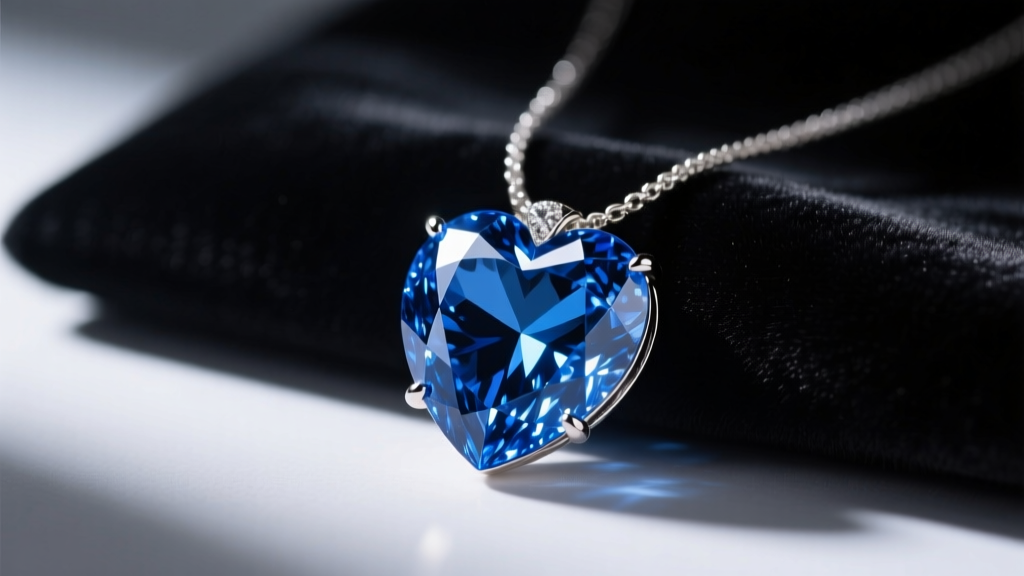
When jewelry enthusiasts and film buffs alike search for the rose necklace from titanic, they are almost universally referring to one of the most iconic pieces of cinematic jewelry in history: the Heart of the Ocean. Worn by Kate Winslet’s character, Rose DeWitt Bukater, this breathtaking blue diamond pendant has captivated audiences since the film's 1997 release. However, as we move into 2026, the trend of cinematic jewelry revivals has brought this specific silhouette back into the spotlight, not as a costume piece, but as a legitimate high-fashion statement.
From a stylistic perspective, the pendant is a masterclass in Edwardian-era inspiration mixed with 1990s high-jewelry glamour. The design features a large, heart-cut center stone surrounded by a delicate halo of round brilliant-cut diamonds, culminating in a matching diamond-encrusted bail. While the original film prop was crafted from cubic zirconia and white gold to accommodate the production budget and the harsh lighting of film sets, the cultural impact of the piece spawned a massive market for replicas, lab-grown alternatives, and high-end homages. Today, we are breaking down the exact gemological, metallurgical, and stylistic specifications you need to know if you want to acquire or style a piece inspired by this legendary necklace.
Gemological Breakdown: Sapphire vs. Tanzanite vs. Cubic Zirconia
To truly understand the allure of this necklace, we must look at the stones used to replicate it. The film’s narrative claims the center stone is a rare blue diamond, but in reality, natural blue diamonds of that size (estimated at over 50 carats in the movie's lore) are virtually non-existent outside of museum collections. Therefore, the replica market relies on three primary gemstones, each with distinct optical and physical properties.
According to the Gemological Institute of America (GIA), natural blue sapphires (corundum) are the most authentic choice for high-end replicas. Sapphires boast a Mohs hardness of 9, making them exceptionally durable for everyday wear. Their dichroic nature means they display two different colors (usually a slightly greenish-blue and a violet-blue) when viewed from different crystallographic directions, giving them a deep, velvety saturation that mimics the movie prop perfectly.
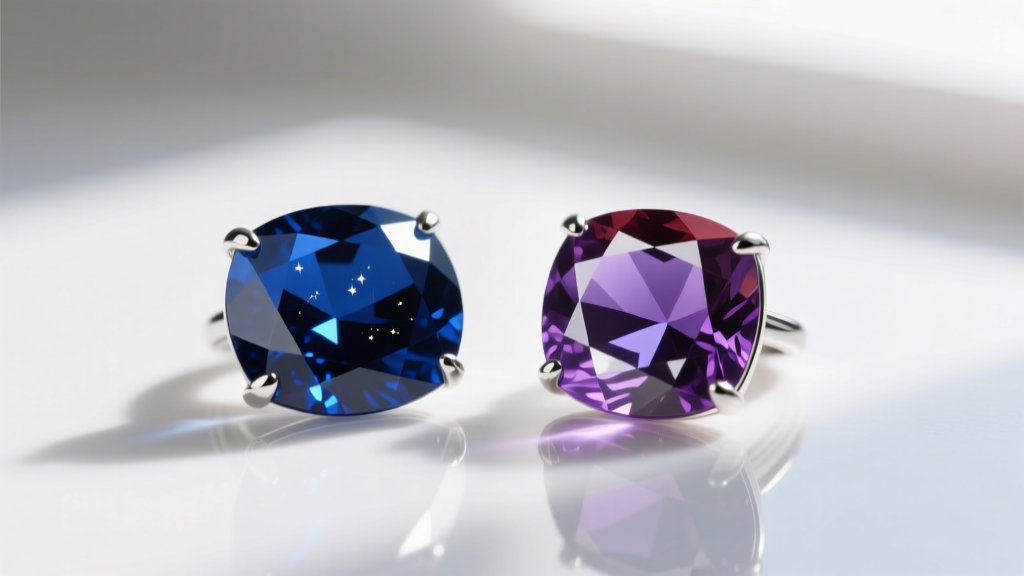
Tanzanite is the second most popular choice. Discovered in 1967 (decades after the Titanic sank, making it historically inaccurate for the film's 1912 setting), tanzanite is a variety of the mineral zoisite. It is highly trichroic, meaning it flashes blue, violet, and burgundy depending on the angle. While incredibly beautiful, tanzanite only ranks 6.5 to 7 on the Mohs scale, making it prone to scratching and chipping if worn daily as a heavy pendant. Finally, cubic zirconia (CZ) remains the standard for budget replicas. While it offers incredible brilliance and a Mohs hardness of 8 to 8.5, it lacks the deep color saturation of a sapphire and can become cloudy over time due to its porous nature and affinity for oils.
Material Comparison for Replicas
| Gemstone | Mohs Hardness | Optical Property | Avg. Price (5ct Equivalent) | Best For |
|---|---|---|---|---|
| Lab-Grown Blue Sapphire | 9.0 | Dichroic (High Saturation) | $300 - $800 | Heirloom quality, daily wear |
| Natural Tanzanite | 6.5 - 7.0 | Trichroic (Violet/Blue) | $1,500 - $3,500 | Special occasions, collectors |
| Cubic Zirconia (CZ) | 8.0 - 8.5 | Isotropic (High Dispersion) | $20 - $50 | Costume wear, travel |
| Blue Spinel | 8.0 | Isotropic (Deep Cobalt) | $800 - $2,000 | Vintage aesthetics, durability |
Metallurgy and Chain Specifications: Getting the Drape Right
A common failure mode with replica necklaces is the chain. The original movie prop utilized a delicate, somewhat flimsy cable chain that draped perfectly for the camera but would easily snap under the weight of a real 15-carat sapphire. If you are investing in a high-quality sapphire or tanzanite pendant, the metallurgy of your chain and setting is paramount.
For a pendant weighing between 8 and 15 grams, you must avoid standard 0.8mm or 1.0mm cable chains. Instead, opt for a 1.5mm to 2.0mm rope chain or a reinforced 1.5mm box chain crafted in 14k or 18k white gold. White gold is an alloy of yellow gold mixed with white metals like nickel, palladium, or silver, and it is almost always plated with rhodium to achieve that bright, mirror-like finish seen in the film. However, rhodium plating wears off over time, especially against the skin's natural pH and friction from clothing. As a 2026 alternative, many jewelers are recommending platinum for the setting and chain. Platinum is naturally white, hypoallergenic, and does not require rhodium plating, ensuring the necklace maintains its icy, Edwardian aesthetic indefinitely.
Furthermore, pay close attention to the clasp. A standard spring-ring clasp is insufficient for a heavy heart pendant. You must ensure the chain is fitted with a sturdy lobster claw clasp with a reinforced jump ring to prevent accidental loss.
The 2026 Trend: Cinematic Jewelry Revival
According to trend forecasts highlighted by Vogue, 2026 is seeing a massive resurgence in "narrative jewelry"—pieces that tell a story or evoke a specific cinematic era. However, the key to pulling off the Heart of the Ocean silhouette today is to avoid looking like you are wearing a costume. The oversized, heavy-hearted pendants of the late 90s have been reimagined for modern styling through the art of layering and contrast.
How to Style a Cinematic Pendant Today
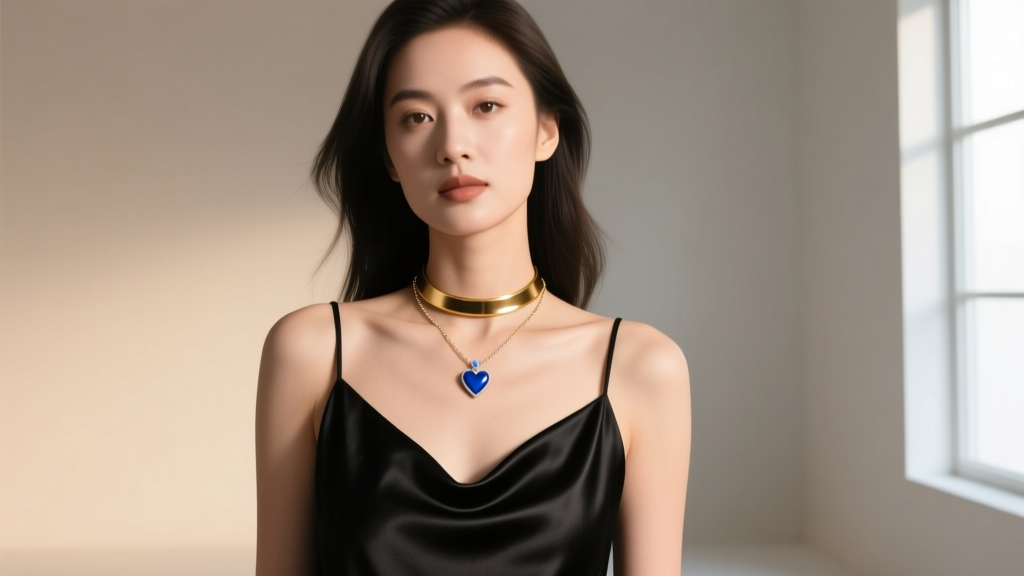
- The Mixed-Metal Layer: The biggest jewelry trend of 2026 is mixing metals. Pair your white gold or platinum blue sapphire pendant with a 14-inch, 18k yellow gold paperclip choker. The contrast between the icy blue/white metals and the warm yellow gold breaks up the "matching set" vibe, making the piece feel like a curated, modern vintage find.
- The Slip Dress Contrast: Channel the iconic drawing scene but modernize it. Instead of a nude illusion, wear the pendant over a black or emerald green silk slip dress with a deep cowl neckline. The 18-inch chain length is crucial here, as it allows the pendant to rest exactly on the sternum, catching the light against the matte silk.
- Daytime Edge: To wear a large heart pendant during the day, juxtapose its elegance with structured tailoring. Wear it over a crisp, oversized white button-down shirt, leaving the top three buttons undone, paired with a vintage leather blazer. The sharp collars frame the pendant, turning a romantic piece into a power-fashion statement.
Where to Buy Authentic Replicas (and What to Avoid)
The market is flooded with unauthorized, low-quality knockoffs. When shopping for a high-quality homage to the rose necklace from titanic, you must be vigilant about material transparency. Avoid listings that use vague terms like "Tibetan Silver," "Alloy," or "Silver Plated" without specifying the base metal. These pot-metal alloys often contain lead or nickel, which can cause severe contact dermatitis and will tarnish to an irreversible black within weeks.
Instead, seek out independent jewelers on platforms like Etsy who specialize in historical recreations and provide CAD (Computer-Aided Design) renderings of their work. Look for sellers who explicitly state the use of solid 925 sterling silver (at minimum) or 14k gold, and who can provide a gemological report or at least a detailed specification sheet for lab-grown sapphires. Brands like JCK noted in their recent retail reports that consumers are increasingly demanding full supply-chain transparency, even for cinematic replicas. If a seller cannot tell you the exact origin of their lab-grown corundum or the specific alloy mix of their white gold, take your business elsewhere.
Final Verdict
The legacy of the necklace Rose wore in Titanic extends far beyond its fictional narrative. It represents a specific intersection of Edwardian romance and late-90s maximalism that continues to influence jewelry design today. By understanding the gemological differences between sapphire and tanzanite, insisting on proper chain gauges and platinum or rhodium-plated white gold, and applying modern 2026 layering techniques, you can transform this cinematic artifact into a versatile, breathtaking staple of your personal jewelry collection. Whether you opt for a lab-grown sapphire for everyday durability or a natural tanzanite for special occasions, the Heart of the Ocean remains an undeniable masterpiece of pendant design.


