Libra Constellation Necklace: Best Metals & Materials Guide
Compare metals, chain gauges, and star inlays for a libra constellation necklace. Expert advice on durability, tarnish resistance, and skin sensitivity.

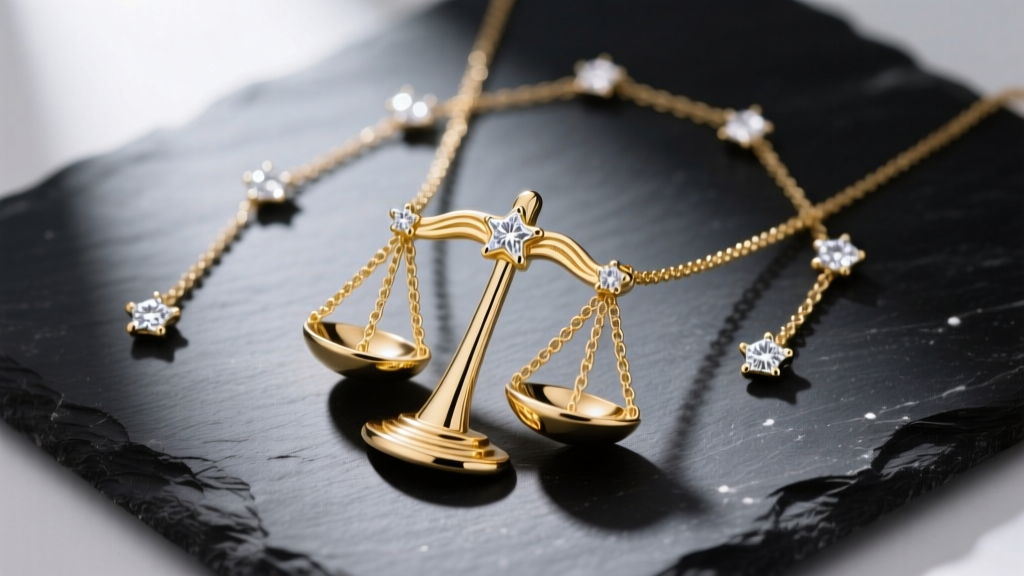
For those born under the sign of the scales, jewelry is rarely just an accessory; it is an expression of balance, harmony, and refined aesthetics. A libra constellation necklace captures this celestial geometry, mapping the stars of the zodiac into a wearable talisman. However, the delicate, sprawling nature of constellation pendants presents unique structural challenges. The wide horizontal span of the Libra scales motif requires specific material properties to prevent bending, while the tiny star inlays demand careful gemstone selection to maintain their brilliance over time.
In this comprehensive material guide, we bypass generic jewelry advice and dive deep into the metallurgical properties, chain gauge mechanics, and inlay durabilities that dictate whether your libra constellation necklace will last a season or a lifetime.
Precious Metals vs. Base Alloys: The Core Comparison
The foundation of any zodiac pendant is its base metal. Because Libra pendants often feature elongated, horizontal beams representing the scales, the metal's tensile strength and yield point are critical. Softer metals will warp when caught on clothing, while overly brittle alloys may snap at the solder points.
14k vs. 18k Solid Gold
While 18k gold (75% pure gold) offers a richer, warmer hue, it is inherently softer. For a wide libra constellation pendant that spans 20mm or more across the collarbone, 18k gold is prone to micro-bending. 14k gold (58.5% pure gold) is the superior choice for structural integrity. The higher alloy content (typically copper and silver) increases the Vickers hardness, ensuring the delicate beams of the scales remain perfectly straight even under daily wear stress.
Sterling Silver (925) and the Tarnish Factor
Sterling silver is an alloy of 92.5% silver and 7.5% copper. The copper provides necessary rigidity but introduces a vulnerability: oxidation. When exposed to sulfur compounds in the air and skin acidity, the copper reacts, creating silver sulfide (tarnish). If you choose a sterling silver libra necklace, look for pieces that have been e-coated or plated with a micro-layer of rhodium to delay this chemical reaction.
Gold Vermeil vs. Standard Plating
Many budget-friendly constellation necklaces are marketed as 'gold plated,' but there is a massive difference in longevity between standard plating and vermeil. According to the Federal Trade Commission Jewelry Guides, gold vermeil must consist of a sterling silver base coated with a minimum of 2.5 microns of gold. Standard gold plating is often less than 0.5 microns thick and applied over cheap brass, which will quickly turn your skin green as the brass oxidizes through the porous gold layer.
| Material | Composition | Structural Rigidity | Tarnish Risk | Avg. Price (18" Chain + Pendant) |
|---|---|---|---|---|
| 14k Solid Gold | 58.5% Gold, 41.5% Alloy | High (Excellent for wide spans) | None | $350 - $800 |
| 18k Solid Gold | 75% Gold, 25% Alloy | Medium (Prone to bending) | None | $600 - $1,500+ |
| Sterling Silver | 92.5% Silver, 7.5% Copper | High | High (Requires maintenance) | $80 - $250 |
| Gold Vermeil | Sterling Silver + 2.5μm Gold | High | Low (Until gold wears off) | $120 - $300 |
The "Stars": Enamel, CZ, and Diamond Inlays
The defining feature of a libra constellation necklace is the star map. The materials used to represent these stars drastically alter the pendant's lifespan, light performance, and maintenance requirements.
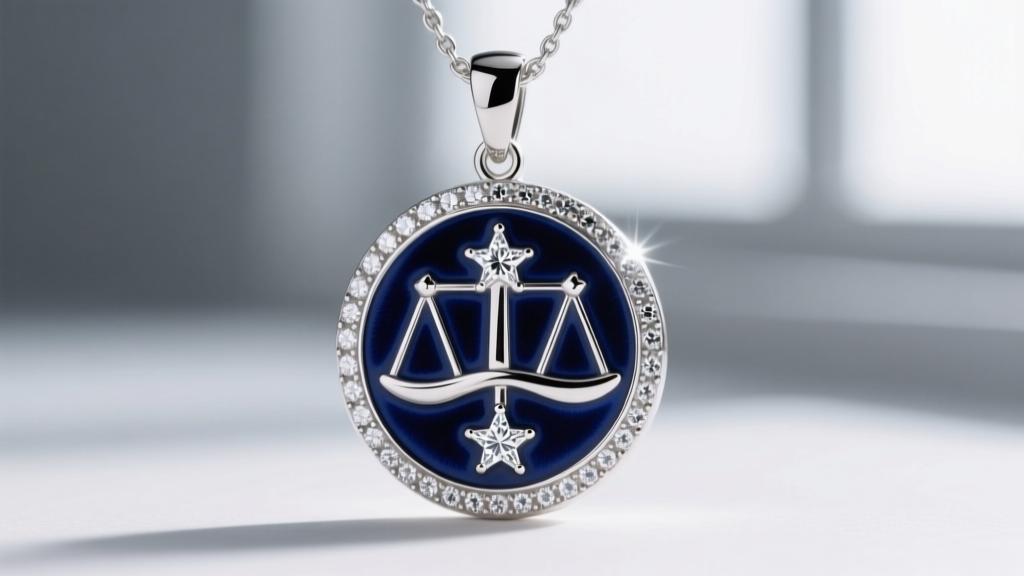
Vitreous Enamel vs. Epoxy Resin
Many modern constellation pendants use a dark background to make the stars 'pop.' High-end jewelers use vitreous enamel, which is essentially powdered glass fired at over 1,400°F. It is highly resistant to UV fading and chemical degradation. Conversely, mass-market brands use epoxy resin. Resin is a soft plastic that will inevitably yellow when exposed to sunlight and skin oils, and it will scratch if cleaned with abrasive polishing cloths.
Gemstone Inlays: Mohs Hardness Matters
When stars are represented by gemstones, hardness is the primary metric for survival. As detailed by the Gemological Institute of America (GIA), the Mohs scale of mineral hardness dictates how well a stone resists scratching.
- Cubic Zirconia (CZ): Ranks at 8 to 8.5. While initially brilliant, CZ is slightly porous and will absorb skin oils over time, leading to a cloudy, 'dead' appearance within 1 to 2 years of daily wear.
- Moissanite: Ranks at 9.25. An exceptional mid-tier choice that offers higher brilliance (fire) than diamonds and will never cloud or scratch from daily friction.
- Diamond: Ranks at 10. The ultimate choice for heirloom-quality constellation pieces. Because diamonds are oleophilic (oil-attracting), they require regular degreasing to maintain their sparkle, but they will never physically degrade.
Chain Gauge and Clasp Mechanics for Delicate Pendants
A common failure point in zodiac jewelry is the chain. The Libra scales motif is horizontally oriented, meaning it acts as a lever. When the pendant swings, it creates a 'pendulum effect' that places disproportionate friction on the jump ring and the adjacent chain links.
Selecting the Correct Gauge
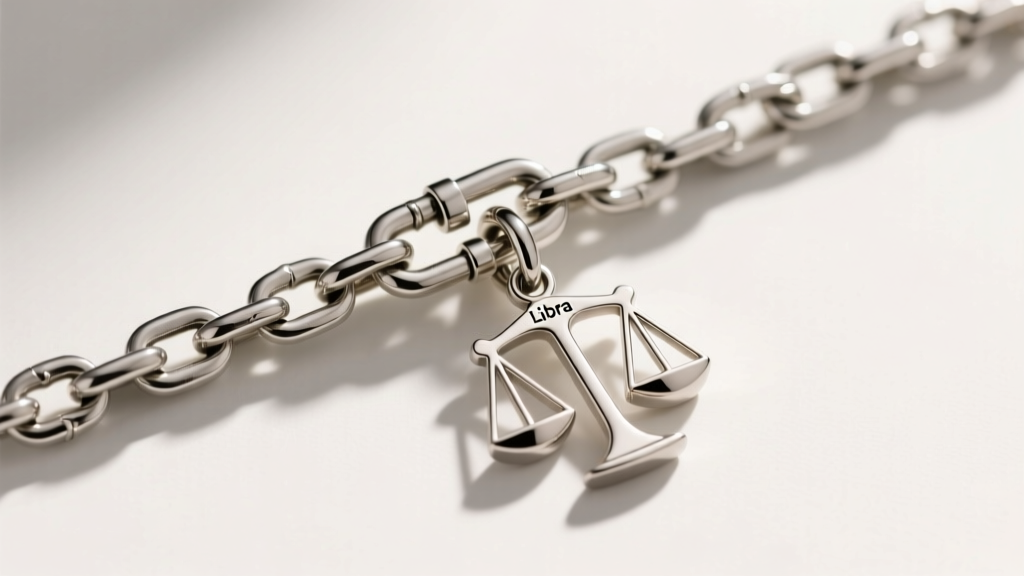
Do not pair a wide, solid-metal libra pendant with a dainty 0.6mm thread chain. The pendant will act as a saw, slowly cutting through the soft metal of the chain links. For pendants weighing between 3 and 8 grams, you need a chain gauge between 1.0mm and 1.4mm. A box chain or a rope chain in this gauge provides excellent tensile strength and resists kinking, which is vital when taking the necklace on and off.
Clasp and Jump Ring Integrity
Inspect the jump ring (the small loop connecting the pendant to the chain). On high-quality necklaces, this jump ring will be soldered closed. If it is merely split and squeezed shut, the horizontal leverage of the Libra scales will eventually pry it open, resulting in a lost pendant. Furthermore, always opt for a lobster clasp over a spring-ring clasp; lobster clasps feature a more robust internal spring mechanism and a larger surface area that prevents accidental unhooking.
Hypoallergenic Properties & Skin Reactivity
The neckline and décolletage are highly sensitive areas prone to contact dermatitis. If you have reactive skin, the metallurgical composition of your libra constellation necklace is paramount.
The White Gold Nickel Trap: Many buyers assume 14k or 18k white gold is inherently hypoallergenic. In reality, white gold is created by alloying yellow gold with white metals, frequently including nickel. To make it look bright white, it is plated with rhodium. Once the rhodium plating wears off (usually within 6 to 18 months), the nickel is exposed directly to the skin, triggering severe allergic reactions.
If you prefer a silver-toned metal but have nickel sensitivities, bypass white gold entirely. Instead, opt for Platinum (which is naturally white and hypoallergenic) or high-grade Titanium. Alternatively, a palladium-alloyed white gold (which uses palladium instead of nickel to achieve the white color) is a safe, albeit more expensive, precious metal alternative.
Care and Maintenance Framework by Material
Proper maintenance extends the life of your necklace, but the cleaning method must match the materials. Using the wrong technique can permanently ruin specific inlays.
- For Solid Gold and Diamond Inlays: Ultrasonic cleaners are highly effective. The high-frequency sound waves create microscopic cavitation bubbles that blast away trapped oils from behind the diamond settings without scratching the metal.
- For Sterling Silver and CZ: Avoid ultrasonic cleaners and harsh chemical dips. Use a few drops of mild, phosphate-free dish soap in warm water and gently agitate with a baby toothbrush. Dry immediately with a microfiber cloth to prevent water spots.
- For Enamel and Resin Inlays: Never use ultrasonic cleaners, steamers, or polishing pastes. The vibrations can shatter vitreous enamel, and polishing pastes will permanently dull the surface of epoxy resin. Clean only with a damp, lint-free cloth.
Ultimately, investing in a libra constellation necklace is about capturing a moment of celestial balance. By prioritizing 14k gold or properly plated vermeil, ensuring a chain gauge of at least 1.0mm, and selecting hard-wearing star inlays like moissanite or vitreous enamel, you ensure that your scales remain perfectly balanced and brilliantly intact for years to come.


