Best Necklace Gem Choices: A Durability and Hardness Guide
Discover the best necklace gem options for daily wear. Compare Mohs hardness, toughness, and ideal settings for diamonds, sapphires, and opals.

The Science of Gemstone Durability in Necklaces
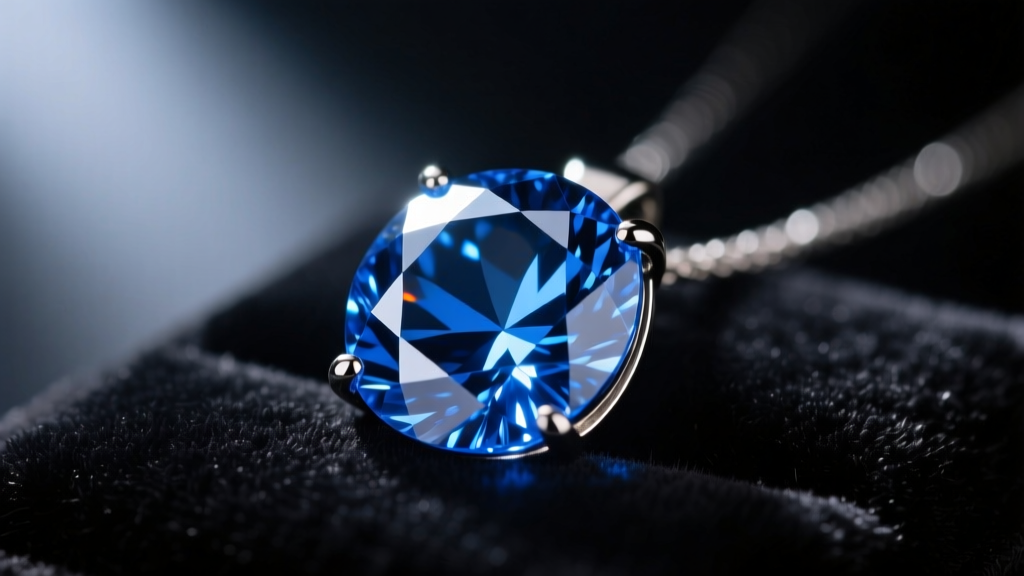
When selecting a necklace gem for everyday wear, color and carat weight often overshadow the most critical factor: material survivability. A pendant rests at the base of the throat, a high-traffic zone prone to accidental impacts against desks, doorways, and steering wheels. To make an informed investment, you must look beyond the jewelry case lighting and understand the crystallographic properties that dictate how a stone will age over decades.
Gemologists evaluate durability through three distinct metrics: hardness (resistance to scratching), toughness (resistance to chipping and breaking), and stability (resistance to heat, light, and chemicals). The Mohs scale of mineral hardness is the most cited metric, but it is frequently misunderstood. The scale is logarithmic, not linear. A diamond (Mohs 10) is not just slightly harder than a sapphire (Mohs 9); it is roughly four times harder in absolute terms. However, hardness alone does not prevent a stone from shattering if dropped on a tile floor. For that, we must examine toughness and internal cleavage planes, as detailed by the Gemological Institute of America (GIA).
Top Tier: The Indestructible Necklace Gem Options
For heirloom-quality pendants intended for 24/7 wear, you need materials that score high in both hardness and toughness. These gems can withstand the micro-abrasions of daily life and the occasional blunt force impact without catastrophic failure.
Corundum (Ruby and Sapphire)
Corundum is widely considered the ultimate necklace gem for daily wear. Scoring a 9 on the Mohs scale, it is exceptionally resistant to scratching. More importantly, corundum lacks true cleavage planes, meaning it does not have structural weak points where the crystal naturally wants to split. This grants it excellent toughness. Whether you choose a heat-treated Ceylon sapphire or an unheated Burmese ruby, a corundum pendant set in a standard prong setting will easily survive generations of continuous wear.
Diamond
While diamond sits at the absolute top of the Mohs scale (10), its toughness is only rated as 'good' to 'fair' depending on the cut. Diamonds possess perfect octahedral cleavage in four directions. A sharp, precise blow to the girdle (the stone's widest edge) or a pointed culet can cause the diamond to cleave or chip. To mitigate this, diamonds in pendants should be set with V-prongs at the corners if they are princess or pear-shaped, protecting the most vulnerable geometric points.
Spinel
Often overshadowed by ruby and sapphire, natural spinel (Mohs 8) is a phenomenal, underutilized necklace gem. It possesses no cleavage and excellent toughness, making it highly resistant to chipping. Because it is singly refractive (like diamond and garnet), it exhibits incredible brilliance, and its lower price point per carat allows for larger, more dramatic pendant centerpieces without compromising durability.
Mid Tier: Beautiful but Demanding Necklace Gems
Gems in this category offer unparalleled beauty and unique optical phenomena but require engineered settings and mindful wearing habits to prevent damage.
Emerald (Beryl Family)
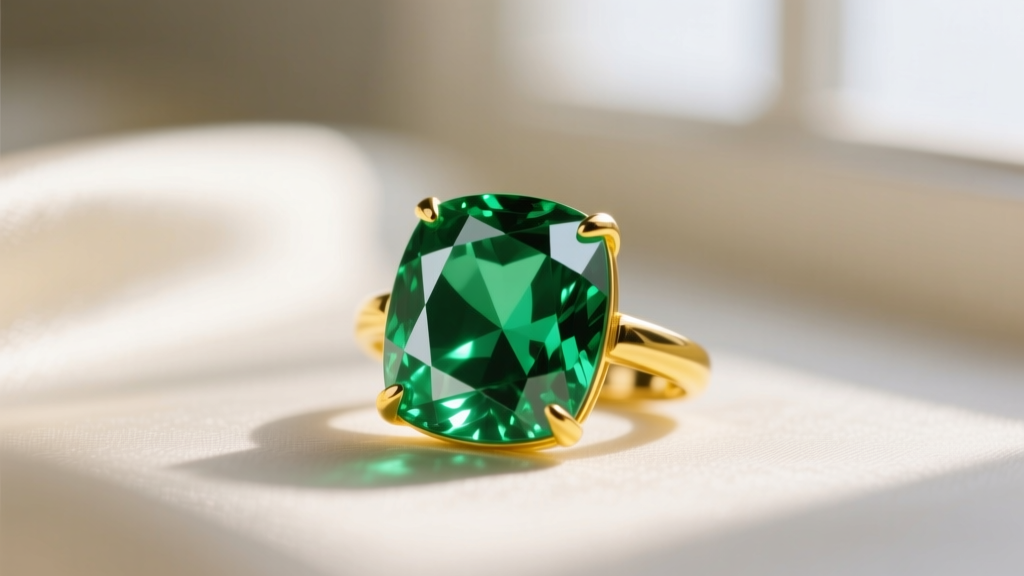
Emeralds score between 7.5 and 8 on the Mohs scale, which is generally safe from household dust (which contains quartz at Mohs 7). However, emeralds are notorious for their internal inclusions, often referred to as the 'jardin' (garden). These microscopic fissures severely compromise the stone's toughness. A prong-set emerald pendant is a liability; a single bump against a marble countertop can cause the stone to fracture along an inclusion line. Furthermore, most commercial emeralds are cedar-oil treated; exposure to ultrasonic cleaners or warm soapy water will leach the oil, leaving the stone looking cloudy and fractured.
Opal
Opals are amorphous silica structures containing up to 20% water. With a Mohs hardness of 5.5 to 6.5, they are easily scratched by metal chains and common abrasives. Their primary vulnerability, however, is 'crazing'—a network of fine cracks that develops if the stone loses its internal moisture due to extreme heat, low humidity, or sudden temperature changes. Australian solid opals are more stable than Ethiopian Welo opals, which are highly porous and can absorb skin oils and cosmetics, permanently altering their body color and play-of-color.
Pearl (Organic)
Scoring a mere 2.5 to 4.5 on the Mohs scale, pearls are incredibly soft. As organic gems composed of calcium carbonate, they are highly sensitive to acids, including the natural lactic acid in human sweat, as well as perfumes and hairsprays. A pearl necklace gem must be worn as the 'last thing on, first thing off' and wiped with a damp microfiber cloth after every use to prevent the nacre from etching and losing its luster.
The Hardness vs. Toughness Matrix
Understanding the difference between scratch resistance and break resistance is vital for selecting the right mounting hardware and chain weight. The following matrix outlines the physical properties of popular pendant stones.
| Gemstone | Mohs Hardness | Cleavage / Toughness | Stability Risks | Ideal Pendant Setting |
|---|---|---|---|---|
| Diamond | 10 | Perfect Cleavage / Fair-Good | Thermal shock (fracture-filled) | V-Prong, Bezel |
| Sapphire / Ruby | 9 | No Cleavage / Excellent | Extreme heat (fracture-filled) | Prong, Halo |
| Spinel | 8 | No Cleavage / Excellent | None significant | Prong, Flush |
| Emerald | 7.5 - 8 | Distinct Cleavage / Poor | Heat, chemicals, ultrasonics | Bezel, Halo |
| Opal | 5.5 - 6.5 | No Cleavage / Fair | Dehydration, thermal shock | High-Bezel, Cabochon |
| Pearl | 2.5 - 4.5 | N/A (Organic) / Poor | Acids, cosmetics, perspiration | Drilled, Peg-Set |
Engineering the Setting: Protecting Vulnerable Gems
If your heart is set on a mid-tier necklace gem like an emerald or an opal, the metalwork must compensate for the stone's physical weaknesses. According to master jewelers and gemological resources like the GIA Gem Encyclopedia, the setting style is just as important as the metal alloy used.
- The Bezel Setting: A continuous rim of metal (usually 0.5mm to 1.0mm thick) wraps entirely around the girdle of the stone. This is the gold standard for protecting emeralds and opals. It prevents lateral impacts from reaching the vulnerable edges and secures the stone without applying the localized pressure points that prongs do.
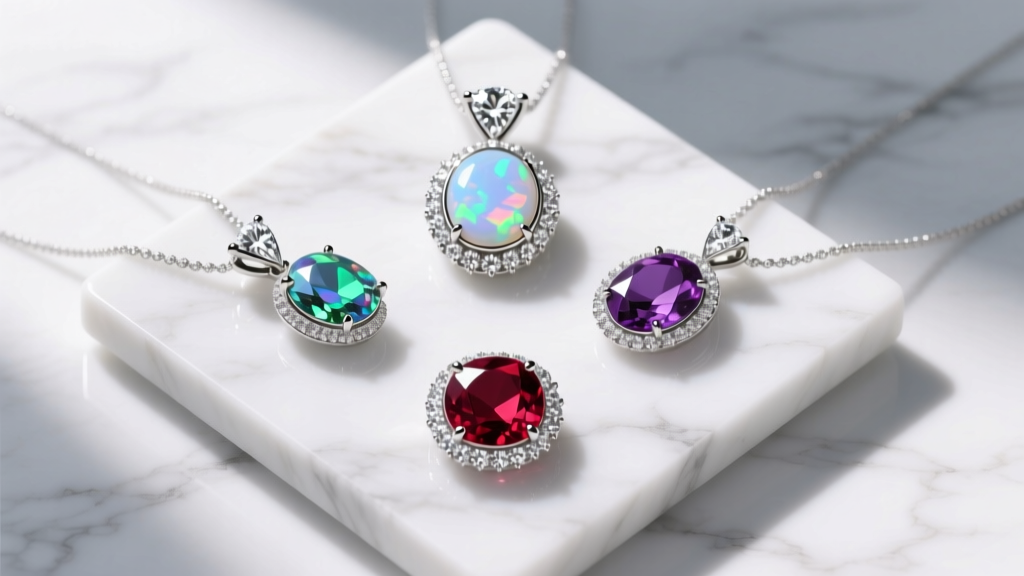
- The Halo Setting: A ring of smaller, harder diamonds (Mohs 10) surrounds the center stone. The halo acts as a sacrificial bumper, absorbing shocks and preventing direct impacts to the softer center gem's girdle.
- Flush / Gypsy Setting: The gem is set directly into a drilled hole in the metal shank or pendant base, with the girdle completely buried. This offers maximum protection for the stone's edges but requires high clarity and precise cutting, as the stone cannot be easily removed for cleaning or repair.
Real-World Pricing & Sourcing in 2026
The market for pendant center stones has shifted dramatically. Lab-grown diamonds and corundum have democratized access to top-tier durability. In 2026, a high-quality 1.5-carat lab-grown diamond pendant center costs between $600 and $1,200, offering identical Mohs 10 hardness to its natural counterpart at a fraction of the environmental and financial cost. Lab-grown sapphires (often created via the Verneuil flame-fusion or Czochralski pull methods) are even more accessible, frequently pricing under $300 per carat, making them the ultimate budget-friendly, indestructible necklace gem.
Conversely, natural, untreated gems command massive premiums due to their rarity. A natural, unheated sapphire over 2 carats with top-tier color saturation can easily exceed $4,000 per carat. For mid-tier stones, the price is heavily dictated by treatments. An oiled commercial emerald might cost $400 per carat, while a minor-oil or no-oil Colombian emerald of the same visual size will command upwards of $3,500 per carat. When buying treated stones for pendants, always request a gemological report detailing the exact nature and extent of the enhancement, as this dictates how you must clean and maintain the jewelry.
Final Verdict: Matching the Gem to Your Lifestyle
Choosing the right necklace gem is an exercise in balancing aesthetic desire with practical reality. If you work in a physical environment, frequently type at a desk, or simply prefer to never take your jewelry off, corundum (sapphire/ruby) and spinel are your safest, most brilliant options. If you are drawn to the moody greens of emerald or the fiery flashes of opal, invest heavily in a custom bezel setting, commit to removing the pendant before showering or exercising, and embrace the careful maintenance these spectacular, yet delicate, materials require.


