The Rhinestone Tie Necklace: 2026 Trend Analysis & Styling Guide
Discover the 2026 rhinestone tie necklace trend. Explore material upgrades, coquette styling techniques, and how to wear this statement piece.


The Evolution of the Rhinestone Tie Necklace in 2026
The trajectory of eveningwear accessories has undergone a radical transformation over the last three years. While the early 2020s saw the explosive revival of the Y2K and coquette aesthetics—characterized by playful, often inexpensive bow motifs and ribbon chokers—the 2026 landscape demands structural sophistication. Enter the rhinestone tie necklace. No longer relegated to music festival novelties or fast-fashion costume bins, the jeweled necktie has been reclaimed by luxury houses and independent bridge jewelers alike. It represents a fascinating synthesis of menswear tailoring and hyper-feminine brilliance, serving as a focal point that elongates the decolletage while providing the kinetic movement of a traditional pendant.
According to trend forecasters and market analysts at the Business of Fashion, consumers are actively shifting away from micro-trends that degrade quickly, favoring 'statement staples' that offer versatile styling across both boardroom-to-bar transitions and formal galas. The rhinestone tie necklace perfectly occupies this space, provided it is constructed with precision and high-grade materials.
Material Upgrades: From Acrylic to Precision-Cut Stones
The most significant shift in the 2026 market is the material composition of the 'rhinestones' themselves. Historically, the term rhinestone encompassed everything from stamped acrylic to low-grade glass. Today, authoritative jewelers are utilizing advanced simulants and lab-grown alternatives to achieve optical brilliance without the prohibitive cost of natural diamonds. The Gemological Institute of America (GIA) notes that high-quality cubic zirconia (CZ) remains the premier simulant due to its exceptional hardness and refractive properties, provided it is cut to ideal proportions.
Furthermore, the 'ribbon' component of the tie necklace has evolved. We are seeing a departure from synthetic organza, which frays and loses its luster, toward heavy silk charmeuse, cotton velvet, and even articulated metal mesh that mimics the drape of fabric while offering lifelong durability.
Stone Quality and Material Comparison Chart
| Material Grade | Refractive Index | Average Price Range | Durability & Wear Profile |
|---|---|---|---|
| Acrylic / Resin | 1.49 | $15 - $35 | Prone to scratching; dulls within 6 months of regular wear. |
| Standard Glass | 1.52 - 1.70 | $30 - $60 | Better clarity than acrylic, but lacks 'fire' and chips easily. |
| AAA-Grade CZ | 2.15 - 2.18 | $90 - $180 | Excellent brilliance; 8.5 on Mohs scale resists daily scratching. |
| Lab-Grown Melee | 2.42 | $450 - $1,200+ | Maximum optical fire; lifelong durability and heirloom potential. |
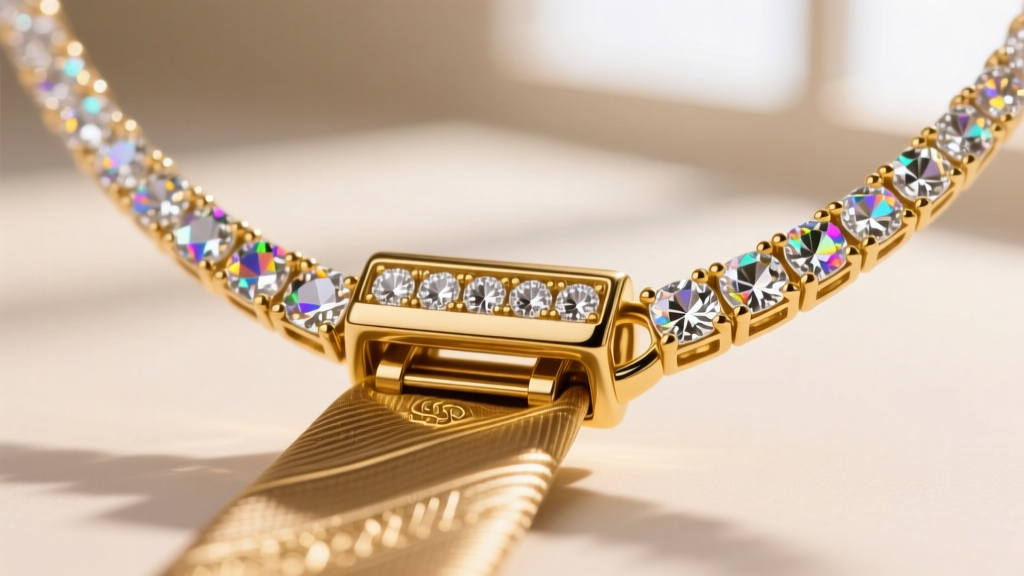
Anatomy of a Luxury Tie Necklace
To evaluate the quality of a rhinestone tie necklace, one must look beyond the sparkle and examine the architectural engineering of the piece. A poorly constructed tie necklace will twist, fail to lay flat against the sternum, or break at the stress points. Here are the critical components to inspect when investing in this trend:
- The Slider Mechanism: Unlike a fixed pendant, a tie necklace requires a slide clasp to adjust the length and secure the 'knot'. High-end sliders feature internal silicone grips or spring-loaded micro-ball bearings that grip the chain or ribbon without crushing it. Cheap sliders rely on simple friction, which fails when the necklace is subjected to movement.
- The Aglet (Weighted Tip): The aglet is the metal cap at the terminal end of the tie. In luxury iterations, this aglet is cast in solid brass or stainless steel and weighs between 12 to 18 grams. This specific weight acts as a plumb bob, ensuring the tie hangs perfectly straight and prevents the ends from flipping up during movement. Fast-fashion versions use hollow alloy tips that weigh less than 3 grams, resulting in a chaotic, unruly drape.
- The Pave Setting: For rhinestone-encrusted ties, examine the setting technique. Prong-set stones allow light to enter from the sides, maximizing brilliance. Glued or 'epoxy-set' stones, while cheaper to produce, create a flat, lifeless appearance and are highly susceptible to falling out when exposed to temperature changes or cosmetic chemicals.
Styling Frameworks: Necklines and Occasions
The versatility of the rhinestone tie necklace lies in its ability to manipulate visual proportions. Because it creates a strong vertical line, it is an exceptional tool for elongating the torso and drawing the eye downward. However, the styling context drastically alters its impact.
The Plunging V-Neck and Silk Slip Dress
For eveningwear, pairing a velvet rhinestone tie necklace with a deep V-neck silk slip dress creates a masterclass in textural contrast. The matte, light-absorbing quality of the velvet ribbon grounds the intense scintillation of the AAA-grade CZ or lab-grown diamonds. To maintain visual harmony, ensure the slider 'knot' sits exactly at the clavicle notch, allowing the tie to follow the natural plunge of the neckline without competing with the dress's hemline.
The Oversized Blazer Contrast
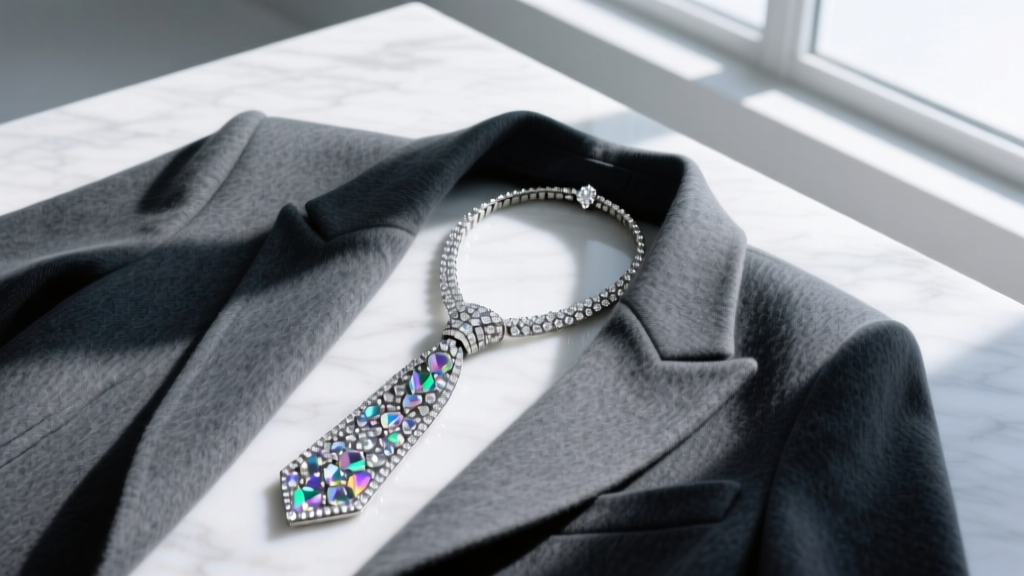
The most dominant 2026 styling technique involves subverting traditional menswear. Wearing a heavily rhinestoned metal-mesh or silk tie necklace directly against the skin, beneath an oversized, structured charcoal or houndstooth blazer, creates a striking juxtaposition of severe tailoring and fluid glamour. This look requires a tie necklace with a heavier, wider 'blade' (the bottom half of the tie) to ensure it remains visible against the lapels of the jacket.
Care and Maintenance for Ribbon and Stone
The intersection of delicate textiles and precision-set stones creates a unique maintenance challenge. The most common failure mode for rhinestone tie necklaces is the degradation of the setting adhesive or the staining of the ribbon base. To preserve your investment, adhere to the following care protocols:
- Chemical Avoidance: Alcohol-based perfumes, hairsprays, and body oils are the enemies of both silk ribbons and epoxy-set pave. Always apply cosmetics and allow them to dry completely before donning the necklace. The alcohol in perfume can dissolve the adhesives used in lower-tier rhinestone settings, causing stones to dislodge.
- Targeted Cleaning: Never submerge a silk or velvet tie necklace in water or ultrasonic cleaners. The high-frequency vibrations of an ultrasonic bath will shake stones loose from their settings. Instead, use a soft-bristled jewelry brush dipped in a mild, phosphate-free soap solution to gently scrub the stones, taking care not to saturate the underlying ribbon.
- Storage Mechanics: Do not hang the necklace by the slider loop, as the sustained gravity will stretch the ribbon or chain over time. Store the piece flat in a lined jewelry box, ensuring the aglet is positioned straight to prevent permanent creasing of the velvet or silk.
Final Verdict: Is the Rhinestone Tie Necklace a Staple?
As we navigate the 2026 fashion landscape, the rhinestone tie necklace has successfully graduated from a fleeting micro-trend to a legitimate category of statement eveningwear. By prioritizing weighted aglets, precision-cut simulants or lab-grown stones, and high-integrity slider mechanisms, buyers can secure a piece that offers both kinetic elegance and enduring style. Whether deployed to soften a sharp menswear silhouette or to add architectural brilliance to a minimalist slip dress, the jeweled tie remains a masterful tool in the modern styling arsenal.


