How to Style a North Star Necklace: Step-by-Step Guide
Learn how to layer and style a north star necklace with our step-by-step guide. Master chain lengths, metal grades, and neckline pairings.

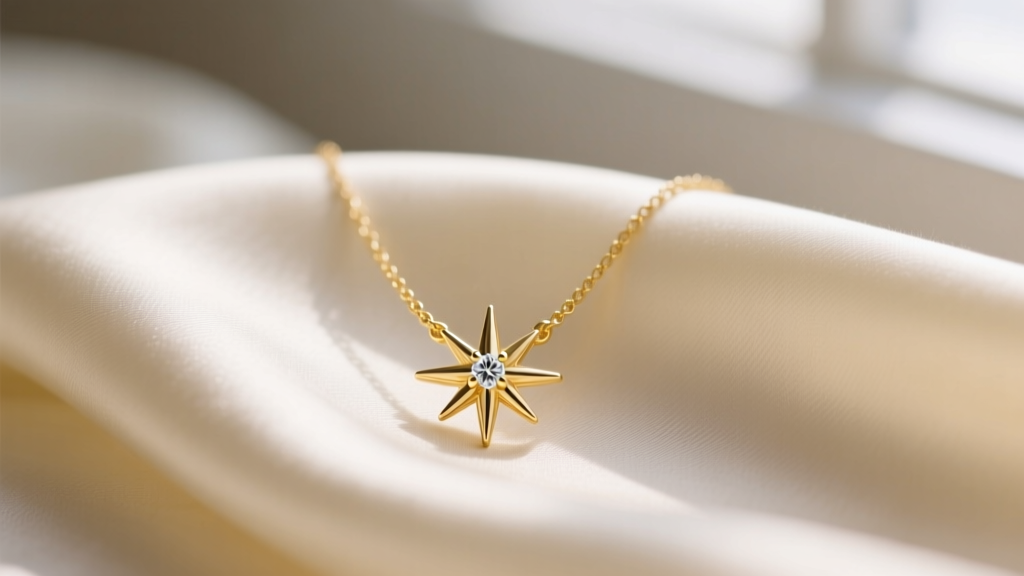
The Anatomy of a North Star Pendant
The north star, or Polaris, has served as a celestial symbol of guidance, constancy, and navigation for centuries. In jewelry design, a north star necklace typically features an eight-pointed compass rose or a simplified four-pointed starburst. When selecting your pendant, pay close attention to the center stone setting. A bezel setting, where a thin metal rim encircles the gemstone, is highly recommended for everyday wear. Unlike traditional prong settings that can snag on knitwear or silk, a bezel setting protects the girdle of the center stone—often a melee diamond ranging from 0.01 to 0.03 carats—and provides a sleek, modern silhouette. According to the Gemological Institute of America (GIA), melee diamonds are frequently used in these celestial designs to add subtle brilliance without overwhelming the delicate geometry of the star points.
Step 1: Selecting the Ideal Chain Gauge and Length
The foundation of any successful pendant necklace is the chain. For a north star pendant, which usually measures between 12mm and 18mm in diameter, the chain gauge must be proportionate. A chain that is too thick will overshadow the intricate star points, while one that is too thin risks breaking under the pendant's weight.
- 1.0mm to 1.2mm Cable Chain: The optimal choice for a minimalist, standalone look. The uniform oval links allow the pendant to slide freely and sit flat against the collarbone.
- 1.5mm Rolo Chain: Features round, interlocking links that offer slightly more visual weight and superior tensile strength, ideal for heavier solid gold pendants.
- 2.0mm Box Chain: Best reserved for layering or supporting larger, gemstone-encrusted compass rose designs. Its geometric links mirror the angularity of the north star.
For length, a 16-inch chain positions the pendant perfectly at the base of the throat (choker style), while an 18-inch chain allows it to rest on the upper chest (princess length). Always opt for a chain equipped with a lobster claw clasp rather than a spring ring; the lobster mechanism offers a more secure closure and is significantly easier to manipulate when layering multiple pieces.
Step 2: Mastering the 2-Inch Layering Formula
Layering a north star necklace transforms it from a simple talisman into a curated stylistic statement. The golden rule of necklace layering is the 2-inch drop increment. This spacing prevents the chains from tangling and ensures each pendant occupies its own visual zone.
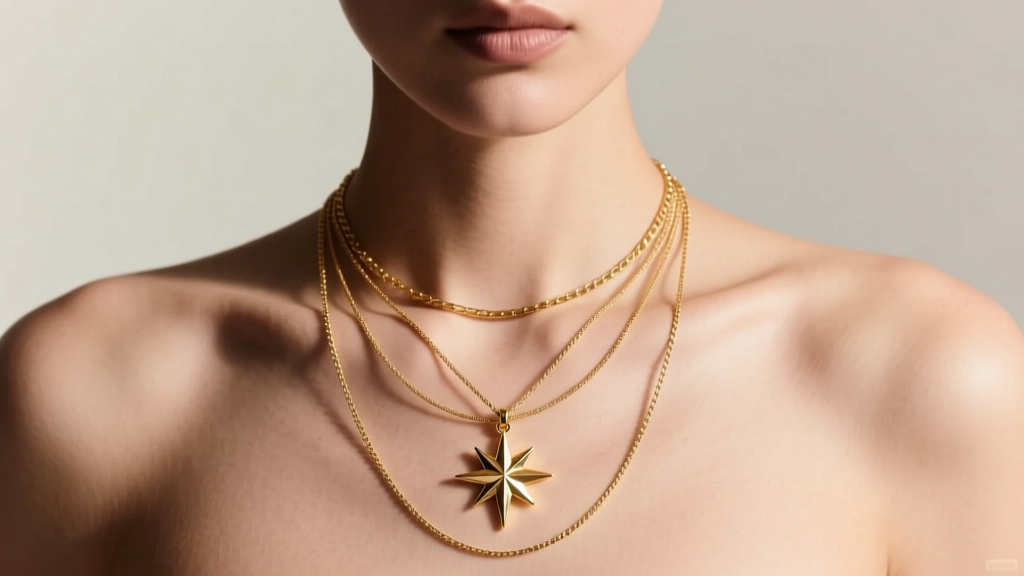
The Three-Piece Celestial Stack
- The Anchor (14 to 15 inches): Start with a simple 1.0mm gold choker or a delicate paperclip chain without a pendant. This frames the face and sets the baseline.
- The Focal Point (17 to 18 inches): Place your north star necklace here. The 2-to-3-inch gap from the choker ensures the star points are fully visible and unobstructed.
- The Elongator (20 to 22 inches): Finish with a longer, heavier chain, such as a 2.5mm Figaro or a lariat-style chain. This draws the eye downward, creating a flattering V-shape that elongates the neck and torso.
When mixing metals, maintain a dominant metal ratio of 70/30. If your north star pendant is 14k yellow gold, use yellow gold for the primary chains and introduce a single white gold or platinum chain to create intentional contrast rather than a mismatched aesthetic.
Step 3: Matching Necklines to Your Celestial Piece
The geometry of your clothing must complement, not compete with, the geometry of your jewelry. The sharp angles of a north star pendant require specific neckline pairings to achieve maximum visual impact.
- V-Neck and Plunging Necklines: The natural V-shape of the neckline perfectly mirrors the downward point of the north star. Use an 18-inch or 20-inch chain so the pendant rests exactly one inch above the apex of the V-neck.
- Crew Necks and T-Shirts: A high, round neckline requires a shorter chain. A 16-inch north star necklace sitting just below the collarbone breaks up the expanse of fabric and adds a focal point without looking buried.
- Off-the-Shoulder and Scoop Necks: These expose a wide canvas of skin. Opt for a multi-layered stack (as detailed in Step 2) to fill the negative space elegantly.
- Collared Button-Downs: Wear the pendant inside the collar, resting against the skin, with the top two buttons undone. This creates a sophisticated, effortless look suitable for professional environments.
Metal Durability and Maintenance Matrix
Because a north star necklace is often worn daily as a personal talisman, selecting the right metal grade is critical for longevity. Below is a comparison of the most common materials used in fine celestial jewelry.
| Metal Type | Purity / Grade | Durability & Tarnish Resistance | Best Use Case |
|---|---|---|---|
| 14k Solid Gold | 58.5% Pure Gold | Highly durable, excellent scratch resistance, will not tarnish. | Everyday wear, showering, swimming. |
| 18k Solid Gold | 75% Pure Gold | Rich color but softer; prone to micro-scratches over time. | Special occasion wear, heirloom pieces. |
| 925 Sterling Silver | 92.5% Silver, 7.5% Copper | Moderate durability; will oxidize and tarnish when exposed to humidity. | Budget-friendly daily wear with regular polishing. |
| Gold Vermeil | 2.5µm Gold over 925 Silver | Low long-term durability; gold layer will eventually wear off. | Occasional wear, trend-driven styling. |
| Platinum | 95% Pure Platinum | Extremely dense and durable; develops a patina rather than wearing away. | Luxury heirloom pieces, diamond-heavy settings. |
For a piece meant to symbolize eternal guidance, 14k solid gold or platinum are the most logical investments. As noted by Jewelers of America, understanding your metal's specific alloy composition is the first step in establishing a proper care routine that prevents premature degradation.
Expert Cleaning and Storage Protocols
Maintaining the brilliance of your north star necklace requires a disciplined approach to cleaning and storage, particularly if the piece features diamond accents or delicate milgrain detailing along the star's edges.

The Weekly Cleaning Routine
Avoid harsh commercial dips or ultrasonic cleaners, especially if your pendant features fracture-filled diamonds or softer gemstones like opals or turquoise in the center. Instead, create a lukewarm bath using distilled water and three drops of mild, phosphate-free dish soap. Submerge the necklace for exactly five minutes. Using a baby-soft toothbrush, gently sweep the bristles across the back of the pendant where skin oils and lotion accumulate. Rinse thoroughly under distilled water and pat dry with a lint-free microfiber cloth. Never use paper towels, as the wood fibers can cause microscopic abrasions on high-polish gold.
Strategic Storage
When not being worn, your north star necklace must be stored completely flat. Hanging delicate 1.0mm chains can cause stress on the individual links over time, leading to stretching or micro-fractures. Lay the necklace in a lined jewelry box, ensuring the clasp is left unfastened to prevent the chain from looping and knotting. Include a 3M anti-tarnish strip in the storage compartment if your piece is crafted from sterling silver or lower-karat gold alloys to absorb ambient sulfur compounds that cause oxidation. By following these precise, step-by-step protocols, your celestial guide will maintain its structural integrity and brilliance for decades to come.


