Troubleshooting Jewelry Over a Traditional Necklace Tattoo
Troubleshoot visual clutter and skin friction when wearing chains and pendants over a traditional necklace tattoo. Expert styling and care tips.

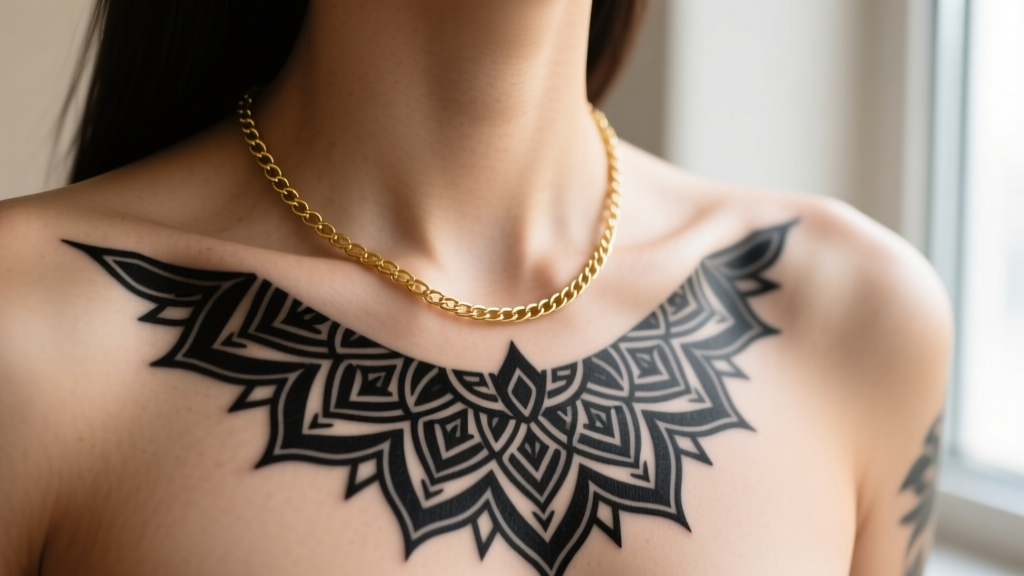
As we navigate the styling landscape of 2026, the juxtaposition of permanent body art with fine jewelry has evolved from a niche subculture statement to a mainstream, curated aesthetic. The traditional necklace tattoo—ranging from bold, American Traditional Sailor Jerry-style collarbone pieces to intricate, fine-line mandala chokers—offers a permanent accessory that never tarnishes. However, for jewelry enthusiasts, this permanence introduces a unique set of styling and dermatological challenges. How do you layer physical gold, silver, or platinum chains over a permanent ink collar without creating visual clutter, accelerating ink degradation, or triggering contact dermatitis on compromised skin? This comprehensive troubleshooting guide breaks down the exact physics, metallurgy, and styling frameworks required to harmonize your physical necklaces with your traditional necklace tattoo.
The Visual Clash: Troubleshooting Competing Focal Points
The most immediate problem when wearing physical jewelry over a traditional necklace tattoo is visual competition. A traditional tattoo relies on high-contrast negative space and bold line work to create the illusion of a necklace. When you introduce a physical chain, you risk muddying the design, making both the ink and the metal look like an afterthought. The solution lies in precise spatial awareness and gauge selection.
Fine-Line Choker Tattoos vs. Bold Collarbone Pieces
If your traditional necklace tattoo is a fine-line, single-needle choker (typically sitting at the 12-inch to 14-inch neck circumference), wearing a physical choker directly over it is a styling error. The metal will obscure the delicate ink and create a chaotic, overlapping effect. Instead, troubleshoot this by utilizing a 'framing' technique. Opt for an 18-inch princess-length chain with a lightweight, 3mm to 5mm pendant. This allows the physical jewelry to rest exactly two inches below the tattoo, creating a deliberate, layered gradient from skin to ink to metal.
Conversely, if your traditional necklace tattoo is a bold, heavy-blackwork mandala or floral collar that spans the 16-inch to 18-inch collarbone area, delicate chains will be visually swallowed by the dark ink. To solve this, you must match the visual weight. A 3.5mm to 5mm rope chain or a substantial Cuban link provides the necessary metallic reflectivity to stand out against dense black ink. Matte finishes, such as brushed titanium or oxidized silver, will disappear into the blackwork; always choose high-polish metals to maximize light reflection against the matte finish of settled tattoo ink.
The Physics of Friction and Ink Degradation
Beyond aesthetics, there is a biological and physical conflict between heavy jewelry and tattooed skin. Tattoo ink is deposited into the dermis, approximately 1.5mm to 2mm below the epidermis. Once healed, the ink particles are trapped within macrophages (immune cells). While UV exposure is the primary culprit for tattoo fading, mechanical friction is a close second.
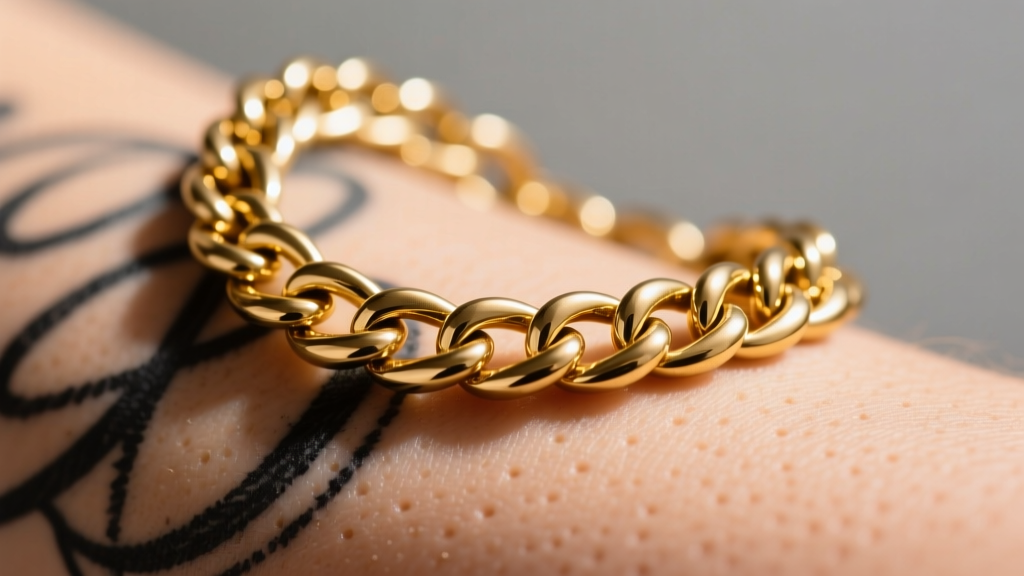
When a heavy pendant (anything exceeding 12 grams) swings against a traditional collarbone tattoo during daily movement, it creates repetitive micro-abrasions. Over years of wear, this localized friction increases cellular turnover in the dermis. As older macrophages die and are replaced, the ink particles can migrate slightly, leading to a blurred or 'blown out' appearance in the areas where the pendant rests most frequently. Furthermore, if a traditional necklace tattoo is less than six months old, the dermal structure is still remodeling. Wearing heavy, swinging chains during this critical settling phase can cause permanent ink migration and scarring.
The Weight Limit Rule
To protect the structural integrity of your traditional necklace tattoo, adhere to strict weight limits based on the chain's drop point:
- Pendants resting directly on the ink: Keep the total weight under 6 grams. Opt for hollow-cast gold, enamel, or lightweight titanium.
- Chains resting on the ink (no pendant): A 20-inch 1.2mm cable chain is generally safe, as the weight is distributed evenly across the neck and shoulders.
- Heavy statement pieces (15g+): These must be worn on shorter 14-inch lengths that sit above the collarbone tattoo, or on 24-inch opera lengths that bypass the tattoo entirely, resting on the sternum.
Metal Reactivity on Tattooed Skin
Tattooed skin is fundamentally different from untreated skin. The process of tattooing introduces thousands of microscopic punctures and deposits foreign pigment bodies into the dermis. This results in a localized, permanent alteration of the skin's immune environment. According to the American Academy of Dermatology, skin that has undergone trauma or possesses a high concentration of active immune cells can be more susceptible to allergic contact dermatitis.
The primary enemy here is nickel, a base metal frequently used in cheap jewelry alloys and even some lower-grade surgical steels. When sweat acts as an electrolyte, nickel ions leach from the metal, penetrate the stratum corneum, and trigger an immune response. On a traditional necklace tattoo, this localized swelling and inflammation can temporarily distort the appearance of the ink, causing the lines to look puffy and blurred. Chronic dermatitis can also lead to hyperpigmentation or hypopigmentation, permanently altering the skin tone surrounding your tattoo.
To safeguard your traditional necklace tattoo, strictly avoid brass, nickel-plated alloys, and unverified 'surgical steel.' Invest exclusively in ASTM F136 implant-grade titanium, 18k solid gold, or platinum. These biocompatible metals possess inert surfaces that will not react with the macrophage-dense environment of your tattooed skin.
For a deeper understanding of how metal allergies interact with skin trauma, the National Center for Biotechnology Information (NCBI) provides extensive clinical reviews on contact dermatitis pathways, confirming that compromised skin barriers require strictly hypoallergenic materials to prevent chronic inflammation.
The Proportional Framework: Chain Lengths vs. Tattoo Placement
Troubleshooting the styling of a traditional necklace tattoo requires a mathematical approach to proportions. Use the following framework to determine which physical necklaces will complement, rather than clash with, your specific ink placement.
| Tattoo Style & Placement | Avoid (The Clash Zone) | Optimize (The Harmony Zone) | Recommended Chain Gauge |
|---|---|---|---|
| Fine-line 14' Choker | 14' to 16' chains (obscures ink) | 18' Princess with 4mm drop | 0.9mm to 1.2mm Cable |
| Bold 16' Collarbone Mandala | 16' to 18' wide chains | 12' Micro-chain or 22' Matinee | 0.8mm Box or 4.0mm Rope |
| American Traditional Floral Collar | Layered multi-strand necklaces | 20' Y-Drop Lariat | 1.5mm to 2.0mm Snake Chain |
| Geometric Sternum Drop (18') | 18' Pendants (hides the focal point) | 14' Choker or 30' Rope | 2.5mm Curb or 1.0mm Bead |
Neckline Pairings: Framing the Ink and the Gold
The final troubleshooting step involves the garments you wear. The neckline of your clothing dictates the visible canvas for both your traditional necklace tattoo and your physical jewelry. A misaligned neckline will cut off the visual flow of the tattoo and cause your chains to tangle in the fabric.

The Scoop Neck Solution
A standard scoop neck t-shirt typically cuts off right at the 18-inch mark. If your traditional tattoo is a wide collarbone piece, a scoop neck will slice the design in half, making it look like a printing error. When wearing scoop necks, choose a 14-inch solid gold herringbone chain that sits high on the neck, entirely above the fabric line, allowing the tattoo to remain the undisputed focal point below.
The Deep V-Neck Advantage
Deep V-necks are the ultimate troubleshooting tool for traditional necklace tattoos. The plunging neckline creates a natural geometric frame that draws the eye down the sternum. This is the ideal environment for a 22-inch matinee chain featuring a heavy, 10-gram pendant. The physical jewelry acts as a visual anchor at the base of the 'V', while the traditional tattoo occupies the upper collarbone space, resulting in a perfectly balanced, uncluttered aesthetic.
The Boat Neck Warning
Boat necks (Bateau necklines) run horizontally across the collarbones. This is the most problematic neckline for traditional necklace tattoos. The fabric will inevitably rub against the top edges of the ink, while simultaneously catching on any physical chains you attempt to wear. If you must wear a boat neck, remove all physical necklaces and allow the traditional tattoo to serve as the sole accessory, relying on the high-contrast blackwork to provide the visual interest that a necklace normally would.
Expert Decision Framework: When to Wear, When to Bare
Ultimately, troubleshooting the intersection of fine jewelry and traditional necklace tattoos comes down to intentionality. Ask yourself: What is the protagonist of today's look? If you are wearing a highly detailed, bold American Traditional collar piece that took 15 hours to ink, let it breathe. Pair it with high-karat gold ear cuffs and rings, but leave the neck bare to honor the artistry of the tattoo. If your traditional necklace tattoo is a subtle, faded vintage piece or a minimalist fine-line band, use your physical necklaces to elevate the look, utilizing layered 18k gold chains to add the brilliance and dimension that the ink alone cannot provide. By respecting the spatial boundaries, understanding the biological impact of friction, and selecting biocompatible metals, you can seamlessly integrate your permanent ink with your fine jewelry collection.


