White Gold Heart Necklace: Metallurgy, Gauges & Settings
Explore the technical details of a white gold heart necklace, from 14k vs 18k palladium alloys and rhodium plating to chain gauge durability.

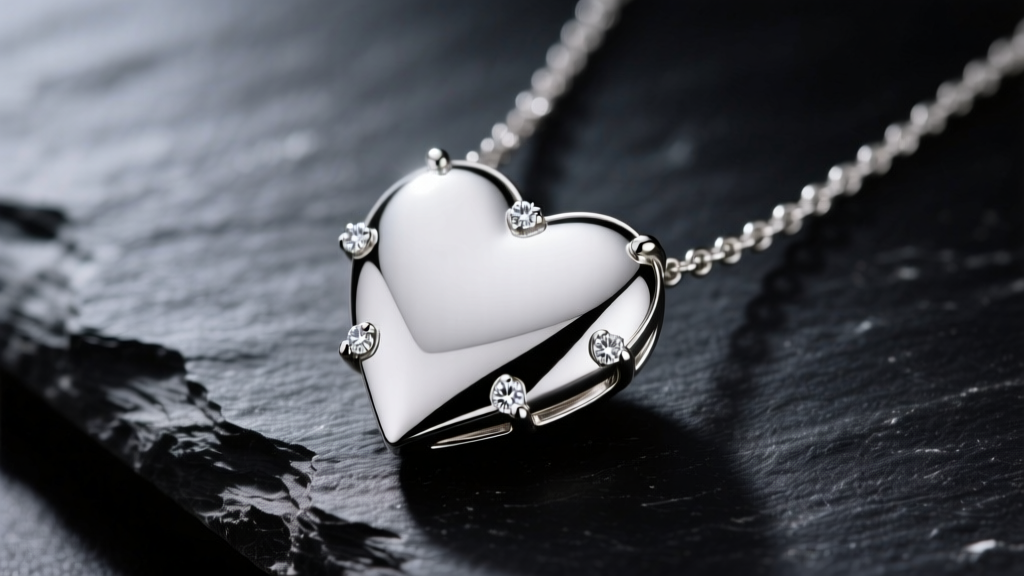
The Hidden Engineering of the White Gold Heart Necklace
The white gold heart necklace remains a cornerstone of fine jewelry, prized for its brilliant luster and romantic silhouette. However, beneath the reflective surface lies a complex intersection of metallurgy, mechanical engineering, and gemological science. For the discerning buyer or the seasoned collector, understanding the technical specifications of white gold alloys, chain tensile strengths, and prong geometries is essential for ensuring longevity and structural integrity. This deep dive explores the precise material science and mechanical design that dictate the performance of these iconic pendants in 2026 and beyond.
Metallurgy: 14k vs. 18k and the Palladium Advantage
White gold does not exist in nature; it is an engineered alloy. Pure 24k gold is inherently yellow and too malleable for daily wear. To create white gold, pure gold is alloyed with white metals. The karatage dictates the ratio: 14k white gold contains 58.3% pure gold, while 18k contains 75%. The remaining percentage consists of bleaching agents.
Nickel vs. Palladium Alloys
Historically, nickel was the primary bleaching agent used to strip the yellow hue from gold. However, nickel is a known sensitizer. According to the Gemological Institute of America (GIA), prolonged skin contact with nickel-alloyed jewelry can trigger contact dermatitis. Consequently, modern high-end jewelers have shifted toward palladium—a platinum group metal—as the primary alloying agent.
- Nickel-Alloyed White Gold: Harder, less expensive, but carries a high risk of allergic reactions. Often banned or restricted in the European Union under the Nickel Directive.
- Palladium-Alloyed White Gold: Denser, heavier, naturally hypoallergenic, and possesses a naturally whiter base color, which drastically reduces the visual impact of rhodium wear.
For a heart pendant that rests directly against the décolletage, an 18k palladium white gold alloy is the superior technical choice, offering both biocompatibility and a premium, substantial hand-feel.
Rhodium Plating: Micron Thickness and Wear Dynamics
Even palladium-alloyed white gold retains a faint warm undertone. To achieve the mirror-like, chromium-white finish consumers expect, the jewelry undergoes rhodium electroplating. Rhodium is a rare, incredibly hard platinum group metal. The industry standard for plating thickness on necklaces ranges from 0.75 to 1.0 microns.
Technical Insight: The Federal Trade Commission (FTC) Jewelry Guides mandate that rhodium plating must not obscure the underlying metal's quality marks. However, consumers should be aware that plating under 0.5 microns will wear through the high-friction zones of a pendant bail within months.
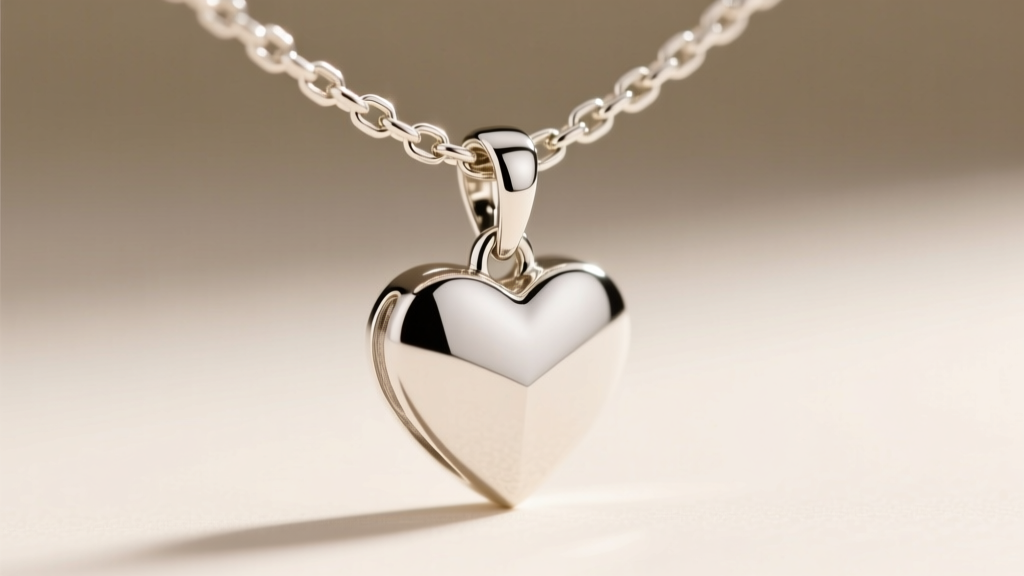
The bail—the loop connecting the heart pendant to the chain—is a critical friction point. As the wearer moves, the chain saws microscopically against the interior of the bail. Over 12 to 18 months, this mechanical abrasion strips the rhodium, revealing the alloy beneath. Choosing a pendant with a hardened, polished interior bail channel can reduce this friction coefficient and extend the life of the plating.
Bail Engineering and Center of Gravity
The geometry of a heart shape presents a unique mechanical challenge: it is top-heavy and asymmetrical compared to a round or oval pendant. If a standard loop bail is soldered to the top cleft of the heart, the pendant will frequently flip upside down against the chest.
To counteract this, expert bench jewelers utilize a hidden bail or a lowered center-of-gravity bail. By routing the chain through a horizontal channel drilled through the upper lobes of the heart, or by soldering a drop-bail that extends slightly down the face of the pendant, the pivot point is aligned with the pendant's true center of mass. This ensures the heart lays perfectly flat and upright, regardless of the wearer's movement.
Chain Gauge Physics and Tensile Strength
A solid 18k white gold heart pendant carries significant mass. Pairing a 6-gram pendant with a delicate 0.8mm cable chain is a structural failure waiting to happen. The tensile strength of the chain must be matched to the dynamic load of the pendant, which increases during sudden movements.
| Chain Style | Gauge (mm) | Max Pendant Weight | Durability & Friction Profile |
|---|---|---|---|
| Cable Chain | 0.9mm | 2.5 grams | Low. High friction; prone to ovaling of links. |
| Box Chain | 1.2mm | 8.0 grams | High. Smooth surface reduces bail wear; excellent tensile strength. |
| Wheat Chain | 1.5mm | 15.0+ grams | Very High. Woven links distribute stress; ideal for solid lockets. |
For a standard solid white gold heart pendant weighing between 4 and 7 grams, a 1.2mm box chain is the optimal engineering choice. The flat, square links of a box chain glide through the bail with minimal abrasion, preserving the rhodium plating while providing a yield strength far exceeding that of round cable links.
Gemstone Settings: Protecting the Heart's Cleft
When the white gold heart necklace features a heart-cut diamond or sapphire, the setting mechanics become critically important. The heart cut is a modified brilliant cut, but it features two highly vulnerable areas: the bottom point and the top cleft (the V-shaped indentation).
The Mandatory V-Prong
Standard rounded prongs place uneven pressure on the sharp angles of a heart-cut gemstone. The cleft, in particular, is a natural stress concentrator. If struck, a stone held by standard prongs will almost certainly cleave or chip at the V. Expert setters use a V-prong at the cleft and the bottom point. The V-prong wraps around the sharp corner, distributing mechanical shock evenly across the girdle and protecting the fragile apex.
Pavilion Depth and Light Return
Heart-shaped gemstones require precise cutting to avoid the "bow-tie effect"—a dark shadow that stretches across the center of the stone. When evaluating a diamond heart pendant, look for a depth percentage between 58% and 64%, and a table percentage under 62%. These parameters ensure that light entering the crown is reflected back through the table, maximizing the stone's brilliance against the white gold backdrop.
Maintenance and Ultrasonic Warnings
Maintaining the optical clarity of a white gold heart necklace requires an understanding of chemical interactions. The rhodium plating is chemically inert, but the underlying alloy and any gemstone inclusions are not.
- Avoid Chlorine: Household bleach and chlorinated pool water react with the copper and zinc in 14k and 18k white gold alloys, causing intergranular corrosion that makes the metal brittle and prone to snapping at the jump ring.
- Ultrasonic Cleaners: While ultrasonic waves are excellent for removing sebum and lotion from the pavilion of a diamond, they can fracture diamonds that have undergone fracture-filling treatments. Furthermore, the high-frequency vibrations can loosen the tension on the V-prongs over time.
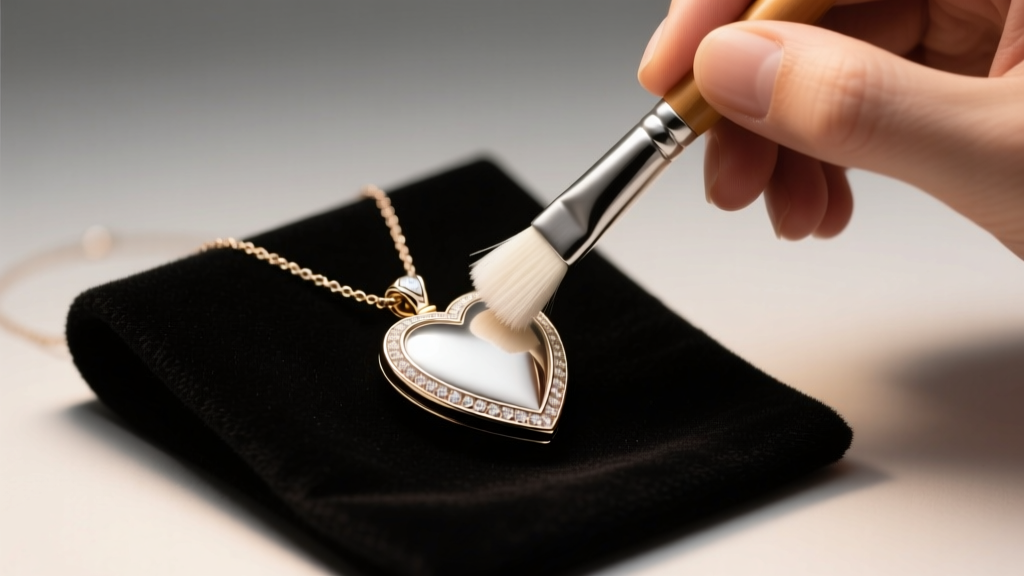
- Manual Cleaning Protocol: The safest method is to use a soft-bristled brush, warm distilled water, and a pH-neutral surfactant. Gently agitate the bail area to remove abrasive silica dust that accumulates from clothing friction, then dry with a microfiber cloth to prevent water spotting on the rhodium.
By prioritizing palladium alloys, selecting the correct chain gauge, and ensuring proper V-prong settings, you secure a white gold heart necklace that is not only visually stunning but engineered to endure decades of continuous wear.


