Mountain Necklace Silver: 2026 Style & Trend Analysis
Discover 2026 trends for the mountain necklace silver aesthetic. Learn how to layer, choose sterling grades, and style nature-inspired pendants.

The Shift to Alpine Minimalism in 2026
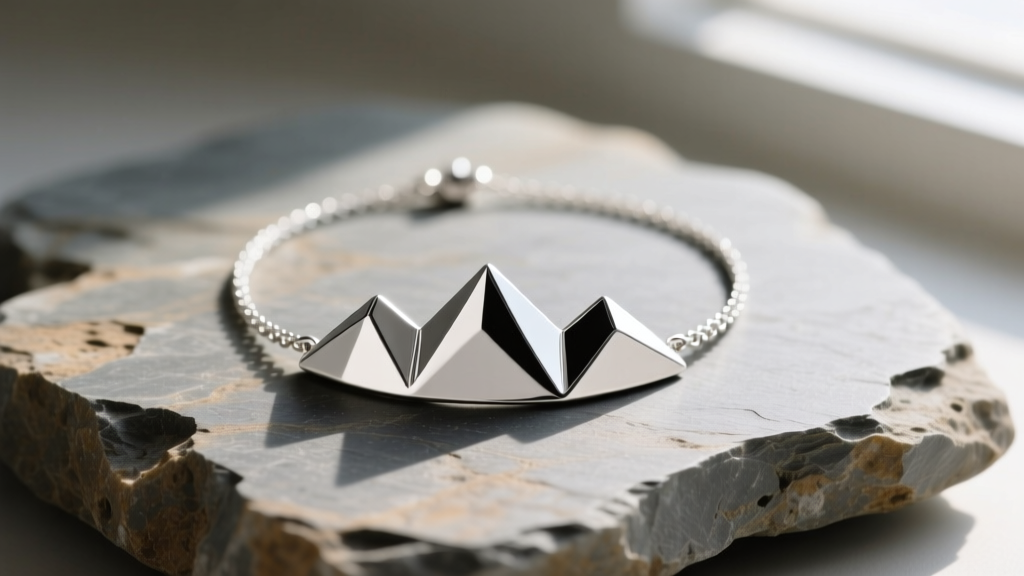
The nature-inspired jewelry market has undergone a radical transformation over the last few years. While the 2010s favored chunky, literal silhouettes of pine trees and jagged peaks, the 2026 aesthetic is defined by "Alpine Minimalism." Today, a sophisticated mountain necklace silver piece relies on abstract topographical contour lines, single-peak geometric architecture, and negative space. This evolution aligns perfectly with the broader "quiet outdoor" and "gorpcore-luxe" fashion movements, where outdoor motifs are translated into refined, everyday fine jewelry rather than rustic souvenirs.
Consumers are no longer looking for heavy, stamped metal pendants that snag on knitwear. Instead, the modern mountain necklace silver aesthetic prioritizes fluid lines, mixed-metal accents (such as a single 14k gold peak atop a sterling silver ridge), and lightweight profiles that integrate seamlessly into curated necklace stacks. Understanding how to select, layer, and care for these pieces requires a deep dive into metallurgy, chain mechanics, and structural styling.
Metallurgy: Choosing the Right Silver Grade
Not all silver is created equal, especially when it comes to intricate topographical designs. The valleys and ridges of a mountain pendant can trap moisture and skin oils, accelerating tarnish if the wrong alloy is used. According to the The Silver Institute, understanding the alloy composition is critical for longevity.
| Silver Grade | Composition | Tarnish Resistance | Best Application | Avg. Price (Pendant) |
|---|---|---|---|---|
| 925 Sterling | 92.5% Silver, 7.5% Copper | Low (Prone to sulfide tarnish) | High-polish, simple silhouettes | $45 - $90 |
| Argentium 935 | 93.5% Silver, Germanium | High (Forms transparent oxide) | Intricate topographical ridges | $110 - $180 |
| 999 Fine Silver | 99.9% Pure Silver | Medium (No copper to oxidize) | Bezel settings, soft wire wrapping | $80 - $150 |
For a detailed mountain necklace silver pendant, Argentium 935 is the undisputed champion in 2026. The addition of germanium creates a transparent germanium dioxide layer on the surface, drastically slowing down the formation of black silver sulfide. This is vital for pendants with deep, textured valleys that are impossible to polish with a standard cloth.
Structural Integrity: Chain Gauges and Clasps
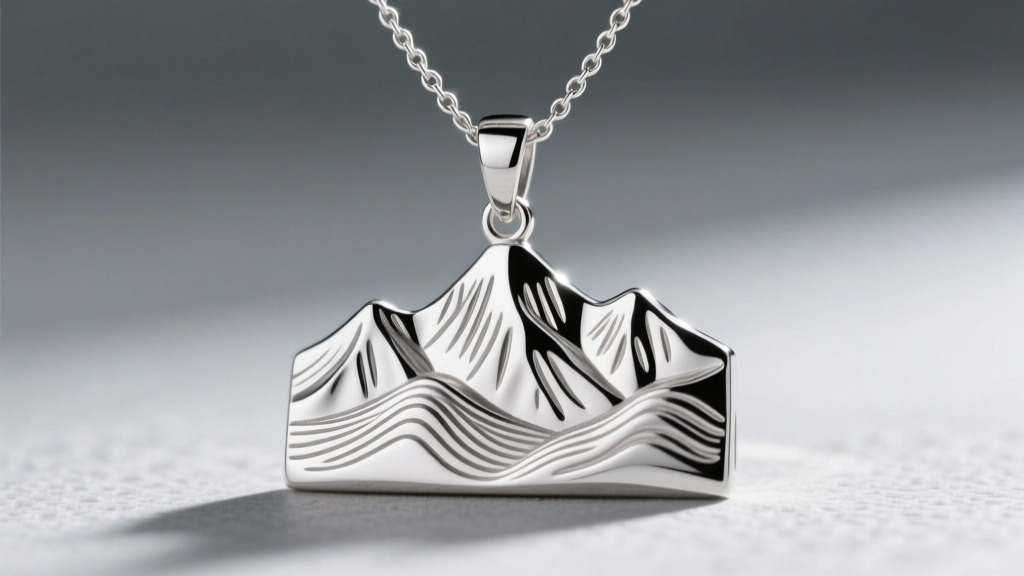
A common failure point in nature-inspired jewelry is the chain. A solid cast silver mountain pendant can easily weigh between 8 and 15 grams. Suspending this weight on a delicate 0.7mm cable chain will inevitably lead to metal fatigue, chain stretching, and eventual breakage. The Gemological Institute of America (GIA) notes that proper jewelry engineering must balance visual delicacy with tensile strength.
- 0.9mm - 1.1mm Cable Chain: Suitable only for lightweight, laser-cut mountain silhouettes (under 5 grams). Prone to kinking.
- 1.2mm - 1.5mm Rolo or Box Chain: The ideal choice for 2026. The interlocking round or square links distribute the weight of a 10g+ pendant evenly, preventing stretching while maintaining a refined look.
- 1.5mm+ Snake Chain: Excellent for heavy, solid-cast pendants, but must be stored flat or hung to prevent permanent creasing.
Furthermore, inspect the jump ring connecting the pendant to the chain. In high-quality artisan pieces, this jump ring will be soldered shut or feature a seamless split-ring mechanism. Mass-market pieces often use unsoldered open jump rings, which will pull apart under the pendulum motion of a heavy mountain pendant.
The 2026 Layering Matrix and Neckline Pairings
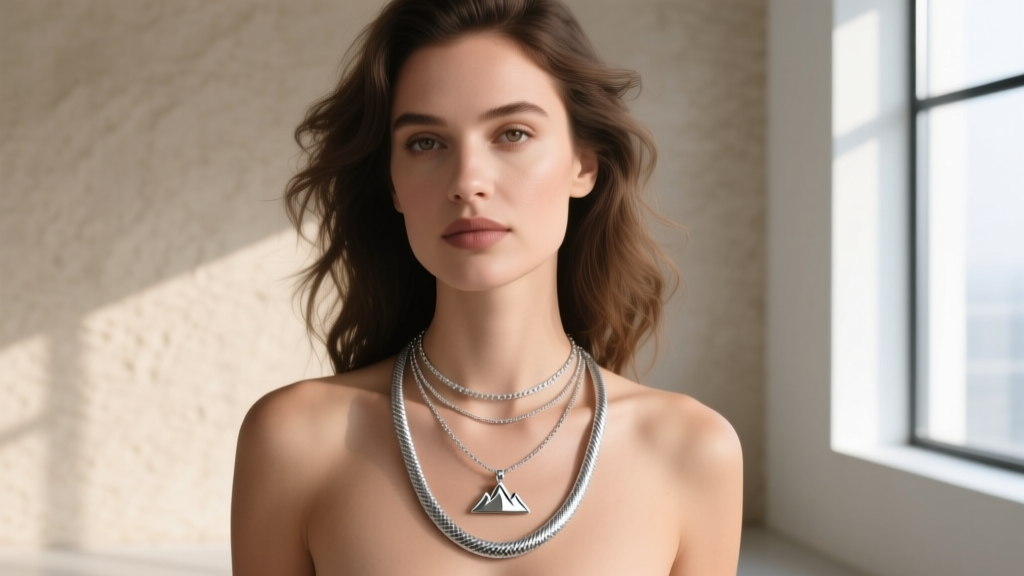
Layering a mountain necklace silver piece requires a strategic approach to lengths and textures to avoid a cluttered neckline. The goal is to create a "Topographical Stack" that mimics the depth of a landscape.
1. The Crew Neck Framework
When wearing a standard crew neck t-shirt or sweater, the neckline creates a harsh horizontal line. Soften this by pairing a 15-inch delicate satellite chain (featuring tiny 2mm silver beads) with your 18-inch mountain pendant. The satellite chain catches the light near the collarbone, while the mountain pendant rests just below the fabric hem, drawing the eye downward.
2. The V-Neck and Button-Down Strategy
For V-necks or unbuttoned Oxford shirts, utilize the negative space. Anchor the stack with a 22-inch plain box chain, followed by a 20-inch mountain pendant that mirrors the V-shape of the garment. Avoid chokers in this scenario, as they visually chop the neck and clash with the garment's plunging lines.
Patina, Oxidation, and Surface Finishes
The visual impact of a mountain necklace silver piece relies heavily on surface treatment. A flat, high-polish finish can make a topographical design look like a cheap cookie-cutter shape. True depth is achieved through chemical oxidation and mechanical finishing.
Artisan jewelers utilize Liver of Sulfur (potassium sulfide) to intentionally oxidize the silver. The pendant is submerged in the heated solution, turning the entire piece black. The jeweler then uses polishing cloths and rotary tools to buff only the "peaks" and high ridges back to a brilliant shine, leaving the "valleys" dark. This high-contrast patina creates a 3D topographical map effect that is impossible to achieve with standard casting alone.
Alternatively, the 2026 trend of "Alpine Frosting" utilizes a brushed or matte finish. By running a fiberglass scratch pen or fine-grit sandpaper unidirectionally across the silver, artisans create a micro-textured surface that diffuses light, mimicking the look of snow-capped peaks or morning mist over a mountain range.
Market Tiers: Artisan CAD vs. Mass Production
When shopping for a mountain necklace silver design, the price point is a direct reflection of the manufacturing process. Understanding these tiers will help you identify genuine quality.
Mass-Market Dropshipped ($25 - $55): These pieces are typically cast from low-resolution 3D prints or stamped from thin sheets of 925 silver. They often suffer from porosity (tiny air bubbles trapped in the metal during casting) and feature thin, hollow backs to save on material costs. The jump rings are rarely soldered, and the chains are usually flimsy 0.6mm cables.
Artisan & Indie Fine Jewelry ($120 - $350+): Independent jewelers use high-precision CAD (Computer-Aided Design) software to map actual topographical data from famous mountain ranges (like the Tetons or the Matterhorn) into 3D models. These are printed in high-resolution castable resin and cast in solid Argentium or recycled 925 silver. The backs are often finished with a comfort-fit dome, and the oxidation is hand-rubbed for maximum contrast.
Final Thoughts on the Alpine Aesthetic
The mountain necklace silver trend has matured from a fleeting novelty into a staple of modern, nature-inspired fine jewelry. By prioritizing Argentium silver for tarnish resistance, selecting structurally sound rolo or box chains, and utilizing intentional oxidation for depth, you can curate a piece that is both geographically meaningful and horologically sound. Whether you are layering over a heavy winter flannel or pairing it with a lightweight summer linen, the key lies in the architectural precision of the design and the integrity of the metalsmithing.