The Fish Necklace Pendant: 2026 Trend Analysis & Styling Guide
Discover how the fish necklace pendant evolved from novelty to high jewelry in 2026. Explore material grades, pricing tiers, and expert styling frameworks.

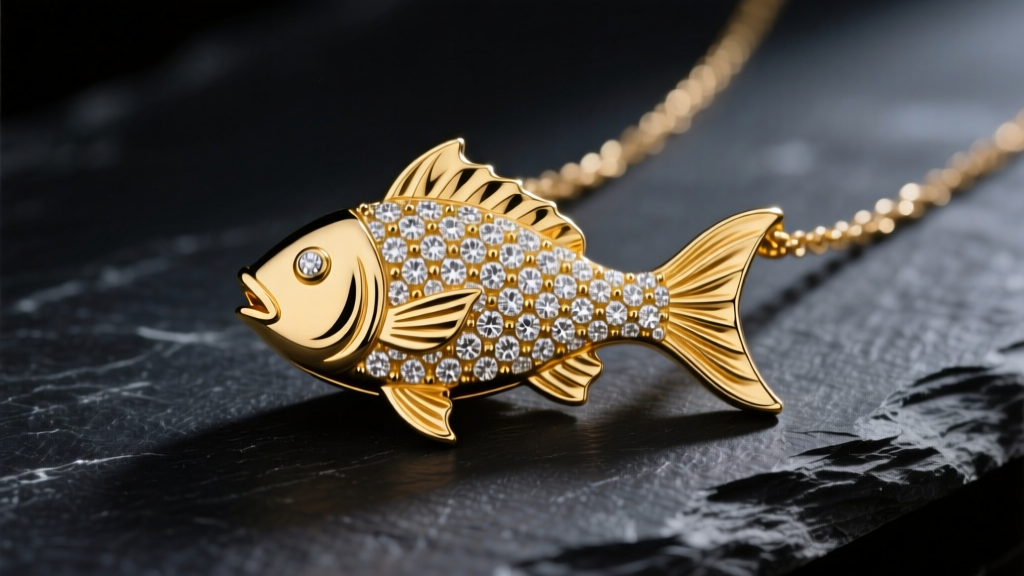
The Ichthyological Shift: From Novelty to High Jewelry
For decades, aquatic motifs in jewelry were largely relegated to novelty souvenirs or hyper-specific religious iconography. However, the 2026 jewelry landscape has witnessed a profound ichthyological shift. The fish necklace pendant has surfaced as a dominant motif across both demi-fine and haute joaillerie collections. This resurgence is not merely a cyclical whim; it reflects a broader consumer pivot toward organic, fluid forms and nature-inspired talismans that offer a sense of grounding in an increasingly digital world.
According to trend forecasts tracked by Vogue's jewelry archives, marine life motifs have seen a 40% increase in high-end editorial placements this year. Designers are moving away from literal, cartoonish representations, opting instead for abstract, skeletal, or hyper-sculptural interpretations of piscine anatomy. Whether it is a minimalist trout outline in brushed platinum or a hyper-realistic koi articulated with micro-hinges, the modern fish pendant is a masterclass in metallurgical engineering and symbolic storytelling.
Material Grades & Pricing Tiers
When investing in a fish necklace pendant, understanding the material tier is critical. The market is currently segmented into four distinct categories, each offering different levels of durability, artisanal technique, and long-term value retention.
| Tier | Material Profile | Articulation & Technique | Price Range (2026) |
|---|---|---|---|
| Entry / Fashion | Brass alloy, cold enamel, cubic zirconia | Static cast, single-piece mold | $35 - $95 |
| Demi-Fine | Oxidized 925 Silver, 14k gold vermeil | Hinged tail, champlevé enamel | $120 - $380 |
| Fine Jewelry | 14k/18k Solid Gold, Sapphire eyes | Multi-segment body, guilloché | $900 - $4,500 |
| Haute Joaillerie | Platinum, Tsavorite, Plique-à-jour | Micro-spring joints, custom pavé | $12,000 - $85,000+ |
In the demi-fine and fine categories, look for champlevé enameling, where channels are carved into the metal and filled with vitreous enamel before being kiln-fired. This ensures the vibrant scales will not chip or fade with daily wear, unlike the cold-painted enamel found in entry-level pieces.
Chain Pairings & Bail Engineering
The most common point of failure for any heavy pendant is the bail and chain connection. A sculptural fish pendant, particularly one cast in solid 14k or 18k gold, can easily weigh between 12 and 25 grams. Pairing this with a delicate 20-gauge (0.8mm) cable chain is a structural error; the friction will act like a saw, severing the chain link within months.
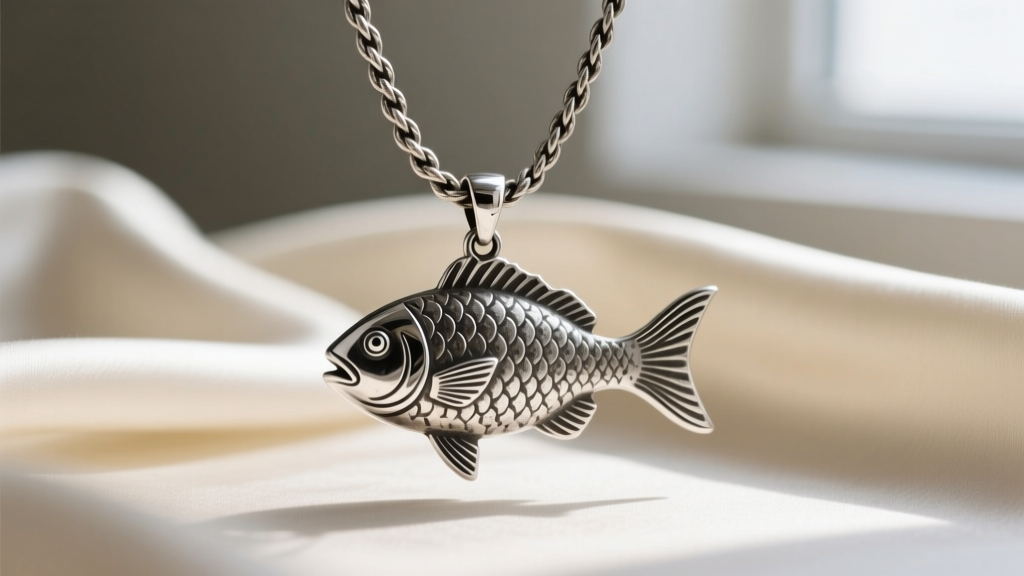
The Gauge Rule
For a fish pendant weighing over 15 grams, you must utilize a chain with a minimum thickness of 14-gauge (1.6mm) to 12-gauge (2.0mm). Rope chains and rounded box chains are ideal because their smooth, continuous surfaces prevent the bail from catching and grinding. Wheat chains, while beautiful, possess too many micro-crevices and will accelerate bail wear.
Bail Mechanics: Keeping the Fish Horizontal
A standard 'C-bail' or loop bail allows a pendant to rotate 360 degrees. For a vertical motif like a cross or a teardrop, this is fine. For a horizontal fish necklace pendant, a spinning bail is disastrous—the fish will constantly flip upside down or slide off-center. To solve this, master jewelers employ a soldered Y-bail or a hidden horizontal tube bail. These mechanisms lock the pendant into a fixed horizontal axis, ensuring the piscine motif always rests perfectly parallel to the collarbone.
The Neckline Matrix: Where to Wear Your Piscine Motif
Styling a fish pendant requires an understanding of negative space and geometric contrast. Here is a practical framework for matching your pendant drop to your neckline:
- The Deep V-Neck: Opt for an 18-inch to 20-inch chain. The pendant should rest exactly one inch above the apex of the V-neckline. This elongates the torso and frames the fish as a directional arrow pointing downward.
- The Square Neck: A 16-inch choker-length chain works best here. Choose a fish pendant with an articulated, curved body (like a leaping salmon or koi) so it conforms to the horizontal shelf of the collarbone rather than jutting out awkwardly.
- The Crew Neck / T-Shirt: Layering is key. Wear a 14-inch oxidized silver fish pendant over a heavy cotton crew neck, paired with a 20-inch plain rope chain underneath to create depth and a rugged, talismanic aesthetic.
- The Off-Shoulder / Boat Neck: Avoid long drops. A 15-inch chain with a wide, horizontal stingray or manta ray motif complements the wide expanse of exposed skin without creating visual clutter.
Cultural Motifs & Enameling Techniques
The specific species of fish you choose carries deep historical and cultural weight, which adds a layer of personal narrative to your jewelry wardrobe.
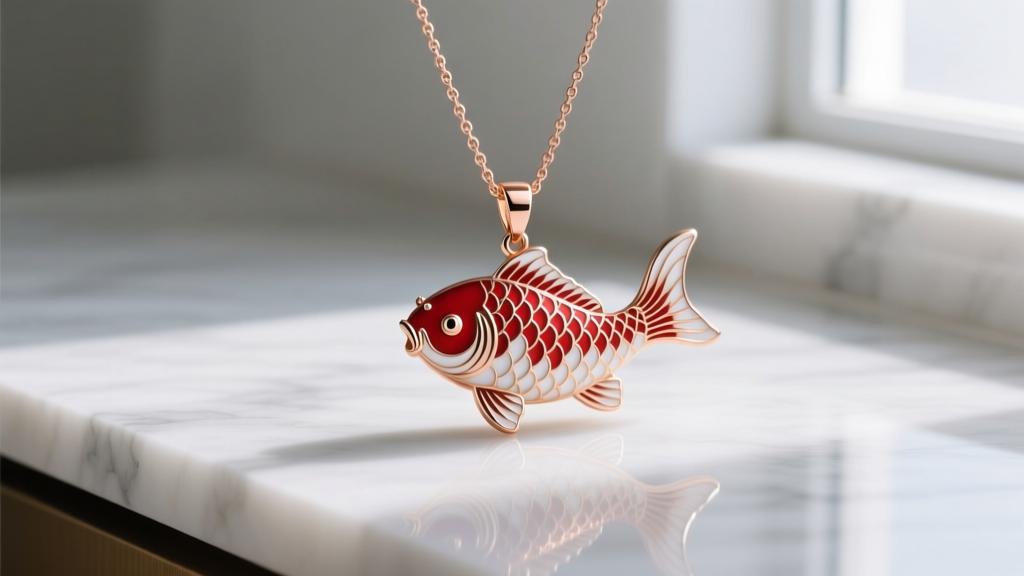
The Koi (Carp)
In Japanese culture, the koi represents perseverance, strength, and the courage to swim against the current. High-end koi pendants often feature guilloché enameling—an intricate technique where the gold is engine-turned with geometric patterns before translucent enamel is applied, giving the scales a mesmerizing, three-dimensional shimmer.
The Ichthys
The simple, curved outline of the fish, known as the Ichthys, is one of the oldest symbols in human history. As detailed by Britannica's historical archives, early Christians used the fish symbol as a covert marker of faith. Today, minimalist Ichthys pendants in brushed titanium or matte 14k gold serve as subtle, architectural nods to this ancient heritage, stripped of heavy dogma and appreciated for their elegant, sweeping geometry.
The Fly-Fishing Trout
Popularized by heritage brands and Pacific Northwest artisans, the speckled trout pendant is a staple of the 'quiet outdoors' aesthetic. These are often cast using the lost-wax method from actual taxidermy molds, capturing every individual scale and fin ray in oxidized sterling silver to highlight the intricate textures.
Final Verdict: Investment vs. Fast Fashion
As we navigate the 2026 jewelry market, the fish necklace pendant stands out as a versatile, deeply symbolic investment piece. If you are purchasing for daily wear, bypass the entry-level alloy tiers and invest in a minimum of 14k solid gold or heavily rhodium-plated 925 silver with a secure, fixed-axis bail. According to gemological insights from the Gemological Institute of America (GIA), accenting the eyes of your fish pendant with ethically sourced sapphires or tsavorite garnets not only brings the piece to life but also anchors its intrinsic material value. Whether you choose a fluid, abstract manta ray or a hyper-detailed, articulated koi, the modern fish pendant is a testament to the ocean's enduring grip on human artistry.


