What Is a Pearl Necklace? The Ultimate Buying Guide
Discover what a pearl necklace is, from Akoya to South Sea. Learn expert grading, sizing, and buying tips to find your perfect strand.

Defining the Classic: What Is a Pearl Necklace?
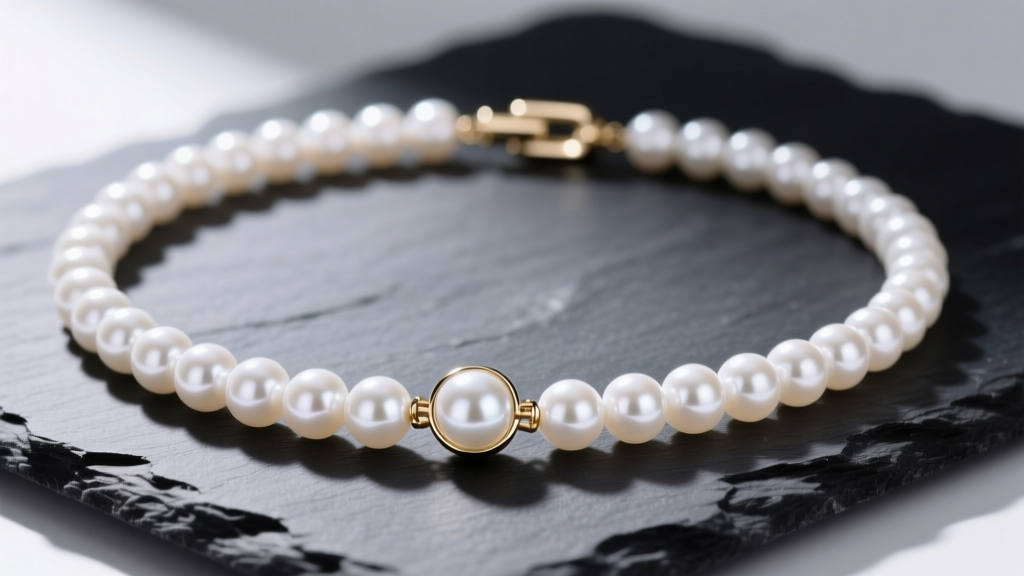
At its core, the answer to "what is a pearl necklace" is deceptively simple: it is a continuous strand of organic gemstones formed within the soft tissue of living saltwater or freshwater mollusks. However, from a gemological and stylistic perspective, a pearl necklace is a complex assembly of nacre, luster, and precise craftsmanship. Unlike mined gemstones that are cut and faceted to reveal their brilliance, pearls are valued for their natural, unpolished spherical geometry and the unique optical phenomenon of their orient and luster.
In the modern jewelry market, virtually all pearl necklaces are composed of cultured pearls. This means human intervention initiated the nacre-secreting process by inserting a nucleus (usually a polished shell bead) and a tiny piece of mantle tissue into the mollusk. Understanding this biological origin is the first step in learning how to evaluate quality, as the thickness and quality of the secreted nacre directly dictate the necklace's longevity, luster, and ultimate value.
The Big Four: Pearl Types You Must Know
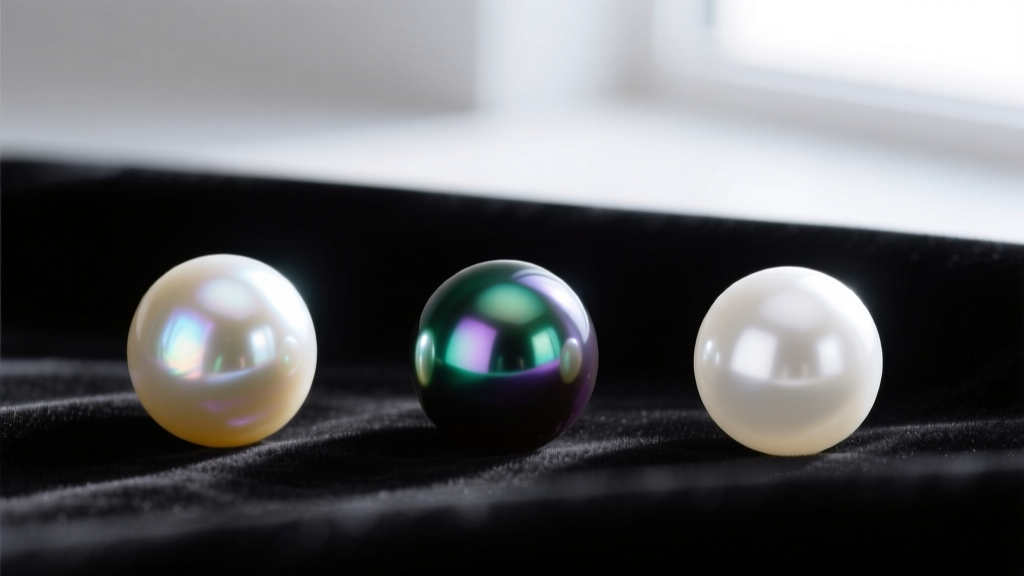
When shopping, you will encounter four primary categories of cultured pearls. Each offers distinct size ranges, color profiles, and price points. According to the Gemological Institute of America (GIA), the origin and mollusk species fundamentally alter the pearl's physical characteristics.
| Pearl Type | Origin / Mollusk | Size Range | Nacre Thickness | Typical Price Range (18" Strand) |
|---|---|---|---|---|
| Akoya | Japan / China (Pinctada fucata) | 6.0mm - 9.0mm | 0.3mm - 0.5mm | $300 - $3,500+ |
| Freshwater | China (Hyriopsis cumingii) | 5.0mm - 12.0mm | Solid nacre (no bead) | $50 - $1,500 |
| Tahitian | French Polynesia (Pinctada margaritifera) | 8.0mm - 16.0mm | 0.8mm - 2.0mm+ | $500 - $15,000+ |
| South Sea | Australia / Philippines (Pinctada maxima) | 9.0mm - 20.0mm | 2.0mm - 4.0mm+ | $1,000 - $100,000+ |
Deep Dive: Akoya vs. Freshwater
Buyers often confuse high-end Freshwater pearls with Akoya pearls. Akoya pearls are renowned for their "mirror-ball" luster—a sharp, high-contrast reflection caused by the rapid crystallization of nacre in cooler Japanese waters. Freshwater pearls, historically tissue-nucleated, possess a softer, satiny luster and come in natural pastel shades of peach, pink, and lavender. However, modern "Edison" freshwater pearls are now bead-nucleated and can rival Akoya in roundness and metallic luster, often at a fraction of the cost.
Decoding the 7 Pearl Grading Factors
To truly understand what a pearl necklace is worth, you must evaluate it against the industry-standard grading criteria. The American Gem Society (AGS) and GIA utilize seven distinct value factors:
- Size: Measured in millimeters. Larger pearls of the same type are exponentially rarer. A 9mm Akoya strand will cost significantly more than a 7mm strand of identical quality.
- Shape: Perfectly round pearls command the highest premiums. Near-round, oval, button, drop, semi-baroque, and baroque shapes offer unique stylistic alternatives at lower price points.
- Color: Composed of bodycolor, overtone, and orient. A white Akoya with a strong rosé overtone is highly prized, while Tahitian pearls are valued for dark bodycolors with peacock or aubergine overtones.
- Luster: The most critical factor. High-quality luster means reflections are bright, sharp, and distinct. Chalky or dull reflections indicate poor nacre quality.
- Surface Quality: Blemishes (spots, bumps, pits) are natural. A completely flawless strand is exceptionally rare and expensive. Look for "clean" or "slightly blemished" strands where imperfections are invisible from a conversational distance.
- Nacre Quality: Determines durability. If the nucleus is visible through the nacre (a chalky band near the drill hole), the pearl will eventually peel and should be avoided.
- Matching: A high-quality necklace requires meticulous sorting. The pearls must match uniformly in size, shape, color, and luster across the entire strand.
Necklace Lengths and Their Style Profiles
The architecture of the strand fundamentally changes how it interacts with your wardrobe. Choosing the correct length is just as important as selecting the pearl type.
| Length Name | Measurement | Style Profile & Best Necklines |
|---|---|---|
| Collar | 10 - 13 inches | Sits tightly against the throat. Best with V-necks, boat necks, or off-the-shoulder garments. Highly formal. |
| Choker | 14 - 16 inches | Rests at the base of the neck. The most versatile, classic length. Pairs perfectly with crew necks and button-downs. |
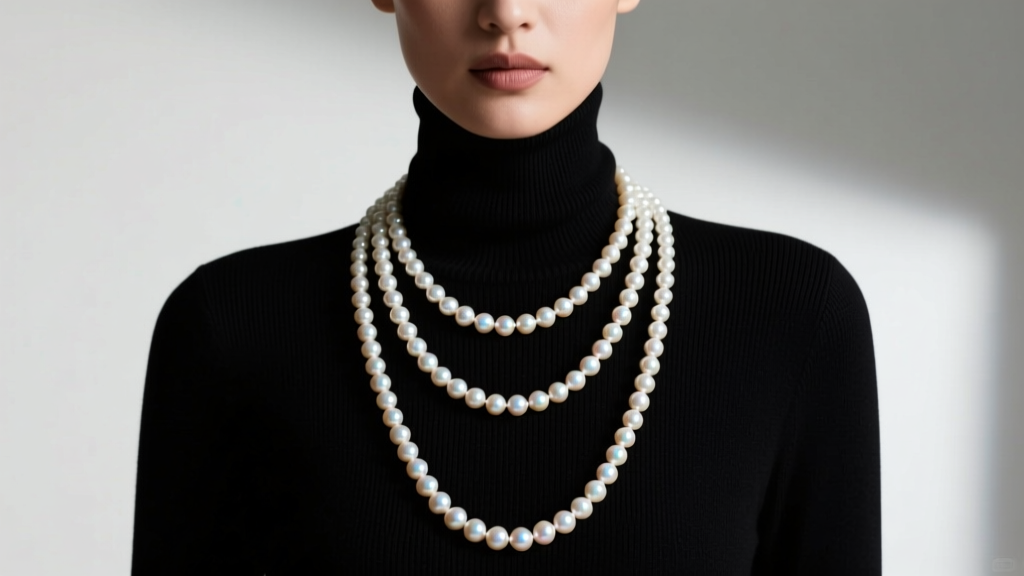
| Princess | 17 - 19 inches | Falls just below the collarbone. Ideal for high necklines, turtlenecks, and professional business attire. |
| Matinee | 20 - 24 inches | Drops to the top of the bust. Excellent for business-casual and evening wear, drawing the eye downward. |
| Opera | 28 - 36 inches | Falls below the bust. Can be worn long or doubled up to create a layered choker effect. Highly dramatic. |
| Rope | 37+ inches | The longest strand, often featuring a clasp that allows it to be detached into multiple shorter necklaces or wrapped as a bracelet. |
Red Flags: How to Spot Fakes and Overpriced Strands
Because the demand for classic pearl necklaces remains high, the market is saturated with imitations. Glass beads coated with essence d'orient (a crystalline substance derived from fish scales) or painted plastic can fool the untrained eye. Here is how to protect your investment:
The Tooth Test
Gently rub the pearl against the biting edge of your front tooth. A genuine cultured pearl will feel distinctly gritty or sandy due to the microscopic crystalline structure of the nacre. A fake pearl (glass or plastic) will feel perfectly smooth and slippery.
Drill Hole Inspection
Use a jeweler's loupe (10x magnification) to examine the drill holes. Real pearls have sharp, clean, well-defined edges where the drill bit exited the nacre. Imitation pearls often show rounded edges, chipped coating, or reveal a clear glass or metal core beneath a flaking surface layer. Furthermore, if the strand is perfectly uniform, flawlessly round, and blindingly white with zero blemishes, yet priced under $200, it is almost certainly synthetic.
Investment vs. Everyday Wear: Final Buying Advice
When determining what a pearl necklace is truly worth to you, align your purchase with your lifestyle. For everyday wear and tear, a high-quality Freshwater or mid-range Akoya strand (7.0mm - 8.0mm) offers the best balance of durability, classic aesthetics, and affordability. Avoid wearing pearls in the shower or while exercising, as the acids in human sweat and the chemicals in cosmetics can slowly degrade the nacre's luster over time.
For heirloom investments or milestone anniversaries, look toward South Sea or gem-quality Tahitian pearls. Ensure the strand comes with a reputable gemological certificate detailing the nacre thickness and exact millimeter sizing. By prioritizing luster over perfect roundness, and understanding the biological origins of these organic gems, you can confidently navigate the market and acquire a necklace that will retain its elegance for generations.


