Beginner's Guide to Buying a Diamond Fleur de Lis Necklace
Discover how to choose the perfect diamond fleur de lis necklace. Learn about diamond grades, metal pairings, chain lengths, and styling tips.

The Timeless Appeal of the Fleur de Lis
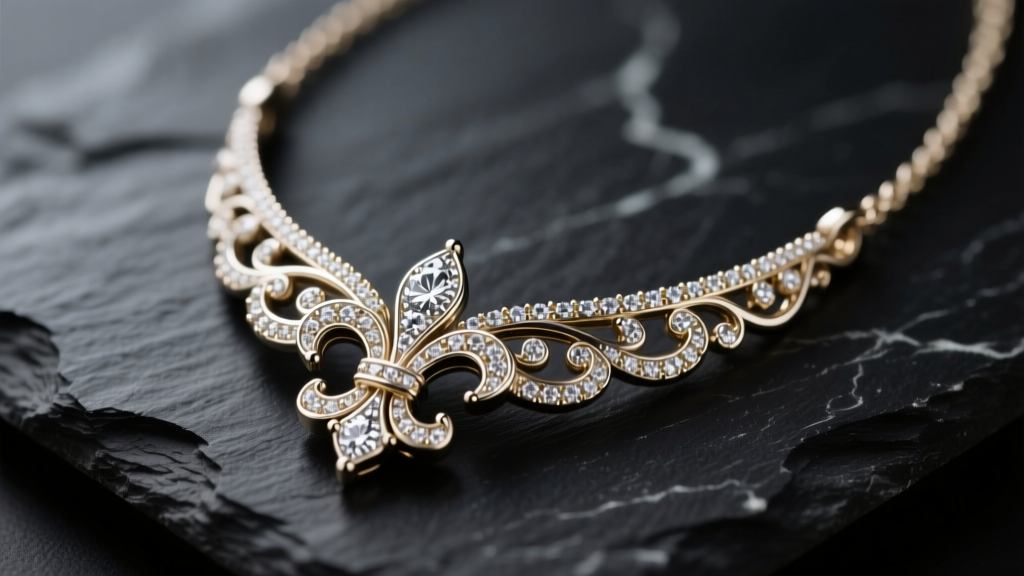
The fleur de lis is far more than a simple decorative motif; it is a symbol steeped in centuries of history, representing French royalty, the Holy Trinity, and the resilient spirit of New Orleans. When translated into fine jewelry, this iconic three-petaled lily becomes a striking emblem of heritage and elegance. For beginners entering the world of fine jewelry, a diamond fleur de lis necklace offers a perfect entry point. It bridges the gap between historical significance and modern brilliance, providing a versatile piece that can be worn daily or reserved for special occasions.
However, purchasing a diamond pendant involves navigating a labyrinth of carat weights, metal purities, and chain mechanics. This comprehensive guide will demystify the buying process, ensuring you select a piece that offers exceptional value, structural integrity, and timeless style.
Decoding the Diamonds: What Beginners Must Know
The most common misconception among first-time buyers is that the "Four Cs" (Cut, Color, Clarity, Carat) apply to pendant diamonds exactly as they do to large engagement ring center stones. In reality, the majority of diamond fleur de lis pendants utilize melee diamonds—small stones typically weighing between 0.01 and 0.15 carats each.
Understanding Total Carat Weight (TCW)
When browsing, you will rarely see a single carat weight listed. Instead, jewelers use Total Carat Weight (TCW), which is the combined weight of all the diamonds in the pendant. A delicate, everyday fleur de lis pendant usually ranges from 0.10 to 0.25 TCW, while bolder, statement-making pieces can reach 0.50 to 1.00 TCW. According to the Gemological Institute of America (GIA), the physical spread of melee diamonds means that a 0.25 TCW pave setting will offer significant sparkle without the exponential price jump associated with single large stones.
The "Sweet Spot" for Color and Clarity
Because melee diamonds are so small, inclusions (internal flaws) are virtually impossible to see with the naked eye. Therefore, paying a premium for VVS (Very Very Slightly Included) or Flawless clarity is an unnecessary expense for this type of jewelry.
- Clarity: SI1 to SI2 (Slightly Included) is the optimal choice. The inclusions are microscopic and completely masked by the sparkle and the metal prongs.
- Color: G to H (Near Colorless) is the ideal range. These stones face up bright white, especially when set in white gold or platinum, without carrying the steep markup of D-F colorless grades.
- Cut: Never compromise here. Even in melee sizes, a "Very Good" or "Excellent" cut is what creates the light return (sparkle) that makes the fleur de lis design pop.
Metal Pairings: Setting the Stage
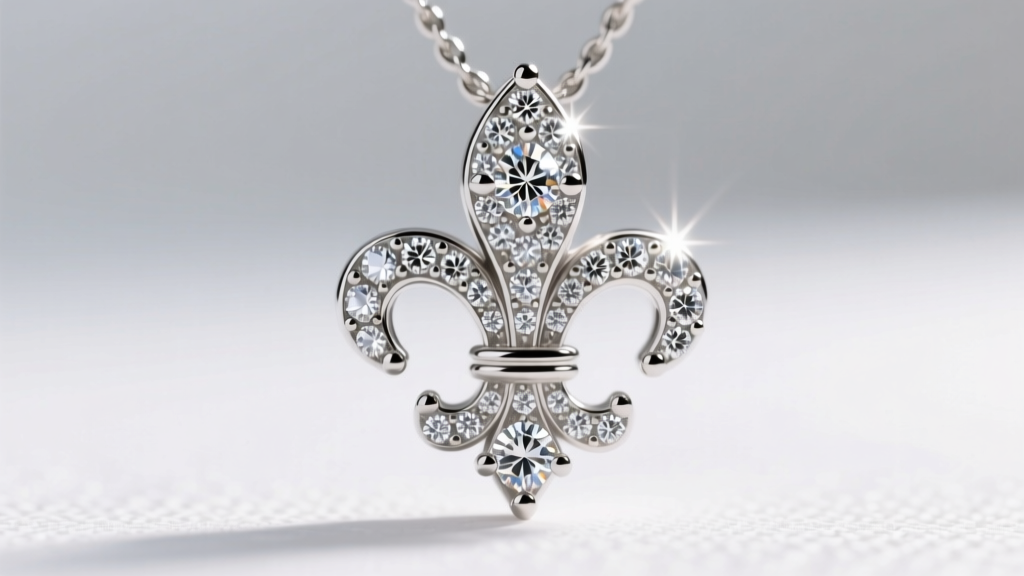
The metal you choose dictates both the aesthetic and the longevity of your necklace. The fleur de lis design features intricate curves and sharp points, requiring a metal that can hold detailed casting and secure tiny diamond prongs.
| Metal Type | Aesthetic Vibe | Durability & Maintenance | Average Price Premium |
|---|---|---|---|
| 14k White Gold | Modern, crisp, enhances diamond whiteness | Requires rhodium plating every 1-2 years to maintain bright white color | Baseline |
| 14k Yellow Gold | Vintage, antique, classic New Orleans style | Highly durable, low maintenance, develops a soft patina over time | Baseline |
| 18k Rose Gold | Romantic, warm, contemporary contrast | Softer than 14k due to higher gold content; copper alloy prevents tarnishing | +15% to 20% |
| Platinum (950) | Heirloom, prestigious, hypoallergenic | Extremely durable, heavy, develops a matte patina but never loses metal mass | +40% to 60% |
Expert Tip: If you choose white gold, ensure the prongs holding your diamonds are also white gold or platinum. Some manufacturers use yellow gold prongs with a rhodium wash; when the wash wears off, the yellow prongs can make your G-H color diamonds look slightly tinted.
Chain Selection and Bail Mechanics
A frequent point of failure in pendant necklaces is not the chain itself, but the bail—the loop that connects the pendant to the chain. The fleur de lis is inherently top-heavy and asymmetrical in its weight distribution compared to a simple round solitaire.
The Bail and Jump Ring
Many fleur de lis pendants feature an "integrated bail" (a loop cast directly into the top petal) or a "hidden bail" on the back. If your pendant uses a standard jump ring, ensure it is soldered closed. An unsoldered jump ring will eventually pull apart under the pendulum-like swinging motion of a top-heavy pendant, leading to loss.
Choosing the Right Chain Gauge
Do not pair a 0.25 TCW diamond pendant with a flimsy 0.8mm chain. The weight of the metal and diamonds requires a chain with structural integrity.
- Box Chain (1.2mm - 1.5mm): The absolute best choice for pendants. The square links lie flat, resist kinking, and provide a sturdy track for the bail to slide along.
- Rope Chain (1.5mm): Offers excellent tensile strength and a twisted, reflective surface that complements the sparkle of the diamonds.
- Cable Chain (1.0mm): A classic choice, but ensure the links are soldered. Unsoldered cable chains are prone to snapping if caught on clothing.
Pricing Tiers: Lab-Grown vs. Natural Diamonds
As of 2026, the market offers robust options for both lab-grown and natural diamonds, allowing buyers to align their purchases with their budgets and ethical preferences. Because a fleur de lis pendant uses multiple small stones, the price differential between lab and natural is highly noticeable.
- Lab-Grown Diamonds (0.25 TCW): Typically priced between $350 and $600. These stones are chemically and optically identical to mined diamonds but allow you to upgrade to a larger pendant size or a higher-quality chain for the same budget.
- Natural Diamonds (0.25 TCW): Generally range from $700 to $1,400. You are paying for the geological rarity and the traditional resale market associated with earth-mined stones.
When purchasing, always verify that the retailer provides a grading report or a detailed specification sheet outlining the TCW, metal weight (in grams), and diamond origin.
Styling and Everyday Care
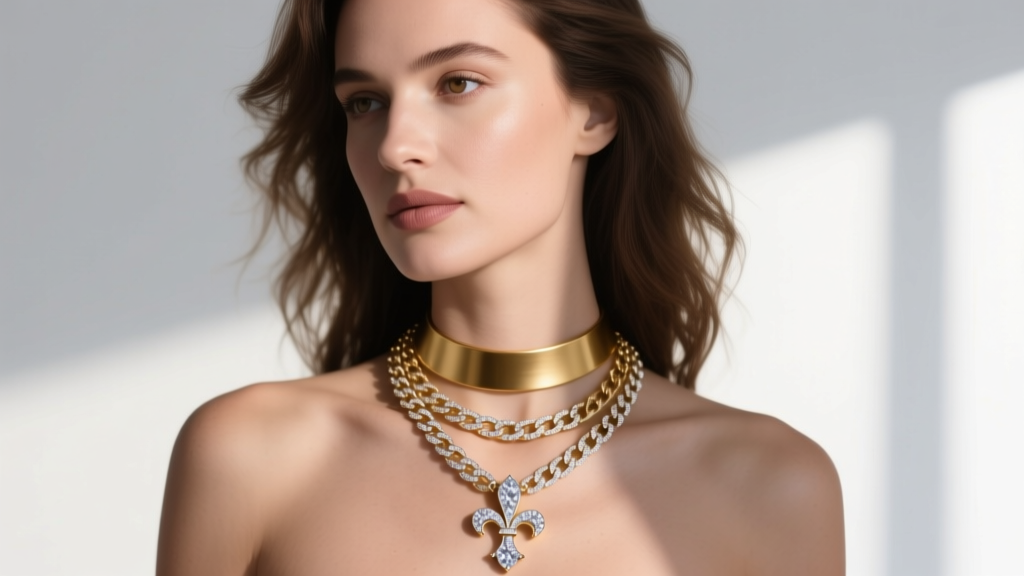
The beauty of the diamond fleur de lis necklace lies in its versatility. For a minimalist, everyday look, wear a 16-inch or 18-inch box chain solo against a crew neck or V-neck blouse. If you prefer a curated, layered aesthetic, pair your 18-inch diamond pendant with a 14-inch plain gold choker and a 22-inch delicate coin necklace to create a cascading effect that draws the eye downward.
Maintenance and Cleaning
The intricate crevices of the fleur de lis design are magnets for lotions, perfumes, and skin oils, which can dull the brilliance of your melee diamonds.
- Soak the necklace in a bowl of warm water mixed with a few drops of mild, ammonia-free dish soap for 15 minutes.
- Gently agitate the pendant with a soft-bristled baby toothbrush, paying special attention to the underside of the setting where grime accumulates.
- Rinse thoroughly under lukewarm running water (always over a closed drain!).
- Pat dry with a lint-free microfiber cloth.


