How to Choose the Perfect White Necklace for Women
Discover how to choose the perfect white necklace for women. Compare white gold, platinum, silver, and pearls with our expert styling and care guide.


The Beginner's Guide to the 'White Necklace' Aesthetic
When searching for the ideal accessory, the phrase 'white necklace women' often dominates search engines, yet it encompasses a vast and frequently misunderstood universe of jewelry. A 'white' necklace does not refer to a single material; rather, it spans a spectrum of precious metals, organic gems, and modern ceramics. For beginners, navigating the differences between rhodium-plated white gold, naturally white platinum, and lustrous pearls can be overwhelming. This guide breaks down the exact metallurgy, grading systems, and styling frameworks you need to make an informed, investment-savvy purchase.
Demystifying White Metals: Silver vs. White Gold vs. Platinum
The foundation of most white necklaces is the metal chain and setting. However, not all white metals are created equal in terms of durability, price, and maintenance. Understanding the alloy composition is critical to avoiding buyer's remorse.
Sterling Silver and Argentium Silver
Standard Sterling Silver (925) is composed of 92.5% pure silver and 7.5% copper. The copper provides necessary strength but is also the culprit behind silver's notorious tendency to tarnish when exposed to sulfur and humidity. For a premium, beginner-friendly upgrade, look for Argentium Silver. This patented alloy replaces some of the copper with germanium, creating a highly tarnish-resistant metal that stays brilliantly white for years without the need for constant polishing. Expect to pay between $40 and $150 for a quality Argentium chain.
White Gold: The Rhodium Reality
Many beginners are shocked to learn that white gold is not naturally white. Pure gold is yellow. To create 14k white gold (58.5% pure gold), jewelers alloy it with white metals like palladium, nickel, or silver. However, the resulting alloy still holds a faint yellowish-gray hue. To achieve the mirror-like 'white' finish, the jewelry is electroplated with a microscopic layer (typically 0.75 to 1.0 microns) of rhodium, a rare platinum-group metal. Over 1 to 3 years of daily wear, this plating wears off, revealing the brassy under-layer and requiring a professional re-dip (costing $50–$150).
Platinum 950: The Premium Standard
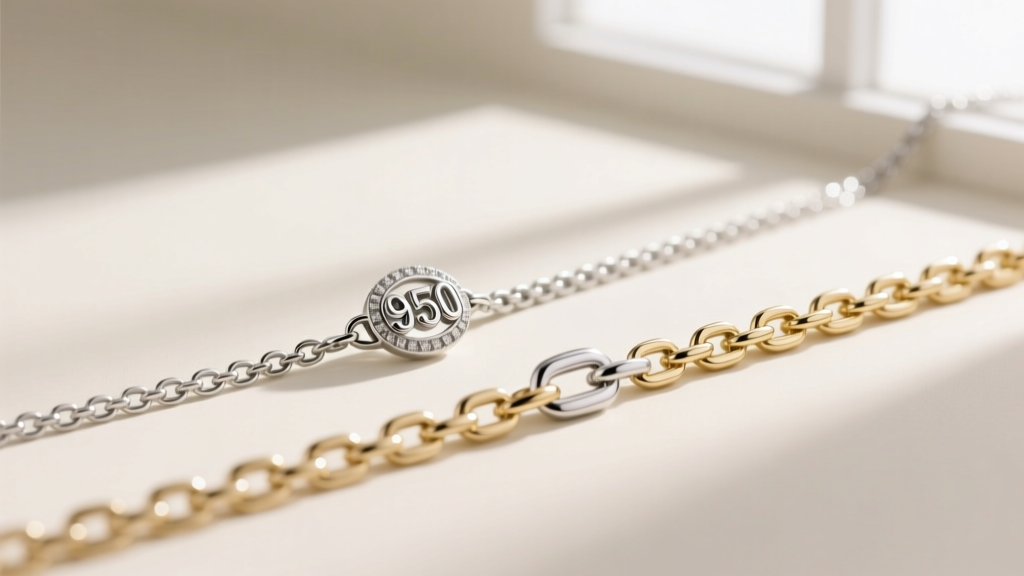
According to the Gemological Institute of America (GIA), platinum used in fine jewelry is typically 95% pure (Pt950), alloyed with 5% ruthenium or iridium. Unlike white gold, platinum is naturally white and will never require rhodium plating. When scratched, platinum does not lose metal; instead, the metal is displaced, creating a soft, frosted 'patina' that many collectors prize. It is significantly denser and heavier than gold, which is reflected in its price point, typically starting around $800 for a simple chain and soaring into the thousands for diamond-set pendants.
| Metal Type | Purity / Grade | Tarnish / Wear | Avg. Price Range (18' Chain) |
|---|---|---|---|
| Sterling Silver | 92.5% Ag | Tarnishes easily | $30 - $120 |
| Argentium Silver | 96% Ag + Germanium | Highly resistant | $60 - $180 |
| 14k White Gold | 58.5% Au + Alloys | Rhodium wears off | $250 - $600 |
| 18k White Gold | 75% Au + Alloys | Rhodium wears off faster | $450 - $1,200 |
| Platinum | 95% Pt (Pt950) | Develops patina, no plating | $800 - $3,500+ |
Beyond Metals: White Pearls, Enamel, and Ceramic
If your vision of a white necklace leans toward organic gems or modern materials, you have distinct categories to explore.
The Pearl Hierarchy
Pearls are the quintessential white necklace staple. The GIA evaluates pearls based on seven value factors, with luster and surface quality being paramount for buyers. Here is how the main white pearl varieties compare:
- Freshwater Pearls: Grown primarily in China, these are the most affordable ($30–$200). They are often off-round or baroque but offer incredible value and a soft, satiny luster.
- Akoya Pearls: The classic Japanese pearl. Ranging from 2mm to 10mm, Akoyas are prized for their perfect roundness and sharp, mirror-like luster. A high-quality 18-inch Akoya strand costs between $300 and $2,500.
- White South Sea Pearls: The 'queen of pearls.' Grown in Australia and the Philippines, these massive gems (10mm–20mm) possess a luxurious, satin-white glow with subtle silver or rosé overtones. Expect to pay $1,500 to $15,000+ for a matched strand.
High-Tech Ceramic and White Enamel
For a contemporary, fashion-forward look, high-tech ceramic (zirconium dioxide) is a phenomenal choice. Used by luxury houses like Chanel and Hublot, ceramic is virtually scratch-proof, hypoallergenic, and retains a brilliant, icy white finish that will never fade or tarnish. White vitreous enamel, fused over gold or silver, offers a glossy, opaque white pop that is perfect for geometric, art-deco-inspired pendants, though it can chip if dropped on hard surfaces.
Matching Your White Necklace to Skin Undertones
A common beginner mistake is buying a necklace without considering skin undertones. While 'white' metals are generally considered universally flattering, subtle differences exist.
The Vein Test: Look at the veins on the inside of your wrist under natural light. If they appear blue or purple, you have cool undertones. If they appear greenish, you have warm undertones. If you cannot decide, you likely have neutral undertones.
Cool Undertones: Platinum, rhodium-plated white gold, and bright white Akoya pearls will beautifully echo the natural pink and blue hues in your skin, creating a cohesive, striking look.
Warm Undertones: Pure white metals can sometimes look too harsh against golden or olive skin. Opt for 18k white gold (which has a slightly warmer underlying alloy before plating), cream-colored Freshwater pearls, or white gold accented with warm diamonds (near-colorless K-M grades) to soften the contrast.
Length and Neckline Pairing Guide
The architecture of your outfit dictates the ideal length of your white necklace. Refer to this framework to ensure your jewelry complements, rather than competes with, your wardrobe.
- Collar (12–13 inches): Sits tightly against the mid-neck. Best paired with V-necks or open-button shirts. Avoid with high turtlenecks.
- Choker (14–16 inches): Rests at the base of the neck. The most versatile length for everyday wear. Perfect with scoop necks, crew necks, and off-the-shoulder tops.
- Princess (18 inches): Falls just below the collarbone. The standard length for pearl strands and diamond solitaire pendants. Ideal for business attire and blouses.
- Matinee (20–24 inches): Drops to the top of the bust. Excellent for layering over a choker or wearing over a turtleneck sweater.
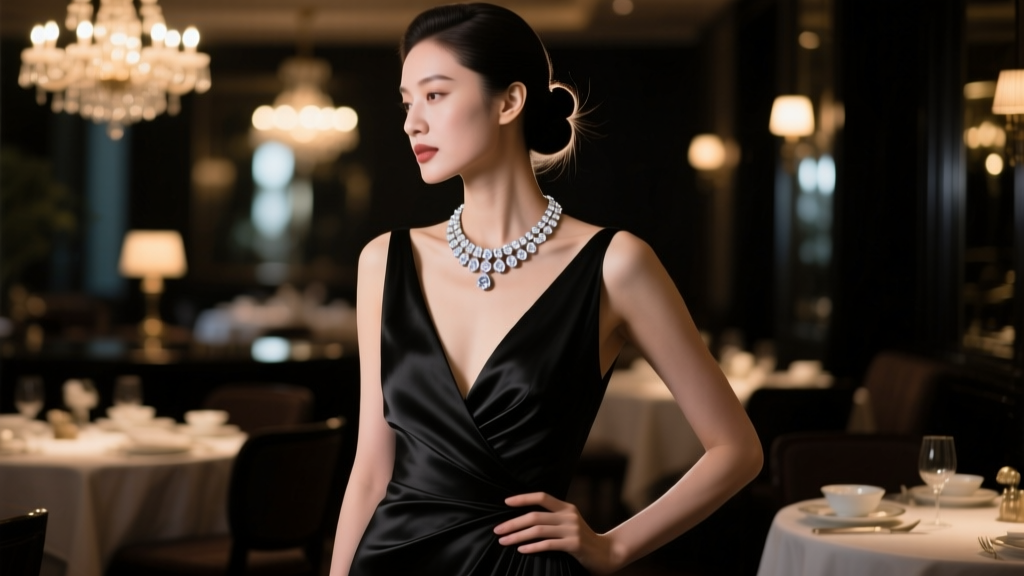
- Opera (28–36 inches): Falls below the bust. A dramatic, elegant choice for evening wear, often doubled up for a layered choker effect.
Care and Maintenance: Keeping White Jewelry Bright
To protect your investment, adopt a strict care regimen tailored to your specific materials:
- Rhodium Replating: If your white gold necklace begins to show yellow patches, take it to a local jeweler for an ultrasonic cleaning and rhodium re-dip. Do not attempt to polish it yourself, as this will strip the remaining plating faster.
- Silver Anti-Tarnish Storage: Store sterling silver in an airtight ziplock bag with a 3M anti-tarnish strip. Never store silver in humid bathrooms.
- Pearl Hydration: According to GIA pearl care guidelines, pearls contain trace amounts of water. Storing them in a dry safety deposit box for years can cause them to crack and dull. Wear them often—the natural oils from your skin keep them lustrous—and always wipe them with a damp microfiber cloth after wearing to remove acidic sweat.
By understanding the precise differences between alloys, pearl grades, and structural lengths, you can confidently select a white necklace that serves as a timeless, versatile anchor in your jewelry collection.


