Beginner's Guide to Buying a Thai Baht Chain Necklace
Discover what a baht chain necklace is, how Thai gold purity works, weight calculations, and expert tips for buying your first investment piece.

What Exactly Is a Baht Chain Necklace?
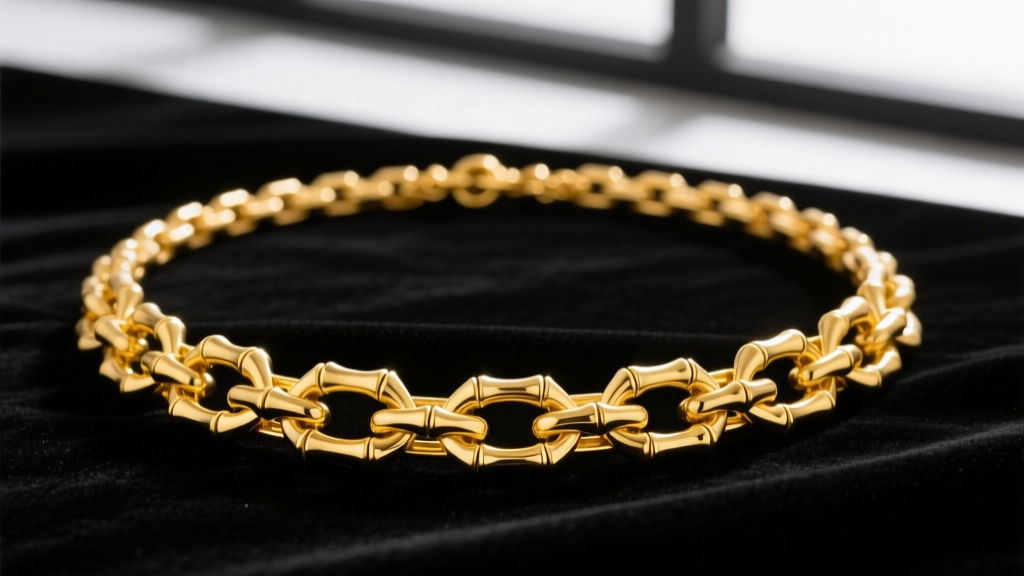
If you have ever explored the global gold jewelry market, you have likely encountered the term 'baht chain necklace.' Originating from Thailand's deeply ingrained gold-trading culture, a baht chain is not just a piece of jewelry; it is a wearable financial asset, a cultural staple, and a masterclass in traditional metallurgy. Unlike Western jewelry, which is typically measured in grams or ounces and priced primarily on brand markup, Thai baht gold is traded as a liquid commodity. For beginners, navigating the nuances of Thai gold purity, weight measurements, and workmanship fees can feel overwhelming. This comprehensive guide will demystify the baht chain necklace, providing you with the exact specifications, pricing frameworks, and practical wearability insights needed to make an informed purchase.
The Metallurgy of Thai Gold: Why 96.5% Purity Rules
To understand a baht chain necklace, you must first understand its unique alloy composition. While the global standard for pure gold is 24-karat (99.9% purity), traditional Thai baht gold is minted and forged at exactly 96.5% purity (approximately 23.16 karats). According to the Thai Gold Traders Association, this specific 96.5% standard is not an accident; it is a carefully calibrated metallurgical sweet spot.
Pure 24k gold is notoriously soft. If a heavy chain necklace were crafted from 99.9% gold, the sheer weight of the links would cause them to stretch, warp, and eventually snap under their own kinetic energy. By alloying 96.5% gold with 3.5% silver and copper, Thai goldsmiths achieve a material that retains the deeply saturated, rich orange-yellow hue of pure gold while gaining the tensile strength required for intricate chain links. This makes the baht chain necklace vastly superior for daily wear compared to softer 24k alternatives, while still holding significantly more intrinsic melt value than 18k (75%) or 14k (58.3%) Western chains.
Understanding the Weight: The 15.2-Gram Standard
The term 'baht' in this context refers to a specific unit of weight used exclusively for Thai gold, not just the national currency. When shopping for a baht chain necklace, you will rarely see prices listed per gram. Instead, chains are sold in whole or half-baht increments. One baht of gold jewelry weighs exactly 15.2 grams. This standardized weight allows buyers to instantly calculate the intrinsic melt value of the piece based on the daily spot price.
| Thai Baht Weight | Metric Weight (Grams) | Troy Ounces | Common Chain Application |
|---|---|---|---|
| 1 Baht | 15.2g | 0.488 oz | Lightweight pendant chains, children's jewelry |
| 2 Baht | 30.4g | 0.977 oz | Standard men's and women's everyday chains |
| 3 Baht | 45.6g | 1.466 oz | Statement pieces, thick rope or bamboo links |
| 5 Baht | 76.0g | 2.443 oz | Heavy investment chains, luxury status symbols |
| 10 Baht | 152.0g | 4.886 oz | Ultra-heavy ceremonial pieces, vault storage |
How Pricing Works: Spot Price vs. Kamnet
One of the most beginner-friendly aspects of buying a baht chain necklace in Thailand (or from reputable international Thai gold dealers) is the transparency of the pricing model. The price is never arbitrary; it is strictly calculated using two components: the daily spot price and the Kamnet.
Decoding the Kamnet (Workmanship Fee)
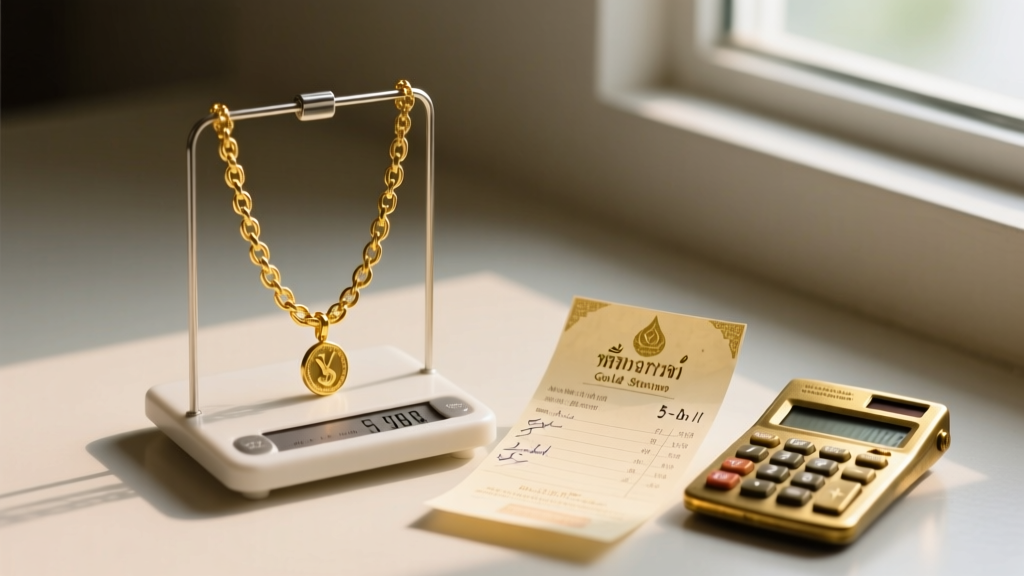
The spot price is set daily by the Thai Gold Traders Association and reflects the raw commodity value of 96.5% gold. The 'Kamnet' is the workmanship or making charge. This fee compensates the goldsmith for the labor, design complexity, and overhead. Unlike Western luxury brands that mark up jewelry by 300% to 1000%, the Kamnet is a modest, fixed fee per baht of weight. As noted in market analyses by Bangkok Post Business, the Kamnet ensures that when you resell the chain, you lose only the workmanship fee, retaining the full spot value of the gold.
- Simple Machine-Made Links (e.g., Curb, Rope): 400 to 800 THB per baht.
- Semi-Handcrafted Links (e.g., Bamboo/Pai): 800 to 1,200 THB per baht.
- Highly Intricate Hand-Forged Links (e.g., Watermelon/Tanmo, Dragon): 1,500 to 3,000+ THB per baht.
Example Calculation: If the daily spot price is 40,000 THB per baht, and you want a 3-baht Watermelon chain with a 1,500 THB Kamnet, your cost per baht is 41,500 THB. Total price: 124,500 THB. When you resell it, you receive exactly 120,000 THB (the raw spot value), losing only the 4,500 THB Kamnet.
Popular Link Profiles for Baht Chains
Thai goldsmiths have developed distinct, culturally significant link patterns that are rarely seen in Western jewelry. Understanding these profiles will help you choose a baht chain necklace that suits your aesthetic and layering goals.
- Bamboo (Pai): Cylindrical, hollow or semi-solid links that mimic bamboo stalks. Highly flexible and excellent for draping over the collarbone.
- Watermelon (Tanmo): Oval links with distinct horizontal striations carved into the gold, resembling the stripes of a watermelon. Exceptional light refraction.
- Dragon (Mangkon): A dense, interlocking scale pattern that lies flat against the chest. Extremely durable and favored for heavy 5-baht+ chains.
- Rope (Cheuak): Twisted links that create a spiraling optical illusion. Best paired with heavy Thai amulet pendants.
Durability, Clasps, and Real-World Failure Modes
While 96.5% gold is stronger than 24k, it is still a precious metal prone to specific failure modes, particularly regarding the clasp. The traditional Thai S-hook clasp is a simple, curved wire that relies entirely on the tension and malleability of the gold to stay closed.

On a heavy 5-baht chain (76 grams), the kinetic energy generated by walking or turning your head can slowly pry the S-hook open over time, leading to catastrophic loss of the necklace. Expert Troubleshooting: If you purchase a baht chain necklace weighing more than 2 baht (30.4g), immediately have a jeweler swap the traditional S-hook for a heavy-duty stainless steel or 18k white gold lobster clasp. Alternatively, insist on a secondary safety chain. Furthermore, avoid sleeping in hollow-link chains (like the Bamboo style), as the thin gold walls can easily crush under the weight of your head, rendering the links irreparably deformed.
Where to Buy Authentic Baht Gold
If you are buying locally in Thailand, Yaowarat Road in Bangkok's Chinatown is the global epicenter for baht gold. Reputable, multi-generational houses like Hua Seng Heng and MTS Gold display their daily spot prices on digital tickers visible from the street. According to data tracked by the World Gold Council, Thai domestic gold markets operate with incredibly tight spreads, making them some of the most efficient physical gold markets on earth.
For international buyers, ensure the dealer provides a certificate of authenticity stating the exact weight in baht and grams, and the 96.5% purity hallmark. Avoid tourist traps in resort areas that sell '18k Thai gold'—true baht chains are strictly 96.5%. By understanding the weight, respecting the Kamnet, and securing the clasp, your baht chain necklace will serve as both a stunning sartorial anchor and a highly liquid generational asset.
Pro-Tip for Layering: When layering a 2-baht and 3-baht chain, ensure the length difference is at least 2 inches (5 cm) to prevent the heavy 96.5% gold links from grinding against each other, which causes premature wear and gold dust loss.


