How to Choose and Style the Perfect Pearl Teardrop Necklace
Master the art of selecting, styling, and caring for a pearl teardrop necklace. Expert tips on pearl grades, hardware, and neckline matching.

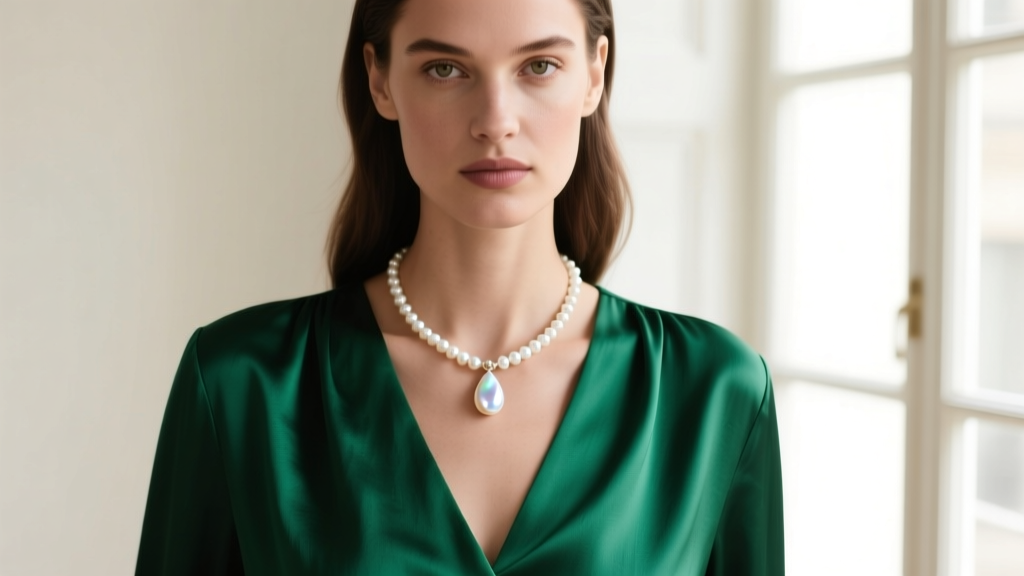
The Anatomy of a Drop: Why the Teardrop Shape Endures
The pearl teardrop necklace is a masterclass in organic geometry. Unlike perfectly round pearls that reflect light uniformly, the teardrop (or drop) shape captures and directs light down its elongated axis, creating a mesmerizing, directional luster. This unique silhouette draws the eye vertically, making it an exceptionally flattering choice for elongating the neck and framing the face. However, selecting the right piece requires navigating a complex landscape of pearl types, nacre thicknesses, and hardware vulnerabilities. This step-by-step guide will walk you through the precise technical and aesthetic considerations needed to choose, style, and preserve a high-quality pearl teardrop necklace.
Step 1: Selecting the Right Pearl Type and Grade
Not all teardrop pearls are created equal. The shape naturally occurs more frequently in certain pearl varieties, heavily influencing both the price and the visual characteristics of the necklace. When evaluating a pearl teardrop necklace, you must first identify the mollusk source and the resulting nacre structure.
Freshwater vs. Saltwater Drop Pearls
Freshwater pearls are solid nacre, meaning they are incredibly durable and resistant to chipping. Because they are nucleated with mantle tissue rather than a round bead, naturally occurring teardrop and baroque drop shapes are abundant, keeping prices accessible. Saltwater pearls, like Akoya, are bead-nucleated. A perfectly symmetrical teardrop Akoya is rare and commands a premium, as most are cultured to be perfectly round.
| Pearl Type | Nacre Thickness | Teardrop Availability | Average Price Range (Pendant Only) |
|---|---|---|---|
| Freshwater | Solid (100% Nacre) | Very High (Often Baroque) | $80 - $350 |
| Akoya | 0.2mm - 0.8mm | Low (Mostly Round) | $400 - $1,200 |
| South Sea | 2.0mm - 6.0mm | Moderate (Large Drops) | $1,500 - $5,000+ |
| Tahitian | 0.8mm - 2.0mm | Moderate (Dark Drops) | $600 - $2,500 |
According to the Gemological Institute of America (GIA), luster is the most critical value factor for any pearl. When inspecting a teardrop, look for 'Excellent' luster, where reflections appear sharp and distinct on the curved surface, rather than 'Fair' luster, which appears chalky and blurred.
Step 2: Evaluating the Bail and Chain Hardware
The most common point of failure in a pearl teardrop necklace is not the pearl itself, but the hardware connecting it to the chain. The bail (the loop that holds the pendant) must be meticulously engineered to protect the pearl's delicate drill hole.
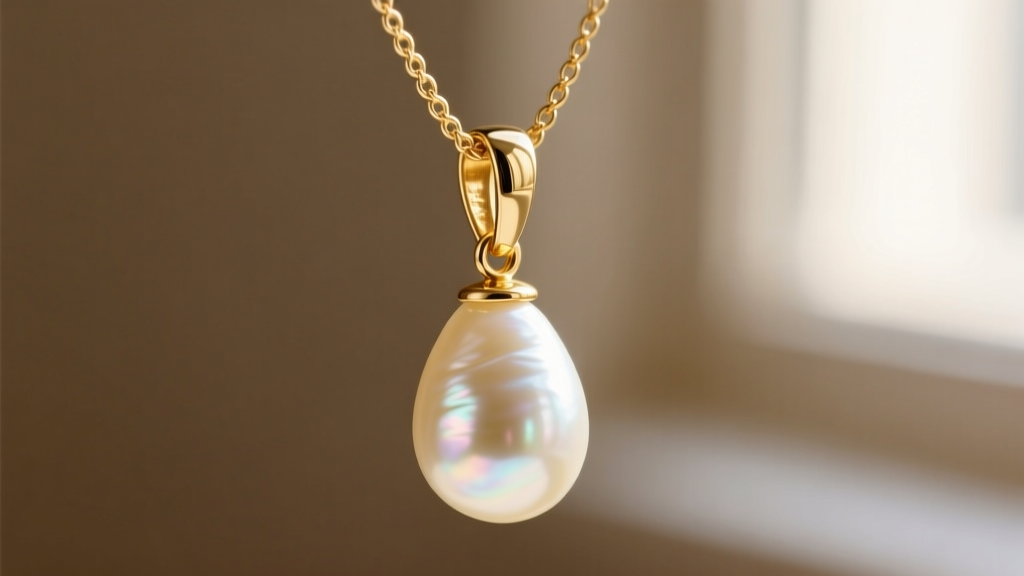
Identifying Hardware Failure Modes
- Glued Bails (Avoid): Many mass-produced teardrop pendants use a simple metal cap glued directly to the top of the pearl. Over time, exposure to skin oils, perfumes, and temperature changes degrades the adhesive, causing the pearl to snap off and get lost.
- Soldered Pin Bails (Preferred): High-end jewelers drill a partial hole into the top of the teardrop, insert a metal pin with a threaded or textured base, and secure it with jeweler's epoxy, finishing with a soldered bail loop. This provides mechanical and chemical security.
- Wire-Wrapped Bails (Artisan): Common for undrilled baroque teardrops, where 14k or 18k gold wire is tightly wrapped around the narrowest point of the drop. Ensure the wire is at least 20-gauge to prevent bending.
Chain Selection and Drill Hole Friction
The chain you select can act as a microscopic saw against the pearl. Avoid box chains or wheat chains, as their sharp, angular edges will slowly chip the nacre around the drill hole with every movement. Instead, opt for a smooth, rounded cable chain or a seamless rolo chain in a 0.9mm to 1.2mm width. These provide adequate tensile strength while remaining gentle on the pearl's aperture.
Step 3: Matching the Pendant to Your Neckline
Styling a pearl teardrop necklace requires an understanding of proportional geometry. The elongated nature of the drop pendant interacts differently with various fabric cuts.
V-Necks and Scoop Necks
These necklines naturally create a vertical vector that mirrors the teardrop shape. For V-necks, select a choker or princess length (16 to 18 inches) so the pearl rests exactly one inch above the apex of the V-neck. This creates a harmonious, unbroken line that elongates the torso. A 10mm to 12mm freshwater teardrop works beautifully here without overwhelming the collarbone.
High Collars, Turtlenecks, and Crew Necks
When wearing high, restrictive necklines, a short chain will cause the teardrop to lie flat against the fabric, losing its kinetic movement. Instead, utilize an opera-length chain (26 to 30 inches). Allowing a large, 14mm South Sea teardrop to hang low over a dark turtleneck creates a striking, modern contrast that leverages the pearl's natural weight and swing.
Step 4: Layering Techniques for Modern Elegance
The single-strand look is timeless, but contemporary styling often involves layering. The key to layering a pearl teardrop necklace without tangling or scratching is adhering to the 'Two-Inch Rule' and mixing material densities.
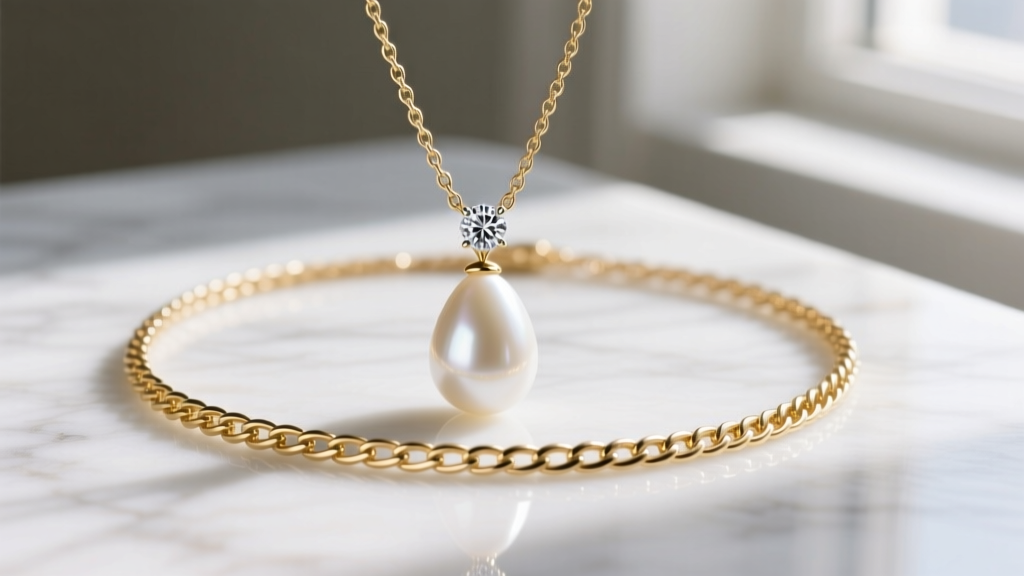
The Layering Blueprint
- Base Layer (14-15 inches): Start with a lightweight, 1mm gold or platinum herringbone chain. This sits high on the collarbone and provides a metallic backdrop.
- The Focal Point (17-18 inches): Your pearl teardrop necklace sits here. Ensure the chain is distinctly different in texture from the base layer (e.g., a cable chain) to prevent the metals from interlocking and tangling.
- The Anchor (20-22 inches): Finish with a heavier, darker element, such as a blackened silver rope chain or a simple leather cord with a minimal geometric pendant. This grounds the ethereal nature of the pearl.
Pro Tip: Never layer a pearl teardrop directly against diamond or sapphire pendants. Gemstones rank much higher on the Mohs hardness scale and will easily scratch the pearl's nacre (which ranks at a mere 2.5 to 3.0) during daily wear.
Step 5: Nacre Preservation and Daily Care
Organic gems require a drastically different care regimen than crystalline stones. The nacre of a teardrop pearl is composed of microscopic aragonite platelets held together by conchiolin, an organic protein that is highly susceptible to chemical degradation.
The Golden Rule of Pearl Care: 'Last on, first off.' Your pearl teardrop necklace should be the very last item you put on after applying cosmetics, hairspray, and perfumes, and the first item you remove when returning home.
Step-by-Step Maintenance Routine
- Immediate Wiping: After wearing, gently wipe the teardrop with a damp, lint-free microfiber cloth. This removes acidic skin oils and environmental pollutants that can slowly etch the nacre, causing it to lose its luster over time.
- Proper Storage: Never store your pearl pendant in an airtight plastic bag or a safety deposit box for extended periods. Pearls require ambient moisture; sealing them can cause the nacre to dehydrate and crack. Store them in a soft silk pouch, separate from harder jewelry.
- Annual Hardware Check: Take the necklace to a professional jeweler once a year. As noted by Jewelers of America, regular inspections ensure the bail pin remains secure and the chain links have not suffered from microscopic metal fatigue.
Final Thoughts on the Teardrop Silhouette
Choosing a pearl teardrop necklace is an investment in organic artistry. By prioritizing solid nacre or thick-nacre saltwater varieties, insisting on mechanically sound soldered bails, and adhering to strict layering and care protocols, you ensure the pendant remains a luminous staple in your wardrobe for decades. The teardrop is not merely a piece of jewelry; it is a dynamic, light-catching sculpture that moves with you.


