The Devil Eye Necklace: Technical Craft & Material Guide
Explore the technical craftsmanship behind the devil eye necklace. Learn about vitreous enamel, cabochon settings, and metal grades for lasting amulets.

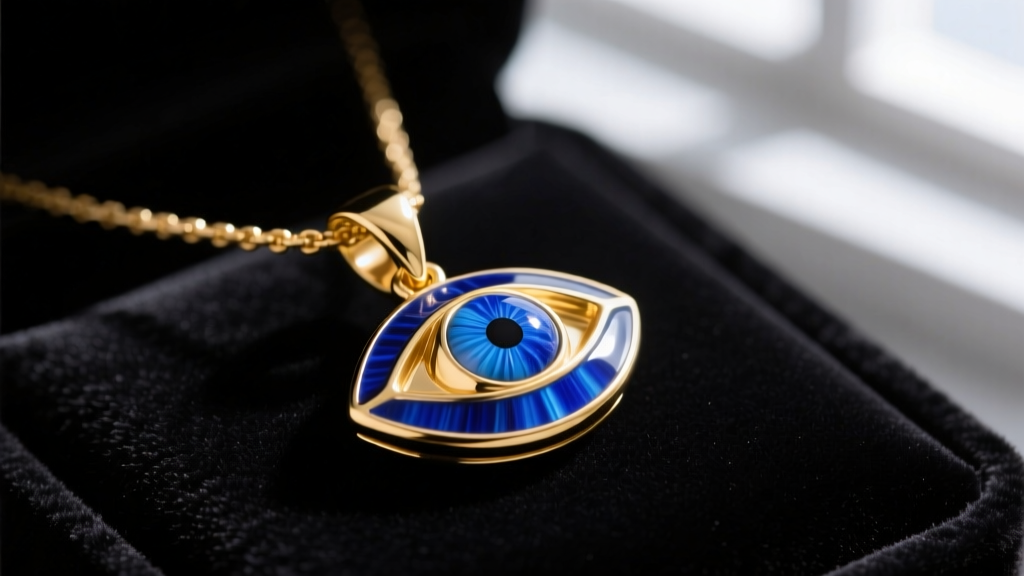
The Anatomy of a Premium Devil Eye Necklace
In the realm of fine jewelry, the devil eye necklace transcends its origins as a simple tourist trinket to become a masterclass in micro-craftsmanship. While culturally synonymous with the Nazar or Malocchio amulets designed to ward off malevolent glares, high-end jewelers approach the devil eye motif as a complex study in concentric geometry, material science, and optical illusion. Crafting a piece that withstands daily wear while maintaining the piercing 'gaze' of the pendant requires strict adherence to metallurgical and lapidary standards.
Unlike mass-produced stamped pendants, a premium devil eye necklace is engineered from the inside out. The structural integrity of the central cabochon, the thermal dynamics of the surrounding enamel, and the tensile strength of the bail all dictate the longevity of the piece. According to the GIA Gem Encyclopedia, the juxtaposition of porous gemstones with rigid metal settings requires precise tolerance calculations to prevent cracking under thermal expansion. This guide dissects the technical specifications that separate heirloom-quality warding amulets from disposable fashion jewelry.
Enamel Techniques: Vitreous vs. Cold Epoxy
The striking blue and white concentric rings of a traditional devil eye necklace are predominantly achieved through enameling. However, the chemical composition of the enamel dictates the pendant's lifespan. Fine jewelers exclusively utilize vitreous enamel, a powdered glass fused to a metal substrate at extreme temperatures. Conversely, commercial manufacturers rely on cold enamel (epoxy resin), which fundamentally lacks the durability required for generational wear.
Temperature and Durability Metrics
Vitreous enamel requires firing in a kiln at temperatures ranging from 1,400°F to 1,600°F (760°C to 870°C). The cobalt oxide used to create the signature deep blue hue chemically bonds with the silica, resulting in a surface that is highly resistant to UV degradation and chemical solvents. Cold epoxy, on the other hand, cures at room temperature and is highly susceptible to yellowing and micro-abrasions.
| Property | Vitreous Enamel (Glass) | Cold Enamel (Epoxy Resin) |
|---|---|---|
| Mohs Hardness | 5.5 - 6.5 | 2.0 - 3.0 |
| Firing Temperature | 1,400°F - 1,600°F | Room Temp / Low Heat Cure |
| UV Resistance | Impervious (Will not yellow) | Poor (Yellows in 1-3 years) |
| Chemical Resistance | High (Withstands mild acids) | Low (Degrades with perfumes) |

Stone Selection for the 'Iris' and 'Pupil'
The focal point of any devil eye necklace is the central 'pupil' and 'iris', typically represented by a dark stone surrounded by a lighter matrix, or vice versa. The selection of these cabochons is not merely aesthetic; it is governed by the Mohs scale of mineral hardness and the stone's porosity. Because the eye motif requires perfectly domed, polished surfaces to catch the light and simulate a wet, reflective gaze, lapidaries must select stones that take a high mirror polish without pitting.
- Lapis Lazuli (Mohs 5-5.5): The traditional choice for the deep blue iris. High-grade Afghan lapis with minimal calcite inclusions is preferred. However, its porosity means it must be bezel-set with a completely sealed back to prevent skin oils from darkening the stone over time.
- Blue Sapphire (Mohs 9): Used in ultra-premium devil eye necklaces. Sapphire cabochons offer unparalleled scratch resistance and a refractive index that gives the 'eye' a luminous, internal glow. They are typically set in 18k gold to complement their cool undertones.
- Black Onyx (Mohs 6.5-7): The standard for the central pupil. Onyx is dense, non-porous, and takes an exceptional polish, providing the necessary high-contrast anchor for the surrounding lighter enamel or turquoise.
- Turquoise (Mohs 5-6): Often used for the outer white/light blue rings in Southwestern interpretations. Stabilized turquoise is mandatory here; untreated chalk turquoise will absorb cosmetics and turn greenish-brown.
Metal Alloys and Prong Construction
The metal chassis of a devil eye necklace must support the immense weight of the glass enamel and stone cabochons without warping. Warping is the enemy of vitreous enamel; if the underlying metal bends, the rigid glass will instantly fracture and pop off. Therefore, the alloy choice and the thickness of the backplate are critical engineering decisions.
For sterling silver (925) pieces, the copper content makes the alloy prone to sulfur-induced tarnishing. To combat this, premium pendants are plated with a minimum of 15 micro-inches of rhodium. This not only prevents tarnish but provides a hard, white-metal barrier that protects the silver from scratching. When gold is preferred, 14k gold (58.5% pure gold) is structurally superior to 18k gold for the backplate due to its higher tensile strength, though 18k is often used for the bezel wire because its higher malleability allows for a tighter, seamless burnish against the cabochon.
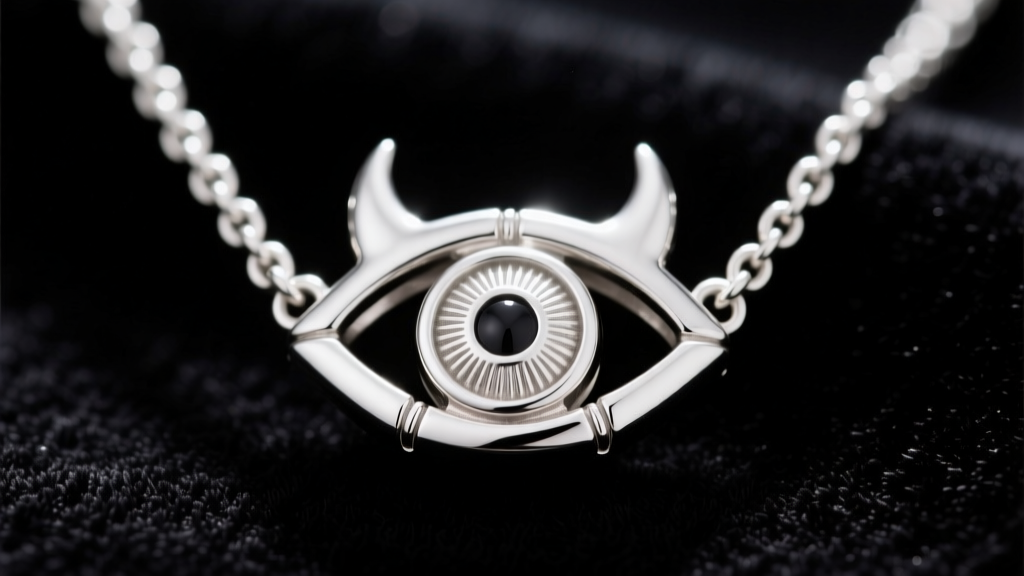
Chain Pairing and Bail Engineering
A heavy, enameled devil eye pendant requires a chain that can support its dynamic load without suffering from link distortion. The bail—the loop that connects the pendant to the chain—must be engineered to distribute weight evenly. Standard soldered ring bails often fail at the solder joint when subjected to the pendulum-like swinging of a heavy eye amulet.
Expert jewelers utilize a 'hidden bail' or a reinforced integrated tube bail. A hidden bail is soldered directly to the backplate of the pendant, allowing the chain to pass through the body of the pendant itself. This lowers the center of gravity, ensuring the devil eye sits perfectly flat against the sternum rather than flipping upside down. For pendants weighing between 8 and 15 grams, a 1.5mm to 2.0mm box chain or wheat chain is recommended. These chain styles offer multidimensional structural support, unlike delicate cable chains which are prone to kinking under concentrated point-loads.
Maintenance and Restoration Protocols
Maintaining a fine devil eye necklace requires an understanding of the chemical vulnerabilities of its composite materials. The most common mistake owners make is using ultrasonic cleaners or harsh silver dips. Ultrasonic vibrations can shatter vitreous enamel and fracture internal inclusions in lapis lazuli. Similarly, thiourea-based silver dips will strip the polish from porous stones and leave a white, powdery residue trapped in the bezel crevices.
Expert Troubleshooting
If the enamel becomes dull from years of skin contact and lotion buildup, it should be cleaned using a soft-bristled brush and a mild, non-detergent soap like Castile soap. For the metal components, a specialized polishing cloth impregnated with jeweler's rouge should be used, taking extreme care to avoid rubbing the cloth directly against softer stones like turquoise or lapis, which can easily be scratched by the mild abrasives in the cloth.
'When restoring antique warding amulets, we never use chemical baths. The concentric enamel work is highly sensitive to thermal shock and acidic compounds. Mechanical cleaning under magnification is the only way to preserve the integrity of the glass-to-metal seal.' - Senior Conservator, V&A Jewelry Collection
Ultimately, investing in a technically sound devil eye necklace means paying for the unseen engineering: the sealed bezels, the kiln-fired glass, and the reinforced bails. By understanding these material sciences, collectors can acquire amulets that are not only culturally significant but structurally capable of surviving generations of wear.


