Expert Guide to Choosing and Styling a Necklace with Eyeball Pendants
Explore the craftsmanship, materials, and styling of a necklace with eyeball pendants. Expert guide on glass, resin, chain gauges, and care.

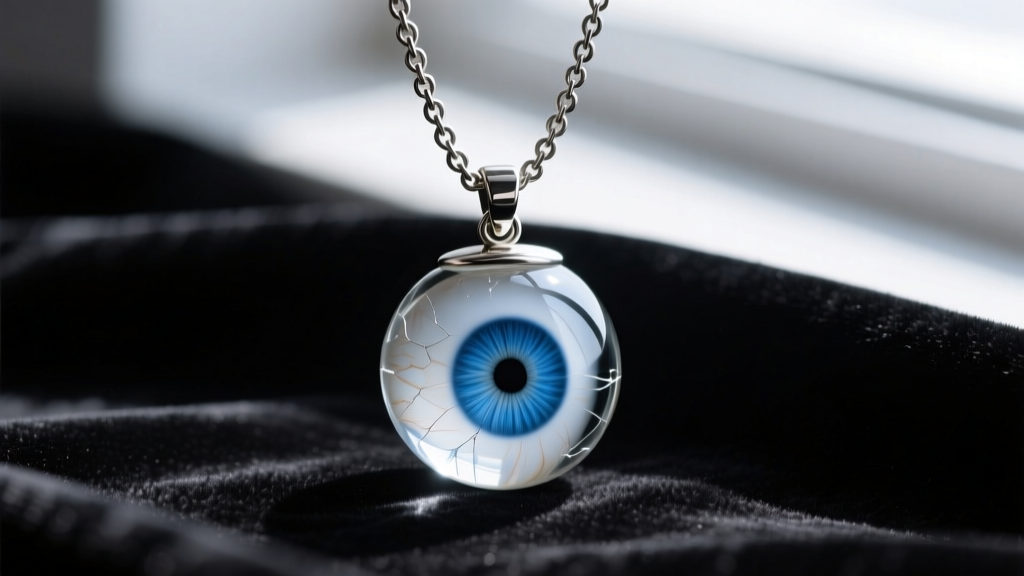
The Renaissance of Anatomical Jewelry
The macabre and anatomical jewelry movement has evolved from niche subculture into a recognized avant-garde staple. At the center of this trend is the necklace with eyeball pendant—a striking statement piece that demands technical precision in both its creation and styling. Unlike standard gemstone pendants, an eyeball pendant requires a masterful understanding of optical illusions, material science, and weight distribution. Whether you are a collector of dark academia aesthetics, a medical professional celebrating anatomy, or a curator of bespoke jewelry, understanding the engineering behind these pieces is critical for making an informed purchase.
In this comprehensive guide, we dissect the material composition, chain gauge requirements, bail mechanics, and long-term maintenance of anatomical eye pendants. By the end, you will possess the horological and gemological knowledge necessary to evaluate high-end artisan pieces versus mass-produced novelties.
Material Breakdown: Glass vs. Resin vs. Enamel
The visual impact of a necklace with eyeball relies entirely on the medium used to replicate the sclera, iris, and pupil. Artisans typically utilize three primary materials, each with distinct physical properties, refractive indices, and durability profiles.
| Material | Durability (Mohs) | Weight (15mm) | Price Range | Primary Vulnerability |
|---|---|---|---|---|
| Borosilicate Glass | 6.0 - 7.0 | 4.5 - 6.0g | $80 - $350 | Shattering from blunt impact |
| UV-Cured Epoxy Resin | 2.5 - 3.5 | 2.0 - 3.0g | $30 - $120 | UV degradation (yellowing) |
| Vitreous Enamel | 5.5 - 6.5 | 7.0 - 9.0g | $150 - $600+ | Chipping if dropped on metal |
| Painted Ceramic | 6.0 - 7.0 | 5.0 - 7.0g | $40 - $150 | Glaze crazing over time |
The Science of Lampwork Glass
High-end eyeball pendants are predominantly crafted using lampwork techniques with borosilicate glass (often known by the brand name Pyrex). Borosilicate is favored for its low coefficient of thermal expansion, which makes it highly resistant to thermal shock. According to technical resources from the Ganoksin Project, artisans melt borosilicate rods at approximately 1650°C, layering opaque white glass for the sclera, colored frit for the iris, and a black glass dot for the pupil. The pendant is then encased in a clear optical-grade glass dome to create a magnifying, 3D parallax effect. Crucially, the glass must be annealed in a kiln at roughly 960°F (515°C) to relieve internal molecular stress. Failure to properly anneal the glass will result in spontaneous stress fractures weeks or months after creation.
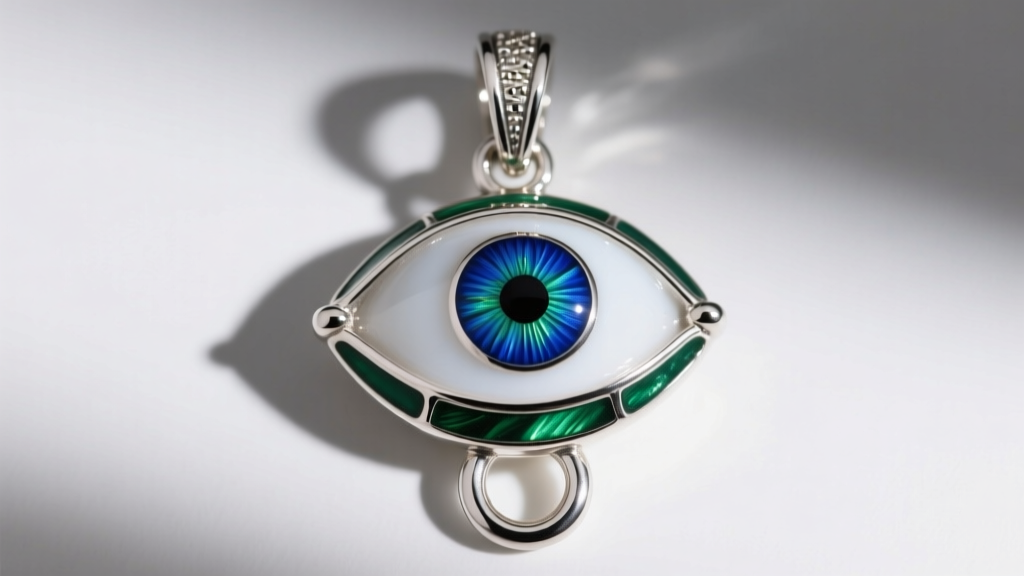
Vitreous Enamel on Metal
For those seeking a more durable, metal-based necklace with eyeball, vitreous enamel is the premier choice. Enameling involves fusing powdered glass to a metal substrate (usually sterling silver or copper) at temperatures exceeding 1400°F. The result is a vivid, scratch-resistant surface that will not yellow or fade over decades. Cloisonné techniques are often employed, using microscopic silver wires to separate the white sclera from the intricately colored iris. While heavier than glass or resin, enamel pendants offer an heirloom-quality finish that appeals to fine jewelry collectors.
Chain Selection and Gauge Specifications
A common failure point in anatomical jewelry is the mismatching of pendant weight to chain gauge. A standard 15mm to 20mm borosilicate glass eyeball weighs between 5 and 8 grams. If suspended on a delicate 1.0mm cable chain, the constant friction will eventually wear through the jump ring or snap the chain links at the clasp. Data compiled by wholesale jewelry suppliers like Rio Grande suggests specific pairings based on pendant mass.
- Lightweight Resin Eyes (Under 4g): Can be safely paired with 1.5mm to 2.0mm rolo or curb chains.
- Medium Glass Eyes (4g - 8g): Require a minimum 2.5mm to 3.5mm chain. A heavy rolo or wheat chain provides the necessary tensile strength and visual balance.
- Large Enamel/Metal Eyes (8g+): Demand a 4.0mm+ Cuban curb or thick Figaro chain, secured with a heavy-duty lobster clasp rather than a standard spring-ring.
Furthermore, the chain material must be considered. Oxidized sterling silver (blackened silver) is the industry standard for macabre jewelry, as the dark patina enhances the anatomical, vintage aesthetic of the eyeball pendant while hiding tarnish.
Bail Mechanics and Pendant Mounting
The bail—the connector that loops the chain through the pendant—is the most critical structural component of a necklace with eyeball. Because eyeball pendants are spherical or domed, traditional glued-on bails are highly discouraged. The convex surface provides insufficient surface area for cyanoacrylate or epoxy adhesives, leading to inevitable detachment.
Soldered vs. Embedded Bails
In metal and enamel pieces, the bail should always be silver-soldered directly to the pendant's casing. For glass lampwork pieces, the artisan will typically fuse a glass loop (a 'frit bail') directly into the molten glass during the kiln process, or utilize a specialized metal bezel cup with a pre-soldered bail that the glass sphere is glued into using a flexible, impact-resistant adhesive like E6000. When inspecting a glass eyeball pendant, ensure the metal bezel has a deep 'lip' that wraps at least 3mm over the equator of the glass sphere to prevent it from popping out if subjected to lateral pressure.
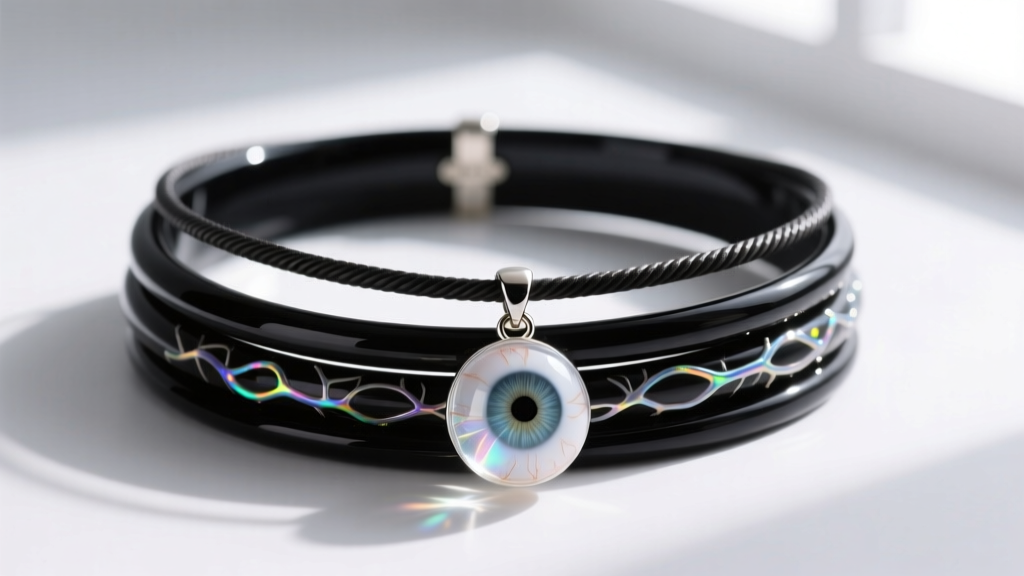
Troubleshooting Common Failure Modes
Even expertly crafted pieces require specific maintenance. Here are the most frequent technical issues encountered with eyeball pendants and their solutions:
- Resin Yellowing (Photo-oxidation): UV-cured resins will naturally yellow when exposed to sunlight over time. When purchasing a resin necklace with eyeball, inquire if the artisan has added HALS (Hindered Amine Light Stabilizers) to the epoxy mixture. If not, the piece must be stored in a dark jewelry box when not worn.
- Cloudy Glass Domes: The clear glass dome over the iris can accumulate micro-scratches from contact with zippers or hard surfaces, ruining the optical clarity. Clean only with a microfiber cloth and specialized glass polish; never use ultrasonic cleaners on lampwork glass, as the high-frequency vibrations can exploit microscopic annealing flaws and shatter the piece.
- Jump Ring Distortion: The jump ring connecting the bail to the chain is a weak point. Ensure the jump ring is 'soldered closed' or, at minimum, made from half-hard wire rather than dead-soft wire to prevent it from pulling open under the pendulum-like swinging motion of a heavy glass eye.
Styling and Wardrobe Integration
Styling a necklace with eyeball requires balancing its inherent edge with your wardrobe. For a subtle, sophisticated approach, opt for a smaller (10mm-12mm) vitreous enamel eye on a 24-inch oxidized silver chain, allowing the pendant to rest over a dark turtleneck or a structured blazer. This creates a 'peek-a-boo' effect that draws the eye downward and elongates the neck.
For maximalist layering, pair a 14-inch resin eyeball choker with a 20-inch medium glass eye pendant and a 26-inch plain silver chain featuring a small anatomical charm (such as a silver tooth or bone). Ensure the chains are staggered by at least 4 inches to prevent the heavy pendants from tangling and scratching one another. By respecting the material science and structural engineering behind these unique pieces, you can curate an anatomical jewelry collection that is as technically sound as it is visually captivating.


