Blue Pearl Necklace Value Guide: 2026 Pricing & Budget Tips
Discover the true value of a blue pearl necklace in 2026. Compare Tahitian vs. dyed Akoya pricing, grading metrics, and expert tips to avoid overpaying.

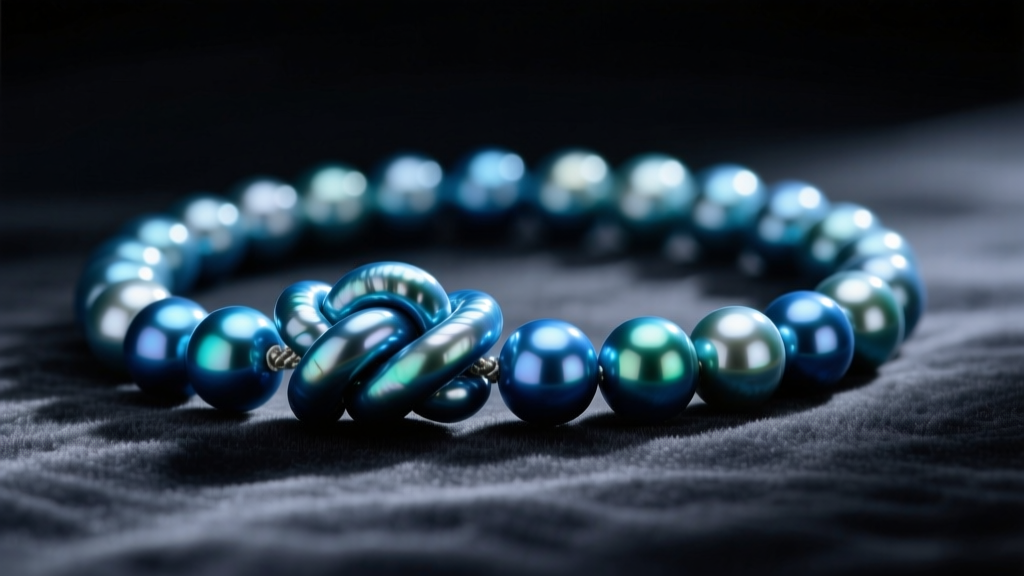
The Allure and Economics of the Blue Pearl Necklace
In the 2026 fine jewelry market, the search for a blue pearl necklace spans a massive economic spectrum. Buyers are frequently surprised to learn that the term "blue pearl" is not a single gemological classification, but rather a visual descriptor that covers everything from $40 dyed freshwater strands to $50,000 gem-grade Tahitian chokers. As colored pearls continue to dominate editorial trends and red-carpet styling, understanding the underlying economics, biological origins, and grading metrics of these gems is essential. This guide provides a rigorous budget and value assessment, equipping you with the exact data points needed to evaluate a blue pearl necklace without falling victim to inflated retail markups or deceptive marketing terminology.
Decoding the "Blue" Pearl: Natural vs. Treated Origins
The most critical factor in assessing the value of a blue pearl necklace is determining the biological origin of the pearl and whether its color is natural or the result of post-harvest treatment. According to the Gemological Institute of America (GIA), true naturally blue pearls are exceptionally rare and originate almost exclusively from the Pinctada margaritifera saltwater oyster, which produces Tahitian pearls. These oysters naturally secrete nacre with dark pigments, resulting in stunning hues of peacock blue, aubergine, and pistachio without any human intervention.
The Premium Tier: Natural Tahitian Blues
Tahitian pearls are the gold standard for naturally blue pearl necklaces. The French Polynesian government strictly regulates their export, mandating a minimum nacre thickness of 0.8mm. However, premium investment-grade strands typically boast nacre layers between 1.5mm and 2.5mm. This thick nacre not only ensures durability but also creates the deep, mirror-like luster and complex color overtones that justify their premium price point. A high-quality Tahitian blue pearl necklace is an heirloom asset that retains significant resale value.
The Budget Tier: Dyed Akoya and Freshwater Alternatives
If a blue pearl necklace is priced under $500, it is almost certainly not a natural Tahitian. Akoya pearls (Pinctada fucata martensii) and freshwater mussels (Hyriopsis) naturally produce white, cream, or pink hues. To achieve a blue color, these pearls undergo post-harvest treatments. Freshwater pearls are typically submerged in organic or chemical dyes, while Akoya pearls are often subjected to silver nitrate irradiation. This irradiation darkens the mother-of-pearl bead nucleus, creating a blue-grey appearance through the translucent nacre. While these treatments produce beautiful, affordable jewelry, they possess virtually no secondary market value and are prone to color fading or peeling over time.

2026 Market Pricing Matrix: What Should You Actually Pay?
To accurately assess a blue pearl necklace, you must align the asking price with the pearl's origin, size, and quality grade. The following matrix reflects average 2026 retail pricing for a standard 18-inch princess-length strand. Use this table as a baseline to identify severe overpricing or suspicious underpricing.
| Pearl Origin | Size Range | Quality Grade | Color Origin | Est. Retail Price (2026) |
|---|---|---|---|---|
| Tahitian | 8.0 - 9.0 mm | AAA (Gem) | Natural Peacock/Blue | $2,500 - $4,500 |
| Tahitian | 9.0 - 10.0 mm | AA+ | Natural Blue-Grey | $1,200 - $2,200 |
| Akoya | 7.0 - 8.0 mm | AAA | Irradiated (Treated) | $400 - $800 |
| Freshwater | 9.0 - 10.0 mm | A | Dyed (Treated) | $60 - $150 |
Note: Prices assume standard 14k gold clasps and silk knotting. Designer brand markups can increase these baseline figures by 100% to 300%.
Critical Value Indicators Beyond Color
When evaluating a blue pearl necklace, color is merely the starting point. The GIA Pearl Quality Factors dictate that luster, surface cleanliness, and matching are far more critical to long-term value and aesthetic appeal. Here is how to assess these metrics like a professional appraiser.
1. Luster and Nacre Quality
Luster is the sharpness of light reflection on the pearl's surface. High-quality Tahitian blues will exhibit "excellent" luster, meaning you can clearly see your own reflection in the pearl's surface. If the pearl looks chalky, dull, or milky, it indicates thin nacre or poor crystallization. In irradiated Akoya pearls, thin nacre (under 0.3mm) leads to a failure mode known as "blinking," where the dark nucleus shows through as flat, lifeless patches, and the nacre is highly susceptible to peeling near the drill holes after just a few years of wear.
2. Strand Matching
Creating a cohesive blue pearl necklace requires sorting thousands of pearls to find matches in size, shape, and overtone. A premium strand will have a seamless gradient or uniform size with consistent peacock or blue overtones. If you notice drastic shifts in color saturation or varying luster levels between adjacent pearls, the strand is considered "commercial grade" and should command a significant discount.

Hardware and Stringing: The Hidden Costs
A common budget trap is focusing solely on the pearls while ignoring the stringing and hardware. A high-value blue pearl necklace must be strung on pure silk thread with individual knots between every pearl. This prevents total loss if the strand breaks and protects the nacre from friction damage. Synthetic threads like nylon or polyester are cheaper but can stretch and cut into the delicate nacre around the drill holes over time.
Furthermore, inspect the clasp. Premium strands utilize solid 14k or 18k gold clasps, often featuring a secure fishhook or box clasp with a figure-eight safety catch. If a seller is asking $3,000 for a Tahitian necklace but it is finished with a cheap, hollow lobster clasp or silver-plated brass, this is a massive red flag indicating corner-cutting in the manufacturing process.
Red Flags: How to Spot Overpriced Imitations
The secondary market and tourist traps are flooded with misrepresented blue pearl necklaces. Arm yourself with these specific troubleshooting insights to avoid fraudulent purchases:
- Dye Pooling: Use a 10x jeweler's loupe to inspect the drill holes. In dyed freshwater or treated Akoya pearls, you will often see concentrated dark blue pigment pooling inside the microscopic drill channel or along surface cracks. Natural Tahitian blues will show clean, pigment-free drill holes.
- The "Uniformity" Trap: Natural Tahitian pearls are organic and will have slight variations in shape and overtone. If a "Tahitian" blue pearl necklace features perfectly round, identically saturated blue pearls with zero surface blemishes and is priced under $1,000, you are looking at dyed freshwater or glass beads coated in synthetic pearl essence.
- Chipping at the Drill Site: Poorly treated pearls often suffer from compromised structural integrity. Inspect the area immediately surrounding the drill hole. If you see micro-chipping or flaking nacre, the pearl has likely been subjected to harsh chemical bleaching prior to dyeing, rendering it structurally unsound.
"Always request an independent gemological laboratory report for any blue pearl necklace priced over $2,500. A reputable seller will easily provide documentation from GIA, SSEF, or GRS confirming the natural color origin and nacre thickness."
Final Verdict: Maximizing Your Budget
Your approach to buying a blue pearl necklace should be strictly dictated by your financial goals. If you are seeking an everyday fashion accessory with bold color and do not care about resale value, a dyed freshwater or irradiated Akoya strand in the $100 to $500 range offers excellent aesthetic value. However, if you are purchasing an heirloom piece, an anniversary gift, or an investment-grade accessory, you must allocate a minimum of $1,500 to $3,000 for a natural, gem-grade Tahitian blue pearl necklace. By prioritizing thick nacre, sharp luster, and proper silk knotting over sheer size, you will secure a piece that remains breathtaking and structurally sound for generations.


