Star Necklace Men: Metal Properties & Buying Guide
Discover the best metals for a star necklace men can wear daily. We compare titanium, sterling silver, stainless steel, and gold for durability and style.

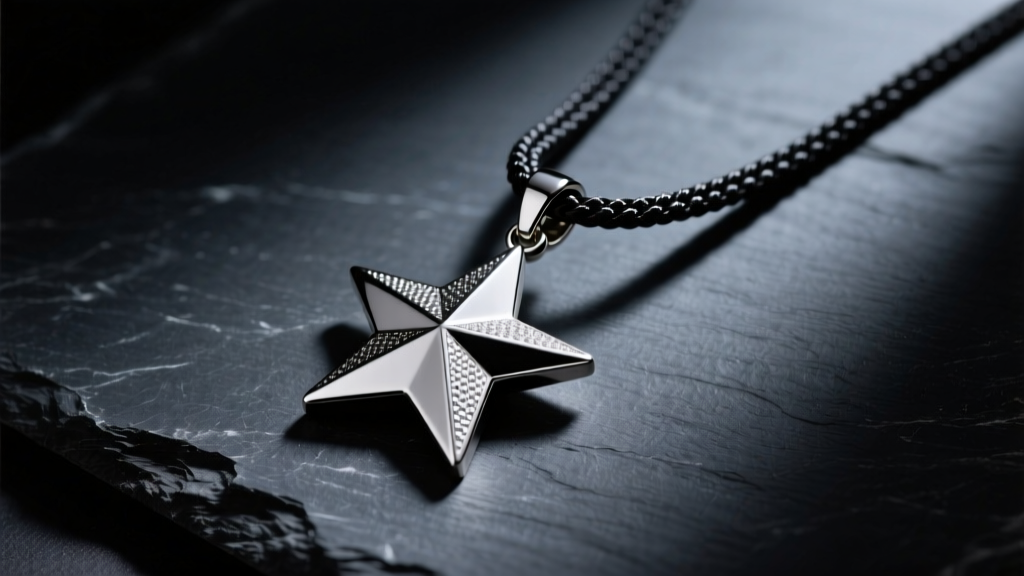
The Evolution of the Men's Star Pendant
The landscape of men's jewelry has undergone a massive transformation over the last decade. Moving away from purely ostentatious displays, modern men's accessories favor geometric minimalism, subtle symbolism, and architectural precision. The star pendant sits right at the intersection of these trends. However, when shopping for a star necklace men can wear daily, the aesthetic design is only half the battle. The material composition dictates the necklace's longevity, skin reactivity, and structural integrity. A delicate star point crafted from the wrong alloy will bend within a week, while a chain lacking proper tensile strength will snap under the weight of a solid metal pendant. In this comprehensive 2026 material guide, we break down the metallurgical properties of the four most common metals used in men's star necklaces, providing actionable data to help you choose the right piece for your lifestyle.
Material Deep Dive: Steel, Titanium, Silver, and Gold
316L Surgical Stainless Steel: The Utilitarian Workhorse
When evaluating stainless steel for jewelry, you must look beyond the generic label and demand 316L surgical grade. The 'L' stands for low carbon, but the real magic lies in the addition of 2-3% molybdenum. This specific alloying element drastically increases resistance to chloride ion corrosion—meaning it will not pit or rust when exposed to the salt in your sweat or ocean water. For a star necklace men wear to the gym or on the beach, 316L is virtually indestructible. The primary drawback is weight; steel is dense, and a solid steel star pendant on a thick chain can feel heavy on the cervical spine over a 12-hour period. Furthermore, steel cannot be easily resized or soldered by a traditional jeweler if a chain link breaks, making clasp integrity paramount from day one.
Grade 5 Titanium (Ti-6Al-4V): Aerospace Meets Streetwear
Many brands market 'titanium' jewelry, but they often use Grade 2 commercially pure titanium, which is relatively soft and prone to scratching. For a high-quality star pendant, you want Grade 5 Titanium (Ti-6Al-4V). Alloyed with 6% aluminum and 4% vanadium, Grade 5 boasts a Vickers hardness of roughly 349 HV, compared to Grade 2's 145 HV. This immense tensile strength ensures that the sharp, defining points of a star pendant will never warp or dull from accidental impacts. Titanium is also 45% lighter than steel and completely hypoallergenic, making it the ultimate choice for men with nickel sensitivities. One unique property of Grade 5 titanium is its ability to be anodized via electrical voltage, allowing for vibrant, permanent color shifts (like deep blues or purples) without using surface paints that can chip over time.
Sterling Silver (925) vs. Argentium (935): The Tarnish Battle
Traditional 925 Sterling Silver consists of 92.5% pure silver and 7.5% copper. While copper provides necessary structural hardness, it is highly reactive to sulfur in the atmosphere and natural skin acids, leading to rapid tarnishing. If you prefer the bright, white luster of silver but despise constant polishing, look for Argentium 935 Silver. According to the Silver Institute, modern silver innovations have led to alloys that replace a portion of the copper with germanium. This creates a transparent germanium oxide layer on the surface that virtually eliminates tarnish and firestain. For a men's star necklace, Argentium maintains its brilliant shine with zero maintenance, though it commands a 20-30% price premium over standard sterling.
Solid Gold: 14K vs. 18K Alloys for Daily Wear
Pure 24K gold is far too malleable for daily wear jewelry. When selecting a gold star necklace, men must choose between 14K and 18K alloys. 18K gold (75% pure gold) offers a richer, deeper yellow hue but is softer. If your star pendant features sharp, elongated points, 18K gold may deform if caught on a heavy winter coat. 14K gold (58.5% pure gold) is alloyed with a higher percentage of copper, zinc, and silver, creating a much tighter, harder crystalline matrix. As noted in the Gemological Institute of America's (GIA) gold guide, these alloying metals dictate both the color and the yield strength of the final piece. For a rugged, everyday men's star necklace, 14K gold provides the optimal balance of luxury, scratch resistance, and structural rigidity.
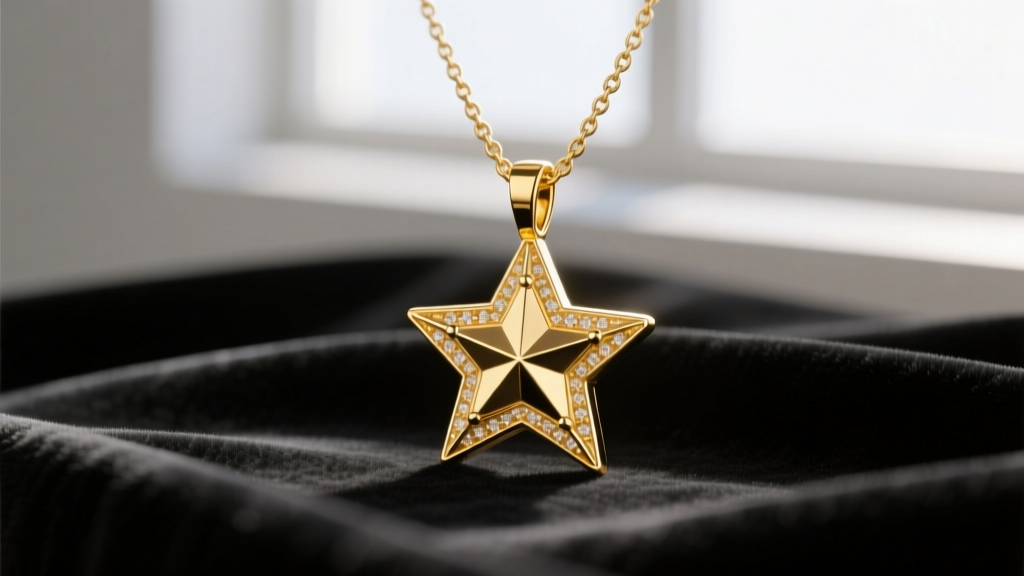
Comprehensive Material Comparison Matrix
To make an informed purchasing decision, compare the metallurgical data and practical metrics of these four dominant metals below:
| Metal / Alloy | Hardness & Durability | Tarnish & Corrosion | Weight Profile | Estimated Price Range (2026) |
|---|---|---|---|---|
| 316L Stainless Steel | High (Scratch resistant, rigid) | Immune to sweat/saltwater | Heavy | $40 - $120 |
| Grade 5 Titanium | Very High (Aerospace grade) | 100% Corrosion proof | Ultra-Light | $90 - $250 |
| Argentium 935 Silver | Medium (Prone to deep gouges) | Highly Tarnish Resistant | Medium | $150 - $350 |
| 14K Solid Gold | High (Excellent yield strength) | Tarnish-free (may dull from oils) | Medium-Heavy | $600 - $2,000+ |
Chain Mechanics: Gauge, Weight, and Clasps
The pendant is only half the equation; the chain dictates the necklace's overall drape and survival rate. For men, the ideal chain gauge for a star pendant falls between 2.5mm and 4.0mm. Anything thinner risks snapping under the pendulum motion of a heavy metal star; anything thicker begins to overpower the pendant's geometry. Cuban links and Figaro chains are the top choices for men due to their interlocking, flat-lying structures that resist twisting and kinking.
Equally critical is the clasp. Avoid spring-ring clasps at all costs. The internal wire springs in cheap clasps suffer from metal fatigue within months, leading to sudden failure and lost jewelry. Always opt for a solid lobster clasp with a stainless steel internal spring, or a box clasp with a figure-eight safety catch for heavier gold chains. Ensure the jump ring connecting the clasp to the chain is soldered shut; an open jump ring is the number one point of failure in men's necklaces.
Real-World Failure Modes and Maintenance
Understanding how jewelry fails allows you to prevent it. Here are the most common failure modes for men's star necklaces and how to mitigate them:
- Point Deformation: Elongated star points act as levers. If you work with your hands or lift weights, choose a 'puffy' or rounded star design, or opt for Grade 5 Titanium to prevent the tips from bending backward against your chest.
- Chain Stretching: Rope chains, particularly in 925 silver, are notorious for stretching over time due to the friction and pulling of the interwoven links. If you choose a rope chain, keep it under 2.0mm and avoid pulling it over your head; always use the clasp.
- Skin Oils and Diamond Accents: If your star pendant features a small diamond or gemstone accent, the accumulation of sebum (skin oils) and dead skin cells behind the stone will drastically reduce its light refraction. Clean it monthly with a soft toothbrush and a drop of mild dish soap in warm water.

Final Verdict: Matching Metal to Lifestyle
Choosing the right star necklace men will actually wear comes down to aligning metallurgical properties with your daily environment. If you are an active individual, a surfer, or someone who works in a humid, high-sweat environment, Grade 5 Titanium or 316L Stainless Steel are your undisputed champions. They require zero maintenance and will survive extreme conditions. For the professional seeking a touch of refined luxury that transitions from the office to evening events, Argentium Silver offers a brilliant white shine without the chore of weekly polishing. Finally, for the collector or the man viewing jewelry as a long-term asset, a 14K Gold star pendant on a sturdy 3mm Cuban link provides unmatched prestige, yield strength, and timeless style. By prioritizing material science over fleeting trends, your star necklace will remain a sharp, enduring staple in your wardrobe for decades to come.


