How to Clean a Diamond Necklace: Expert Care & Maintenance Guide
Learn how to clean a diamond necklace safely at home. Expert tips on ultrasonic cleaners, DIY solutions, and preserving precious metal settings.

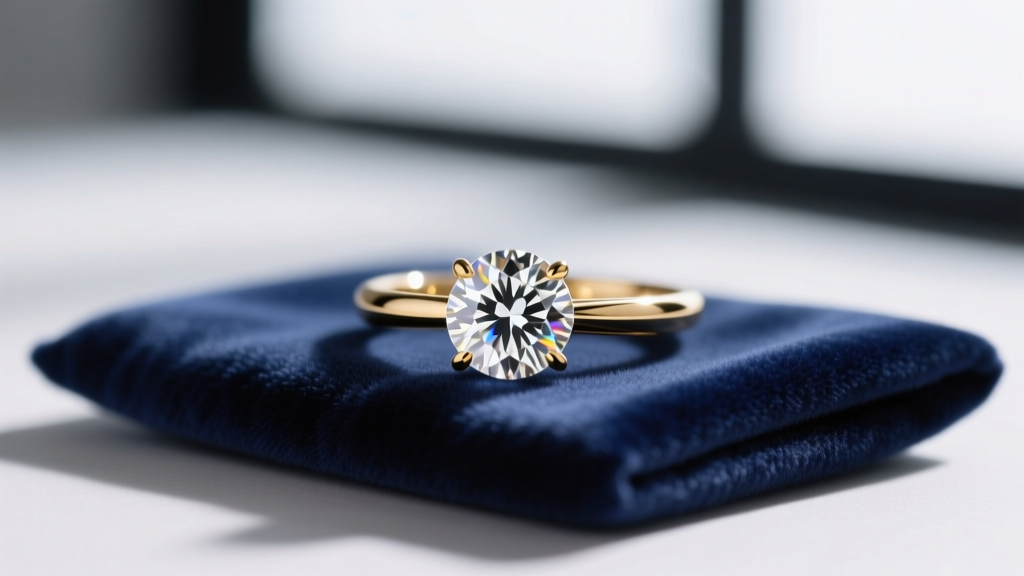
The Science of Diamond Attraction: Why Your Necklace Loses Its Sparkle
To understand how to clean a diamond necklace effectively, you must first understand the chemical nature of the stone itself. Diamonds are inherently oleophilic (grease-loving) and hydrophobic (water-repelling). This means that every time you touch your pendant, apply lotion, or even cook in the same room, microscopic layers of sebum and oils adhere to the diamond's surface.
When oil coats the pavilion (the bottom facets) of your diamond, it alters the stone's refractive index. Instead of light entering the crown, bouncing off the pavilion facets, and returning to your eye as brilliance, the light simply leaks out the bottom. The result is a dull, lifeless stone that looks like cloudy glass. Furthermore, the metal settings—whether 14k gold, 18k gold, or 950 platinum—accumulate dead skin cells, soap scum, and hard water minerals, creating a breeding ground for bacteria and accelerating metal tarnish.
Step-by-Step: How to Clean a Diamond Necklace Safely at Home
According to the Gemological Institute of America (GIA), regular at-home maintenance is the best way to preserve a diamond's optical performance. Below are the two most effective, jeweler-approved methods for restoring your necklace's fire and brilliance.
The Mild Degreaser Method (Best for Weekly Maintenance)
This is the safest method for all diamond necklaces, including those with delicate tension settings or mixed gemstone accents.
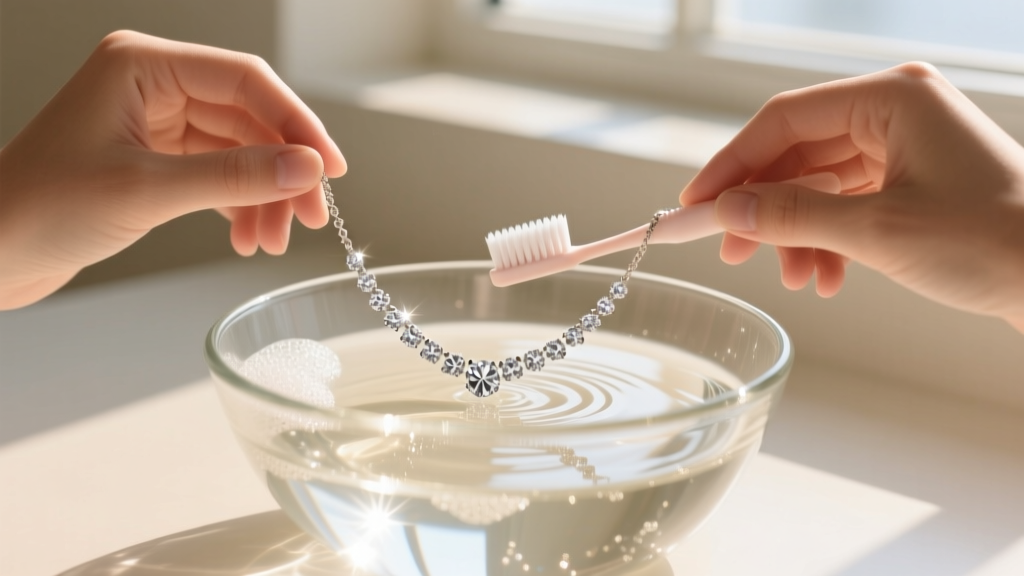
- Prepare the Solution: Fill a small glass bowl with warm (not hot) water. Add 3-4 drops of a mild, ammonia-free liquid dish soap. Avoid soaps with heavy moisturizers or added dyes, as these leave a residual film.
- Soak: Submerge your diamond necklace completely. Let it soak for 15 to 20 minutes. This allows the surfactants in the soap to break down the oleophilic bonds of the grease.
- Agitate Gently: Using an extra-soft baby toothbrush, gently brush the diamond. Pay special attention to the back of the stone (the pavilion) and the prongs where grime accumulates. Never use hard-bristled brushes, as they can scratch the precious metal setting.
- Rinse and Dry: Rinse the necklace under a gentle stream of lukewarm water. Crucial: Always place a mesh strainer over the drain to prevent catastrophic accidents. Pat dry with a lint-free microfiber cloth.
The Ammonia Solution (For Stubborn Grime on Platinum & Gold)
If your necklace features a solid platinum or yellow/white gold setting (without porous accent stones like pearls or emeralds), an ammonia bath will cut through heavy buildup.
- Mix exactly 1 part household ammonia to 6 parts warm water.
- Soak the necklace for no more than 10 minutes.
- Brush gently, rinse thoroughly, and dry.
Expert Warning: Never use ammonia on silver settings, as it will cause rapid oxidation and blackening. Additionally, if your diamond is "clarity-enhanced" or fracture-filled, ammonia will permanently destroy the glass-like filler, leaving the stone cloudy and cracked.
Cleaning Agents to Avoid: Protecting Your Settings and Stones
The internet is flooded with DIY jewelry cleaning hacks that can cause irreversible damage to your diamond necklace. The American Gem Society (AGS) strongly advises against using abrasive household cleaners.
| Cleaning Agent | Effect on Diamond | Effect on Metal Setting | Verdict |
|---|---|---|---|
| Toothpaste | Safe (Hardness 10) | Severe Scratching (Abrasives are harder than gold/platinum) | Avoid |
| Bleach / Chlorine | Safe | Pits and weakens gold alloys; destroys solder joints | Avoid |
| Baking Soda Paste | Safe | Micro-scratches on high-polish finishes | Avoid |
| Rubbing Alcohol | Safe (Excellent degreaser) | Safe for Gold/Platinum; dries out porous accents | Use with Caution |
| Mild Dish Soap | Safe | Safe for all metals | Highly Recommended |
Ultrasonic Cleaners: Are They Safe for Diamond Necklaces?
Ultrasonic cleaners use high-frequency sound waves to create microscopic bubbles in a liquid solvent. When these bubbles collapse against the jewelry—a process called cavitation—they blast away microscopic dirt particles from deep within the prongs and setting galleries.
While ultrasonic cleaners are incredibly effective, they come with specific risks:
- Loose Stones: If your necklace's prongs are already worn or bent, the intense vibrations of the ultrasonic machine can shake the diamond completely out of its setting.
- Clarity-Enhanced Diamonds: Diamonds that have been fracture-filled with a glass-like substance to hide internal inclusions will shatter or cloud in an ultrasonic bath.
- Pave Settings: Necklaces with micro-pave diamond halos are at high risk, as the tiny beads holding the micro-diamonds can be vibrated loose over repeated cycles.
If you own a solid, well-maintained solitaire pendant in platinum or gold, a home ultrasonic cleaner used once a month with a specialized jewelry solution is generally safe. For anything else, stick to manual brushing.
Professional Maintenance: When to See a Jeweler
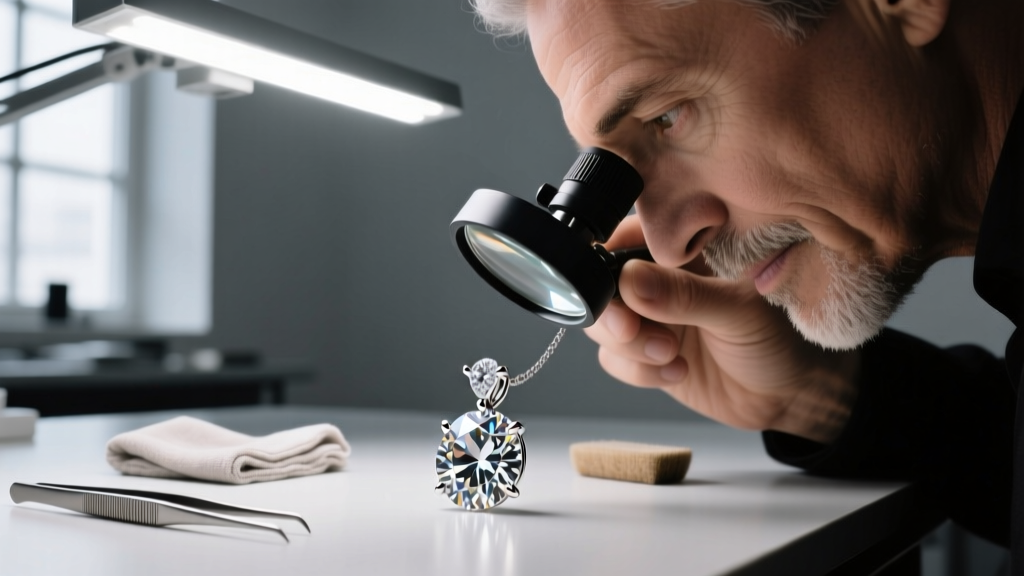
At-home cleaning only addresses surface dirt. It cannot fix structural wear or restore metal finishes. You should take your diamond necklace to a professional bench jeweler every 12 to 18 months for the following services:
Prong Inspection and Retipping
Over time, the metal prongs holding your diamond can wear down from friction against clothing. A jeweler will use a 10x loupe to check for "flat spots" on the prongs. If a prong is too thin, they will add a small bead of matching metal (retipping) to secure the stone before it falls out.
Rhodium Replating (For White Gold)
If your diamond pendant is set in 14k or 18k white gold, you may notice the metal turning slightly yellow over time. White gold is naturally a pale yellow alloy that is plated with rhodium (a platinum-group metal) to give it a bright, silvery-white finish. Professional cleaning often includes stripping the old rhodium and electroplating a fresh layer, restoring the necklace to its original showroom brilliance.
Daily Wear and Storage Protocols for Maximum Brilliance
How you store and wear your diamond necklace is just as important as how you clean it. Diamonds rank a 10 on the Mohs scale of mineral hardness. This means a diamond can only be scratched by another diamond, but it will easily scratch gold, platinum, and other gemstones.
- The "Last On, First Off" Rule: Always put your diamond necklace on after applying makeup, perfume, hairspray, and lotions. Take it off before showering or washing dishes.
- Individual Storage: Never toss your diamond necklace into a communal jewelry box. The diamond will act like sandpaper against your other pieces. Store it in a dedicated soft fabric pouch or a separate felt-lined compartment.
- Prevent Chain Tangling: When storing, leave the clasp undone and lay the chain flat, or hang it on a dedicated jewelry arbor to prevent frustrating micro-knots in delicate cable or box chains.
By combining weekly degreasing soaks with mindful wearing habits and annual professional inspections, your diamond necklace will maintain its optical fire and structural integrity for generations.


