Expert Care Guide: Cleaning Unique Statement Necklaces
Learn expert cleaning and maintenance tips for unique statement necklaces. Discover safe methods for mixed metals, raw crystals, and enamel jewelry.

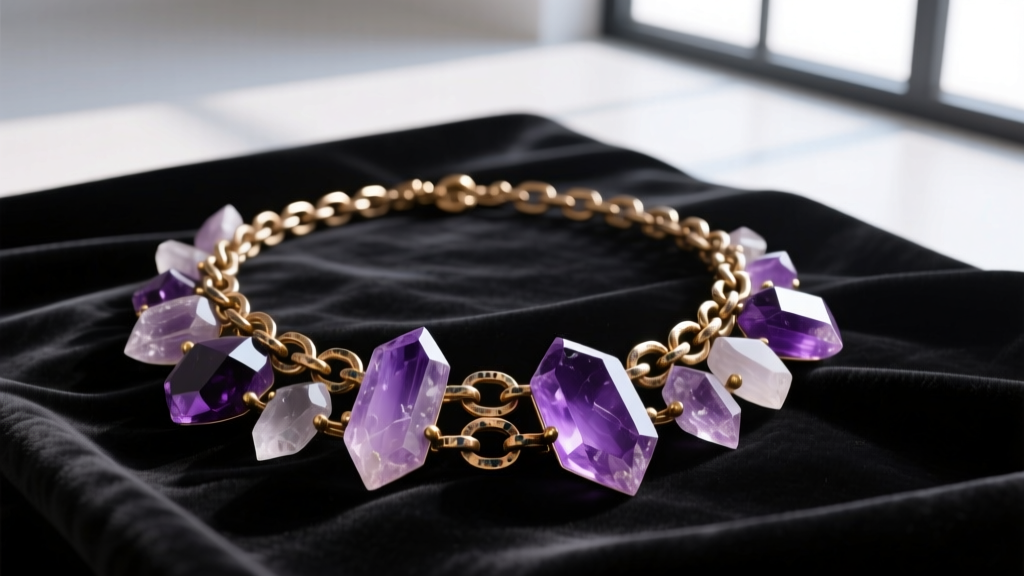
Investing in unique statement necklaces is a brilliant way to elevate any wardrobe, but these bold pieces require far more nuanced care than standard fine jewelry. Because statement pieces frequently combine mixed media—such as raw geodes, oxidized brass, hand-painted enamel, and porous organic gems—using a one-size-fits-all commercial jewelry dip can permanently ruin them. In this comprehensive care guide, we break down the exact chemical and mechanical protocols needed to clean, maintain, and store your most complex neckwear without damaging delicate settings or finishes.
The Anatomy of a Statement Piece: Why Standard Cleaners Fail
Most commercial silver and gold cleaners rely on harsh chemicals like thiourea or ammonia to strip tarnish. While effective on solid precious metals, these chemicals are catastrophic for the mixed materials often found in unique statement necklaces. For instance, ammonia will permanently cloud the surface of turquoise and malachite, while the high-frequency vibrations of ultrasonic cleaners can shatter druzy crystals and shake loose the epoxy adhesives used to secure heavy cabochons.
Furthermore, statement necklaces often feature intentional oxidation (darkened recesses in silver or brass to highlight texture). Standard polishing dips will strip this intentional patina, leaving the piece looking flat and mass-produced. Understanding the specific material composition of your necklace is the first step in establishing a safe maintenance routine.
Material-Specific Cleaning Protocols
To properly care for your jewelry, you must identify the primary materials and treat them according to their Mohs hardness and chemical sensitivity. The Gemological Institute of America (GIA) emphasizes that porosity and fracture-filling are the primary vulnerabilities in mixed-media gemstones.
Raw & Unpolished Crystals (Geodes, Druzy, and Bismuth)
Raw crystals are highly susceptible to dust accumulation in their natural crevices. Never use a brush with stiff bristles, as it can scratch softer formations like bismuth or fluorite (Mohs 4). Instead, use a can of compressed air to blow out debris. If washing is necessary, use distilled water and a drop of phosphate-free dish soap, gently swishing the piece. Dry immediately with a microfiber cloth; never let raw crystals air dry, as hard water spots will lodge into the porous matrix.
Mixed Metal Alloys & Oxidized Brass
Brass and copper components develop a natural patina over time. If you wish to maintain the bright, polished look of the brass without stripping the oxidized detailing, avoid liquid dips entirely. Instead, use a treated polishing cloth (such as a Sunshine cloth) and carefully rub only the raised, high-friction areas of the metal. For heavy grime in the crevices, use a wooden toothpick or a soft-bristle baby toothbrush to gently dislodge dirt without scratching the alloy.
Enamel, Resin, and Acrylic Components
Enamel and resin are essentially glass and plastic, respectively. They are highly sensitive to thermal shock and chemical solvents. Never use alcohol-based cleaners, acetone, or even heavy hand sanitizers near resin pendants, as these will cause the material to cloud, craze, or melt. Clean these components with a barely damp microfiber cloth and buff dry immediately.
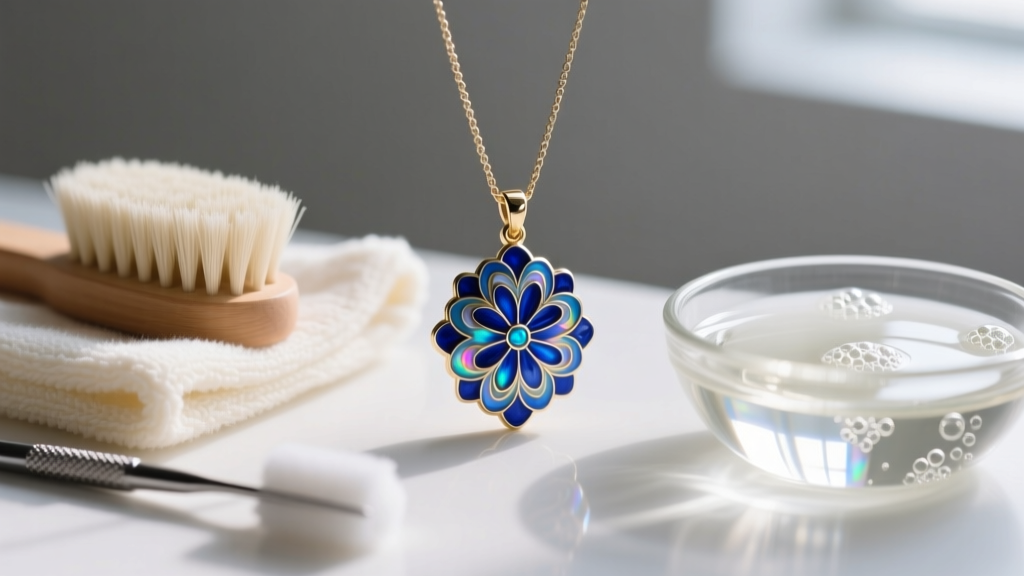
The Ultimate Cleaning Toolkit for Statement Jewelry
Building a specialized toolkit ensures you are never caught using an abrasive or corrosive substance on a delicate piece. Below is a quick-reference matrix for your cleaning arsenal, vetted by Rio Grande jewelry supply experts.
| Tool / Solution | Best Used For | Strictly Avoid On |
|---|---|---|
| Phosphate-Free Dish Soap | Solid gold, sterling silver, hard gems (diamonds, sapphires) | Pearls, coral, turquoise, lapis lazuli |
| Soft Baby Toothbrush | Dislodging dirt from chain links and metal filigree | Soft raw crystals, foil-backed vintage stones |
| Compressed Air Duster | Blowing dust out of druzy, geodes, and intricate resin molds | Loose settings (high pressure may dislodge weak glue) |
| Renaissance Wax | Sealing brass, copper, and raw steel to prevent future tarnish | High-polish silver (can dull the mirror finish slightly) |
| Wooden Toothpicks | Scraping hardened lotion or wax out of tight metal crevices | Enamel surfaces, soft gemstones (can cause gouging) |
Step-by-Step Maintenance Routine for Heavy Wear
Statement necklaces sit directly against the skin, making them prime targets for sebum, sweat, and cosmetic buildup. Follow this routine every 4 to 6 weeks for pieces worn regularly:
- Inspect the Hardware: Before introducing any moisture, check all jump rings, clasps, and glue settings. If a jump ring is gaping, close it with two pairs of flat-nose pliers before cleaning.
- Dry Dusting: Use compressed air and a soft, dry makeup brush to remove surface dust and dead skin cells from the back of the pendant.
- Targeted Spot Cleaning: Dip a cotton swab in a solution of warm distilled water and mild soap. Gently roll the swab over metal components and hard stones. Do not scrub.
- Moisture Removal: Press a dry microfiber cloth against the piece to absorb moisture. Use a hairdryer on the cool setting to blow water out of hidden crevices.
- Protective Sealing: If your necklace features raw brass or copper, apply a micro-thin layer of Renaissance Wax with a soft cloth. Let it haze for 10 minutes, then buff. This creates a barrier against skin acids.
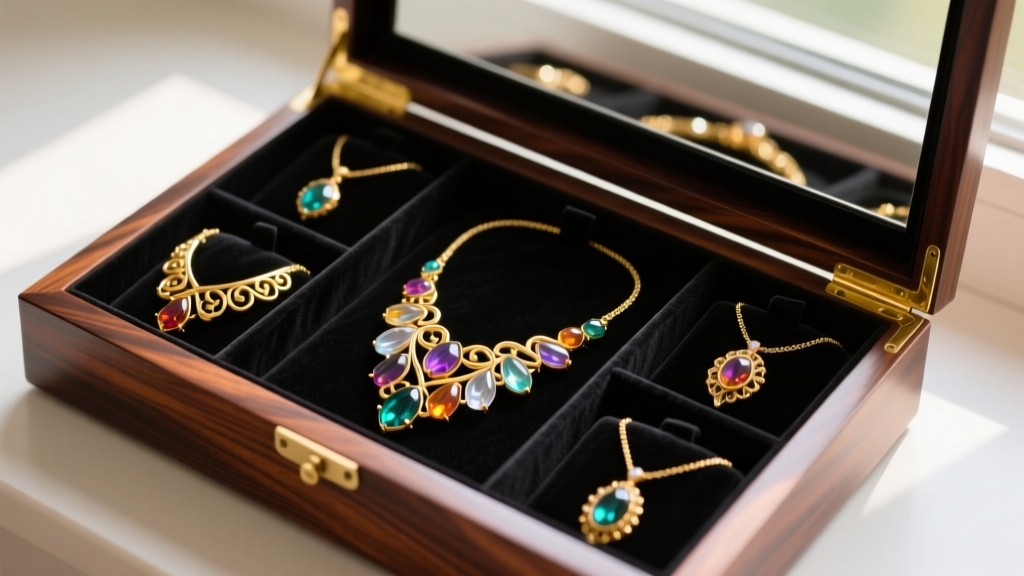
Proper Storage to Prevent Tarnish and Tangles
The weight and complex geometry of unique statement necklaces make them notoriously difficult to store. Tossing them into a communal jewelry box guarantees tangled chains and scratched resin components.
The Hanging vs. Flat Debate
Heavy chain necklaces with large pendants should be stored flat. Hanging a heavy statement piece for months can cause the chain links to stretch and the clasp solder joints to weaken under the constant gravitational pull. Conversely, multi-strand beaded or delicate wire-wrapped necklaces should be hung on padded hooks to prevent the wire from taking a permanent set or kinking.
Climate and Chemical Control
Silver and brass tarnish is accelerated by humidity and sulfur in the air. Store your statement pieces in individual, breathable cotton pouches rather than airtight plastic bags (which can trap moisture and cause certain alloys to pit). Slip a 3M anti-tarnish strip into each pouch; these strips absorb airborne sulfides and can protect your metals for up to 12 months in a standard drawer environment.
Expert Warning: Never store unique statement necklaces with pearl or shell components in a completely airtight safe or vault. Organic gems require trace amounts of ambient moisture to prevent them from drying out, cracking, and peeling over time.
By adopting these targeted, material-specific care techniques, your unique statement necklaces will retain their structural integrity, vibrant colors, and intentional finishes for years to come. Treat each piece according to its unique anatomy, and your boldest accessories will remain as striking as the day you acquired them.


