Troubleshooting Your Pyrite Bead Necklace: Repairs & Care
Is your pyrite bead necklace crumbling or tarnishing? Learn expert troubleshooting tips to fix string breakage, prevent oxidation, and restore its shine.

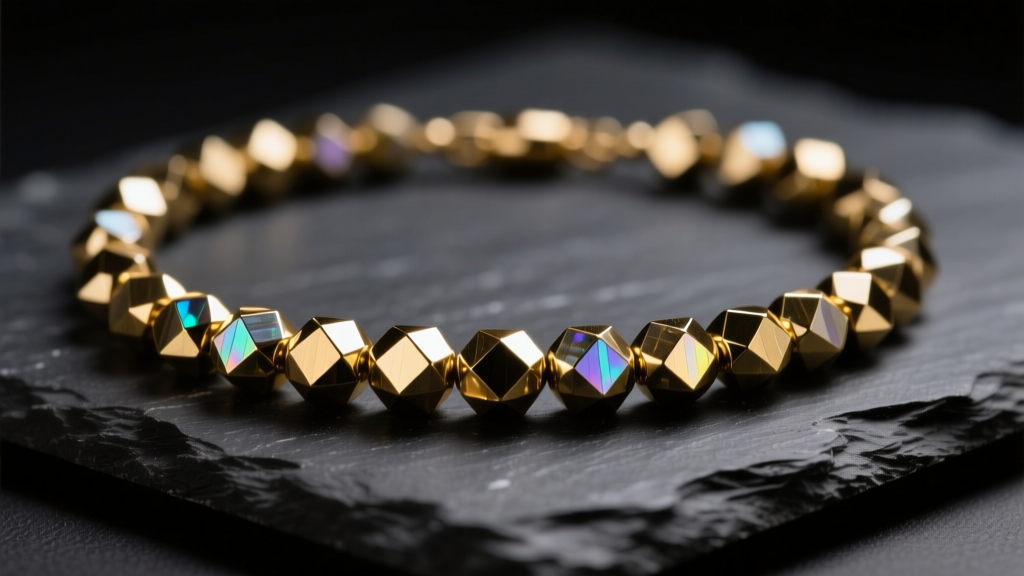
Pyrite bead necklaces offer a striking, metallic gold aesthetic without the precious metal price tag. Often dubbed 'Fool's Gold,' pyrite provides a bold, vintage, and highly reflective look that dominates bohemian and statement jewelry trends. However, as any experienced bench jeweler or lapidary expert knows, iron sulfide (FeS2) is a notoriously temperamental material. If you own a pyrite bead necklace, you have likely encountered its inherent structural weaknesses: sudden string breakage, surface pitting, or a mysterious white powdery crust that seems to eat away at the beads.
Troubleshooting a pyrite bead necklace requires moving beyond generic jewelry care advice. Because pyrite is both exceptionally heavy and chemically reactive, standard silk threading and commercial silver polishes will actively destroy your piece. This comprehensive guide breaks down the exact failure modes of pyrite jewelry and provides actionable, bench-level solutions to repair, restring, and preserve your necklace for decades.
The Inherent Weaknesses of Pyrite Jewelry
To effectively troubleshoot a failing pyrite bead necklace, you must first understand the mineralogy of the stone. According to the Mindat mineral database, pyrite scores between 6 and 6.5 on the Mohs hardness scale. While this makes it relatively scratch-resistant compared to softer stones like turquoise or malachite, pyrite possesses poor cleavage and high brittleness. It shatters rather than dents when subjected to impact.
Furthermore, pyrite has a specific gravity of roughly 5.0. This means it is approximately five times denser than water and significantly heavier than quartz or glass beads of the exact same millimeter size. A standard 8mm pyrite bead necklace can weigh upwards of 80 to 100 grams. This extreme density creates immense kinetic stress on the stringing material every time the wearer moves, leading to the most common failure point in pyrite jewelry: catastrophic cord snapping.
Troubleshooting String Breakage (The 'Cheese Wire' Effect)
If your pyrite bead necklace has snapped, or if you notice the string fraying near the clasp, you are experiencing the 'cheese wire' effect. The sharp, unpolished inner edges of the drilled pyrite beads act like microscopic blades. When combined with the stone's high specific gravity, traditional stringing materials like silk, nylon, or elastic cord are rapidly sawed in half.
The Solution: Upgrading to Micro-Fused Steel
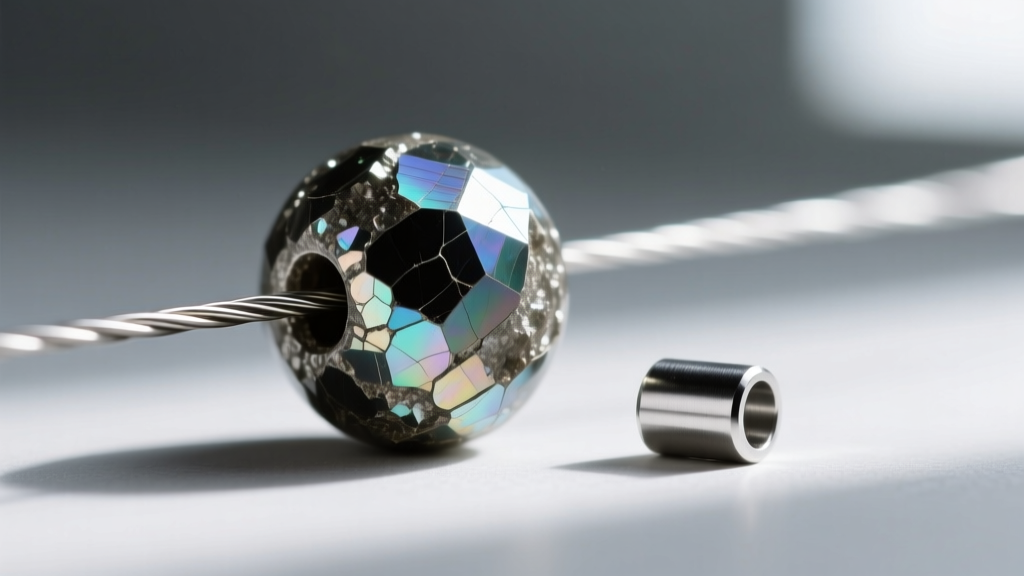
Never restring heavy pyrite beads on silk or standard monofilament. You must use a 49-strand micro-fused stainless steel beading wire coated in nylon, such as those produced by Soft Flex Company. For 6mm to 10mm pyrite beads, a .024-inch gauge wire is mandatory to withstand the sheer weight and abrasive drill holes.
Step-by-Step Restringing Protocol for Heavy Pyrite:
- Wire Prep: Cut your .024-inch 49-strand wire 6 inches longer than your desired finished length to allow for finishing.
- Protection: Thread a 2x2mm sterling silver or gold-filled crimp tube, followed by a French wire (bullion) or a wire protector to shield the steel wire from the clasp's friction.
- Spacing: Because pyrite beads are heavy, they will pull tightly against one another, causing edge chipping. Insert 1mm to 2mm metal or hard rubber spacer beads between every 5 to 10 pyrite beads to distribute the kinetic load and prevent bead-on-bead abrasion.
- Crimping: Use a dedicated crimping plier to fold the 2x2mm tube. Do not simply crush it flat; folding it creates a rounded profile that prevents the sharp edges of the crimp from cutting into the adjacent pyrite bead's drill hole.
Identifying and Halting 'Pyrite Disease'
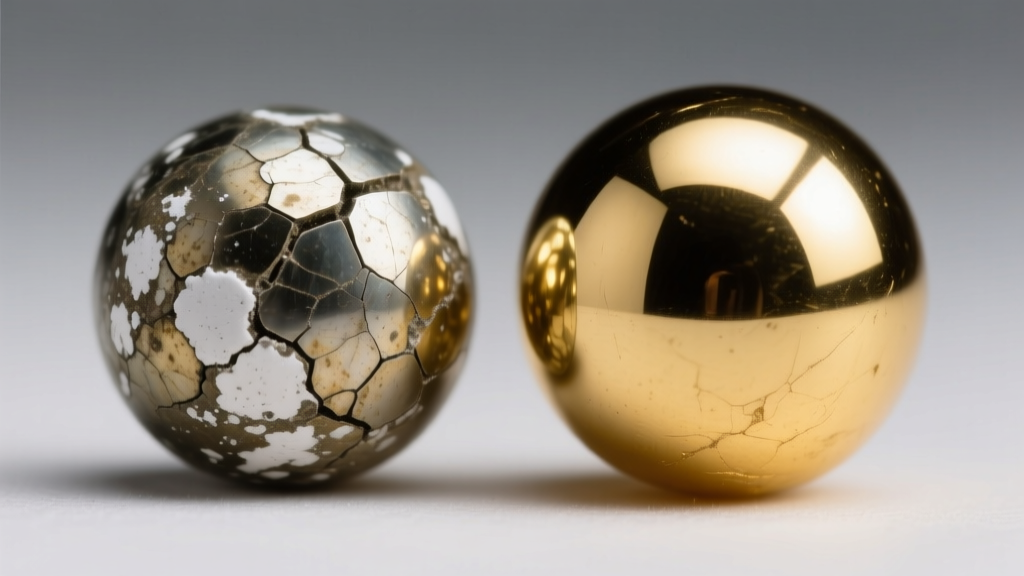
The most alarming issue a collector can face is 'Pyrite Disease' (also known as Byne's disease in mineralogy). This is a destructive chemical reaction where iron sulfide reacts with atmospheric moisture and oxygen to form iron sulfate and sulfuric acid. If your beads are developing a chalky white or pale yellow crust, emitting a faint sulfur (rotten egg) odor, or actively crumbling into powder, your necklace is undergoing active oxidation.
Chemical Breakdown of the Decay
The reaction is straightforward but devastating: 4FeS2 + 15O2 + 8H2O → 2Fe2(SO4)3 + 8H2SO4. The resulting sulfuric acid can etch the surface of the beads and severely corrode any metal findings, clasps, or crimp beads touching the pyrite.
Cleaning Agents: What to Avoid vs. What to Use
Treating pyrite disease requires extreme caution. Commercial jewelry dips will accelerate the decay.
| Cleaning Agent | Effect on Pyrite | Verdict |
|---|---|---|
| Ultrasonic Cleaners | Vibrations shatter brittle beads; water accelerates oxidation. | NEVER USE |
| Commercial Silver Dip | Contains thiourea and acids that strip the metallic luster and cause pitting. | NEVER USE |
| Baking Soda Paste | Alkaline, but the abrasive grit will scratch the polished surface. | AVOID |
| Anhydrous Ethanol | Safely removes surface oils without introducing water-based moisture. | SAFE |
| Micro-Crystalline Wax | Seals the surface from oxygen and halts active decay. | HIGHLY RECOMMENDED |
Surface Pitting and Luster Restoration
If your pyrite bead necklace has already suffered from minor pitting or a loss of its signature mirror-like luster due to skin acids and environmental exposure, you can restore it using lapidary polishing techniques. However, heat is the enemy of pyrite. High-speed rotary tools will generate enough friction to cause thermal shock, cracking the beads.
To restore the luster safely, use a cerium oxide polishing compound mixed with a few drops of mineral oil (never water) to form a thick paste. Apply the paste to a soft, untreated leather strop or a microfiber cloth. Rub the beads gently by hand, rotating them to ensure even pressure. Once the metallic shine returns, wipe the beads completely clean with a dry microfiber cloth. According to the Gemological Institute of America (GIA), avoiding harsh chemicals and extreme temperature changes is paramount for preserving pyrite's structural integrity.
The Preventative Storage Framework
Because pyrite disease is triggered by humidity, how you store your pyrite bead necklace when it is not being worn is just as critical as how you string it. Tossing a pyrite necklace into a standard velvet jewelry box in a humid bathroom or bedroom is a recipe for disaster.
Creating a Micro-Climate for Iron Sulfide
To ensure your necklace survives long-term, implement the following storage protocol:
- Seal the Surface: After cleaning, apply a microscopic layer of Renaissance Wax (a museum-grade micro-crystalline wax) to the beads. Buff it gently. This creates an impermeable barrier against atmospheric oxygen and skin acids.
- Control the Humidity: Store the necklace in an airtight polyethylene zip-lock bag or a sealed acrylic display case. You must keep the relative humidity (RH) below 40%.
- Use Desiccants and Scavengers: Place a small packet of indicating silica gel inside the storage bag to absorb ambient moisture. Additionally, include a small sachet of activated charcoal. The charcoal acts as a sulfur scavenger, absorbing any trace sulfur gases off-gassed by the pyrite, preventing the acid formation that corrodes your metal clasps.
- Lay Flat: Never hang a heavy pyrite necklace on a jewelry stand for long periods. The constant gravitational pull will stretch even the best steel beading wire over time and stress the crimps. Always store it laid flat in a soft, anti-tarnish pouch.
Final Thoughts on Pyrite Maintenance
A pyrite bead necklace is a high-maintenance, high-reward piece of jewelry. By respecting the mineral's high density, avoiding water-based cleaners, and upgrading your stringing materials to 49-strand steel wire, you can eliminate the most common points of failure. Regular inspection of your crimps and a proactive approach to humidity control will ensure your 'Fool's Gold' retains its brilliant, metallic fire for years to come.


