Expert Care Guide: Cleaning Your Silver Ruby Necklace
Learn how to safely clean, store, and maintain your silver ruby necklace. Expert tips on preventing tarnish and protecting delicate gemstone settings.

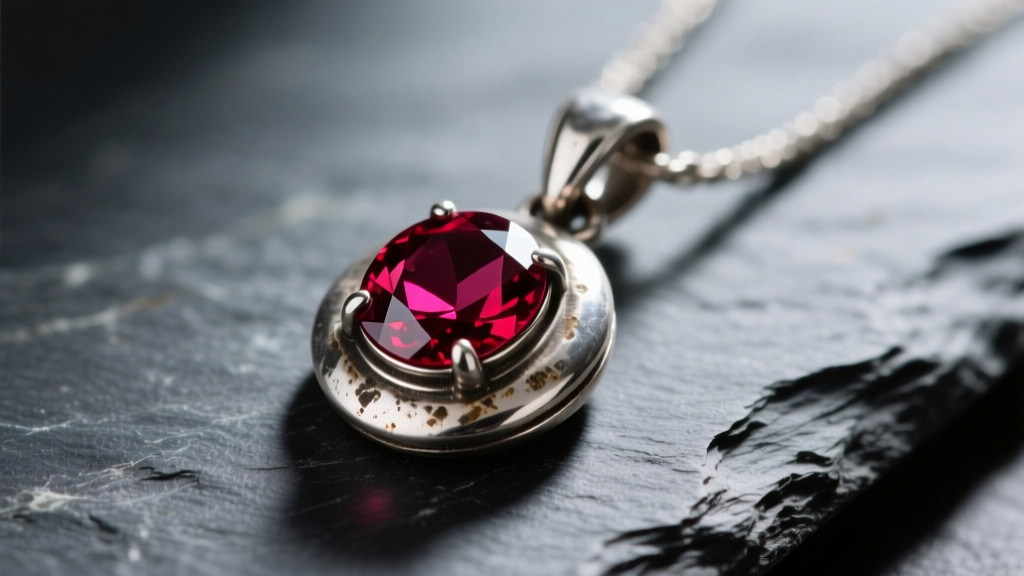
A silver ruby necklace is a study in material contrasts. You are pairing one of the hardest, most durable gemstones on earth with a precious metal notorious for its softness and chemical reactivity. As of 2026, the jewelry market is heavily saturated with both natural, untreated rubies and fracture-filled alternatives, meaning a one-size-fits-all cleaning approach can easily result in catastrophic damage to your piece. Proper maintenance requires an understanding of metallurgy, gemology, and environmental chemistry.
This comprehensive guide will walk you through the exact protocols required to clean, polish, and store your silver ruby necklace, ensuring the sterling silver remains bright and the ruby retains its legendary pigeon-blood brilliance.
The Material Paradox: Hard Gemstone, Soft Metal
To care for your necklace, you must first understand the physical properties of its components. Ruby is a variety of corundum (aluminum oxide), ranking at a 9 on the Mohs scale of hardness. It is exceptionally resistant to scratching and abrasion. Sterling silver, however, is an alloy typically composed of 92.5% pure silver and 7.5% copper, as verified by The London Assay Office. This copper addition provides structural integrity but introduces a major vulnerability: tarnish.
When the copper in sterling silver reacts with sulfur compounds in the atmosphere, it forms silver sulfide (Ag2S), the blackish-brown film we recognize as tarnish. While the ruby itself is entirely immune to this chemical reaction, the silver setting and chain are not. Furthermore, because sterling silver ranks at a mere 2.5 to 3 on the Mohs scale, the metal is highly susceptible to micro-scratches from improper cleaning tools.
Chemical and Mechanical Hazards to Avoid
Before reaching for a cleaning solution, you must eliminate practices that will permanently ruin either the metal or the gemstone. The Gemological Institute of America (GIA) specifically warns against harsh chemical exposures for treated gemstones.
The Ultrasonic Cleaner Trap
While natural, untreated rubies can generally withstand the high-frequency vibrations of an ultrasonic cleaner, the modern market is flooded with fracture-filled rubies. These stones are treated with lead-glass or silica-based resins to mask internal fissures and improve clarity. If you place a fracture-filled ruby in an ultrasonic cleaner, the acoustic cavitation will shatter the glass filling, leaving the stone pitted, cloudy, and structurally compromised. Never use ultrasonics on a silver ruby necklace unless you possess a lab report confirming the stone is 100% untreated.
Chemical Enemies
- Chlorine and Bleach: These will aggressively pit sterling silver and can permanently dull the polish on a ruby's facet junctions.
- Ammonia: Often found in commercial glass cleaners and jewelry dips, ammonia can strip the protective rhodium plating (if your silver is plated) and degrade fracture-fillings.
- Steam Cleaners: The sudden thermal shock can cause internal inclusions in natural rubies to expand and fracture the stone.
Step-by-Step Cleaning Protocol
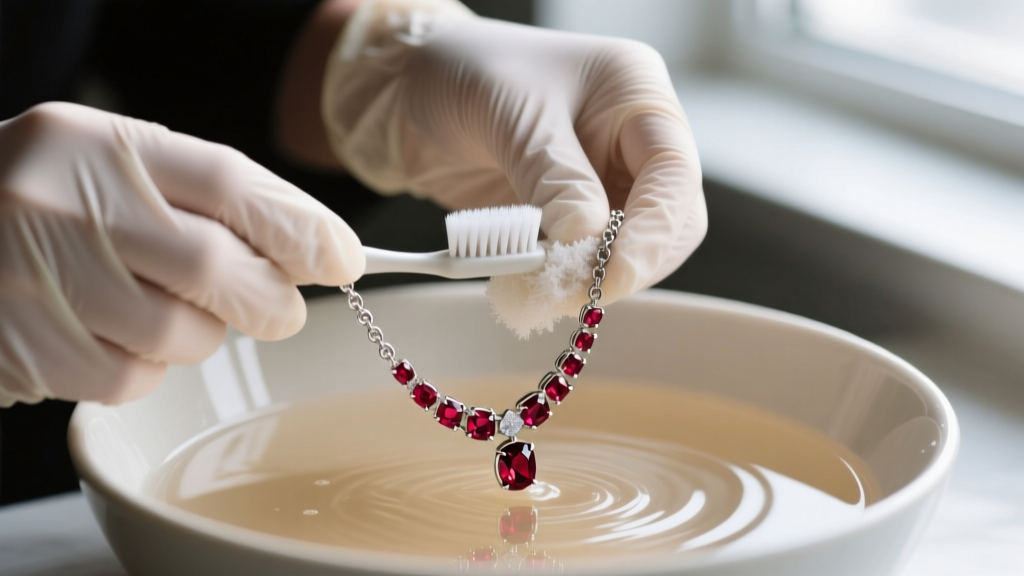
For routine maintenance and the safe removal of body oils, lotions, and environmental dust, a gentle manual cleaning is the gold standard. Follow this exact framework to restore your necklace's brilliance without risking damage.
Step 1: The Preparation
Plug your sink drain or use a small glass bowl to prevent accidental loss. Fill the bowl with lukewarm distilled water. Tap water contains minerals and chlorine that can leave hard water spots on the silver and cloud the ruby's pavilion. Add three drops of a phosphate-free, mild dish soap (such as original Dawn). Avoid soaps with added moisturizers or citrus extracts, as these leave a filmy residue on gemstones.
Step 2: The Soak
Submerge the silver ruby necklace in the solution for exactly 5 to 10 minutes. This allows the surfactants in the soap to break down the sebum and cosmetic buildup trapped beneath the ruby's setting. Do not exceed 15 minutes, as prolonged water exposure can accelerate oxidation in the copper alloy of the silver chain.
Step 3: Targeted Agitation
Using a brand-new, extra-soft baby toothbrush, gently agitate the soapy water around the chain links. When you reach the ruby pendant, focus your brushing on the pavilion (the underside of the gemstone). Grease and dead skin cells accumulate here, blocking light return and making the ruby look dark and lifeless. Use gentle, circular motions; do not scrub aggressively, as trapped grit could scratch the silver setting.
Step 4: The Rinse and Dry
Rinse the necklace thoroughly under a gentle stream of lukewarm distilled water. Immediately pat it dry with a clean, lint-free microfiber cloth. Do not allow the necklace to air dry, as water droplets will leave mineral deposits on the silver. Use a wooden toothpick to gently wick away any remaining moisture trapped in the prong settings.
Polishing Without Damaging the Ruby
Cleaning removes dirt; polishing removes tarnish. Because silver sulfide is a physical layer of corrosion, it must be mechanically or chemically removed. The safest method for a silver ruby necklace is a treated jeweler's rouge cloth (such as a Sunshine Cloth).
When polishing, wrap the cloth around your finger and gently rub the silver chain and the bezel or prongs of the setting. Critical Rule: Do not rub the treated cloth directly over the ruby. The mild abrasives and chemical tarnish-removers embedded in the cloth can dull the gemstone's polish over time and leave a waxy buildup in the facet junctions. Use a separate, clean, untreated microfiber cloth to buff the ruby itself to a high shine.
Storage Framework and Maintenance Schedule
How you store your silver ruby necklace is just as important as how you clean it. Sterling silver requires an environment with low humidity and minimal sulfur exposure. Below is a professional maintenance schedule designed to maximize the lifespan of your jewelry.
| Maintenance Task | Frequency | Tools Required | Objective |
|---|---|---|---|
| Microfiber Wipe-Down | After Every Wear | Untreated microfiber cloth | Remove acidic skin oils and perfumes before they etch the silver. |
| Wet Wash & Soap Soak | Monthly | Distilled water, phosphate-free soap, baby toothbrush | Clear sebum buildup from the ruby pavilion and chain links. |
| Tarnish Polishing | Quarterly (or as needed) | Jeweler's rouge cloth | Remove silver sulfide layer and restore metal luster. |
| Prong & Setting Inspection | Every 6 Months | 10x Jeweler's Loupe | Check for silver prong wear, lifting, or stone rattle. |
| Anti-Tarnish Strip Replacement | Annually | 3M Anti-Tarnish Strips | Neutralize airborne sulfur in the storage environment. |
Optimal Storage Conditions
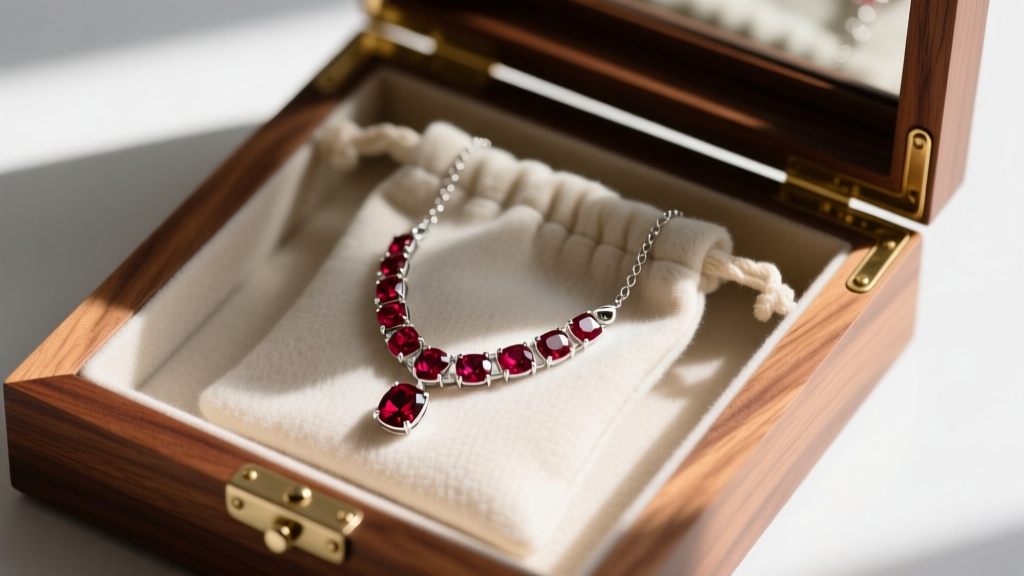
Never store your silver ruby necklace in a cardboard box or a standard plastic bag. Cardboard contains sulfur compounds that accelerate tarnishing, while certain plastics emit gases that react with copper. Instead, store the necklace flat inside an anti-tarnish flannel pouch. Place a 3M anti-tarnish strip and a small silica gel desiccant packet inside the pouch to absorb ambient moisture and neutralize sulfur. Keep the pouch in a dark, climate-controlled drawer away from direct sunlight and heating vents.
Prong Integrity and Professional Care
The most significant structural vulnerability of a silver ruby necklace is not the chain, but the prongs holding the gemstone. Because sterling silver is soft and malleable, prongs wear down, bend, and thin out much faster than their gold or platinum counterparts.
"A silver prong loses approximately 0.05 millimeters of thickness per year of daily wear due to friction against clothing and skin. If a prong drops below 0.5 millimeters in width, the risk of catastrophic stone loss increases exponentially." — Bench Jeweler Structural Guidelines, 2025 Edition
Every six months, examine the ruby's setting under a 10x jeweler's loupe. Look for flattened prong tips, gaps between the metal and the gemstone's girdle, or any movement when you gently tap the stone with a wooden toothpick. If you detect any of these warning signs, cease wearing the necklace immediately and take it to a professional bench jeweler for a prong re-tipping. Attempting to bend silver prongs back into place at home often results in metal fatigue and snapping.
By respecting the distinct chemical and physical needs of both the sterling silver and the ruby, you ensure that your necklace remains a vibrant, structurally sound heirloom for decades to come.


