Opalite Necklace Taylor Swift Aesthetic: Cleaning Guide
Learn how to safely clean and maintain your opalite necklace, inspired by Taylor Swift's ethereal style. Expert tips on washing, storage, and care.

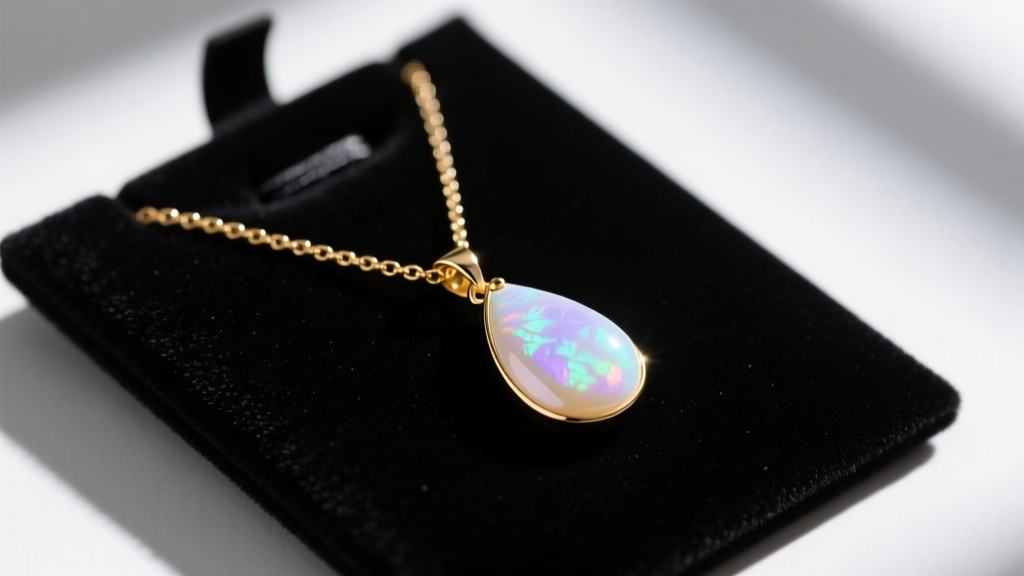
The Allure of the Opalite Necklace: Taylor Swift's Ethereal Aesthetic
As we navigate the jewelry trends of 2026, the ethereal, cottagecore-inspired aesthetics popularized by Taylor Swift during her folklore and evermore eras remain a dominant force in celebrity and everyday style. Central to this look is the milky, iridescent glow of opalite. Whether styled with a vintage slip dress or a casual oversized knit, an opalite necklace captures a magical, moonlit adularescence that mimics high-end natural opals. However, the very properties that give opalite its mesmerizing visual depth also make it uniquely vulnerable to improper care. If you own a piece inspired by the Taylor Swift aesthetic, understanding the material science behind your jewelry is the first step in preserving its signature glow.
Unlike diamonds or sapphires, opalite requires a highly specific, gentle approach to maintenance. Using the wrong cleaning agents or exposing the stone to sudden temperature changes can permanently cloud the glass matrix or fracture the stone. In this comprehensive guide, we break down the exact protocols used by jewelry conservators to clean, maintain, and store opalite pendants and chains.
Understanding Opalite: Material Science & Vulnerabilities
Before applying any cleaning solution to your necklace, it is crucial to understand what opalite actually is. The term "opalite" is a trade name that generally refers to two distinct materials:
- Man-Made Opalite (Opalescent Glass): The vast majority of commercial opalite jewelry is a high-quality, man-made glass infused with metallic oxides to create a milky, iridescent flash. It is sometimes erroneously sold as "sea opal" or "titanium quartz."
- Natural Opalite (Common Opal): In mineralogy, natural opalite is a form of common opal found in matrix, lacking the vivid play-of-color of precious opal but sharing a similar internal structure.
According to the Gemological Institute of America (GIA), both natural opals and opalescent glasses share a critical vulnerability: they sit between 5.5 and 6.5 on the Mohs scale of mineral hardness. This means they can be easily scratched by everyday dust (which contains quartz particles with a hardness of 7). Furthermore, both materials are highly susceptible to thermal shock. Sudden shifts from hot to cold water can cause microscopic internal fractures, permanently dulling the stone's adularescence. For a deeper dive into the mineral composition of natural variants, the Mindat.org mineral database provides extensive crystallographic data on common opal matrices.
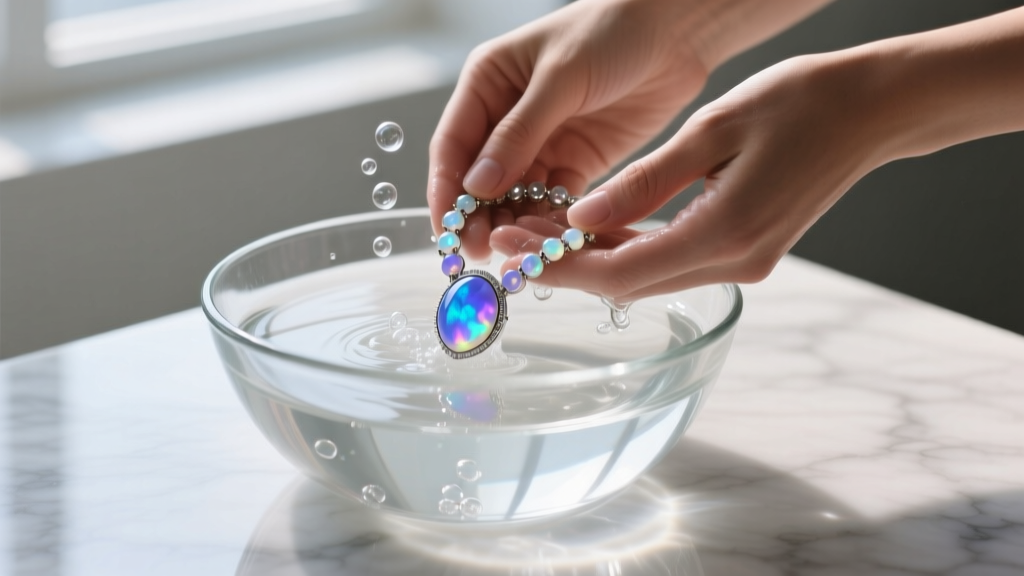
The Conservator’s Step-by-Step Cleaning Protocol
To safely remove skin oils, cosmetics, and environmental grime from your opalite necklace without damaging the stone or its metal setting, follow this exact protocol. Never skip the preparation steps, as hard water minerals are the enemy of opalite's optical clarity.
Phase 1: Gathering the Right Tools
Discard harsh commercial jewelry dips. You only need four specific items:
- Distilled Water: Tap water contains calcium and magnesium, which leave microscopic hard-water spots that cloud the opalite's surface.
- pH-Neutral Dish Soap: A mild, lotion-free detergent (like original Dawn) that cuts through sebum without stripping the metal.
- Ultra-Soft Microfiber Cloth: Lint-free and non-abrasive. Never use paper towels or tissue, as wood pulp fibers can cause micro-scratches on the glass/opal surface.
- Baby Hairbrush or Soft Makeup Brush: For gently dislodging debris from the pendant's bail and prong settings.
Phase 2: The Washing Process
- Prepare the Bath: Fill a small glass bowl with room-temperature distilled water. Add exactly two drops of pH-neutral dish soap and gently agitate the water to create mild suds.
- Acclimatize the Stone: Submerge the opalite necklace and let it sit for exactly 3 to 5 minutes. This allows body oils and cosmetic residue to soften without requiring aggressive scrubbing.
- Agitate Gently: Using your fingertips, gently massage the opalite pendant. Use the soft baby hairbrush to carefully sweep around the metal bail (the loop connecting the pendant to the chain) and any prong settings where grime accumulates.
- The Rinse: Rinse the necklace under a very gentle stream of room-temperature distilled water. Do not use hot water, as thermal shock can fracture the opalite matrix.
- Dry and Polish: Lay the necklace flat on a clean microfiber cloth. Pat the opalite dry gently. Allow the metal chain to air-dry completely before storing to prevent water spots on the silver or gold hardware.
The Opalite Danger Zone: What to Avoid
Many well-intentioned jewelry owners ruin their opalite pieces by treating them like durable crystalline gemstones. Below is a quick-reference matrix of common cleaning methods and their safety ratings for opalite.
| Cleaning Method | Safety Rating | Why It Fails / Succeeds |
|---|---|---|
| Ultrasonic Cleaners | 🚫 Never Use | High-frequency vibrations cause internal fracturing and can shatter the opalescent glass matrix. |
| Steam Cleaners | 🚫 Never Use | Extreme, sudden heat causes immediate thermal shock and permanent clouding. |
| Commercial Silver Dips | ⚠️ Avoid | Harsh thiourea chemicals can strip the metallic oxide coating on man-made opalite, killing the flash. |
| Baking Soda Paste | 🚫 Never Use | Baking soda has a Mohs hardness of 2.5, but its crystalline structure acts as an abrasive sandpaper on opalite. |
| Distilled Water + Mild Soap | ✅ Always Safe | Effectively removes oils without introducing harsh chemicals, abrasives, or thermal shock. |
Chain Maintenance: Caring for the Metal Hardware
An opalite pendant is only as strong as the chain it hangs from. Taylor Swift’s stylists frequently pair ethereal pendants with delicate 14k gold-filled, gold vermeil, or oxidized sterling silver chains (typically in 18-inch to 20-inch lengths for optimal pendant drop). Each metal requires distinct care during the washing process.
If your chain is sterling silver, it is prone to sulfur-induced tarnishing. While the mild soap bath will clean it, you must ensure it is dried immediately and thoroughly. For gold vermeil (a thick layer of gold over a sterling silver base), avoid any polishing cloths treated with rouge or chemicals, as these will strip the gold layer over time, exposing the silver beneath. Simply patting the chain dry with a clean microfiber cloth is sufficient to maintain its luster without compromising the plating.
Proper Storage to Prevent Micro-Scratches
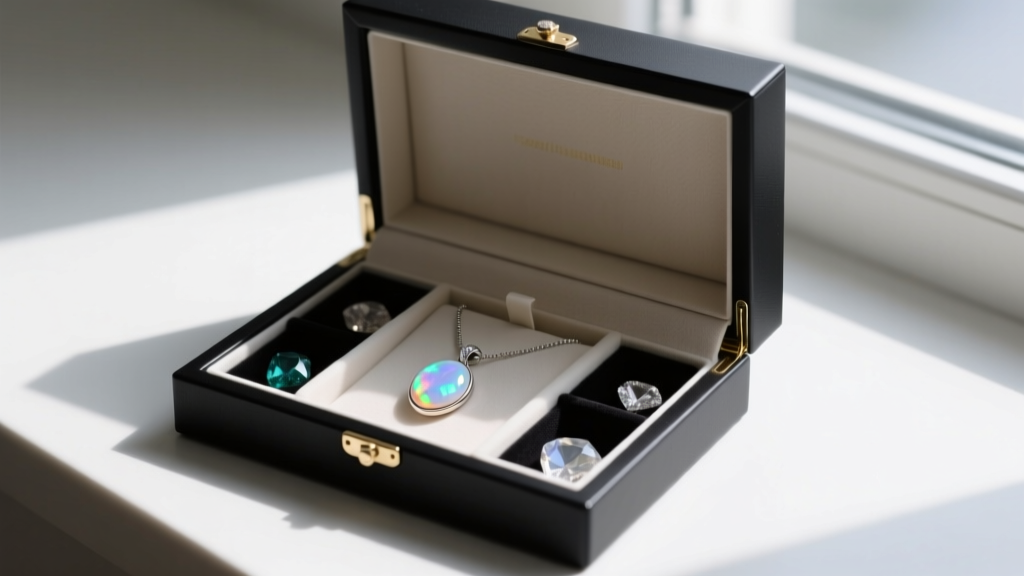
The most common cause of dull, scratched opalite is improper storage. Because opalite maxes out at a 6.5 on the Mohs scale, storing it in a communal jewelry box alongside diamonds (10), sapphires (9), or even quartz (7) guarantees that the opalite will be scratched and its milky surface marred.
To maintain the Taylor Swift vintage aesthetic, store your opalite necklace in an individual, anti-tarnish flannel pouch. If you use a jewelry box, ensure the pendant is placed in a dedicated, fabric-lined compartment where it cannot swing against other pieces. Furthermore, always put your opalite necklace on after applying perfumes, hairsprays, and lotions, and remove it before swimming in chlorinated pools or the ocean, as salt and chlorine can degrade both the stone's finish and the metal chain's integrity.
Conclusion
An opalite necklace is a stunning, light-catching piece that perfectly encapsulates the romantic, ethereal style championed by Taylor Swift. By respecting the material's vulnerabilities—specifically its sensitivity to thermal shock and its moderate Mohs hardness—you can ensure your pendant retains its mesmerizing adularescence for decades. Stick to distilled water, pH-neutral soaps, and isolated storage, and your opalite will continue to glow with every wear.


