The Ultimate Necklace Sizer Guide: Find Your Perfect Chain Length
Discover how to choose and use a necklace sizer to find your ideal chain length. Our buying guide covers materials, sizing charts, and pendant placement.

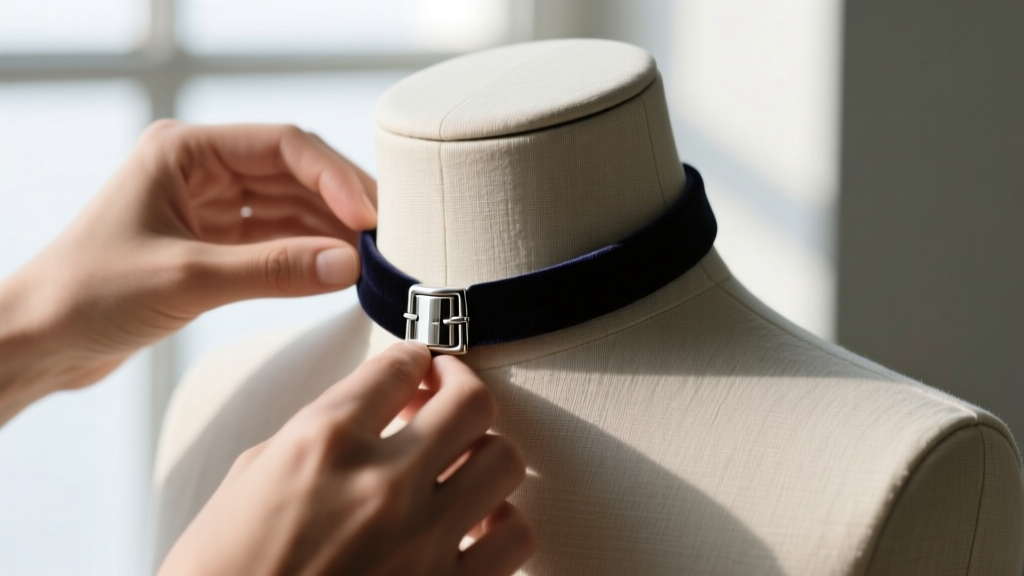
Finding the perfect necklace length is rarely as simple as picking a standard 18-inch chain and hoping for the best. Whether you are a jewelry designer prototyping a new pendant, a stylist curating a layered look, or a shopper investing in a fine jewelry piece, guessing your ideal chain length leads to costly returns and aesthetic compromises. This is where a dedicated necklace sizer becomes an indispensable tool in your jewelry box.
In 2026, with the rise of customized fine jewelry and hyper-personalized layering trends, understanding exact drop lengths and neck circumferences is more critical than ever. This comprehensive buying guide will walk you through exactly what to look for when purchasing a necklace sizer, how to interpret the measurements, and the hidden variables—like pendant bail sizes and clasp weights—that alter how a chain actually sits on the body.
Why You Need a Dedicated Necklace Sizer
Most consumers rely on a soft tailor's tape measure to guess their necklace size. While a tape measure can tell you your neck circumference, it completely fails to simulate the drape, weight, and visual drop of a real chain. A physical necklace sizer mimics the behavior of actual jewelry, allowing you to see exactly where a clasp will sit, how a chain will drape over the collarbone, and whether a specific length will interfere with your most-worn necklines.
According to educational resources from Blue Nile, the visual impact of a necklace changes drastically with just a two-inch difference in length. A dedicated sizer eliminates the guesswork, providing a three-dimensional preview that flat measurements simply cannot offer.
Types of Necklace Sizers: Which One Should You Buy?
Not all sizers are created equal. The market offers several distinct types, each catering to different needs, from casual shoppers to professional jewelers.
Adjustable Cord and Beaded Sizers
These are the most common and versatile tools. Typically made from durable cotton, velvet, or leather cords, they feature a sliding metal or silicone toggle that allows you to lock the sizer at any length from 12 to 36 inches. High-end versions use 4mm glass or gemstone beads, which add realistic weight to the sizer, mimicking the drape of a heavier chain. What to look for: Ensure the cord is at least 2mm thick so it doesn't tangle, and check that the sliding toggle has a silicone grip inside to prevent it from slipping down during use.
Sliding Chain and Metal Sizers
For fine jewelry buyers, metal sizers are the gold standard. These feature actual sterling silver or gold-filled chains with a specialized sliding clasp mechanism. They are essential when purchasing delicate chains (like 0.9mm cable or box chains) because they accurately represent the stiffness and light-reflective properties of metal. What to look for: Look for sizers made from hypoallergenic materials like nickel-free sterling silver or surgical stainless steel, especially if you have sensitive skin.
Printable and Acrylic Template Sizers
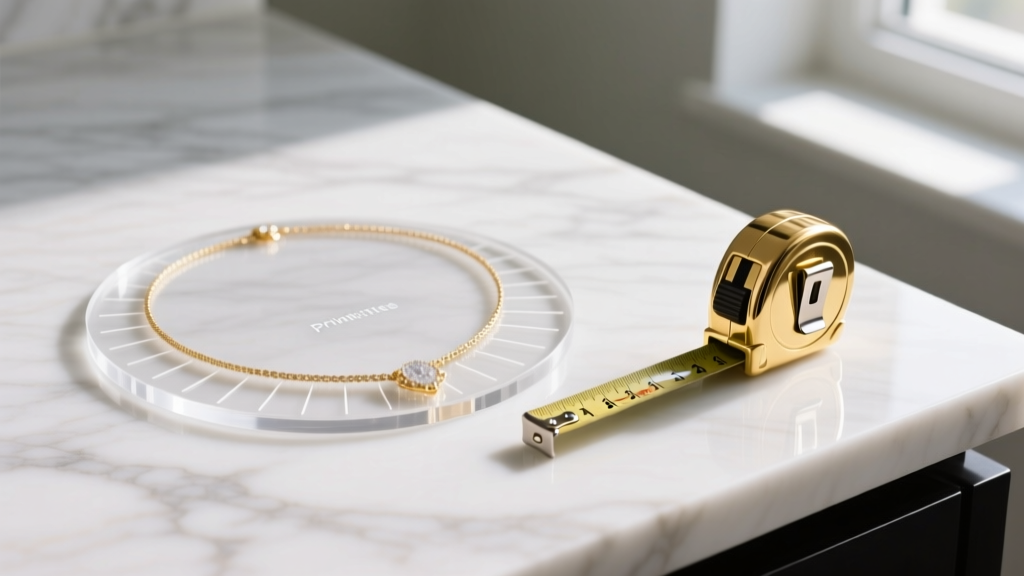
Printable paper sizers or rigid acrylic templates are excellent for quick, flat measurements. They are often provided as free PDF downloads by online jewelers. While they lack the 3D drape of a cord sizer, acrylic templates with cut-out necklines are fantastic for visualizing how different lengths interact with crew necks, V-necks, and scoop necks. What to look for: If buying a physical acrylic template, ensure it is made from shatter-resistant polycarbonate rather than cheap, brittle acrylic.
The Anatomy of Necklace Lengths: A Precision Chart
When using your new necklace sizer, it is vital to understand the industry-standard terminology for chain lengths. The Gemological Institute of America (GIA) and major jewelry retailers categorize lengths into specific styles. Use your sizer to test these exact measurements on your own body.
| Length (Inches) | Length (cm) | Style Name | Placement & Best Use |
|---|---|---|---|
| 14" - 16" | 35 - 40 cm | Choker / Collar | Sits tightly on the lower neck. Best for open-shoulder tops and minimalist pendants. |
| 18" | 45 cm | Princess | Rests exactly on the collarbone. The universal standard for everyday diamond solitaires. |
| 20" - 24" | 50 - 60 cm | Matinee | Falls between the collarbone and the bust. Ideal for business attire and layering over turtlenecks. |
| 28" - 36" | 71 - 91 cm | Opera / Rope | Drops below the bust. Perfect for high necklines, evening wear, or wrapping into a double-strand. |
How to Measure for Specific Necklines and Pendants
Using a necklace sizer is only half the battle; interpreting the measurement in the context of your wardrobe and jewelry design is where the real expertise lies.
Factoring in Pendant Drop and Bail Size
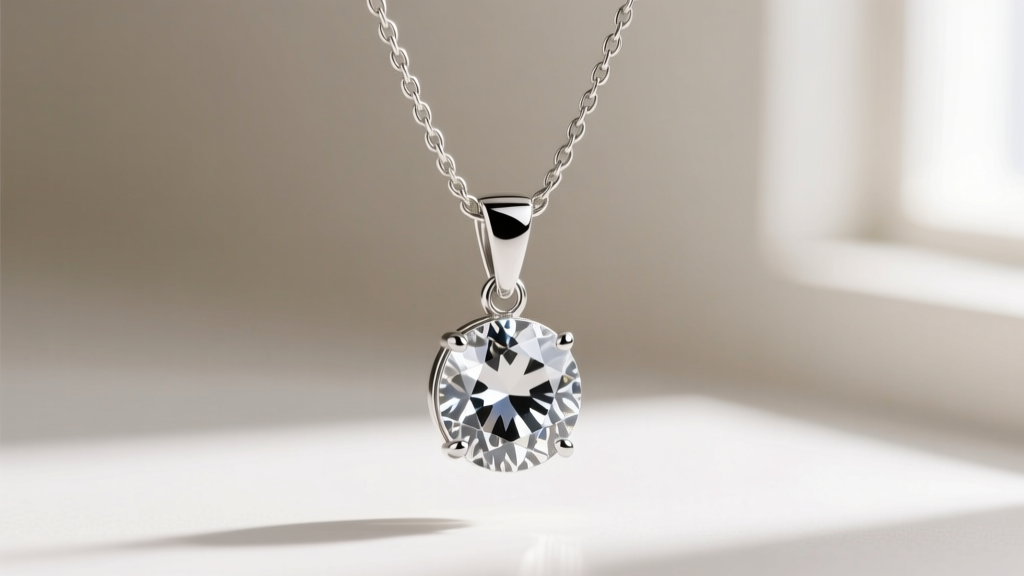
A common rookie mistake is measuring the chain length without accounting for the pendant. If you want a pendant to rest exactly at the hollow of your throat (an 18-inch drop), but the pendant itself is 1.5 inches long with a 0.5-inch bail, you actually need a 16-inch chain. Always use your necklace sizer to measure the total visual drop, then subtract the length of your pendant and bail to find the exact chain length you need to purchase.
Adjusting for Seasonal Wardrobes
Neck circumference fluctuates slightly with temperature and hydration, but more importantly, the bulk of your clothing changes the required chain length. A chain that sits perfectly at 18 inches over a silk camisole in July might feel suffocatingly tight over a thick cashmere turtleneck in December. Professional stylists recommend using your sizer over the thickest garment you plan to wear with the piece, and opting for a 2-inch extender chain to provide seasonal versatility.
Common Sizing Mistakes and How to Avoid Them
- Ignoring the Clasp Weight: If you are sizing a very delicate chain (under 1.2mm) but plan to use a heavy lobster clasp, the weight of the clasp will pull the chain backward, causing the front of the necklace to ride up higher than your sizer indicated. Always factor in clasp weight for ultra-fine chains.
- Measuring Over the Wrong Posture: Stand up straight and look forward when using your sizer. Slouching or looking down compresses the neck and chest, leading to a measurement that will be too short when you stand normally.
- Forgetting Layering Clearance: If you plan to layer multiple chains, there must be at least a 2-inch to 3-inch difference between each sizer measurement. Any less, and the chains will tangle constantly and the pendants will overlap awkwardly.
Final Verdict: What to Look For Before Checkout
When buying a necklace sizer, prioritize adjustability, realistic weight, and durability. For everyday shoppers and gift buyers, a high-quality velvet adjustable cord sizer with a secure silicone-grip toggle (typically priced between $8 and $15) is the most practical investment. For fine jewelry collectors and designers, a sterling silver sliding chain sizer ($30 to $60) is non-negotiable for accurately judging the drape of precious metals.
Pro Tip: Always measure your neck at the end of the day when slight swelling is at its peak, ensuring your choker and collar-length necklaces will remain comfortable around the clock.
By integrating a proper necklace sizer into your buying process, you eliminate the frustration of ill-fitting jewelry and ensure every chain, choker, and pendant rests exactly where it was designed to.


