The Green Gemstone Necklace Trend: 2026 Style & Stone Guide
Discover the 2026 green gemstone necklace trends. Compare emerald, tsavorite, and chrysoprase, and learn expert styling tips for every neckline.

The 2026 Shift: Beyond the Traditional Emerald
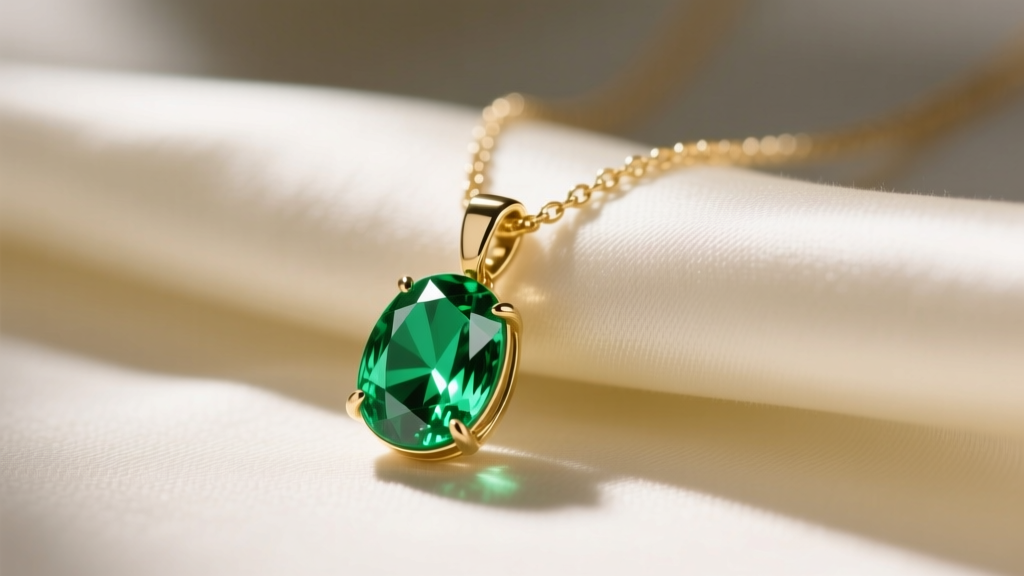
The resurgence of botanical and earth-toned aesthetics in 2026 has catapulted the green gemstone necklace to the forefront of fine jewelry styling. No longer confined to vintage estate pieces or traditional May birthstone gifts, green gems are now the anchor of modern, avant-garde layering and minimalist statement dressing. While the classic emerald remains a blue-chip investment, the 2026 runway and high-jewelry market have seen a massive pivot toward alternative green stones. Designers and collectors alike are prioritizing optical brilliance, ethical traceability, and unique color saturation over traditional prestige.
This shift is largely driven by the geological scarcity and exceptional light performance of tsavorite garnet, alongside the bold, opaque statements made by chrysoprase and malachite. According to GIA's comprehensive garnet research, tsavorite's refractive index (1.74) significantly outpaces that of an emerald (1.57), meaning it delivers a fiery brilliance that requires no artificial enhancement. For the modern jewelry wardrobe, understanding the distinct gemological properties of these stones is critical for both styling and long-term wearability.
The Green Gemstone Matrix: Data, Hardness, and Pricing
Choosing the right green gemstone necklace requires balancing your aesthetic preferences with the stone's physical durability and market value. Below is a comparative matrix of the top five green gemstones dominating the 2026 market, complete with gemological data and current fine-grade pricing.
| Gemstone | Mohs Hardness | Avg Price/Carat (Fine) | Refractive Index | Best Metal Pairing |
|---|---|---|---|---|
| Colombian Emerald | 7.5 - 8.0 | $4,000 - $12,000+ | 1.57 - 1.58 | 18k Yellow Gold |
| Tsavorite Garnet | 7.0 - 7.5 | $800 - $2,500 | 1.74 | Platinum / 18k White Gold |
| Chrome Diopside | 5.5 - 6.0 | $50 - $150 | 1.67 - 1.70 | 14k Rose Gold |
| Chrysoprase | 6.5 - 7.0 | $30 - $80 (Cabochon) | 1.53 - 1.54 | 18k Yellow Gold |
| Peridot | 6.5 - 7.0 | $50 - $120 | 1.65 - 1.69 | 14k Yellow Gold |
As the data illustrates, tsavorite offers a compelling middle ground: it is significantly more brilliant and inclusion-free than emerald, yet remains accessible compared to top-tier Colombian specimens. Chrome diopside, while visually striking with its deep forest-green hue, is much softer and should be reserved for pendants rather than high-impact jewelry pieces.
Neckline Pairing Framework: A Structural Approach
A green gemstone necklace must be engineered to complement the geometry of your neckline. The interplay between chain length, pendant drop, and stone cut can dramatically alter the visual proportions of your upper body.
The Plunging V-Neck & Y-Drop Lariat
For deep V-necks and wrap dresses, the goal is to elongate the torso and draw the eye downward. A 24-inch to 28-inch Y-drop lariat necklace is the optimal choice. Select a pear-cut or marquise-cut tsavorite or emerald as the terminal drop. The pointed tip of the stone should mirror the angle of the V-neck, creating a seamless, continuous vertical line. Avoid chokers or 16-inch princess lengths here, as they will visually chop the neck and clash with the garment's structural lines.
The Square Neck & Geometric Pendants
Square necklines provide a horizontal canvas that demands geometric balance. An 18-inch princess-length necklace featuring an emerald-cut or Asscher-cut green gemstone pendant works perfectly. The step-cut facets of an emerald-cut stone echo the straight lines of the neckline. For a more contemporary 2026 aesthetic, opt for a bezel-set chrome diopside in a sleek, minimalist platinum frame to provide high contrast against the skin.
High Collars & Opaque Chokers
When styling turtlenecks, high-collared blouses, or winter knits, delicate chains and transparent faceted stones often get lost in the fabric. This is where opaque, cabochon-cut green stones shine. A 14-inch to 15-inch choker featuring a 14mm to 18mm polished chrysoprase or malachite cabochon provides a bold, graphic pop of color. The smooth, domed surface of the cabochon catches ambient light differently than faceted stones, offering a rich, velvety green that contrasts beautifully against dark wools and cashmeres.
Metal Synergies and Prong Security
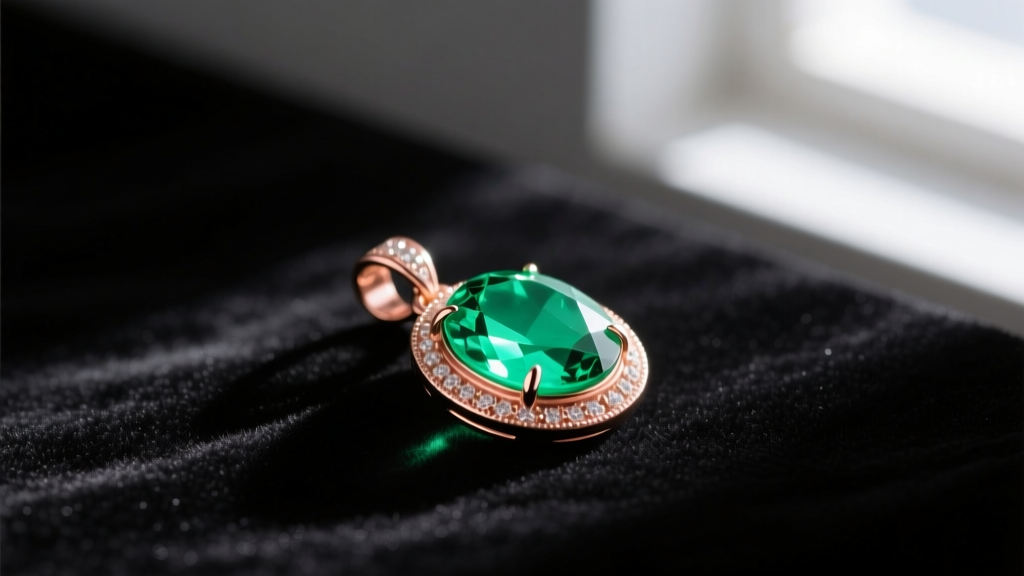
The metal alloy you choose for your green gemstone necklace impacts both the color perception of the stone and its physical security. Yellow gold (specifically 18k, which contains 75% pure gold) naturally amplifies the warm, grassy undertones of peridot and chrysoprase. Conversely, white gold or platinum enhances the cool, icy, or deep forest tones of tsavorite and chrome diopside.
Expert Setting Tip: If you are purchasing a faceted emerald necklace, ensure the jeweler utilizes V-prongs on the corners of the stone. Emeralds are notoriously brittle due to their natural inclusions (known as 'jardin'), and standard pointed prongs can exert too much pressure on the vulnerable corners, leading to catastrophic chipping.
For bezel settings, which are highly popular in 2026 for their sleek profile and superior protection, ensure the jeweler leaves the culet (the bottom point of the stone) open or properly supported to prevent light leakage, which can cause the green stone to appear muddy or black in low light.
Navigating Treatments and Authenticity
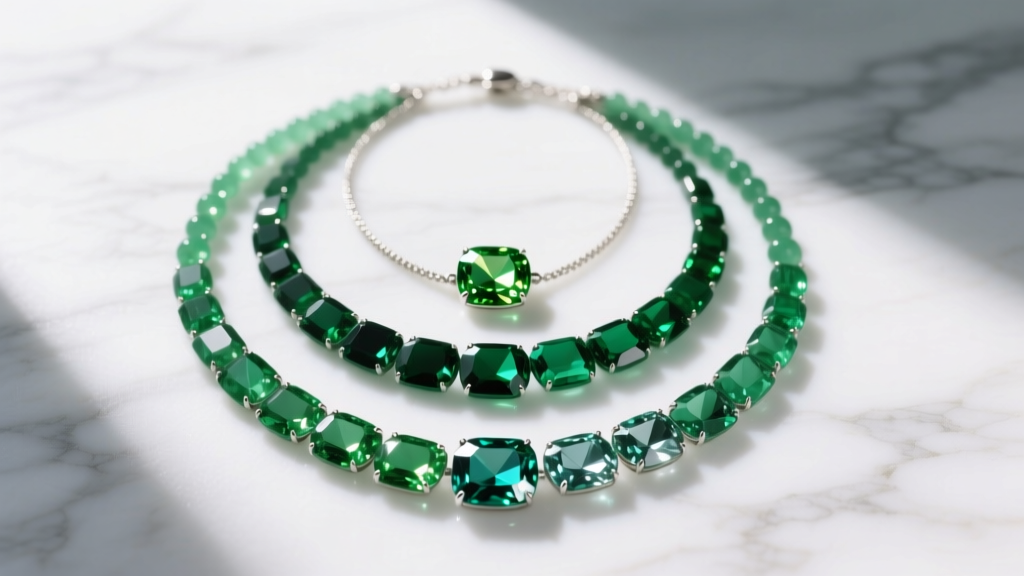
The green gemstone market is heavily reliant on clarity enhancements, and as a buyer, you must understand what you are purchasing. According to GIA's Emerald Buying Guide, it is an industry-standard practice to treat emeralds with oils or resins to fill surface-reaching fissures and improve apparent clarity.
When investing in a high-end emerald necklace, always request a laboratory report from a reputable institution like the GIA or AGS. The report will classify the treatment level as 'None', 'Minor', 'Moderate', or 'Significant'. For investment-grade pieces, stick to 'None' or 'Minor' oiling. Avoid stones with 'Significant' epoxy resin treatments, as the resin can degrade, yellow, or melt if exposed to the heat of a jeweler's torch during future repairs or ring resizing. Tsavorite and peridot, by contrast, are almost entirely untreated, making them highly appealing for buyers seeking natural, unaltered gemstones.
Final Styling Verdict for 2026
The green gemstone necklace has evolved from a static, traditional accessory into a dynamic tool for personal expression. Whether you are layering a delicate 16-inch peridot chain with a chunky gold curb link, or making a solitary statement with a 3-carat tsavorite pendant on a plunging silk blouse, the key lies in matching the stone's optical properties and durability to your specific lifestyle and wardrobe geometry. By prioritizing precise chain lengths, appropriate metal pairings, and verified gemological data, you can curate a green gemstone collection that is both aesthetically breathtaking and structurally enduring.


