Expert Guide to the Slip Knot on Necklace Adjusters
Master the slip knot on necklace cords with our technical guide. Learn cord friction, knot mechanics, and durable sliding techniques for jewelry.

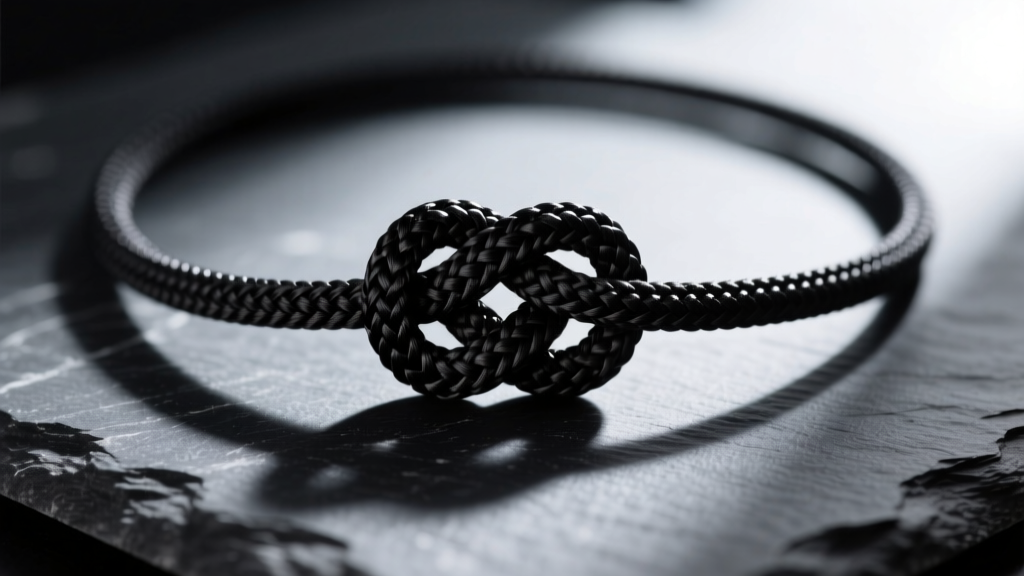
The Misnomer: Slip Knot vs. Sliding Square Knot
When jewelers, crafters, and consumers refer to a slip knot on necklace designs, they are almost always describing a mechanical misnomer. In textile and rope engineering, a true slip knot (such as the one used in knitting or basic sailing) is a knot that collapses and unravels when tension is applied to the working end. If you were to use a true slip knot as an adjustable closure on a necklace, the first time the pendant caught on a sweater, the knot would fail, dropping your jewelry to the floor.
What the jewelry industry colloquially calls a "slip knot" for adjustable cord necklaces is technically a sliding square knot (often referred to in macramé as a slider knot). This knot relies on controlled surface friction rather than a collapsing loop. The two working ends of the cord cross each other, and a separate segment of cord (or the same cord looped back) is woven tightly around them. When pushed, the friction is overcome, allowing the knot to slide. When pulled, the tension locks the woven cord against the core cords, preventing movement. Understanding this distinction is the first step in mastering adjustable jewelry closures.
Material Science: Cord Friction and Wear
The success of any adjustable cord necklace relies entirely on the tribology—the study of friction, wear, and lubrication—of the cord material. A cord that is too slick will cause the slider to loosen throughout the day, while a cord with too much surface drag will jam, making it impossible for the wearer to adjust the necklace over their head.
| Cord Material | Relative Friction | Melt Point | UV & Moisture Resistance | Best Application |
|---|---|---|---|---|
| Nylon (e.g., C-Lon, S-Lon) | Medium | ~220°C (428°F) | Poor UV / Good Moisture | Lightweight pendants, bead weaving |
| Polyester (Braided) | Medium-High | ~260°C (500°F) | Excellent UV / Excellent Moisture | Heavy pendants, outdoor/sport wear |
| Waxed Cotton | High | N/A (Combusts) | Poor UV / Poor Moisture | Rustic styles, thick macramé |
| Leather (Round Suede) | Low | N/A (Scorches) | Medium / Degrades in Sweat | Minimalist sliders, thick gauges |
| Silk (Griffin) | Low | N/A (Scorches) | Poor UV / Stains with Sweat | High-end pearls, delicate gems |
For the most reliable sliding mechanism, braided polyester in a 1.0mm diameter is the gold standard for modern jewelry designers. It offers the perfect balance of surface texture for gripping when stationary, and structural integrity when pushed. According to Fire Mountain Gems, synthetic braided cords also resist the natural oils and acids from human skin that cause natural fibers to degrade and swell over time.
The Role of Cord Diameter and Gauge
The diameter of your cord dictates the mechanical advantage of the slider. Cords thinner than 0.5mm lack the surface area required to generate sufficient friction, meaning the knot will slip under the weight of even a modest 15-gram pendant. Conversely, cords thicker than 2.0mm become too rigid. The bending radius required to weave a tight square knot around a 2.5mm core cord will cause the outer fibers to splay and weaken. The sweet spot for a durable, smooth-gliding slip knot on necklace closures is between 0.8mm and 1.2mm.
Step-by-Step: Engineering a High-Friction Slider
Tying a sliding square knot requires precise tension control. If the weaving cord is pulled too tightly during the knotting process, the slider will jam permanently. If left too loose, it will unravel.
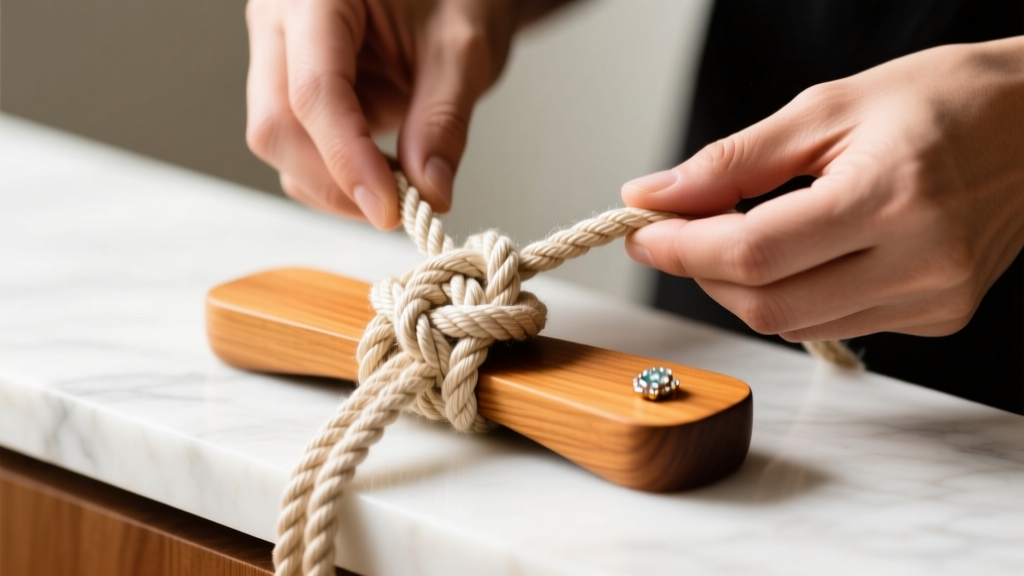
- Prepare the Core: Cross the left and right ends of your main necklace cord so they overlap by at least 4 inches. Secure them to a jeweler’s bench pin or clipboard to maintain baseline tension.
- Introduce the Weaving Cord: Take a separate 12-inch piece of the same cord material. Place its center point underneath the two overlapping core cords.
- The First Half-Knot: Bring the right weaving cord over the core cords, then under the left weaving cord. Take the left weaving cord under the core cords, and pull it up through the loop created by the right cord. Pull snug, but do not overtighten.
- The Second Half-Knot: Reverse the process. Left cord over the core, under the right. Right cord under the core, up through the left loop. This alternating sequence creates the square knot structure, preventing the slider from twisting.
- Repeat and Test: Complete 4 to 6 alternating half-knots. After every two knots, gently test the sliding mechanism by pushing the knot along the core cords. If it requires more than 2 pounds of force to move, your tension is too high.
Troubleshooting Common Slider Failures
Even experienced jewelers encounter mechanical failures when designing adjustable closures. Here is how to diagnose and fix the most common issues:
- The Knot Jams: This is usually caused by using a weaving cord that is thicker than the core cord, or by applying too much lateral tension during step 4. Fix: Always use the exact same cord for both core and weaver, or step down one gauge size for the weaver.
- The Knot Loosens Under Weight: Heavy pendants (30g+) create downward vector forces that pull the core cords taut, narrowing their profile and allowing the slider to slip. Fix: Increase the number of square knots in the slider from 4 to 8, expanding the friction surface area.
- Cord Fraying at the Edges: If the ends of the weaving cord are not properly sealed, body oils and friction will cause the braided jacket to peel back from the core. Fix: Implement proper thermal or chemical fusing techniques (detailed below).
Heat Sealing vs. Chemical Fusing
The finishing step is critical to the lifecycle of the necklace. Because synthetic cords are essentially extruded plastics, they can be thermally fused. Using a precision thread burner tool allows you to melt the nylon or polyester end into a smooth, glass-like bead that locks the final knot in place without adding bulk.
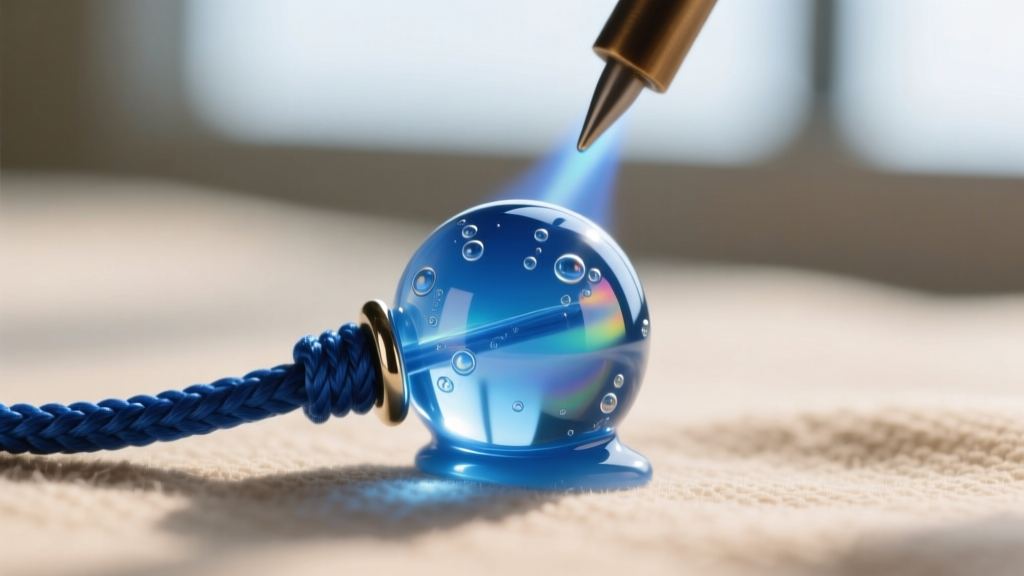
However, heat sealing has limitations. If you are working with natural fibers like waxed cotton, silk, or leather, thermal fusing will only result in scorch marks and structural weakening. For these materials, you must rely on chemical fusing. A micro-drop of cyanoacrylate (CA) glue applied via a precision syringe needle will wick into the fibers via capillary action, curing into a rigid acrylic barrier that prevents fraying. According to material guidelines from Rio Grande Jewelry Supply, using a flexible CA formula is preferred for leather to prevent the glued joint from becoming brittle and snapping during adjustment.
Environmental Factors and Long-Term Maintenance
A necklace is worn against the skin, exposing it to a highly corrosive micro-environment. Human sweat contains urea, sodium chloride, and lactic acid. Over a period of 6 to 12 months, these compounds can alter the friction coefficient of your cord.
Expert Maintenance Tip: To extend the life of an adjustable cord necklace, advise clients to rinse the cord under fresh water after heavy sweating or swimming in salt water. Allow it to air dry fully before sliding the knot. Forcing a slider along a damp, salt-encrusted cord acts like sandpaper on the internal fibers, leading to sudden tensile failure.
Furthermore, UV degradation is a silent killer of nylon cords. If a client wears a black nylon cord necklace daily while outdoors, UV exposure will break down the polymer chains, causing the cord to turn gray and become brittle. In these scenarios, polyester is vastly superior, as its molecular structure is inherently UV-stable, ensuring the slip knot mechanism remains functional for years.
Conclusion: Precision Over Tradition
Mastering the adjustable closure is what separates amateur jewelry crafting from professional, heirloom-quality design. By understanding the physics of friction, selecting the correct polymer or natural fiber, and executing a precise sliding square knot, you eliminate the frustration of jammed or slipping necklaces. The next time you design an adjustable piece, remember that the success of the garment relies entirely on the engineering of the slider. For further reading on gemstone care and how different pendant materials interact with corded closures, the Gemological Institute of America (GIA) provides excellent baseline guidelines on preventing chemical reactions between porous stones and treated jewelry cords.


