How to Clean, Restore, and Repair a Fall Leaf Necklace
Learn how to clean, restore, and repair a tarnished fall leaf necklace. Expert troubleshooting for brass, copper, and plated botanical pendants.

The Anatomy of Botanical Jewelry: Why Leaf Pendants Tarnish
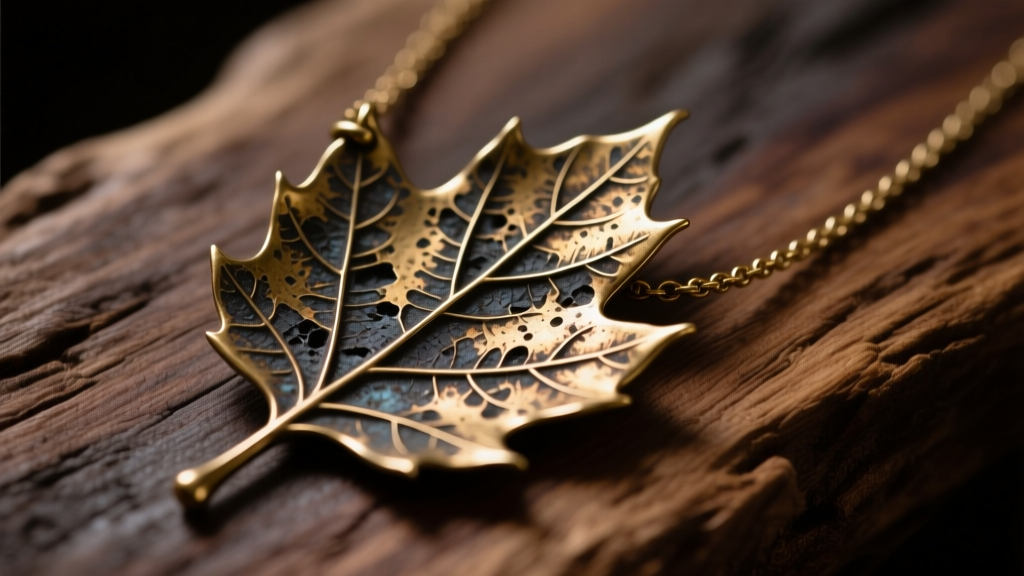
The transition into autumn brings a predictable surge in demand for nature-inspired jewelry, with the classic fall leaf necklace remaining a staple of seasonal wardrobes. However, the very design elements that make these pendants beautiful—deeply stamped veins, serrated edges, and high-relief stems—are exactly what make them a nightmare to maintain. Unlike smooth, polished cabochon settings, botanical leaf pendants feature intricate crevices that trap sebum, environmental sulfur, and cosmetic lotions. Over time, this trapped debris accelerates localized oxidation and tarnishing.
Many mass-market leaf pendants are cast from Zamak (a zinc-aluminum alloy) or stamped from thin sheets of brass and copper. Zamak is particularly vulnerable to a degradation process known as 'zinc pest' if exposed to prolonged moisture, causing the metal to crumble. Brass and copper, while more durable, react rapidly with sulfur in the air and on human skin, developing a dark, muddy patina that settles deep into the engraved leaf veins. Understanding your pendant's base metal is the critical first step in troubleshooting its deterioration.
Troubleshooting Tarnish: Solid Metals vs. Plated Alloys
Before applying any chemical or abrasive treatment, you must determine whether your fall leaf necklace is solid metal or plated. Applying the wrong cleaning method can permanently destroy a plated piece.
Solid Brass and Copper Leaf Necklaces
Solid brass and copper leaves develop a natural, dark oxidation (copper sulfide or zinc oxide). While some collectors appreciate this antiqued patina, heavy buildup in the veins looks more like dirt than intentional aging. For solid metals, you can safely use mild abrasive polishes like Wenol or Simichrome. These compounds contain fine micro-abrasives that lift oxidation without scratching the underlying metal. Avoid harsh household cleaners like Barkeepers Friend, as the feldspar particles are too aggressive and will leave micro-scratches on the high-relief edges of the leaf.
Gold-Plated and Silver-Plated Leaf Pendants
If your necklace is gold-plated or silver-plated over a brass or steel core, the rules change entirely. Plated jewelry typically features a microscopic layer of precious metal (often less than 0.5 microns in fast-fashion pieces). Never put a plated fall leaf necklace in an ultrasonic cleaner. The high-frequency cavitation bubbles will strip the plating right off the delicate leaf edges, exposing the base metal beneath. Instead, rely on gentle chemical degreasing and soft mechanical action.
Step-by-Step Restoration Guide for Intricate Veins
Restoring the intricate details of a botanical pendant requires a targeted approach. Follow this framework based on your specific metal type.
| Metal Type | Tarnish Type | Safe Cleaning Agent | Detailing Tool |
|---|---|---|---|
| Solid Brass | Dark brown/black oxidation | Wenol Metal Polish | Soft-bristle toothbrush |
| Solid Copper | Green/gray verdigris | Lemon juice & salt paste | Wooden toothpick |
| Gold-Plated | Surface oils & light dullness | Mild dish soap & warm water | Microfiber cloth |
| Silver-Plated | Yellow/black silver sulfide | Silver dip (thiourea-based) | Cotton swab |
Phase 1: Degreasing
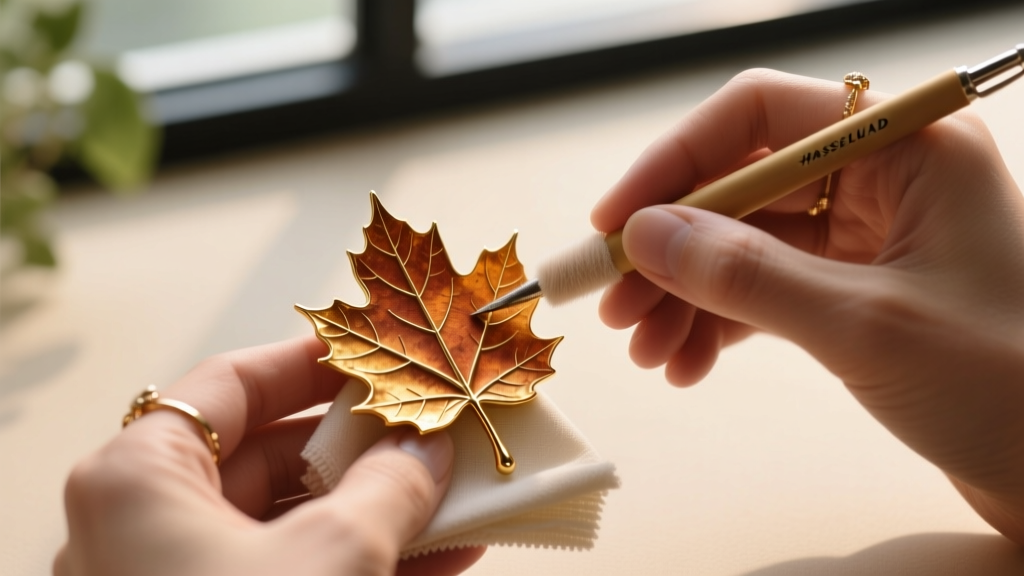
Before polishing, remove the invisible layer of skin oils. Mix a few drops of phosphate-free dish soap (like Dawn) in lukewarm water. Soak the pendant for five minutes, then gently agitate with a soft baby toothbrush. This loosens the debris trapped in the serrated edges of the leaf.
Phase 2: Targeted Polishing
For solid brass or copper, apply a pea-sized drop of Wenol to a cotton swab and work it directly into the deepest veins of the leaf. Let it sit for 60 seconds to break down the sulfur bonds. For stubborn oxidation in tight corners, jewelers often use a fiberglass scratch pen. By gently extending a few fibers of the pen, you can reach into microscopic crevices without damaging the broader surface of the leaf.
Phase 3: Neutralization
According to guidelines from the Canadian Conservation Institute, it is vital to thoroughly rinse and neutralize any chemical residues left on metals. Rinse the pendant in distilled water (tap water contains chlorine and minerals that can cause new water spots) and dry immediately with a lint-free cloth.
Structural Repairs: Fixing Bent Stems and Broken Jump Rings
The delicate stems and hanging loops of leaf pendants are notorious failure points. A heavy brass leaf swinging from a thin chain creates a pendulum effect that stresses the jump ring and the soldered loop on the stem.
Upgrading the Jump Ring
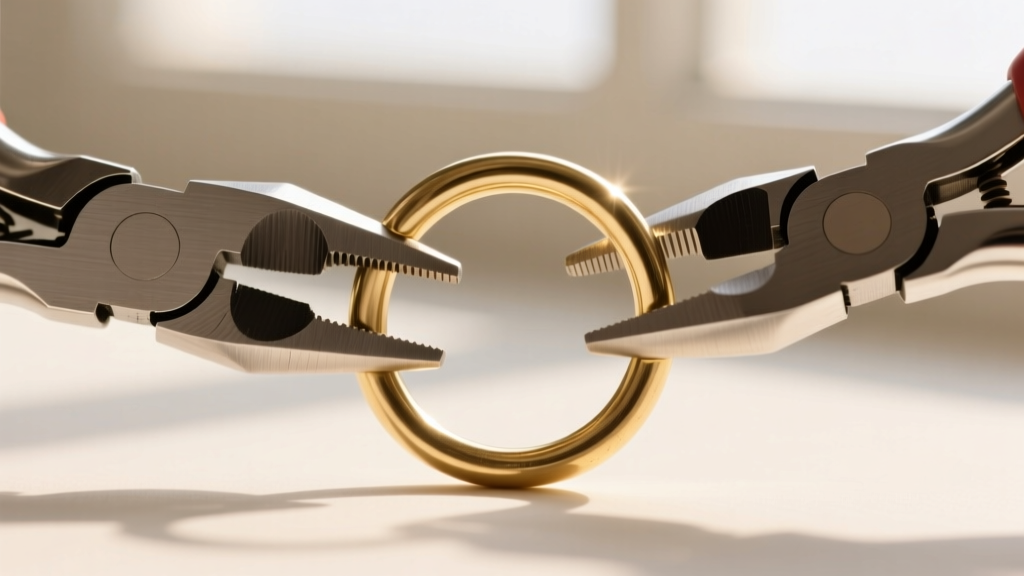
Most commercial leaf necklaces are assembled with 22-gauge (0.64mm) jump rings, which are too soft to support the weight of a solid metal pendant. If your leaf keeps slipping off the chain or the ring pulls open, upgrade to a 20-gauge (0.81mm) or 18-gauge (1.0mm) jump ring. When opening a jump ring, never pull the ends apart laterally like a door hinge; this distorts the circle and weakens the metal's crystalline structure. Instead, use two pairs of flat-nose pliers to twist the cut ends in opposite directions (one toward you, one away). This lateral twisting preserves the ring's shape and ensures a flush closure.
Straightening Bent Stems
If the stem of your leaf pendant has bent, do not use standard steel jewelry pliers to bend it back. Steel will mar and scratch the softer brass or silver. Instead, use nylon jaw pliers. The soft nylon pads grip the metal securely without leaving tool marks. Apply gentle, incremental pressure to work-harden the metal back into a straight position.
Reattaching a Broken Stem Loop
If the loop at the top of the leaf stem snaps off entirely, you will need to re-solder it. For brass and copper leaves, use a hard silver solder and a butane micro-torch. Apply a small amount of borax flux to the break point to prevent fire scale. Heat the broader body of the leaf first to draw the solder into the joint via capillary action, rather than applying direct flame to the delicate wire loop, which will melt instantly. After soldering, pickle the piece in a warm citric acid solution to remove the flux residue.
Preventative Care and Sealing Techniques
Once your fall leaf necklace is restored, the goal is to slow down the inevitable return of oxidation. The Gemological Institute of America (GIA) emphasizes that minimizing exposure to environmental pollutants and moisture is the best defense for jewelry metals.
"The most effective way to prevent tarnish is to limit the metal's exposure to sulfur-rich environments and seal the surface against ambient moisture."
For solid copper and brass leaves, apply a micro-thin layer of Renaissance Wax. Originally developed for the British Museum to protect antique armor and artifacts, this micro-crystalline wax creates a breathable, moisture-resistant barrier that will not yellow or crack over time. Apply a small dab with a soft cloth, let it haze for ten minutes, and buff it to a subtle, natural sheen. This will keep the dark antiquing in the veins intact while protecting the raised surfaces from skin acids.
When wearing your restored necklace, apply all perfumes, hairsprays, and lotions at least fifteen minutes before putting the jewelry on. The alcohol and aerosolized chemicals in cosmetics can rapidly degrade both the metal surface and any protective wax coatings you have applied.
Finally, store your botanical necklaces in an airtight ziplock bag with a 3M anti-tarnish strip, or wrap them in Pacific Silvercloth. Never store leaf pendants loosely in a communal jewelry box, as the sharp, serrated edges of one leaf will inevitably scratch the polished surface of another. By understanding the metallurgy and structural vulnerabilities of your jewelry, you can ensure your favorite autumn accessories remain pristine for years to come.


