The Gold Elephant Necklace: 2026 Trend & Style Guide
Explore 2026 trends for the gold elephant necklace. Discover expert styling tips, gold purity guides, chain pairings, and manufacturing insights.

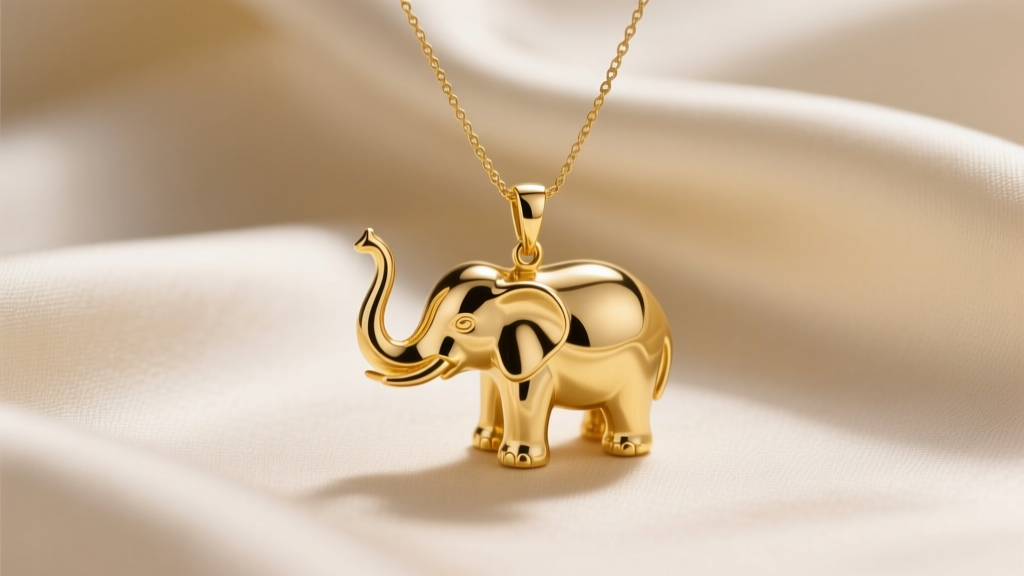
The gold elephant necklace has transcended its bohemian roots to become a sophisticated staple in modern fine and demi-fine jewelry collections. As we navigate the style landscape of 2026, the elephant motif has evolved from chunky, heavily oxidized statement pieces into sleek, architectural, and micro-detailed pendants that cater to both minimalist and maximalist aesthetics. Whether you are drawn to the elephant for its profound cultural symbolism—representing wisdom, memory, and good fortune—or simply for its striking geometric silhouette, selecting the right piece requires a nuanced understanding of metallurgy, manufacturing techniques, and proportional styling.
In this comprehensive trend and style analysis, we deconstruct the modern gold elephant necklace. We will explore the shift in design philosophies, break down the exact gold purities and pricing tiers you should expect in the current market, and provide a structural framework for pairing your pendant with the correct chain and neckline.
The Resurgence of the Elephant Motif in 2026
According to historical jewelry archives documented by Encyclopedia Britannica, animal motifs have cycled through prominence since the Victorian era, but the elephant has maintained a unique, unbroken lineage due to its cross-cultural significance. In the early 2010s, the gold elephant pendant was heavily associated with festival culture and boho-chic layering, often featuring turquoise inlays, heavy rope chains, and distressed finishes.
Fast forward to 2026, and the trend has sharply pivoted toward quiet luxury and architectural minimalism. Contemporary designers are stripping away the excess, favoring negative space, high-polish 14k and 18k gold, and subtle micro-pave diamond accents. The modern gold elephant necklace is no longer just a casual talisman; it is a refined accessory meant to be layered with delicate diamond solitaires or worn alone as a subtle focal point against tailored silk blouses and structured blazers. The emphasis is now on the anatomical accuracy of the silhouette and the fluid drape of the metal, moving away from flat, stamped charms toward three-dimensional, sculptural forms.
Manufacturing Methods: Cast vs. Die-Struck Pendants
When evaluating a gold elephant necklace, understanding how the pendant was manufactured is critical to assessing its durability, weight, and price point. There are two primary methods used in today's market: 3D CAD casting and die-striking.
3D CAD Investment Casting: Most high-end and artisanal elephant pendants are cast using the lost-wax method. A 3D model is printed in wax, encased in a plaster mold, and then burned out, leaving a cavity that is filled with molten gold. This method allows for intricate, three-dimensional details—such as the textured wrinkles of the elephant's skin or the delicate curve of the tusks. Cast pieces are typically solid or feature a heavy gallery wire backing, giving them a satisfying, luxurious weight. However, because they require more raw gold, cast pendants command a premium price.
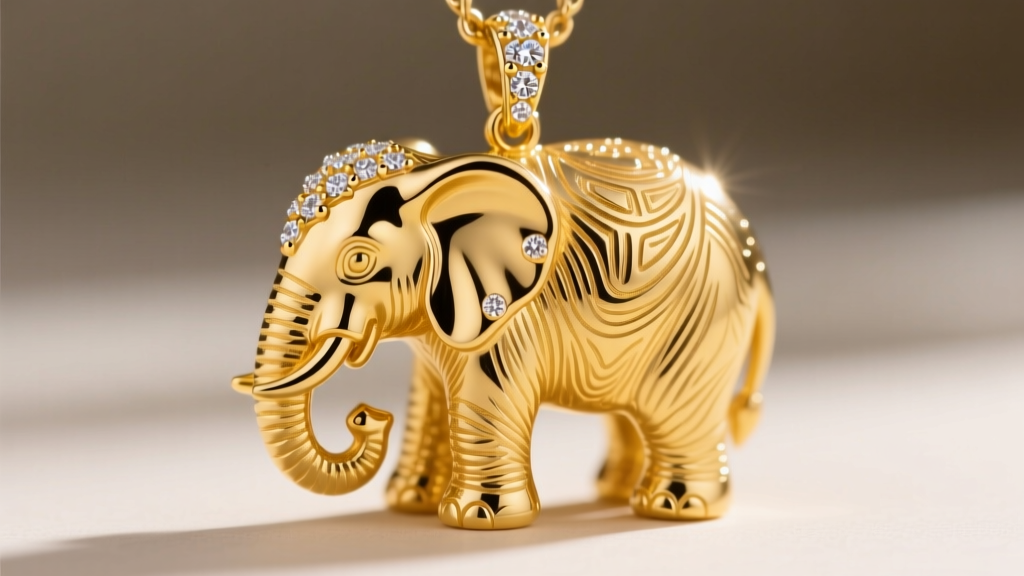
Die-Striking (Stamping): For more affordable, mass-market options, manufacturers use die-striking. A sheet of gold (often 10k or 14k) is stamped under immense pressure between two hardened steel dies. Die-struck elephant pendants are incredibly durable due to the compression of the metal's grain structure, but they are inherently flat. To create the illusion of depth, manufacturers often use diamond-cut bevels or high-polish edges. These pieces are lightweight, making them ideal for ultra-delicate chains, but they lack the sculptural presence of their cast counterparts.
Gold Purity and Pricing Tiers
The Gemological Institute of America (GIA) notes that gold purity fundamentally alters both the color and the structural integrity of a piece. Because elephant pendants often feature protruding elements like trunks and tusks that are prone to snagging or bending, choosing the right karat weight is essential for longevity. Below is a breakdown of the current market tiers for solid gold and vermeil elephant necklaces in 2026.
| Material / Purity | Durability & Characteristics | Estimated Price Range | Best Use Case |
|---|---|---|---|
| Gold Vermeil (Sterling Base) | Moderate. Prone to wear on high-friction edges over 1-2 years. | $45 - $120 | Trend-testing and occasional wear. |
| 10k Solid Gold | Extremely hard. Paler yellow hue. Excellent for thin protruding tusks. | $130 - $220 | Everyday wear, active lifestyles. |
| 14k Solid Gold | Optimal balance of hardness and rich color. The industry standard. | $250 - $550 | Heirloom quality, daily layering. |
| 18k Solid Gold | Softer, deeper yellow luster. Requires care to avoid bending delicate trunks. | $600 - $1,500+ | Luxury investment, special occasions. |
| 22k Solid Gold | Very soft. Rich, buttery color. Usually limited to flat, cultural/religious designs. | $800 - $2,000+ | Cultural ceremonies, safe-keeping. |
Chain Pairings, Bail Sizes, and Proportions
A common failure point in styling a gold elephant necklace is ignoring the relationship between the pendant's bail (the loop it hangs from) and the chain's width. Because the elephant is a horizontally oriented, visually heavy motif, it requires a chain that provides adequate structural support without overpowering the design.
For minimalist, die-struck 14k gold elephant pendants weighing under 2 grams, a 1.0mm to 1.2mm cable chain or a 1.2mm box chain is ideal. The box chain's square links catch the light beautifully and offer surprising tensile strength for their delicate appearance. Ensure the pendant's bail has an inner diameter of at least 3mm x 4mm to allow the box chain to drape smoothly without kinking.
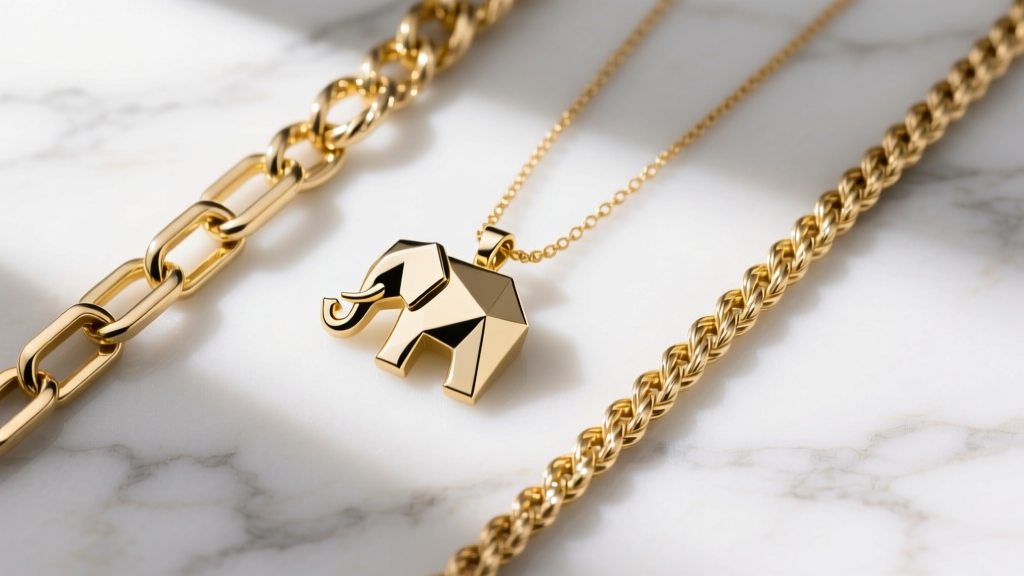
For heavier, 3D-cast 18k gold pieces weighing between 4 and 8 grams, you must scale up the chain to prevent clasp failure and neck strain. A 1.5mm to 2.0mm rope chain or a 2.2mm Figaro chain provides the necessary visual weight and physical support. The twisting pattern of a rope chain complements the organic, textured lines of a cast elephant pendant, creating a cohesive, luxurious aesthetic. Avoid pairing heavy elephant pendants with hollow paperclip chains, as the localized weight of the pendant will eventually warp and snap the hollow links.
Symbolism and Styling Framework
The directional orientation of the elephant's trunk is a frequent point of debate among jewelry collectors. In Western superstition, a trunk raised upward is traditionally viewed as showering good luck and positive energy outward, making it a popular choice for graduation gifts or career milestones. Conversely, in many Eastern traditions, particularly those influenced by the iconography of Ganesha, a trunk curving downward or to the left is not considered bad luck; rather, it symbolizes internalized energy, groundedness, and the quiet overcoming of obstacles. In 2026, designers are increasingly offering both orientations, allowing the wearer to choose based on personal intention rather than rigid superstition.
To seamlessly integrate a gold elephant necklace into your wardrobe, apply this neckline styling framework:
- The V-Neck and Wrap Blouse: The natural downward angle of a V-neck perfectly frames the horizontal spread of an elephant pendant. Opt for a 16-inch to 18-inch chain so the pendant rests exactly in the negative space of the neckline, acting as a visual anchor.
- The Crew Neck and Turtleneck: When wearing high, closed necklines, scale up the pendant. A larger, 25mm+ cast gold elephant pendant worn on a 20-inch to 24-inch chain over a dark turtleneck creates a striking, high-contrast statement that draws the eye downward and elongates the torso.
- The Open Collar and Button-Down: For a relaxed, intellectual aesthetic, layer a small, 12mm minimalist gold elephant charm on a delicate 15-inch choker-length chain with a slightly longer 18-inch geometric pendant. This asymmetrical layering technique bridges the gap between casual weekend wear and smart-casual office attire.
- The Strapless and Sweetheart Neckline: Avoid short chokers that compete with the collarbone. Instead, utilize a 20-inch rope chain that allows the gold elephant pendant to rest against the skin below the clavicle, providing a sophisticated focal point without cluttering the décolletage.
Ultimately, the gold elephant necklace in 2026 is a testament to the jewelry industry's ability to honor ancient symbolism through a lens of modern, wearable luxury. By paying close attention to manufacturing quality, gold purity, and proportional chain pairings, you can secure a piece that is not only structurally enduring but deeply resonant with your personal style narrative.


