Pink Pearls Necklace Materials: A Deep Comparison
Discover the material differences in a pink pearls necklace. Compare Freshwater, Akoya, Edison, and Conch pearls for luster, nacre, and durability.

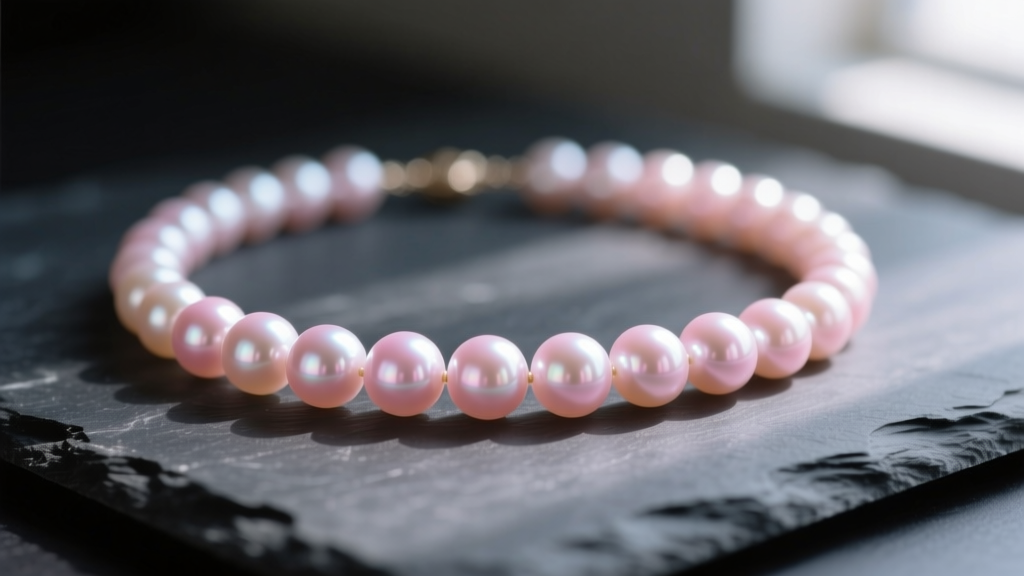
The Allure and Science of Pink Pearl Coloration
When selecting a pink pearls necklace, understanding the underlying material science is just as critical as evaluating the visual aesthetics. Unlike white or cream pearls, which derive their color primarily from the absence of specific pigments, pink pearls owe their hues to a complex interplay of organic compounds and trace elements. According to the Gemological Institute of America (GIA), the pink coloration in pearls is largely influenced by porphyrins and specific trace metals like manganese, which are incorporated into the conchiolin (the organic protein matrix) during the nacre secretion process.
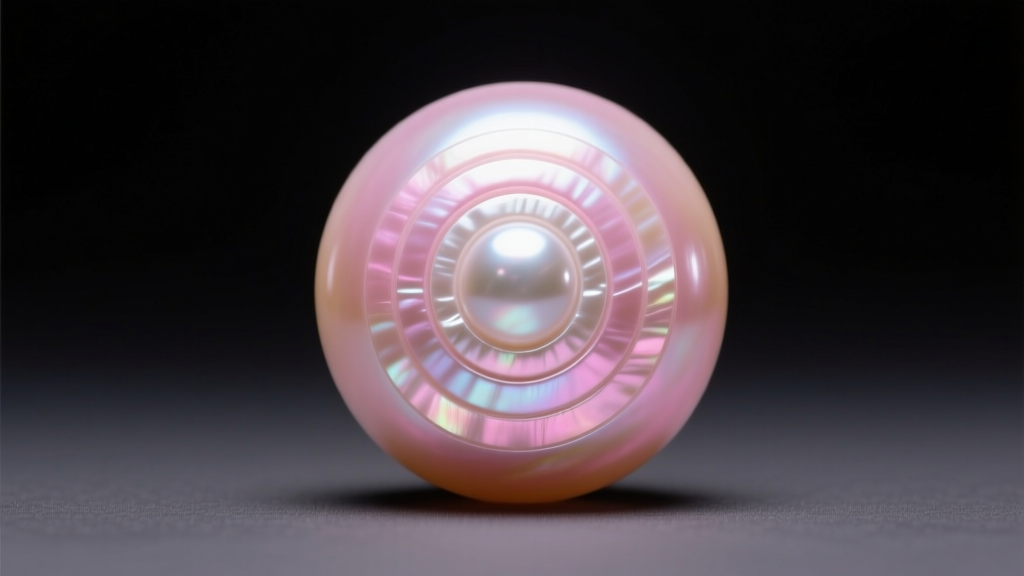
The structural composition of any pearl is a composite material consisting of microscopic aragonite (calcium carbonate) platelets bound together by conchiolin. In naturally pink pearls, the conchiolin layers contain higher concentrations of these organic pigments. However, not all pink pearls achieve their color naturally. The market is flooded with treated, dyed, and irradiated options, making a deep dive into material properties essential for any serious collector or buyer. By analyzing nacre thickness, structural durability, and optical properties, you can accurately assess the true value and longevity of a pink pearls necklace.
Material Comparison: Types of Pink Pearls
To make an informed purchase, you must distinguish between the four primary categories of pink pearls available in the modern jewelry market. Each type possesses distinct material characteristics, origin stories, and price points.
| Pearl Type | Environment | Nacre Thickness | Mohs Hardness | Avg. Strand Price |
|---|---|---|---|---|
| Edison | Freshwater (China) | 2.0mm - 4.0mm | 2.5 - 3.0 | $150 - $800 |
| Natural Freshwater | Freshwater (China/USA) | 1.5mm - 3.0mm (Solid) | 2.5 - 3.0 | $50 - $250 |
| Akoya (Dyed) | Saltwater (Japan/Vietnam) | 0.2mm - 0.5mm | 2.5 - 3.5 | $400 - $1,200 |
| Conch | Saltwater (Caribbean) | Non-Nacreous | 3.5 - 4.5 | $15,000+ |
Edison and Freshwater Pearls
Edison pearls represent a massive leap in freshwater pearl cultivation. By utilizing a bead-nucleation technique combined with specific genetic strains of the Hyriopsis cumingii mussel, cultivators produce large (11mm-16mm), perfectly round pearls with deep, natural pink and peach hues. Because the nacre is exceptionally thick (often exceeding 2.0mm), Edison pearls offer outstanding durability and a rich, satiny luster. Standard tissue-nucleated freshwater pearls, while smaller and often off-round, are composed of solid nacre all the way through, making them virtually impervious to peeling.
Akoya and Conch Pearls
Naturally pink Akoya pearls are exceedingly rare; consequently, 95% of pink Akoya necklaces on the market are dyed or irradiated. While they offer a sharp, mirror-like luster, their nacre is notoriously thin (often under 0.4mm), making them susceptible to chipping and peeling over decades of wear. Conch pearls, sourced from the Queen Conch snail in the Caribbean, are non-nacreous. They lack the traditional iridescent layers, presenting instead a porcelain-like surface with a unique "flame structure." They are priced by the carat rather than the millimeter and represent the pinnacle of rare pearl collecting.
Nacre Thickness and Structural Durability
The longevity of your pink pearls necklace is directly dictated by nacre thickness and the structural integrity of the aragonite platelets. Nacre is not just a coating; it is the very essence of the pearl's optical and physical resilience.
The Bead-Nucleated vs. Tissue-Nucleated Divide
Traditional freshwater pearls are tissue-nucleated, meaning a tiny piece of mantle tissue is inserted into the mussel, which then forms a pearl sac and secretes solid nacre. The result is a 100% solid pearl. If you scratch a tissue-nucleated pink pearl, you simply reveal more pink nacre beneath. Conversely, saltwater Akoya pearls and freshwater Edison pearls are bead-nucleated. A spherical shell bead is inserted, and the mollusk secretes nacre over it. If an Akoya pearl's nacre is too thin (below 0.3mm), friction from clothing or accidental impacts can wear the nacre away, exposing the dull, chalky shell bead underneath. When investing in a pink pearls necklace, always request an X-ray or endoscope verification for bead-nucleated varieties to ensure the nacre exceeds at least 0.5mm for saltwater, or 1.5mm for Edison pearls.
Evaluating Luster, Orient, and Surface Quality
Luster and orient are the two primary optical properties that determine a pearl's visual impact, and they are heavily influenced by the material's crystalline structure.
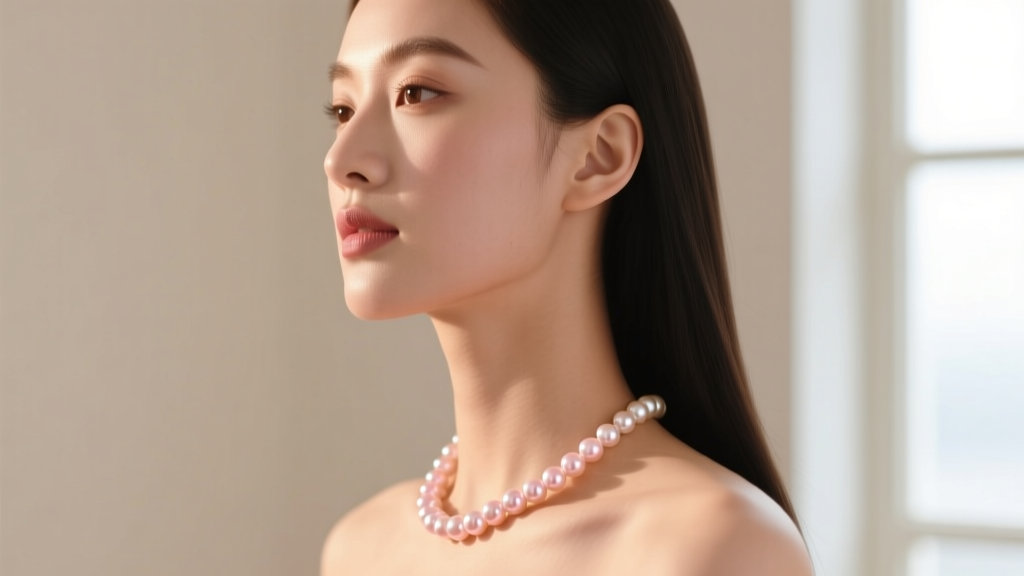
Luster refers to the sharpness and intensity of light reflected from the pearl's surface. Akoya pearls, due to the rapid, cold-water secretion of their aragonite crystals, possess the highest, sharpest luster—often described as a "mirror ball" effect. However, this comes at the cost of nacre thickness. Freshwater and Edison pearls, grown in warmer, nutrient-rich waters, secrete thicker, slightly more porous aragonite layers. This results in a softer, more satiny luster that glows from within rather than reflecting sharply off the surface.
Orient, on the other hand, is the iridescent play of colors seen just below the surface, caused by light refracting through the overlapping layers of aragonite and conchiolin. The American Gem Society notes that thick-nacre pearls like Edison and natural freshwater varieties exhibit superior orient. In a high-quality pink Edison necklace, you will often see flashes of green, gold, or violet dancing across the pink body color, a phenomenon entirely absent in heavily dyed, thin-nacre alternatives.
Porosity and Long-Term Care Protocols
Pearls are organic gemstones, ranking a mere 2.5 to 4.5 on the Mohs hardness scale. Their material porosity makes them highly reactive to environmental chemicals, requiring strict care protocols to maintain their structural integrity and color.
Expert Rule of Thumb: Pearls should be the last thing you put on when getting dressed, and the first thing you take off. The chemical composition of perfumes, hairsprays, and cosmetics can permanently degrade the conchiolin matrix, leading to a loss of luster and structural flaking.
Because dyed pink Akoya pearls have undergone chemical processing to achieve their color, their nacre is often more porous and fragile than untreated freshwater pearls. Exposure to mild acids, such as those found in human sweat or citrus-based cleaners, can cause the dye to leach or the nacre to etch. To clean any pink pearls necklace, use only a soft, lint-free microfiber cloth dampened with distilled water. Never use ultrasonic cleaners, steamers, or commercial jewelry dips, as the high-frequency vibrations and harsh chemicals will shatter the aragonite crystals and strip the organic conchiolin binders.
Furthermore, the silk thread used to knot pearl necklaces stretches and degrades over time, absorbing oils and acids from the skin. If you wear your pink pearls necklace frequently, professional re-stringing every 18 to 24 months is mandatory to prevent catastrophic strand failure. By understanding these material properties and adhering to rigorous care standards, your pink pearl jewelry will retain its breathtaking luster and structural beauty for generations.


