Custom Daddy Necklace Guide: Metals, Chains & Engraving
Discover the technical specs for a custom daddy necklace. Compare titanium, tungsten, and 14k gold, plus chain tensile strength and laser engraving depth.

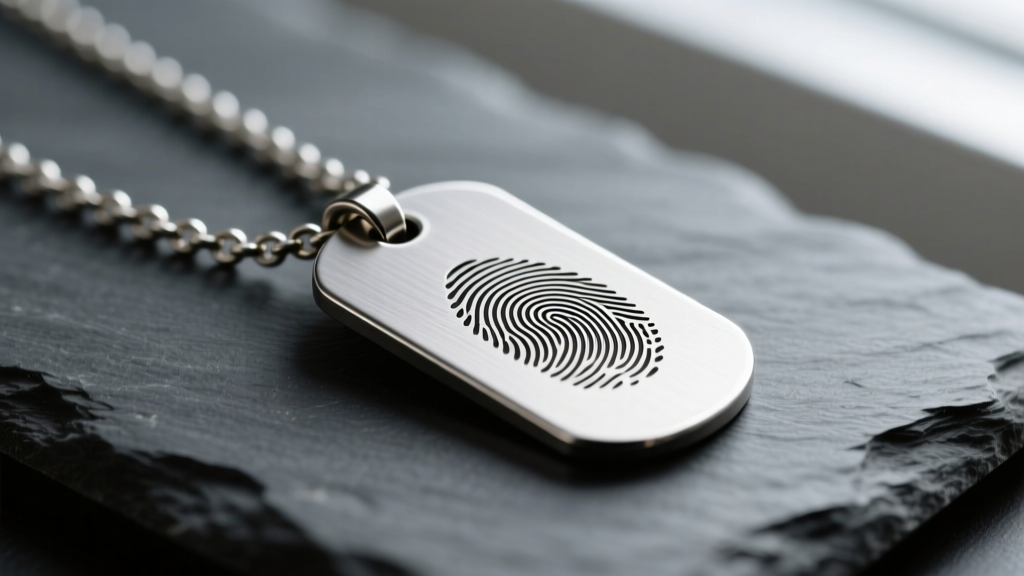
The Anatomy of a Durable Daddy Necklace
When selecting a custom daddy necklace, the jewelry market often prioritizes sentimental aesthetics over structural integrity. However, for an active father, a necklace is not merely a static accessory; it is a piece of wearable hardware subjected to significant mechanical stress, environmental exposure, and accidental kinetic impact. From toddler yanks to sweat exposure during weekend projects, a high-quality daddy necklace must be engineered to survive the physical demands of fatherhood without catastrophic failure.
As jewelry manufacturing techniques have evolved through 2026, the gap between novelty gifts and heirloom-grade hardware has widened. This technical deep dive bypasses the marketing fluff to examine the metallurgical properties, chain tensile mechanics, and precision engraving technologies required to produce a custom daddy necklace that will endure decades of daily wear. Whether you are evaluating a fingerprint pendant or a custom nameplate, understanding the material science behind the piece is critical for long-term durability.
Metallurgy & Material Grades: What Survives the Playground?
The pendant material dictates the necklace's resistance to scratching, corrosion, and deformation. While traditional jewelers often default to precious metals, modern metallurgy offers advanced alloys that outperform gold in high-impact environments. According to the Gemological Institute of America (GIA), pure gold is far too soft for daily wear, necessitating alloy blends that fundamentally alter the metal's Vickers Hardness (HV).
Titanium vs. Tungsten Carbide vs. 14k Gold
Grade 5 Titanium (Ti-6Al-4V): Often confused with commercially pure Grade 2 titanium, Grade 5 is an aerospace-grade alloy containing 6% aluminum and 4% vanadium. It boasts a tensile strength of roughly 950 MPa, making it four times stronger than Grade 2. For a daddy necklace, Grade 5 is the optimal choice for intricate threading and clasp components, as it resists stripping and bending. Furthermore, it is entirely hypoallergenic and impervious to chlorine and saltwater corrosion.
Tungsten Carbide: Composed of tungsten and carbon atoms in equal parts, this ceramic-metal composite ranks between 8 and 9 on the Mohs hardness scale. It will not scratch under normal conditions. However, its extreme hardness comes with a critical failure mode: brittleness. A tungsten pendant dropped onto a concrete garage floor or subjected to a blunt, high-velocity impact can shatter. It is best suited for fathers with low-impact, office-based lifestyles.
14k Yellow and White Gold: Comprising 58.5% pure gold, 14k alloys rely on copper, silver, and zinc for structural integrity. White gold is typically alloyed with nickel or palladium and plated with rhodium. While 14k gold offers excellent malleability and traditional value, its Vickers Hardness (approx. 120-150 HV) means it will accumulate micro-scratches and patina over time. It requires periodic re-polishing and, in the case of white gold, rhodium re-plating.
| Material | Vickers Hardness (HV) | Tensile Strength (MPa) | Best Use Case | Avg. Price Range |
|---|---|---|---|---|
| Grade 5 Titanium | 334 HV | 950 MPa | Active dads, outdoor sports, sweat exposure | $80 - $250 |
| Tungsten Carbide | 1500+ HV | 344 MPa | Office wear, scratch-averse users | $50 - $150 |
| 14k Yellow Gold | 125 HV | 500 MPa | Traditional heirlooms, formal events | $400 - $1,200 |
| 316L Surgical Steel | 220 HV | 515 MPa | Budget-friendly durability, gym wear | $30 - $90 |
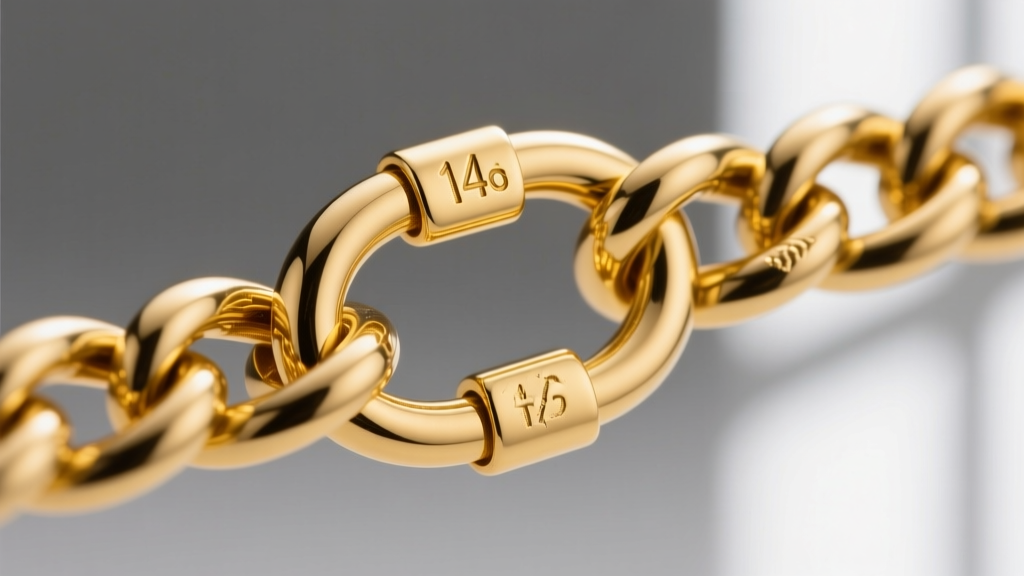
Chain Mechanics & Tensile Strength
A pendant is only as secure as the chain suspending it. The most common point of catastrophic failure in a daddy necklace is not the pendant bail, but the chain links and clasp assembly. When evaluating chains, you must consider both the wire gauge and the link soldering process.
Machine-made chains produced for the mass market often feature unsoldered links. While they offer flexibility, an unsoldered 2.0mm link will permanently deform and open under approximately 12 to 15 pounds of lateral force—easily achievable if a toddler grabs and pulls the necklace. For a secure daddy necklace, you must specify a minimum wire thickness of 3.0mm (approximately 8 gauge) and ensure the links are laser-welded or soldered. Soldering the link closures distributes kinetic loads across the entire joint, increasing the tensile yield threshold by up to 300%, as noted by manufacturing data from Rio Grande Jewelry Supply.
The Weakest Link: Clasp Engineering
Standard spring ring clasps are notorious for internal coil fatigue. The microscopic spring inside a 5mm spring ring typically loses its tension memory after 400 to 600 actuation cycles, leading to a clasp that fails to close completely. For a heavy, custom daddy pendant, always upgrade to a dual-spring lobster clasp or a magnetic neodymium safety clasp. Lobster clasps feature a solid cast body and a heavier internal spring, reliably enduring upwards of 10,000 cycles without mechanical degradation.
Engraving Techniques: Laser vs. Rotary
Personalization is the defining feature of a daddy necklace, whether it involves a child's name, a significant date, or a fingerprint. The method used to etch the metal fundamentally alters the structural integrity and visual longevity of the piece.
Rotary (CNC) Engraving: This traditional method uses a physical diamond or carbide drag tool to carve into the metal. It physically displaces the material, creating deep, tactile grooves. While excellent for thick, heavy-gauge pendants, rotary engraving removes mass. If applied to a pendant thinner than 1.5mm, the deep grooves can create stress concentrators, making the metal prone to snapping under bending stress.
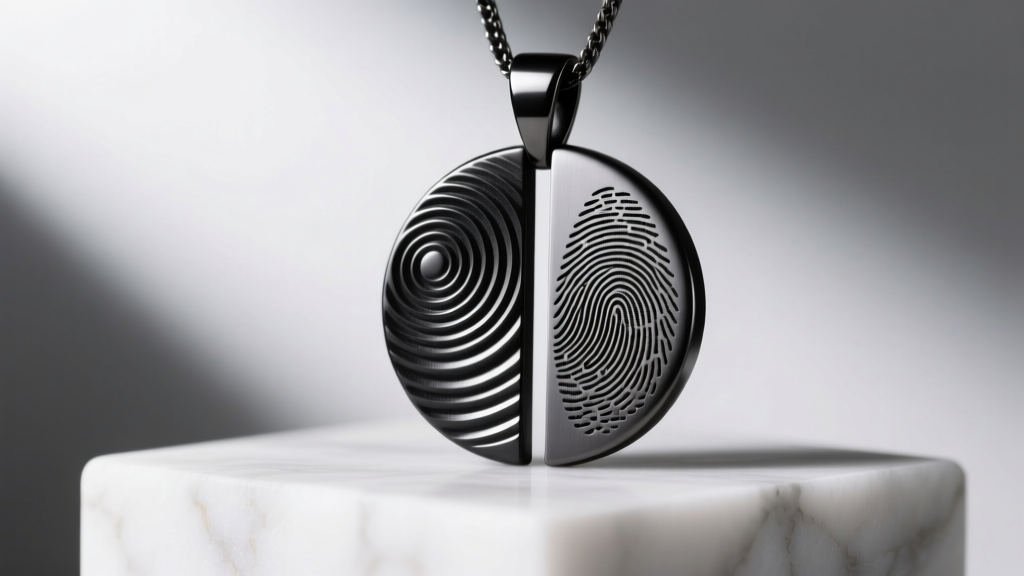
Fiber Laser Annealing (Ytterbium): Operating at a 1064nm wavelength, modern fiber lasers do not cut into the metal; instead, they use localized heat to oxidize the surface layer, turning it a deep, permanent black. This annealing process removes zero mass from the pendant, preserving its structural integrity. For fingerprint engravings, a fiber laser is mandatory. It requires a high-resolution scan (minimum 1000 DPI) to map the microscopic friction ridges of the skin. The laser translates this topography into high-contrast grayscale annealing, resulting in a hyper-realistic, touchable fingerprint that will not fade or fill with tarnish over time.
Maintenance & Troubleshooting Protocols
Even the most robust custom daddy necklace requires specific maintenance protocols to prevent environmental degradation. Active fathers often expose their jewelry to harsh chemicals without realizing the metallurgical consequences.
- Avoid Hypochlorite Exposure: Household bleach and heavily chlorinated pool water contain hypochlorite ions. These ions induce stress corrosion cracking (SCC) in 14k white gold and lower-grade stainless steels, leading to sudden, brittle chain failure.
- Ultrasonic Cleaning: To remove sebum, dead skin cells, and environmental grit from chain links, use an ultrasonic cleaner operating at 40kHz to 45kHz. Fill the tank with warm water and a few drops of mild, ammonia-free dish soap. Run for exactly 3 minutes. Do not use ultrasonic cleaners on tungsten pendants with glued-in carbon fiber or wood inlays, as the cavitation bubbles will destroy the adhesive bond.
- Bail Inspection: Every six months, inspect the pendant bail (the loop connecting the pendant to the chain). Look for microscopic thinning on the bottom curve where the chain rubs against the metal. If the bail wire has worn down by more than 20% of its original thickness, it must be re-tipped or replaced by a jeweler immediately.
Expert Insight: When ordering a custom fingerprint daddy necklace, always request that the jeweler archive the high-resolution digital scan file. Fingerprint pendants are deeply sentimental, and having the original 1000+ DPI vector file backed up ensures that if the piece is ever lost, an exact replica can be laser-annealed onto a new pendant without needing to recast the original mold.
By prioritizing aerospace-grade alloys, soldered chain mechanics, and non-destructive laser annealing, you can commission a custom daddy necklace that transcends temporary sentimentality and becomes a genuine, indestructible family heirloom. Understanding these technical specifications ensures your investment survives the beautiful, chaotic reality of fatherhood.


