Realistic Heart Necklace Value Guide: Pricing & Materials
Discover the true value of a realistic heart necklace. We break down pricing tiers, material grades, and casting methods to help you buy smart.

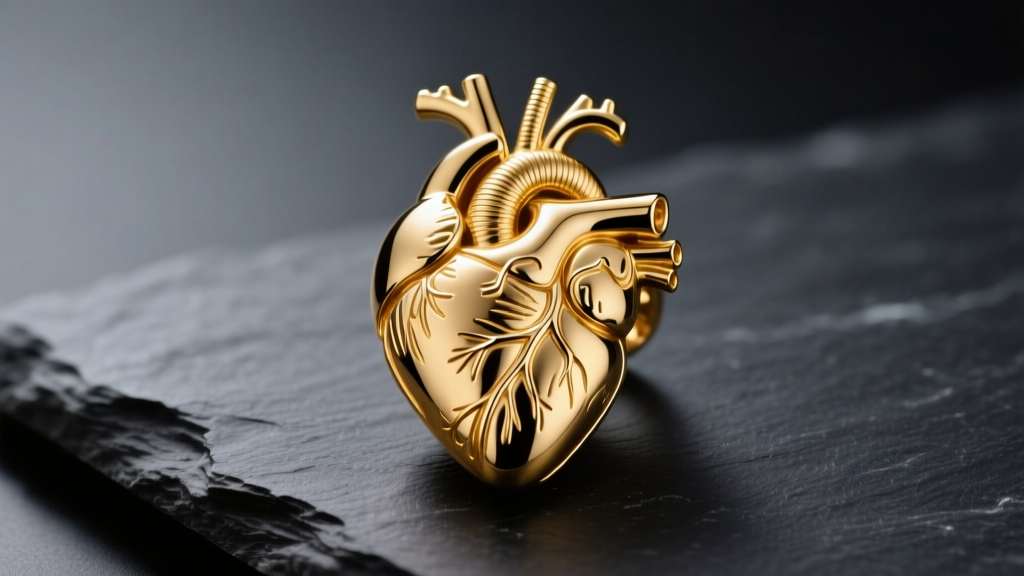
The search for the perfect realistic heart necklace often leads buyers down a confusing path of wildly varying price tags. Unlike standard, smooth-domed heart pendants, realistic heart designs—whether anatomically accurate medical replicas or hyper-textured, organic 3D casts—require advanced manufacturing techniques and precise finishing. In the current jewelry market, you will find these pieces priced anywhere from $15 to over $1,500. But how do you separate genuine artisan craftsmanship from overpriced, mass-produced dropshipped alloys?
As a value assessment guide, we are going to dissect the realistic heart necklace market. We will evaluate material grades, casting methodologies, and the hidden maintenance costs that dictate the true long-term value of your investment.
Defining 'Realistic' in Heart Pendants
Before assessing value, we must define what the market considers 'realistic.' There are two primary categories dominating this niche:
- The Anatomical Heart: A scientifically accurate 3D model featuring the aorta, pulmonary artery, superior vena cava, and distinct ventricular grooves (the coronary sulcus). High-value pieces capture the exact branching of the arterial tubes.
- The Hyper-Textured Organic Heart: A traditional heart shape that has been hand-carved or digitally sculpted to mimic organic matter—featuring deep pitting, hammered textures, or 'melting' wax effects that catch the light in a highly realistic, three-dimensional manner.
Both styles demand deep crevices and high-relief surfaces, which directly impacts the metal weight, casting difficulty, and ultimately, the retail price.
The Value Matrix: Materials and True Market Pricing
When evaluating a realistic heart necklace, the base metal is your primary indicator of value. Because these pendants are often 3D and heavy, the cost of raw materials scales rapidly. Below is a breakdown of what you should expect to pay in the current market, based on Gemological Institute of America (GIA) metal standards and current precious metal spot prices.
| Material Grade | Expected Price Range | Weight (Avg 15mm) | Longevity & Value Rating |
|---|---|---|---|
| Zinc Alloy / 'Tibetan Silver' | $12 - $25 | 15 - 22 grams | Poor (High toxicity risk, rapid corrosion) |
| Brass with PVD Gold Plating | $35 - $65 | 12 - 18 grams | Fair (Plating wears in crevices quickly) |
| 925 Sterling Silver (Solid) | $85 - $160 | 10 - 15 grams | Excellent (Heirloom quality, cleanable) |
| 14k Solid Yellow/White Gold | $600 - $1,200+ | 8 - 14 grams | Superior (Generational investment) |
Value Insight: If you see a pendant marketed as 'solid silver' weighing over 20 grams but priced under $50, it is almost certainly a mislabeled zinc alloy. True 925 sterling silver carries a premium that reflects its intrinsic melt value and the labor required to cast it safely.
The Hidden Cost of Crevices: Maintenance and Tarnish
One of the most critical, yet overlooked, aspects of buying a realistic heart necklace is the maintenance burden. Anatomical hearts and highly textured pendants are riddled with microscopic grooves, undercuts, and deep tubular structures.
The Tarnish Trap in Sterling Silver
Sterling silver naturally oxidizes when exposed to sulfur in the air and skin oils. In a smooth pendant, you can wipe this away with a polishing cloth in seconds. In a realistic anatomical heart, tarnish will quickly turn the deep ventricular grooves and the underside of the aorta arch pitch black. Because polishing cloths cannot reach these recessed areas, the pendant can look permanently dirty.
The Value Fix: If you are investing in a 925 sterling silver realistic heart, look for pieces that have been rhodium-plated or e-coated. Alternatively, budget for a professional ultrasonic cleaning once a year, or use a specialized liquid silver dip (with extreme caution) to dissolve tarnish in the deep crevices.
PVD Coating Failures on Brass
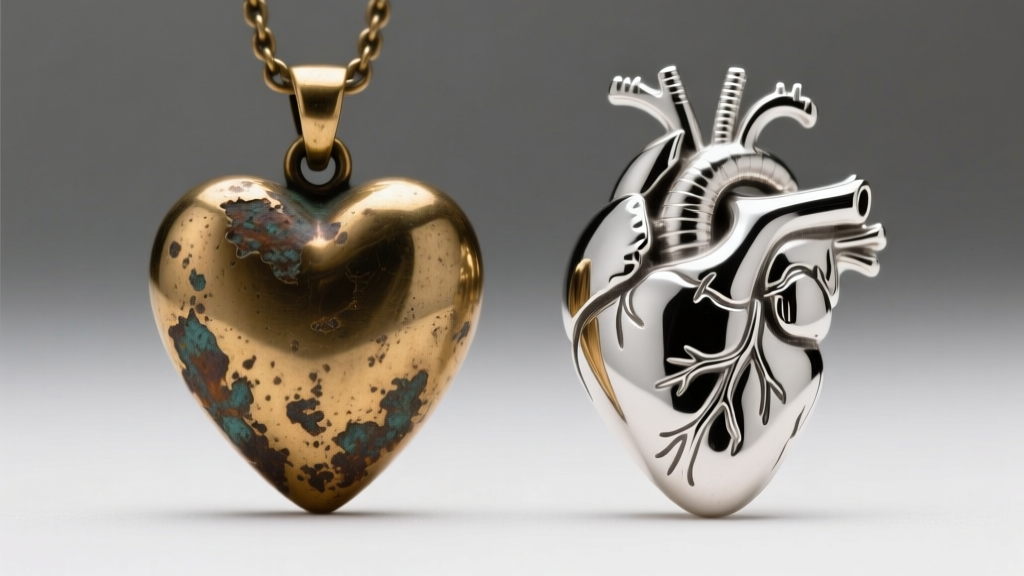
Physical Vapor Deposition (PVD) is a common plating method for budget brass jewelry. While PVD is incredibly hard, it is applied in a vacuum chamber. If the manufacturer does not properly rotate the pendant during the PVD process, the microscopic 'arteries' of the heart will receive a thinner coating. Within six months of daily wear, the brass will begin to bleed through the gold tone in these recessed areas, ruining the realistic illusion. For long-term value, avoid PVD-plated realistic pendants if you have acidic skin chemistry.
Manufacturing Methods: Cast vs. 3D Printed Resin
The crispness of the anatomical details is the hallmark of a high-value realistic heart necklace. According to manufacturing standards outlined by jewelry suppliers like Stuller, the method used to create the master model dictates the final price and quality.
- Lost-Wax Casting (High Value): Artisan jewelers carve the heart in jeweler's wax or use high-resolution DLP 3D printing (down to 25-micron layers) to create a master. This is then cast using the lost-wax method. The resulting metal piece retains razor-sharp edges on the coronary arteries and perfectly smooth ventricular walls.
- Silicone Mold Spin-Casting (Low Value): Mass-produced budget pendants are often made by pressing a master into a rubber mold and injecting liquid zinc or pewter. The high viscosity of these cheap metals means they cannot fill the tiny, intricate details of an anatomical heart. The resulting pendants look 'melted' or blurred, with visible seam lines running down the side of the aorta.
How to test this when buying online: Zoom in on the product photos. If the edges of the 'tubes' at the top of the heart look rounded, soft, or feature a distinct vertical line running down the side, it is a cheap spin-cast piece not worth more than $20.
Chain Selection for Heavy 3D Pendants
A major failure point in budget realistic heart necklaces is the chain. A solid, 3D-cast anatomical heart pendant measuring just 18mm in height can easily weigh between 12 and 18 grams. This is significantly heavier than a standard flat pendant.
Many retailers pair these heavy pendants with delicate 1mm cable chains to save on manufacturing costs. This is a structural failure waiting to happen. The concentrated weight of the 3D pendant will quickly stretch the links of a thin cable chain, leading to a snapped necklace and a lost pendant.
The Ideal Chain Pairings
To protect your investment, assess the chain included in the bundle, or budget an extra $40–$80 for a proper replacement:
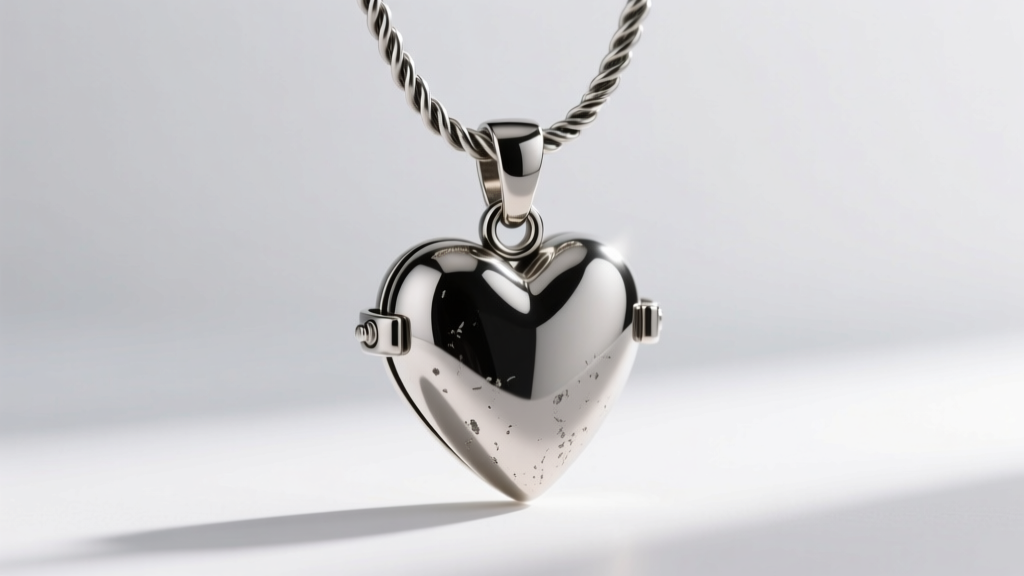
- 2.0mm to 3.0mm Rope Chain: The twisted links of a rope chain distribute weight evenly and offer a tensile strength capable of supporting up to 30 grams of solid metal.
- 2.5mm Curb or Cuban Chain: Flat, interlocking links provide excellent durability and a modern, industrial aesthetic that pairs beautifully with anatomical designs.
- The Bail Check: Ensure the pendant's bail (the loop the chain passes through) is soldered and reinforced. A poorly soldered bail on a heavy realistic heart will snap under the kinetic stress of daily walking and movement.
Red Flags: When You Are Overpaying
When shopping for a realistic heart necklace, be highly skeptical of the following marketing tactics that artificially inflate the price without adding intrinsic value:
- 'Vintage Antique' Brass Sold at Silver Prices: Some boutiques intentionally allow cheap brass to oxidize and market it as 'antique bronze' or 'gothic vintage,' charging $150+ for a piece with $4 worth of raw material.
- Hollow-Cast 14k Gold: To make solid gold affordable, some manufacturers use resin cores or electroforming to create massive, lightweight 3D hearts. While this saves on gold weight, electroformed jewelry is incredibly fragile. If you dent a hollow realistic heart, it cannot be repaired or soldered by a standard jeweler. Always ask if a gold piece is solid cast or hollow-formed.
Final Verdict: Where to Invest Your Budget
The realistic heart necklace is a bold, conversation-starting piece of jewelry that demands high-quality execution. If you are on a strict budget under $50, opt for surgical-grade stainless steel rather than brass or zinc alloys; stainless steel will not tarnish in the deep crevices and offers excellent structural integrity. However, for a true heirloom piece that captures the breathtaking complexity of human anatomy or organic textures, 925 sterling silver (preferably rhodium-plated) or solid 14k gold remains the undisputed standard for long-term value, durability, and artisan craftsmanship.


