Drake Engagement Ring Necklace: Technical Design Breakdown
An expert technical breakdown of the Drake engagement ring necklace trend, covering pendant engineering, chain gauges, and diamond setting mechanics.

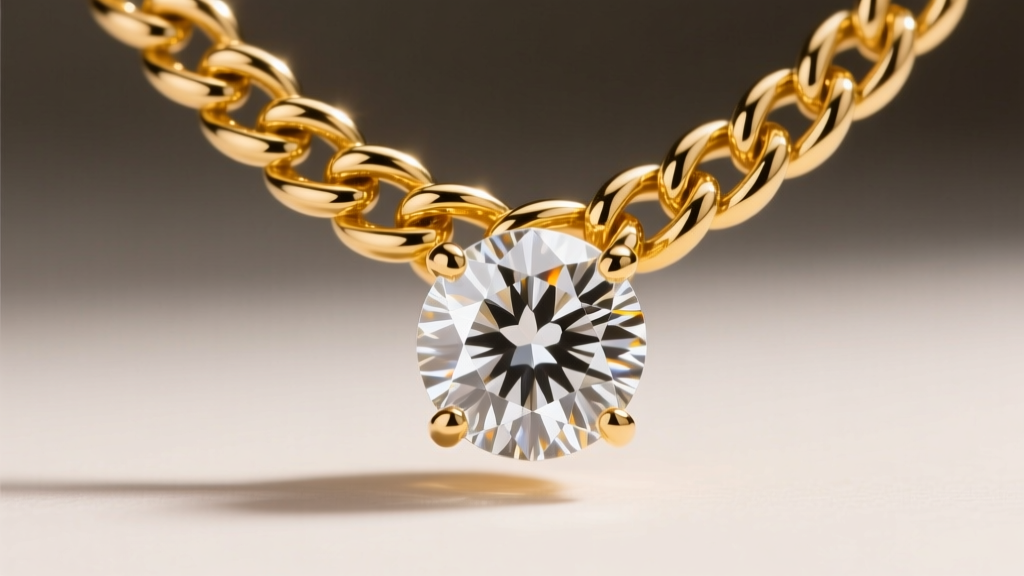
The Anatomy of the Hip-Hop Solitaire Phenomenon
When collectors and fans search for the drake engagement ring necklace, they are rarely looking for actual matrimonial jewelry. Instead, this search intent targets a highly specific, hyper-exaggerated motif in modern hip-hop jewelry: the oversized solitaire diamond pendant designed to mimic a massive engagement ring, worn boldly on a heavy chain. Popularized by cultural icons like Drake, who frequently blur the lines between traditional fine jewelry and streetwear status symbols, this piece requires serious engineering. Transforming a 10 to 20-carat center stone into a wearable pendant is not as simple as soldering a loop to a ring shank. It requires a deep understanding of tensile strength, center-of-gravity physics, and advanced metallurgy. In this 2026 technical deep dive, we break down exactly how master jewelers engineer these massive pieces to hang perfectly, catch the light, and survive daily wear without catastrophic failure.
Optical Physics: Designing for a Swinging Stone
A diamond set in a traditional engagement ring is viewed primarily from a static, top-down angle. A pendant, however, is in constant motion. As the wearer walks, the necklace swings, exposing the pavilion (bottom) facets to shifting ambient light and varying angles of observation. If a jeweler uses a standard commercial cut for a drake engagement ring necklace replica, the stone will frequently 'black out' or look dull when tilted at 15-degree angles.
To combat this, expert lapidaries utilize 'Super Ideal' cut proportions for these massive pendants. According to the Gemological Institute of America (GIA), optimizing the lower girdle facet lengths to exactly 75-80% ensures maximum light return even when the stone is not perfectly perpendicular to the viewer. Furthermore, because these pendants often feature 10 to 15-carat CVD (Chemical Vapor Deposition) lab-grown diamonds to keep costs manageable without sacrificing visual impact, the crown angles must be cut to precisely 34.5 degrees. This specific geometry acts as a prism, capturing the erratic, multi-directional light of a nightclub or outdoor environment and refracting it back to the observer, ensuring the pendant remains the focal point of the outfit.
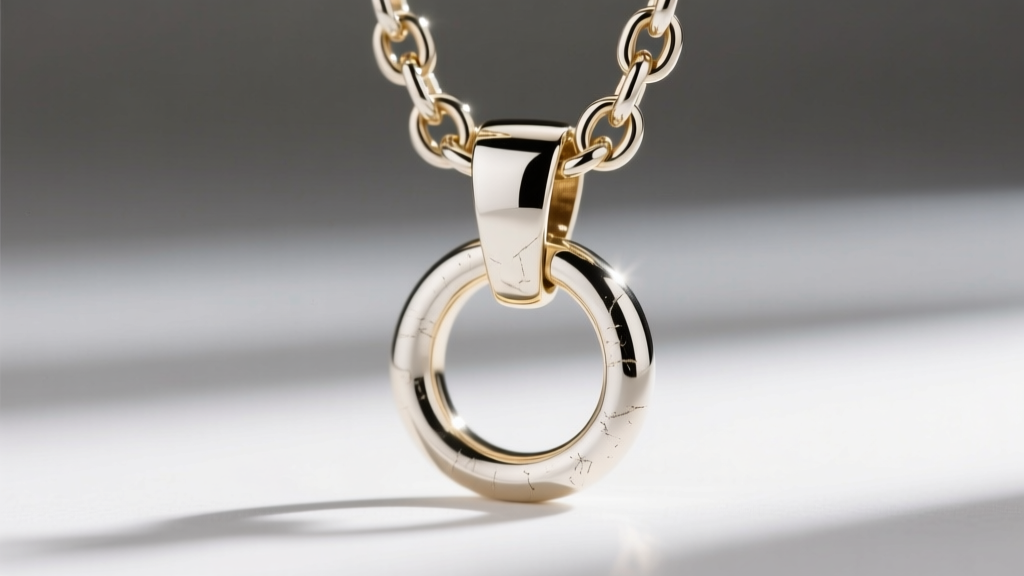
Engineering the Bail and Center of Gravity
The most common failure in amateur custom jewelry is the 'pendant flip.' If a jeweler takes a standard 12-carat solitaire ring and simply welds a standard bail to the top of the shank, the piece will immediately flip upside down, showing the back of the setting instead of the diamond. This happens because the center of gravity in a massive ring is too low and too far forward.
To engineer a proper drake engagement ring necklace, the bail must be integrated directly into the ring's structural architecture. Master CAD designers use a 'Shank-Through' or counter-weighted hidden halo method. In the Shank-Through design, the chain threads directly through a reinforced, hollowed-out section of the ring's lower band, bringing the pivot point closer to the stone's girdle. Alternatively, jewelers will cast a heavy, solid gold counter-weight behind the gallery (the underside of the diamond setting). This hidden mass pulls the center of gravity backward, forcing the diamond to remain perfectly flush against the wearer's chest, regardless of how vigorously the chain moves.
Chain Gauges and Tensile Load Capacities
You cannot suspend a 45-gram diamond pendant on a standard 3mm cable chain. The dynamic load created by walking, bending, or sudden movements can multiply the static weight of the pendant by a factor of three, easily snapping weaker links. Below is a structural breakdown of the chain types required to support heavyweight solitaire pendants.
| Chain Type | Gauge (mm) | Avg Weight (g) | Max Static Pendant Load | Dynamic Load Tolerance |
|---|---|---|---|---|
| Miami Cuban | 12mm | 55g - 75g | 120g | High (Interlocking flat links) |
| Franco | 10mm | 65g - 90g | 150g | Extreme (V-shaped woven links) |
| Rope | 8mm | 40g - 55g | 85g | Moderate (Prone to twisting) |
For the ultimate hip-hop aesthetic, the 12mm Miami Cuban remains the gold standard. However, from a purely structural perspective, the 10mm Franco chain offers superior tensile strength due to its interlocking V-shaped links, which distribute the pendant's downward force across four distinct contact points rather than two.
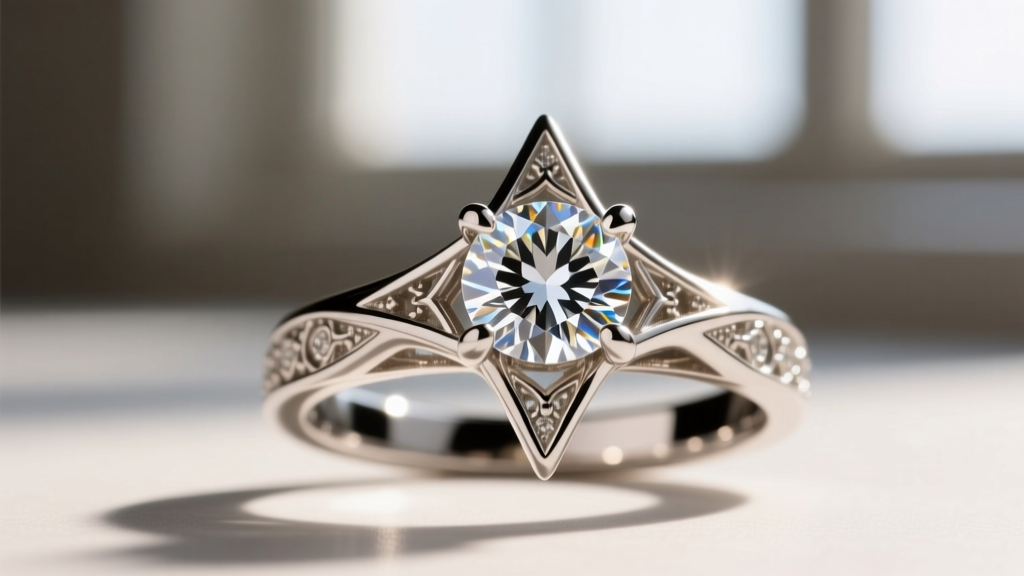
Metallurgy: Why 14k Gold Outperforms 18k for Heavy Loads
There is a persistent myth in fine jewelry that higher karat gold is always better. When engineering a heavy drake engagement ring necklace, 14k gold is technically superior to 18k gold for both the chain and the setting's prongs. Pure gold is a highly malleable, soft metal. 18k gold contains 75% pure gold, leaving only 25% for alloying metals like copper, silver, and zinc. Conversely, 14k gold contains 58.5% pure gold and 41.5% alloy metals.
This higher alloy content significantly increases the yield strength and hardness of the metal. For a pendant that will inevitably strike the wearer's sternum, get caught on clothing, or swing into zippers, 14k gold prongs are far less likely to bend, warp, or release the center stone. If a client insists on the richer yellow hue of 18k gold for the chain, expert jewelers will often cast the diamond setting itself in 14k white gold or platinum to ensure the prongs maintain their structural rigidity over decades of wear.
Clasp Mechanics and Failure Points
The clasp is the single most vulnerable point of failure on any heavy necklace. Standard lobster clasps rely on a tiny internal steel spring that will easily deform or snap when subjected to the 40+ grams of continuous downward pull from a massive diamond pendant. For pieces in this weight class, a double-locking box clasp is mandatory.
A high-quality box clasp features a male insert that clicks into a female housing, secured by a friction-based internal latch. However, for the drake engagement ring necklace style, this must be paired with a figure-eight safety latch—a secondary wire loop that snaps over a small knob on the side of the clasp. This redundancy ensures that even if the primary internal spring fails, the necklace remains secured around the neck. According to industry analyses by JCK Online, the rise of ultra-heavy custom pendants in the hip-hop sector has forced manufacturers to completely redesign box clasps, utilizing laser-welded hinges and thicker gauge safety wires to prevent catastrophic drops.
Maintenance Protocols for High-Impact Pendants
Pendants endure significantly more physical trauma than rings or earrings. Every time the wearer leans forward, the diamond and its metal setting crash against the chest. This repetitive micro-impact causes 'prong fatigue.' Over time, the metal crystallizes and weakens, leading to microscopic fractures at the base of the prong.
To maintain a piece of this magnitude, owners must adhere to a strict maintenance schedule. Ultrasonic cleaning should be performed monthly to remove sebum and dead skin cells that accumulate in the hidden halo and gallery, which can dull the stone's brilliance. More importantly, the piece must be inspected under 10x magnification by a bench jeweler every six months. If prong wear is detected, traditional soldering is insufficient due to the heat required; instead, jewelers must use laser welding to retip the prongs. Laser welding allows for precise, localized heat application, adding microscopic drops of platinum or gold alloy to the prong tips without risking thermal shock to the massive center diamond.


