The Best Wall Mounted Necklace Organizer: An Expert Guide
Discover technical specs, material safety, and installation mechanics for the perfect wall mounted necklace organizer to protect fine jewelry.

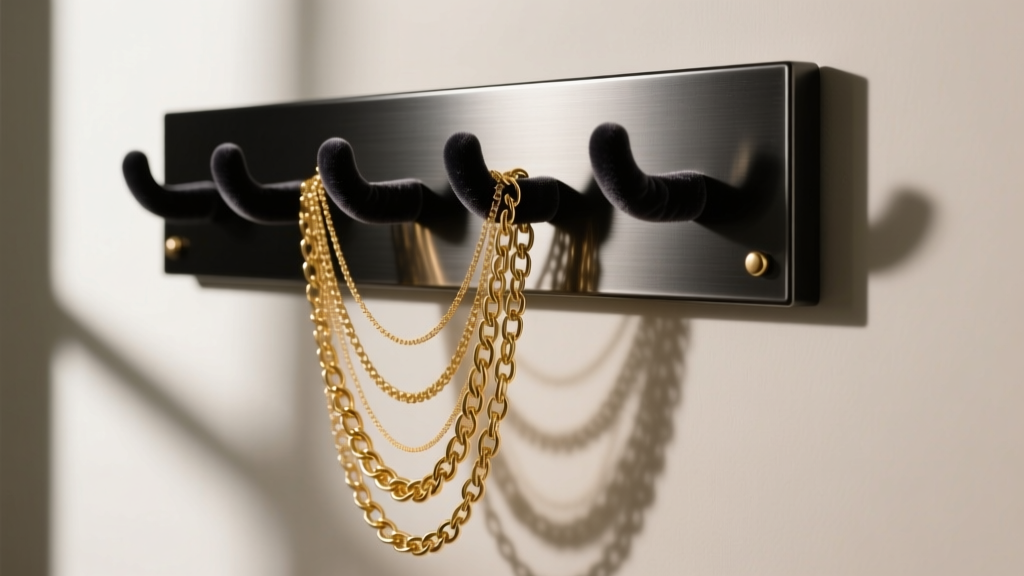
When it comes to preserving the structural integrity and visual brilliance of fine jewelry, how you store your pieces is just as critical as how you wear them. Tossing delicate chains into a lined drawer invites catastrophic tangling, micro-abrasions, and accelerated tarnishing. For serious collectors and everyday enthusiasts alike, a high-quality wall mounted necklace organizer offers the ultimate solution: gravity-assisted detangling, immediate visual access, and proper air circulation. However, not all organizers are created equal. Selecting and installing the right system requires a deep understanding of material science, load-bearing physics, and spatial mathematics.
The Material Science of Jewelry Storage
The primary enemy of fine jewelry—particularly sterling silver and copper alloys—is environmental reactivity. According to the Gemological Institute of America (GIA), airborne pollutants and moisture are the main catalysts for tarnish. When evaluating a wall mounted necklace organizer, the base material of the unit is your first line of defense.
Wood Off-Gassing and Acidic Reactions
Many mass-market wooden organizers are constructed from Medium-Density Fiberboard (MDF) or unfinished pine and oak. Raw wood naturally emits acetic acid and formaldehyde as it ages and off-gasses. In an enclosed space or against direct contact, these volatile organic compounds (VOCs) react with the copper in sterling silver (which is 92.5% silver and 7.5% copper) to accelerate the formation of silver sulfide—the black tarnish layer that degrades your jewelry. If you prefer the aesthetic of wood, you must ensure the organizer is sealed with a fully cured, water-based polyurethane or acrylic sealant to trap these acidic emissions.
Acrylic, Steel, and Fabric Linings
For maximum chemical inertness, powder-coated steel or cast acrylic organizers are vastly superior. Powder coating provides a non-porous, chemically stable barrier that will not react with precious metals. If the organizer features padded hooks or a velvet backing, verify that the fabric is certified acid-free and archival-quality. Standard synthetic felts can trap moisture and harbor microscopic abrasive particles that cause micro-scratching on high-polish gold and platinum surfaces.
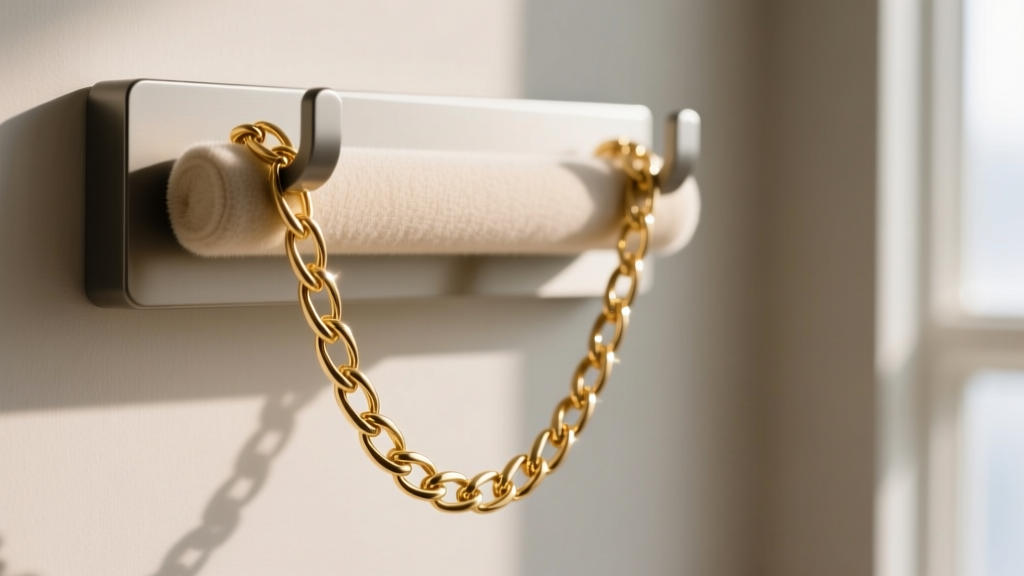
Hook Mechanics and Weight Distribution
The hook is the critical failure point of any wall mounted necklace organizer. While a delicate 14k gold cable chain may weigh less than 5 grams, heavy gemstone collar necklaces, multi-strand pearl bibs, and solid gold Cuban links can easily exceed 150 grams. The wire gauge and metallurgy of the hook dictate its lifespan and safety.
| Hook Type | Wire Gauge / Thickness | Material | Max Static Load | Best Use Case |
|---|---|---|---|---|
| Standard Cup Hook | 1.5mm (approx. 16g) | Zinc-plated steel | 2.5 lbs (1.1 kg) | Delicate pendants, single chains |
| Heavy-Duty Peg | 3.0mm (approx. 10g) | Brushed brass / steel | 8.0 lbs (3.6 kg) | Statement pieces, multi-strand |
| Acrylic Notch | 5.0mm (cast acrylic) | Polycarbonate blend | 4.0 lbs (1.8 kg) | Chokers, rigid collars |
| Velvet-Wrapped Bar | 6.0mm (core wire) | Steel core, archival felt | 12.0 lbs (5.4 kg) | Heavy gemstone bibs, pearls |
Always look for organizers that utilize steel-core hooks. Over time, the sheer weight of heavy necklaces will cause cheap aluminum or thin brass hooks to bend outward, altering the geometry and eventually causing the jewelry to slip off and fall.
Installation Engineering: Drywall vs. Studs
A fully loaded wall mounted necklace organizer can easily weigh between 15 and 30 pounds. Relying on standard nails or basic plastic drywall anchors is a recipe for structural failure, resulting in damaged drywall and ruined jewelry. Proper installation requires matching the anchor to the wall composition and the dynamic load of the unit.
Calculating Load and Selecting Anchors
According to structural guidelines outlined by Bob Vila, standard conical plastic anchors are only rated for light loads (up to 15 lbs in 1/2-inch drywall) and are highly susceptible to pull-out under dynamic stress—such as the vibration caused by opening and closing nearby doors. For a heavy wooden or steel organizer, you must upgrade your hardware.
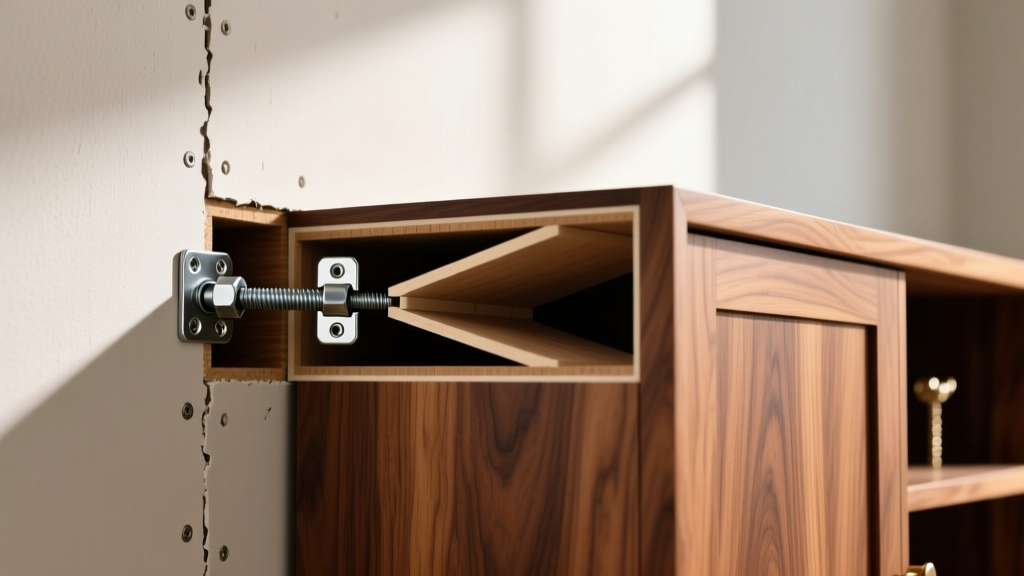
- Self-Drilling Threaded Zinc Anchors: Rated for 30–50 lbs. These bite directly into the drywall and provide excellent shear strength, making them ideal for medium-weight acrylic or slim metal organizers.
- Strap Toggles (Snaptoggles): Rated for 100+ lbs in standard drywall. The metal channel flips flat behind the drywall, distributing the load across a wide surface area. This is the mandatory choice for large, cabinet-style wall organizers or heavy solid-wood pieces.
- Stud Mounting: If you can align the organizer’s mounting brackets with wooden wall studs (typically spaced 16 inches apart on center), use #8 or #10 wood screws driven at least 1.5 inches into the stud. This provides virtually unlimited holding power for residential applications.
Spatial Planning and Chain Entanglement Prevention
The primary functional advantage of a wall mounted necklace organizer is keeping chains separated. However, poor spatial planning negates this benefit. To prevent the "pendulum effect"—where adjacent necklaces swing into one another and tangle—you must apply a specific spacing formula based on your collection's dimensions.
The Drop + Swing Formula
Measure the longest necklace you intend to hang on a specific row. An 18-inch chain yields a drop of approximately 8.5 inches from the hook to the bottom of the clasp. Add the length of your largest pendant (e.g., 2 inches) and a 2-inch safety buffer for lateral swing. This dictates a minimum vertical row spacing of 12.5 inches. Horizontally, hooks should be spaced at least 4 inches apart to accommodate the natural drape of the chain without overlapping the neighboring piece's swing radius.
Environmental Control and Maintenance
Even the best wall mounted necklace organizer cannot entirely eliminate environmental exposure. Because wall-mounted units leave jewelry exposed to ambient air, you must proactively manage the micro-climate of your storage space. Maintain your room's relative humidity (RH) between 40% and 50%. High humidity accelerates the electrochemical reactions that cause tarnish.
For enclosed wall cabinets featuring glass doors, integrate 3M anti-tarnish strips or silica gel desiccant packets into the hidden recesses of the frame. Replace these desiccants every 3 to 6 months to ensure they remain active. By combining chemically inert materials, precision-engineered hooks, and structurally sound installation, your wall mounted organizer will transition from a simple storage accessory into a professional-grade preservation system for your most valued necklaces and pendants.


