The Beginner's Guide to Buying an Authentic Italian Necklace
Discover how to choose an authentic Italian necklace. Learn about hallmarks, popular chain styles like Figaro, and pricing in this beginner's guide.

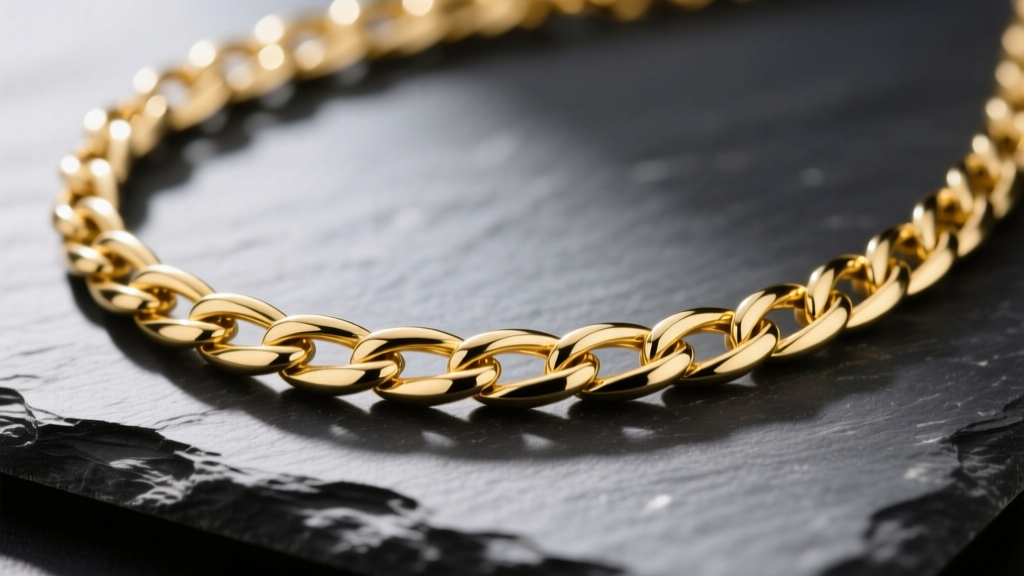
When you begin exploring fine jewelry, the term 'Italian necklace' is bound to catch your eye. Italy has been the undisputed global capital of gold chain manufacturing for centuries, with entire cities dedicated to the meticulous art of metalworking. However, the prestige of Italian craftsmanship also attracts counterfeiters and misleading marketing. For a beginner, navigating the difference between a genuine masterpiece from Arezzo and a mass-produced, hollow imitation can be daunting.
This guide strips away the marketing jargon and provides you with a practical, expert-level framework for identifying, understanding, and purchasing an authentic Italian necklace. Whether you are looking for a durable everyday chain or a statement piece, knowing exactly what to look for will save you from costly mistakes.
What Exactly Makes a Necklace 'Italian'?
An authentic Italian necklace is not just a geographic label; it represents a specific standard of manufacturing excellence. The Italian gold jewelry industry is heavily concentrated in three main districts: Arezzo, Vicenza, and Valenza. Each region specializes in different techniques. Arezzo, for instance, is globally renowned for its mechanized yet highly precise chain weaving, particularly for styles like the Figaro and Rope chains.
According to the Jewelers of America, true Italian chains are celebrated for their superior finishing techniques. This includes diamond-cutting (faceting the metal to catch light without using gemstones) and meticulous polishing that ensures the links move fluidly without kinking. When you buy a genuine piece from these regions, you are paying for advanced metallurgical engineering and generations of artisanal knowledge.
Decoding Italian Hallmarks and Stamps
The most critical step in verifying an Italian necklace is understanding its hallmarks. Unlike the US, where a simple '14K' or '18K' stamp is standard, Italy employs a rigorous, legally mandated hallmarking system that traces the piece back to its exact manufacturer.
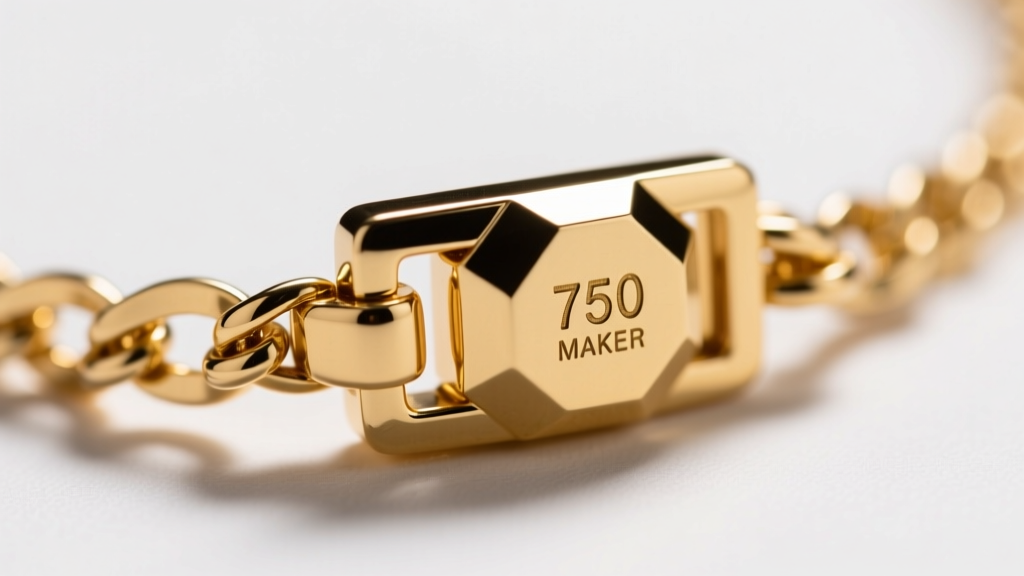
The Purity Mark (Il Titolo)
Italian gold is typically stamped with a three-digit number indicating the parts per thousand of pure gold. You will rarely see '18K' on a genuine Italian piece; instead, look for:
- 750: 18-karat gold (75% pure gold). The standard for high-end Italian chains.
- 585: 14-karat gold (58.5% pure gold). Common for durable, everyday wear.
- 925: Sterling silver (92.5% pure silver).
The Maker's Mark (Il Marchio del Fabbricante)
This is the ultimate proof of authenticity. The Gemological Institute of America (GIA) notes that international hallmarks can vary wildly, but the Italian maker's mark is distinct. It consists of a polygon (usually a lozenge or rectangle) containing a registration number and a two-letter province code. For example, a stamp reading 1234 AR inside a polygon means the chain was made by the 1,234th registered manufacturer in the province of Arezzo. If your necklace lacks this polygonal maker's mark, its Italian origin is highly questionable.
Top 4 Classic Italian Chain Styles Explained
Italian manufacturers have pioneered and perfected several chain weaves that are now global standards. Choosing the right weave dictates the chain's durability, sparkle, and suitability for pendants.
| Chain Style | Link Structure | Durability | Best Use Case |
|---|---|---|---|
| Figaro | Alternating pattern of 2-3 small circular links and 1 elongated oval link. | High | Worn solo or with lightweight pendants; classic menswear staple. |
| Rope | Small metal links twisted together to mimic a woven hemp rope. | Medium | High sparkle; best worn solo as a statement piece. |
| Mariner (Ancora) | Oval links featuring a solid crossbar in the center, inspired by ship anchors. | Very High | Heavy pendants; highly resistant to kinking and pulling. |
| Franco | V-shaped links interlocked in a continuous, four-sided 3D pattern. | Maximum | Heavy, valuable pendants; virtually indestructible under normal wear. |
Pricing Expectations: What Should You Actually Pay?
Beginners often suffer from sticker shock when pricing Italian gold chains. To negotiate or evaluate a price fairly, you must understand the pricing formula: Melt Value + Making Charge + Retail Markup.
The 'melt value' is simply the weight of the gold multiplied by the current daily spot price. However, Italian chains command a premium 'making charge' (prezzo di lavorazione). Complex weaves like the Rope or Franco chain require specialized machinery, multiple soldering points, and extensive hand-finishing.
Expert Pricing Tip: Expect to pay a 30% to 60% premium over the raw gold melt value for a genuine, solid Italian chain. If a seller offers a heavy 18k Italian Rope chain at or near the raw spot gold price, it is almost certainly hollow, electroformed, or counterfeit.
Always ask the jeweler for the exact gram weight of the piece. A standard 20-inch solid 18k Figaro chain might weigh between 15 and 25 grams. Multiply that weight by the current 18k gold gram rate, add the manufacturing premium, and you will know if the retail price is justified.
Red Flags: How to Spot a Fake Italian Gold Chain
As gold prices have surged, the market has been flooded with deceptive alternatives. Here is how to protect your investment using practical, real-world tests.

The Hollow Chain Deception
Many chains stamped '750 Italy' are technically real gold, but they are manufactured using an electroforming process that leaves them completely hollow inside. While they look thick and impressive, hollow chains are incredibly fragile. A simple tug or a caught clasp will crush the links, and they are nearly impossible to repair. Always compare the physical weight of the chain in your hand against its visual thickness; if a thick chain feels suspiciously light, it is hollow.
The Clasp and Jump Ring Test
Counterfeiters often attach a genuine Italian clasp to a base-metal chain. Bring a small neodymium magnet when shopping. Gold is non-magnetic. If the chain links are attracted to the magnet, the core is made of steel or iron, regardless of what the clasp stamp says. Furthermore, inspect the jump rings (the small circles connecting the clasp). Authentic Italian manufacturers use perfectly flush, soldered jump rings, while fakes often feature roughly cut, unsoldered gaps.
Care and Maintenance for Italian Craftsmanship
To maintain the brilliant diamond-cut facets and polished finishes of your Italian necklace, proper care is essential. Avoid ultrasonic cleaners, especially for diamond-cut or hollow chains, as the high-frequency vibrations can fracture microscopic solder points.
Instead, create a gentle cleaning solution using lukewarm water and a few drops of phosphate-free dish soap. Let the chain soak for five minutes, then gently agitate it with a baby toothbrush. Rinse thoroughly and pat dry with a microfiber cloth. Store your necklace flat or hanging to prevent the links from twisting and kinking over time.
By understanding the hallmarks, evaluating the structural integrity of the weave, and calculating the true manufacturing premium, you can confidently invest in an authentic Italian necklace that will last a lifetime.


