Choosing a Gold North Star Necklace: 14k vs 18k Alloys
Compare 14k, 18k, and gold-filled alloys for your gold north star necklace. Expert insights on hardness, pricing, and chain pairing for compass pendants.

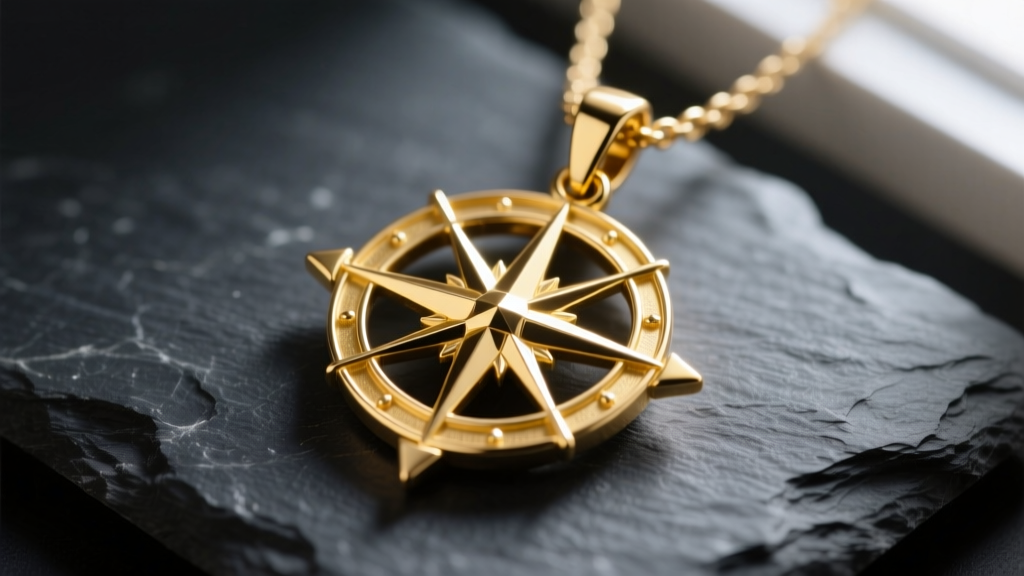
The North Star, or Polaris, has served as a celestial guide for navigators for millennia. In contemporary jewelry, the gold north star necklace translates this symbolism of guidance and constancy into a wearable talisman. However, from a metallurgical and design perspective, the compass rose motif presents unique structural challenges. The sharp, elongated points of a star pendant are highly susceptible to mechanical stress, snagging, and friction wear. Choosing the right gold alloy is not merely a matter of color preference or budget; it is a critical decision that dictates the structural integrity and longevity of the piece.
In this comprehensive material guide, we dissect the properties of various gold alloys, evaluating their hardness, tarnish resistance, and suitability for the intricate geometry of a north star pendant. Whether you are investing in a solid 18k heirloom piece or a durable 14k everyday necklace, understanding the metallurgy will ensure your compass rose remains pristine.
The Geometry of a Star: Why Alloy Hardness is Critical
To understand why material selection matters, we must first examine the physical design of a north star pendant. A classic compass rose features four primary cardinal points and four secondary intercardinal points. These elongated, tapering vertices act as natural snag points against knitwear, seatbelts, and hair. When a pendant catches on fabric, the kinetic energy transfers directly to these thin metallic extensions.
Pure 24-karat gold is exceptionally malleable, registering a mere 25 to 30 on the Vickers Hardness (HV) scale. If a north star pendant were cast in 24k gold, the delicate points would bend or warp upon the first significant snag. To achieve structural rigidity, gold must be alloyed with harder base metals like copper, silver, zinc, or palladium. According to the Gemological Institute of America (GIA), the specific ratio of these alloying metals not only determines the karat purity but also drastically alters the tensile strength and Vickers hardness of the final piece.
Solid Gold Showdown: 14k vs. 18k for Star Pendants
When shopping for a solid gold north star necklace, buyers typically navigate between 14k and 18k options. Both are excellent choices, but they behave differently under daily wear conditions.
14k Gold (58.5% Pure Gold)
14k gold is the workhorse of the American jewelry market. Because it contains a higher percentage of alloy metals (41.5%), it boasts a Vickers hardness of approximately 140 HV. This increased rigidity makes 14k gold exceptionally well-suited for the sharp points of a compass rose, as it resists bending and deformation far better than higher-karat alternatives. Furthermore, the higher copper and zinc content provides excellent tarnish resistance, though it may trigger contact dermatitis in individuals with severe nickel or copper sensitivities.
18k Gold (75.0% Pure Gold)
18k gold offers a richer, deeper yellow hue due to its higher pure gold content. It registers around 125 HV on the Vickers scale. While slightly softer than 14k, high-quality 18k alloys are still more than durable enough for a pendant, provided the star points are cast with adequate thickness (at least 0.8mm at the base of the point). The trade-off for the luxurious color and hypoallergenic properties of 18k gold is a higher price point and a marginally higher risk of micro-scratches on the polished surfaces.
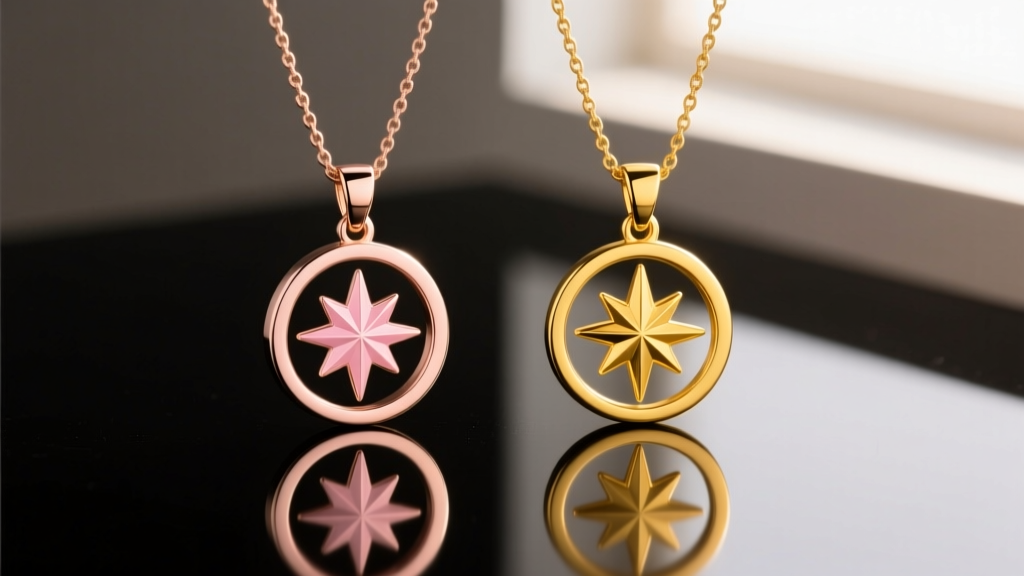
Material Comparison Matrix
| Property | 14k Yellow Gold | 18k Yellow Gold | 18k Rose Gold | 14k White Gold (Rhodium Plated) |
|---|---|---|---|---|
| Gold Content | 58.5% | 75.0% | 75.0% | 58.5% |
| Primary Alloys | Silver, Copper, Zinc | Silver, Copper | Copper (22.25%), Silver | Nickel/Palladium, Zinc |
| Vickers Hardness (HV) | ~140 HV | ~125 HV | ~130 HV | ~135 HV (Base Metal) |
| Point Durability | Excellent | Very Good | Very Good | Excellent (Base) / Poor (Plating) |
| Avg. Price (15mm Pendant) | $180 - $280 | $300 - $450 | $320 - $480 | $220 - $350 |
The White Gold Rhodium Dilemma
If you prefer a silvery aesthetic, 14k or 18k white gold is a popular choice. However, white gold alloys are naturally pale yellow or grayish. To achieve a brilliant white finish, jewelers electroplate the piece with rhodium, a platinum-group metal. For a north star necklace, this presents a specific maintenance issue. The sharp, protruding points of the compass rose experience the highest friction against clothing and skin. Consequently, the rhodium plating will wear off the tips of the star long before it wears off the flat central face, resulting in a two-toned appearance that requires periodic re-plating by a professional jeweler.
Navigating Gold Alternatives: Vermeil, Gold-Filled, and Plated
For those seeking the look of a gold north star necklace at a lower entry price, alternative metallization processes are available. However, it is vital to understand the legal definitions and failure modes of these materials, as outlined by the Federal Trade Commission (FTC) Jewelry Guides.
- Gold-Filled (GF): By FTC mandate, gold-filled jewelry must contain a gold layer that constitutes at least 5% of the total weight of the metal item. The gold is mechanically bonded to a brass core under high heat and pressure. A 14k gold-filled north star pendant is highly durable and can last decades, though the sharp points may eventually reveal the brass core if subjected to heavy abrasive wear.
- Gold Vermeil: Vermeil requires a base of solid sterling silver, plated with a minimum thickness of 2.5 microns of gold (usually 14k or 18k). While superior to standard plating, the thin gold layer on the star points will inevitably wear through with daily friction, exposing the silver beneath.
- Gold Plated: Standard flash plating involves a microscopic layer of gold (often less than 0.5 microns) over a base metal like brass or copper. This is not recommended for intricate pendants, as the plating will degrade rapidly at the high-friction vertices of the star design.
Chain Metallurgy and Gauge Sizing
The pendant is only half the equation; the chain you pair with your gold north star necklace dictates the overall wear experience and mechanical stress on the pendant's bail (the loop through which the chain passes).
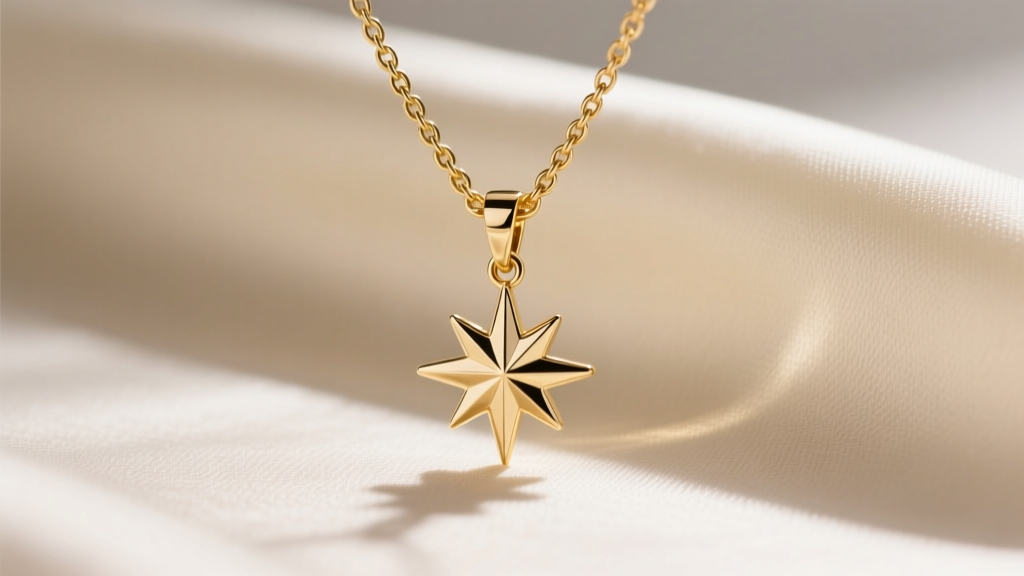
A common failure mode in necklace design is friction sawing. If the chain is harder than the pendant bail, or if the chain links are too small and act like a file, the chain will slowly saw through the bail over time. To prevent this:
- Match the Karat: Pair an 18k pendant with an 18k chain, and a 14k pendant with a 14k chain. This ensures the metals wear at a similar rate.
- Optimal Gauge: For a standard 15mm to 20mm north star pendant (weighing between 1.5 and 3.0 grams), a chain gauge between 0.9mm and 1.2mm is ideal. Thinner chains (0.5mm) are prone to snapping under the pendulum effect of the star pendant, while thicker chains (1.5mm+) can overwhelm the delicate compass aesthetic.
- Chain Style: A standard cable chain or a box chain is recommended. Avoid herringbone or snake chains, as their rigid, interlocking links can kink permanently when the sharp points of the north star catch on clothing and pull the chain at an abrupt angle.
Gemstone Inlays and Maintenance Protocols
Many premium gold north star necklaces feature a central gemstone inlay to represent the eye of the compass or the celestial body itself. Mother of pearl, lapis lazuli, and turquoise are frequent choices. These materials are porous and relatively soft (Mohs hardness of 3 to 6).
Expert Warning: Never clean a north star necklace featuring organic or porous gemstone inlays in an ultrasonic cleaner. The high-frequency vibrations can easily fracture the inlay or detach the adhesive securing it to the gold bezel. Instead, use a soft-bristled baby toothbrush dipped in a mild solution of warm water and phosphate-free dish soap, gently brushing the crevices where the gold star points meet the central stone.
Final Verdict: Selecting Your Guiding Star
The ideal material for your gold north star necklace depends entirely on your lifestyle and budget. For an everyday piece that will endure the rigors of active wear without bending its cardinal points, 14k yellow or rose gold offers the best balance of Vickers hardness and affordability. If you are commissioning a luxury heirloom piece and prioritize the deep, rich saturation of pure gold, 18k yellow gold is unmatched, provided the star points are cast with structural integrity in mind. Avoid standard gold plating for this specific geometry, as the sharp vertices will inevitably betray the base metal beneath. By aligning your metallurgical choice with the physical demands of the compass rose design, you ensure your guiding star remains brilliant and intact for years to come.


