How to Layer Affordable Necklaces for Women: Step-by-Stack Guide
Learn how to build a tangle-free, skin-safe layered stack using affordable necklaces for women. Expert guide on metals, gauges, and lengths.


The Foundation: Choosing Skin-Safe Budget Metals
Building a luxurious-looking necklace stack does not require a five-figure budget. By understanding metallurgy, chain gauges, and spatial proportions, you can curate a stunning collection using affordable necklaces for women that rival high-end designer pieces. The first step in our how-to guide is selecting the right base metals. The biggest mistake budget shoppers make is prioritizing color over coating technology, leading to green skin and tarnished chains within weeks.
When shopping for budget-friendly gold-toned jewelry, always look for PVD (Physical Vapor Deposition) coating on a 316L stainless steel base. Unlike traditional flash electroplating, which dips brass into a thin chemical bath that wears off in three to six months, PVD coating bonds titanium nitride or real gold particles to the steel in a vacuum chamber. This creates a layer that is 10 times thicker and more resistant to sweat, perfume, and friction. According to the Federal Trade Commission Jewelry Guides, retailers must accurately disclose plating thickness and base metals, so always check the product specifications for 'PVD' or 'vacuum plated' rather than generic 'gold-plated' claims.
| Material & Coating | Base Metal | Estimated Lifespan | Price Range | Skin Safety |
|---|---|---|---|---|
| PVD Gold Coated | 316L Stainless Steel | 2 to 5+ Years | $15 - $40 | Hypoallergenic (Nickel-free) |
| Flash Electroplated | Brass or Copper | 1 to 3 Months | $8 - $20 | High Allergy & Tarnish Risk |
| Rhodium Dipped | 925 Sterling Silver | Lifetime (with polish) | $35 - $75 | Hypoallergenic |
| Gold Vermeil | 925 Sterling Silver | 1 to 2 Years | $45 - $90 | Hypoallergenic |
Step 1: Anchor with a 14-to-16-Inch Choker
Every successful layered stack requires a visual anchor. This is the shortest necklace in your arrangement, sitting snugly at the base of the throat or collarbone. For affordable necklaces for women, the 14-to-16-inch range is the sweet spot. The structural integrity of this anchor chain is critical because it sets the tone for the rest of the stack.
Choose a chain with a thicker gauge—ideally between 1.5mm and 2.0mm (approximately 14 to 12 gauge). A 2.0mm stainless steel box chain or a 1.5mm rope chain provides excellent weight and prevents the lighter chains below it from riding up. Avoid ultra-delicate 0.5mm chains for your anchor; they lack the visual weight to ground the stack and are highly prone to snapping under the friction of daily wear. When fastening, ensure the clasp is a sturdy lobster claw rather than a spring ring, which can easily catch on hair or clothing and bend out of shape.
Step 2: Add the 18-Inch Pendant Focal Point
The second layer is where you introduce personality and a focal point. An 18-inch chain falls perfectly on the upper chest, creating a visual triangle that draws the eye. This is the ideal placement for a pendant, charm, or semi-precious stone.
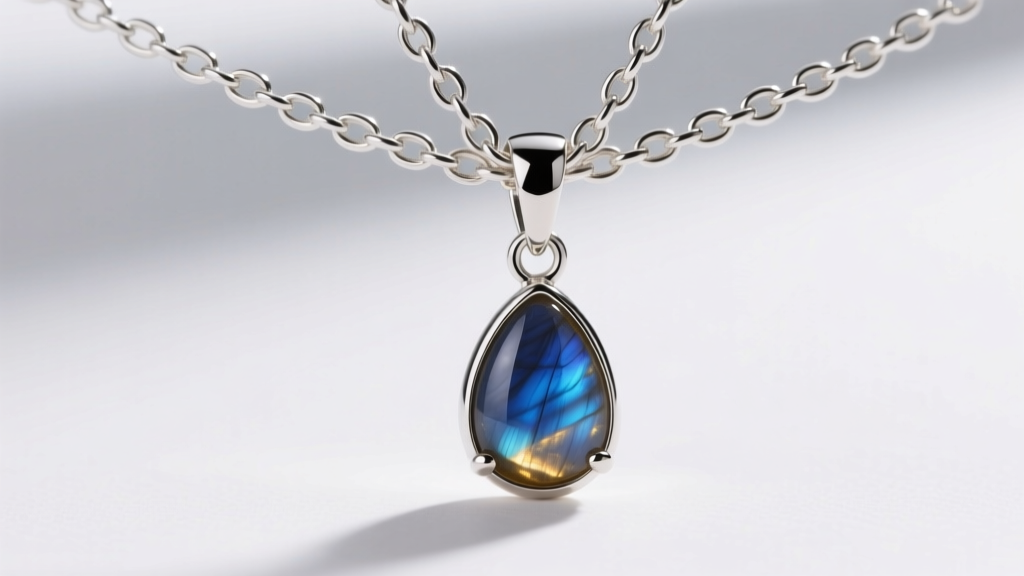
When selecting an affordable pendant necklace, pay close attention to the bail (the loop that connects the charm to the chain). A standard 4mm to 5mm bail allows the pendant to slide smoothly along a 1.0mm to 1.2mm cable or rolo chain. If the bail is too tight, the pendant will remain stuck in one spot, ruining the dynamic movement of the stack. Furthermore, ensure the pendant's weight is proportionate to the chain. A heavy brass pendant on a delicate 0.8mm sterling silver chain will cause the chain to stretch and eventually break at the solder points. For budget stacks, opt for lightweight enamel charms, lab-created opals, or small bezel-set cubic zirconia stones that offer maximum sparkle without excessive gravitational pull.
Step 3: The 22-to-24-Inch Matinee Finisher
To elongate the neck and complete the gradient effect, your final layer should drop to the matinee length (22 to 24 inches). This chain should be the most delicate of the three, typically ranging from 0.8mm to 1.0mm in gauge. The purpose of this layer is not to carry heavy pendants, but to add a subtle glint near the neckline of v-neck tops or button-down shirts.
A popular technique for this step is to use a lariat-style chain or a simple bead chain (like a 1.2mm ball chain). Because this layer sits lower on the chest, it is less exposed to the oils and sweat of the neck, meaning you can safely use more affordable materials like gold-plated brass for this specific piece if you are strictly managing your budget. However, maintaining a consistent metal color family across all three layers—such as all warm yellow gold tones or all cool rhodium tones—is essential for a cohesive, high-end appearance.
Troubleshooting Common Layering Tangling Issues
The most frustrating aspect of wearing multiple affordable necklaces for women is the inevitable tangling. Necklaces tangle due to a simple principle of physics: when the individual links of one chain are larger than the links of an adjacent chain, the smaller chain threads through the larger one during movement. To solve this, you must engineer your stack to prevent friction-based threading.
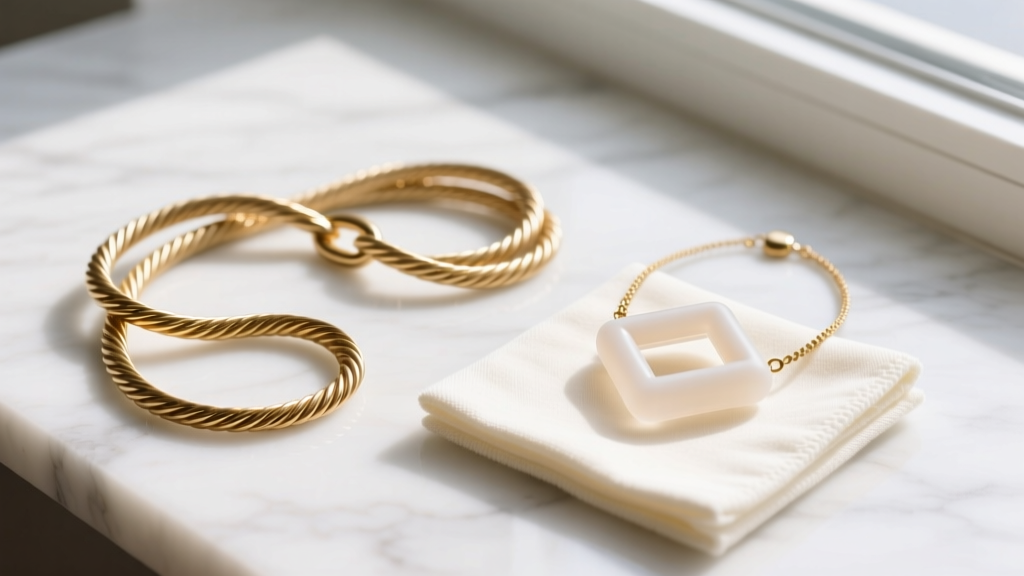
- The 2mm Link Rule: Ensure that the link size of your chains varies by at least 2mm between layers. For example, pair a 4mm rolo chain (anchor) with a 1.5mm cable chain (mid) and a smooth 1.0mm box chain (finisher). The vast difference in link geometry prevents them from interlocking.
- Use a Detangler Clasp: If your chains are too similar in texture, invest in a silicone or leather multi-strand detangler clasp. These devices clip onto the ends of your chains behind your neck, holding them parallel and completely eliminating the rotation that causes knots.
- Avoid Herringbone and Snake Chains in Stacks: While beautiful on their own, flat herringbone and smooth snake chains act like magnets for texture. They will easily catch on the links of a standard cable chain. Keep these flat chains as standalone statement pieces rather than integrating them into a multi-layer stack.
- Weight Distribution: Ensure the bottom chain is slightly heavier or features a small sliding weight at the end. This keeps the chain pulled taut against the body, reducing the slack that allows chains to flip and twist around one another.
Care & Maintenance for Budget Pieces
Even the highest quality PVD-coated affordable necklaces will degrade if exposed to harsh chemicals. The Gemological Institute of America (GIA) emphasizes that everyday household cleaners, chlorine, and sulfur are the primary enemies of jewelry finishes. To maximize the lifespan of your budget stack, implement a strict maintenance routine.
Never wear your layered necklaces in swimming pools or hot tubs; the chlorine will rapidly break down the molecular bond of gold plating, causing the base metal to oxidize and turn your skin green. When cleaning your stack, avoid commercial jewelry dips and ultrasonic cleaners, which are far too aggressive for plated metals. Instead, use a few drops of mild, phosphate-free dish soap in lukewarm water. Gently agitate the chains with a soft-bristled baby toothbrush to remove trapped sebum and lotion from the crevices of the links. Rinse thoroughly with distilled water to avoid hard water spots, and lay them flat on a microfiber cloth to air dry completely before storing them individually in anti-tarnish ziplock bags. By treating your affordable pieces with the same respect as fine jewelry, your layered stack will maintain its brilliant luster for years to come.


