Gold and Silver Necklace Layering: A Budget & Value Guide
Discover how to master gold and silver necklace layering on a budget. We break down material grades, pricing tiers, and long-term value retention.

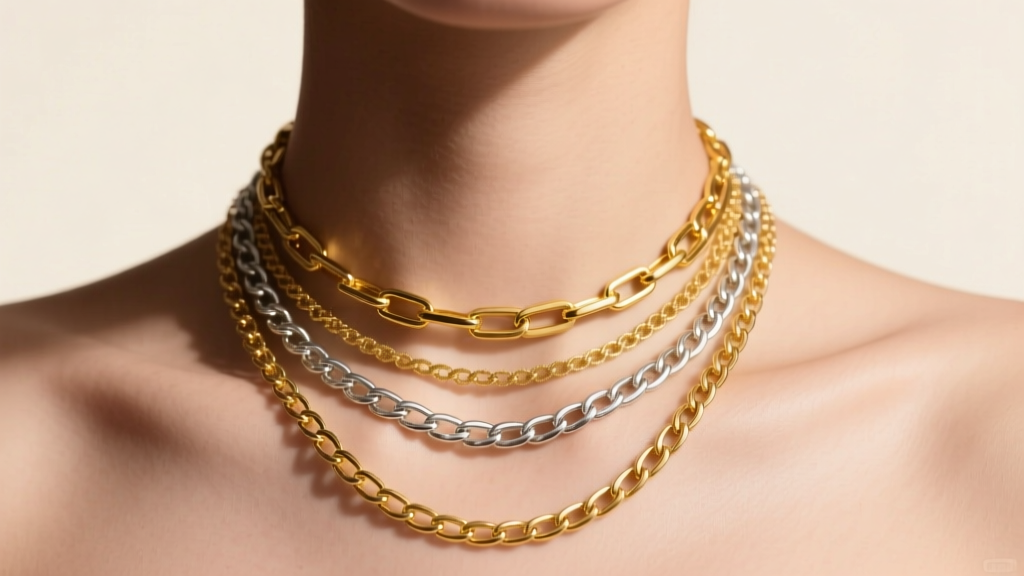
The trend of mixing metals has completely transformed modern jewelry styling, but executing a flawless stack requires more than just an eye for aesthetics. When it comes to gold and silver necklace layering, the financial and material realities of your choices dictate how long your stack will last, how it will age, and whether you are genuinely investing in your wardrobe or simply burning cash on fast-fashion accessories. As precious metal markets continue their volatile upward trajectory in 2026, understanding the budget and value assessment of mixed-metal stacks is no longer optional for the savvy consumer—it is essential.
In this comprehensive guide, we move beyond basic styling tips to dissect the economics of layering. We will evaluate material grades, analyze friction wear between different alloys, and provide a concrete financial framework to help you build a mixed-metal stack that maximizes cost-per-wear without sacrificing visual impact.
The Economics of Mixed-Metal Stacks
The primary advantage of gold and silver necklace layering from a budget perspective is strategic asset allocation. By intentionally mixing metals, you eliminate the need to purchase an entire suite of solid 14k or 18k gold chains to achieve a voluminous, textured look. A three-piece solid gold stack (typically a 14-inch choker, 16-inch pendant chain, and 18-inch link chain) can easily exceed $1,800 at current market rates. However, by strategically introducing high-quality sterling silver and gold-filled components, you can achieve the exact same visual weight and stylistic complexity for under $450.
The key metric to track here is Cost-Per-Wear (CPW). A $600 solid gold chain worn daily over five years yields a CPW of roughly $0.32. A $60 gold vermeil chain that tarnishes, chips, and becomes unwearable after eight months yields a CPW of $2.50. Value in jewelry layering is not about finding the cheapest initial price tag; it is about engineering a stack where the foundational pieces retain intrinsic value while the accent pieces provide affordable trend relevance.
Material Grades: Where to Spend and Where to Save
To build a financially sound layered stack, you must understand the metallurgical differences between common jewelry materials. The Federal Trade Commission (FTC) Jewelry Guides strictly regulate how these materials can be stamped and marketed, yet consumer confusion remains high. Below is a value-assessment matrix for the most common layering materials.
| Material Grade | Composition Details | Avg. Price (16" Chain) | Longevity & Wear | Best Layering Role |
|---|---|---|---|---|
| Solid 14k Gold | 58.5% pure gold, alloyed with copper/silver/zinc | $350 - $600+ | Lifetime; can be polished and repaired | Foundation / Hero Piece |
| 14k Gold-Filled | 1/20th 14k gold mechanically bonded to brass core | $80 - $140 | 5-10 years; highly tarnish resistant | Bridge / Mid-Length Chain |
| Gold Vermeil | 2.5 microns of gold plated over 925 sterling silver | $45 - $90 | 1-3 years; prone to wear at friction points | Trend Accents / Pendants |
| Sterling Silver (925) | 92.5% pure silver, 7.5% copper alloy | $40 - $120 | Lifetime; requires anti-tarnish maintenance | Texture / Base Layers |
| Gold Plated (Brass) | Flash plating (under 0.5 microns) over base metal | $15 - $35 | Months; high failure rate, skin discoloration | Avoid for long-term value |
For a budget-conscious but value-driven stack, your anchor piece (the chain closest to the neck or the heaviest pendant) should always be Solid 14k or, at minimum, heavy Gold-Filled. The outer, longer layers can safely utilize Sterling Silver or Vermeil, as they experience less friction against the skin and are easier to remove for maintenance.
Friction, Galvanic Wear, and Hidden Degradation
One of the most overlooked aspects of gold and silver necklace layering is the physical interaction between the chains. When you layer a textured 14k gold rope chain over a smooth sterling silver herringbone chain, you create a micro-abrasion environment. Because 14k gold (alloyed for durability) is often harder than the copper-mixed sterling silver, the gold chain will act like a file, slowly wearing away the surface of the silver chain over months of daily wear.
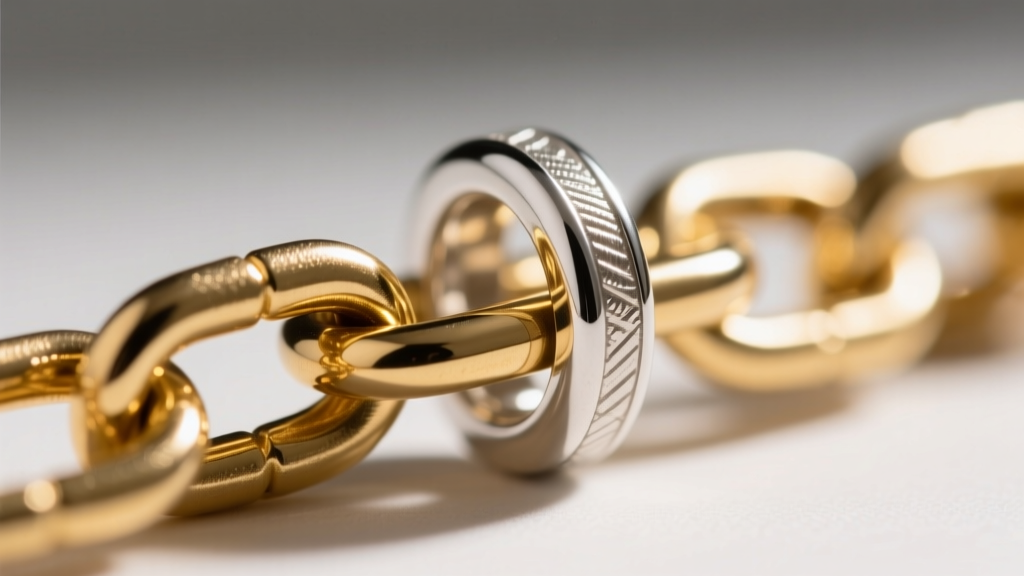
Furthermore, if you are layering gold vermeil (which has a silver base) against raw sterling silver, you must be aware of galvanic reactions. While true galvanic corrosion requires an electrolyte (like heavy sweat or saltwater), the continuous transfer of oils, lotions, and acidic perspiration between layered metals can accelerate the oxidation of the copper alloy within the sterling silver. This leads to localized blackening that can transfer onto your lighter gold vermeil pieces, making them look perpetually dirty. To mitigate this, always apply a protective jewelry wax to the clasp areas and friction points of your silver chains before layering them with gold.
The 3-Tier Budget Framework for Layering
To maximize your jewelry budget without ending up with a stack that looks cheap or degrades quickly, adopt the 3-Tier Investment Framework. This method ensures your money is allocated exactly where it impacts both longevity and visual aesthetics.
Tier 1: The Foundation (50% of Budget)
This is your shortest chain (14 to 15 inches) or your primary pendant necklace. It rests directly on the collarbone, experiences the most friction, and is the focal point of the stack. Rule: Only purchase Solid 14k gold or Solid 925 silver for this tier. Do not compromise here. A $400 solid gold cable chain will last a lifetime and retains roughly 40-50% of its scrap value, acting as a micro-asset in your wardrobe.
Tier 2: The Bridge (30% of Budget)
This is your mid-length chain (16 to 18 inches), often a paperclip or curb link that adds visual weight and bridges the gap between the choker and the longest layer. Rule: Opt for 14k Gold-Filled or Rhodium-Plated Sterling Silver. Gold-filled chains offer the exact visual warmth of solid gold but at a fraction of the cost, while rhodium-plated silver prevents the copper-tarnish transfer that ruins mixed-metal stacks.
Tier 3: The Trend Accents (20% of Budget)
This is your longest layer (20+ inches) or novelty pendants (e.g., mixed-metal coins, zodiac signs, or seasonal charms). Rule: This is where you can safely experiment with Gold Vermeil or mixed-metal brass pieces. Because these hang lower and experience less skin friction, the plating will last significantly longer. If a $50 vermeil pendant eventually wears down to its silver base, it simply transitions into a deliberate mixed-metal piece within your stack.
Hidden Costs: Tarnish, Wear, and Maintenance
When assessing the true budget of a layered stack, you must factor in maintenance. According to the Jewelers of America, sterling silver naturally tarnishes when exposed to sulfur compounds in the air and cosmetics. When you mix silver and gold in a single stack, cleaning becomes a logistical hazard.
Standard silver dip cleaners are highly acidic and will instantly strip the gold layer off any vermeil or gold-filled chains submerged in the solution. Conversely, ultrasonic cleaners, while excellent for solid gold and diamonds, can cause the microscopic layers of gold-filled and vermeil chains to delaminate if left in too long. Therefore, a mixed-metal stack requires manual, piece-by-piece polishing with a treated microfiber cloth. If you are unwilling to spend 10 minutes a month carefully untangling and individually wiping down your layered chains, the long-term value of your silver and vermeil pieces will plummet as they become irreparably oxidized and tangled.
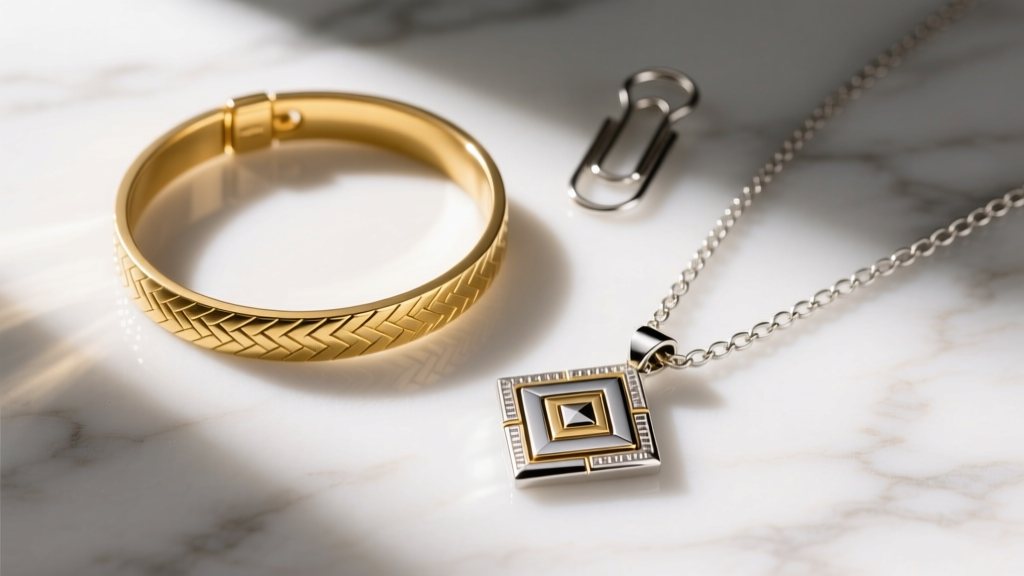
Real-World Layering Combinations Under $500
To put this value assessment into practice, here are two highly specific, budget-optimized stacking recipes that deliver maximum visual impact and longevity without breaking the $500 ceiling.
Recipe A: The Everyday Minimalist ($310 Total)
- Base (14"): Solid 14k Yellow Gold 1.2mm Cable Chain ($210). The indestructible anchor.
- Bridge (16"): Sterling Silver 2.5mm Flat Curb Chain, Rhodium Plated ($65). Provides modern, industrial contrast.
- Accent (18"): 14k Gold-Filled 3mm Paperclip Chain ($35). Adds elongation and catches the light.
Value Verdict: This stack relies on the high contrast between the delicate solid gold base and the chunky rhodium silver curb. The gold-filled paperclip adds length without the $400+ price tag of a solid gold equivalent.
Recipe B: The Textured Maximalist ($445 Total)
- Base (15"): Solid 925 Silver 2mm Herringbone Chain ($85). Liquid metal effect, sits flush on the skin.
- Bridge (17"): Solid 14k Yellow Gold 1.5mm Rope Chain ($280). The investment hero piece that draws the eye.
- Accent (20"): Gold Vermeil Mixed-Metal Coin Pendant on a Silver Box Chain ($80). Provides a bohemian, layered focal point.
Value Verdict: By making the gold rope chain the focal point rather than the base, you save heavily on the herringbone (which is notoriously fragile and expensive in solid gold) while still achieving a premium, heavy-metal aesthetic.
Final Verdict: Maximizing Cost-Per-Wear
Mastering gold and silver necklace layering on a budget is an exercise in material science as much as it is in personal style. By abandoning the pursuit of head-to-toe solid gold and instead embracing a strategic mix of solid anchors, gold-filled bridges, and vermeil accents, you can build a dynamic, ever-evolving stack that respects your financial boundaries. Remember that true value in jewelry is measured not just by the scrap weight of the metal, but by the confidence, versatility, and longevity the pieces bring to your daily wardrobe. Invest heavily in the chains that touch your skin, save smartly on the chains that frame your outfit, and never underestimate the destructive power of friction in a poorly planned stack.


