Choosing the Perfect My Daughter Necklace: A Material Guide
Discover how to choose a lasting my daughter necklace. Compare metals, chain gauges, and gemstone durability for a truly timeless gift.

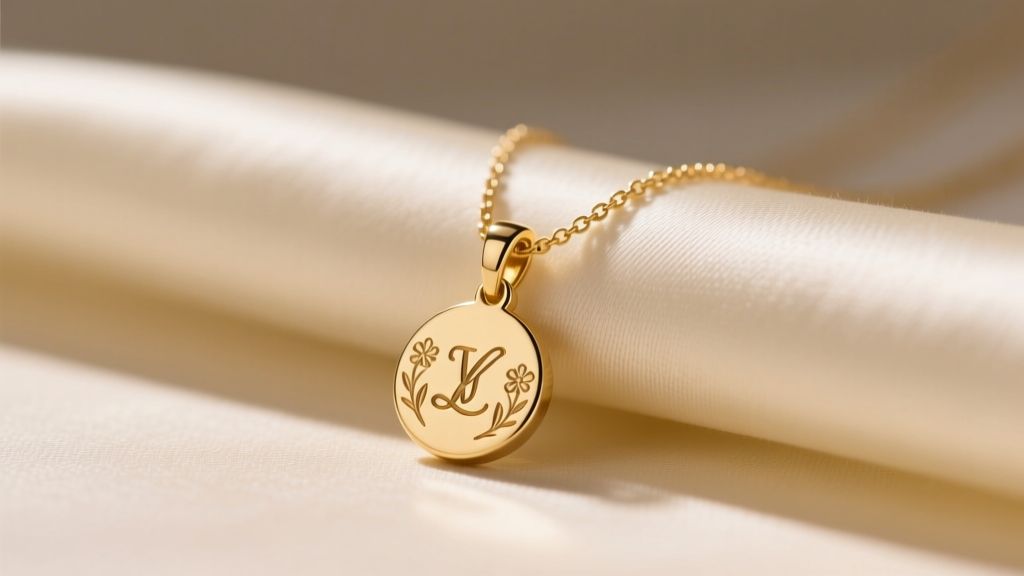
The Sentiment vs. Science Dilemma
The market for a sentimental 'my daughter necklace' is vast, emotionally driven, and unfortunately, saturated with low-quality metals. Parents and grandparents often purchase these pieces to mark milestones—graduations, birthdays, or weddings—expecting the jewelry to serve as a lifelong keepsake. However, the reality of modern jewelry manufacturing means that many of these necklaces are crafted from base alloys that oxidize, snap, or cause contact dermatitis within months.
As we navigate the jewelry landscape in 2026, consumers are increasingly demanding transparency in metallurgy. A necklace meant to symbolize an enduring bond should not be constructed from materials that degrade after a few wears. To select a piece that truly stands the test of time, we must look past the marketing copy and examine the material properties, chain mechanics, and structural integrity of the jewelry.
Decoding the Metals: A Metallurgical Breakdown
The longevity of any pendant necklace is dictated by its base metal and any surface treatments applied to it. Here is a deep dive into the most common materials used in sentimental jewelry, ranked by their durability and suitability for daily wear.
316L Surgical Stainless Steel
Often marketed as 'tarnish-free,' 316L stainless steel is an alloy containing iron, chromium, molybdenum, and typically 8% to 10.5% nickel. While the chromium oxide layer makes it highly resistant to corrosion from water and sweat, the nickel content is a significant drawback. According to the National Center for Biotechnology Information (NCBI), nickel is the leading cause of allergic contact dermatitis. If your daughter has sensitive skin or a known metal allergy, 316L steel is a poor choice, regardless of its 'surgical' branding.
Sterling Silver (925)
Sterling silver consists of 92.5% pure silver and 7.5% copper. The copper provides necessary tensile strength but is also the culprit behind tarnishing. When exposed to sulfur compounds in the air and chlorides in sweat, the copper oxidizes, leading to a dark, dull patina. High-quality silver necklaces are often plated with a microscopic layer of rhodium to delay this process, but once the rhodium wears away at high-friction points (like the clasp), the silver beneath will require regular polishing.
Gold Vermeil vs. Gold-Filled
These two terms are frequently confused but represent vastly different manufacturing standards. The Federal Trade Commission (FTC) strictly regulates these classifications:
- Gold Vermeil: A sterling silver base coated with a minimum of 2.5 microns of gold (usually 14k or 18k). It is more hypoallergenic than steel but will eventually wear down to the silver base with daily friction.
- Gold-Filled: A brass or copper core mechanically bonded with a gold layer that must constitute at least 5% (or 1/20th) of the total weight of the item. This creates a gold layer that is up to 100 times thicker than standard plating, making it highly resistant to flaking and ideal for a 'my daughter necklace' meant for daily wear without the solid gold price tag.
Solid 14k Gold
For heirloom-quality pieces, solid 14k gold remains the undisputed standard. Comprising 58.3% pure gold alloyed with metals like zinc, silver, and copper, it offers an optimal balance of rich color, structural rigidity, and absolute tarnish resistance. It will not flake, turn the skin green, or degrade over decades of continuous wear.
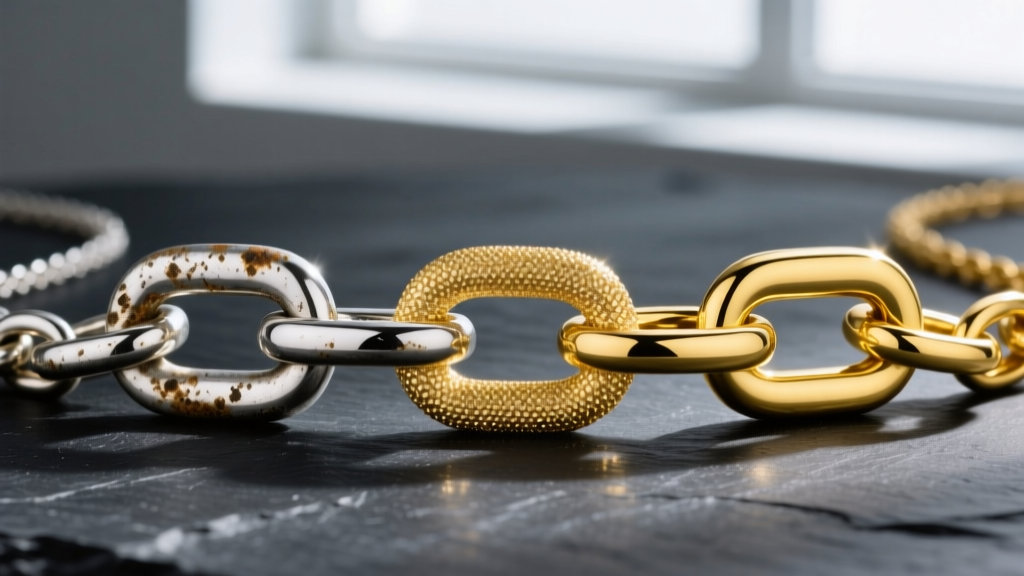
Comparative Data: Durability, Cost, and Hypoallergenic Properties
When budgeting for a meaningful gift, it is crucial to weigh the initial cost against the expected lifespan of the metal. The table below outlines the practical realities of each material in 2026.
| Material | Base Metal | Gold Layer / Plating | Hypoallergenic? | Estimated Price Range | Lifespan (Daily Wear) |
|---|---|---|---|---|---|
| 316L Stainless Steel | Iron/Chromium/Nickel | None (or PVD coated) | No (Contains Nickel) | $30 - $75 | 5+ Years (but may cause rash) |
| Sterling Silver (925) | Silver/Copper | Often Rhodium | Mostly Yes | $60 - $150 | Lifetime (requires polishing) |
| Gold Vermeil | Sterling Silver | ≥ 2.5 microns Gold | Yes | $90 - $180 | 1 - 3 Years before wear |
| Gold-Filled (1/20 14k) | Brass/Jewelers Metal | 5% Total Weight | Yes (usually) | $120 - $250 | 10 - 30 Years |
| Solid 14k Gold | Gold Alloy (58.3%) | Solid throughout | Yes | $350 - $800+ | Generational Heirloom |
Chain Mechanics and Structural Failure Points
A pendant is only as secure as the chain that holds it. Many sentimental necklaces fail not because the metal degrades, but because the chain snaps under mechanical stress. When selecting a 'my daughter necklace,' pay close attention to the chain gauge (thickness) and link construction.
Gauge Sizes and Tensile Strength
Gauge refers to the thickness of the wire used to make the chain. For a lightweight, small pendant (under 5 grams), a 0.8mm to 1.0mm chain is sufficient. However, if the pendant features a heavy gemstone or a thick metal quote plate, you must upgrade to a 1.2mm to 1.5mm gauge. Chains thinner than 0.7mm are highly susceptible to snapping if caught on clothing or hair.
Link Styles and Soldering
- Cable Chains: Classic oval links. Ensure each link is soldered (closed with a tiny weld). Unsoldered cable links will easily pull apart under tension.
- Box Chains: Composed of square, interlocking links. These are incredibly strong and resist kinking, making them an excellent choice for active younger wearers.
- Rope Chains: Twisted links that mimic a rope. While beautiful and reflective, the intricate twists can trap lotions and perfumes, requiring more frequent ultrasonic cleaning.
Gemstone Durability for Birthstone Pendants
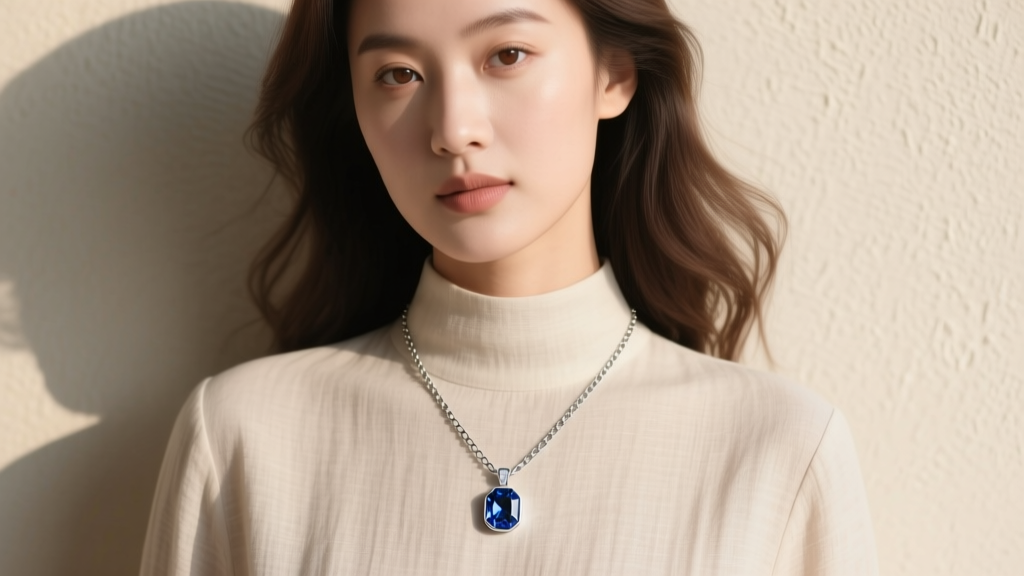
Many 'my daughter' necklaces incorporate birthstones to add a personalized touch. However, not all gemstones are suitable for daily wear. The Gemological Institute of America (GIA) utilizes the Mohs scale of mineral hardness to determine a stone's resistance to scratching and abrasion.
Expert Insight: Any gemstone with a Mohs hardness below 7 is at high risk of scratching from everyday dust, which contains microscopic quartz particles. Furthermore, stones with 'cleavage planes' (internal structural weaknesses) can shatter if bumped against a hard surface.
Safe vs. Risky Birthstones
If your daughter's birthstone is a Diamond (10), Sapphire (9), or Ruby (9), it is perfectly suited for a daily-wear pendant. These corundum and diamond structures are exceptionally resilient.
Conversely, if her birthstone is an Opal (5.5 - 6.5), Pearl (2.5 - 4.5), or Moonstone (6 - 6.5), you must exercise caution. These stones are highly porous or structurally fragile. For softer stones, opt for a bezel setting (where metal completely encircles the gem's edge) rather than a prong setting, which leaves the vulnerable girdle of the stone exposed to impacts.
Expert Verdict: Matching the Metal to the Milestone
Choosing the right 'my daughter necklace' requires aligning the material properties with the wearer's lifestyle and the significance of the occasion.
For a teenager's sweet sixteen or high school graduation, a 14k gold-filled necklace on a 1.2mm soldered box chain offers the perfect intersection of durability, hypoallergenic safety, and affordability. It will easily survive the rigors of college life, gym sessions, and daily showers without turning her skin green or breaking at the clasp.
For a wedding day or a landmark 30th birthday, investing in solid 14k gold paired with a high-Mohs gemstone transforms the piece from a simple accessory into a true generational heirloom. By prioritizing metallurgical integrity over fleeting trends, you ensure that the physical necklace remains as enduring as the bond it represents.


