Heart Lariat Necklace Troubleshooting: Fix Tangles & Slips
Is your heart lariat necklace constantly tangling or slipping? Discover expert troubleshooting tips, chain upgrades, and styling fixes to keep it secure.

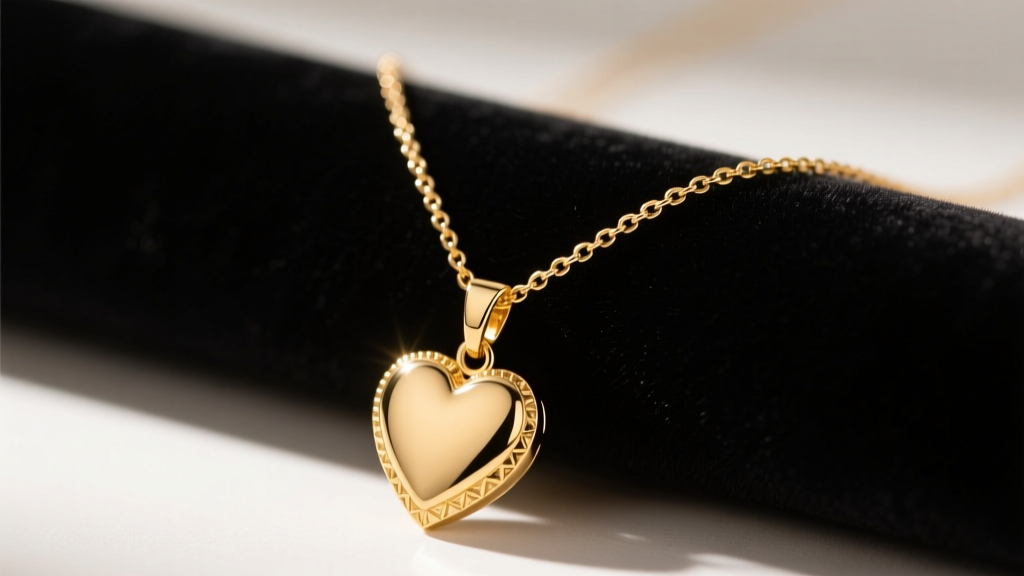
The Anatomy of a Heart Lariat Necklace (and Why It Fails)
The heart lariat necklace—often referred to as a Y-necklace or drop necklace—is a staple of elegant jewelry design. However, its structural reliance on a single sliding junction makes it uniquely prone to mechanical failure, tangling, and fit issues. Unlike standard clasp necklaces, a lariat depends on friction and gravity to maintain its shape. When the chain weave is too loose, the metal grade is too soft, or the jump ring at the Y-junction is improperly sized, the piece quickly becomes a source of frustration.
According to manufacturing standards outlined by Rio Grande, the most common point of failure in lariat designs is the transition ring where the main collar chain meets the vertical drop chain. If this ring is not soldered shut, the constant friction of the sliding chain will eventually wear through the metal, leading to a snapped necklace. Below, we break down the most common problems associated with heart lariat necklaces and provide actionable, jeweler-approved solutions.
Troubleshooting Common Lariat Necklace Problems
Problem 1: The Endless Chain Tangle
Because lariat necklaces lack a fixed clasp, the loose ends are free to move independently, making them highly susceptible to knotting. The root cause is almost always the chain weave.
- Snake Chains: While sleek, snake chains are notorious for kinking and tangling. The tight interlocking rings catch on loose threads and hair, creating stiff, permanent bends.
- Cable Chains: Standard cable chains (especially those under 0.8mm) have large open links that easily hook onto one another when stored or worn.
- The Fix: Upgrade to a 1.0mm to 1.2mm Box Chain. Box chains feature flat, squared links that lay flush against one another, drastically reducing the surface area available for snagging. According to jewelry fabrication experts, a 1.0mm box chain offers the optimal balance of fluid drape and anti-tangle rigidity.
Problem 2: The Slipping Knot and Length Drift
A true lariat necklace requires the wearer to thread one end through a loop or tie a knot. Throughout the day, body movement and clothing friction cause the knot to loosen, resulting in an uneven, asymmetrical drape. If your necklace features a fixed Y-junction rather than a tie-front, the entire drop chain may slide through the collar ring, altering the neckline.
The Fix: For tie-front lariats, use a clear silicone earring back as a hidden stopper. Thread the chain through the silicone backing before tying your knot; the high-friction silicone grips the metal links and prevents the knot from sliding. For fixed Y-junctions that slip, a jeweler can apply a microscopic drop of clear jeweler's epoxy to the interior of the transition ring to increase friction without permanently soldering the chain in place.
Problem 3: The Upside-Down Heart Pendant
Nothing ruins the aesthetic of a heart lariat necklace faster than the pendant flipping upside down. This occurs when the center of gravity is misaligned with the bail (the loop connecting the heart to the chain). If the bail is too wide or the jump ring is too large, the heart will freely rotate.
The Fix: Replace the standard oval bail with a soldered V-bail. A V-bail locks the pendant into a fixed downward angle by distributing the tension across two upper points of the heart rather than a single top loop. Alternatively, insert a tiny, 1mm clear silicone O-ring inside the existing bail to create enough friction to stop the pendant from spinning.
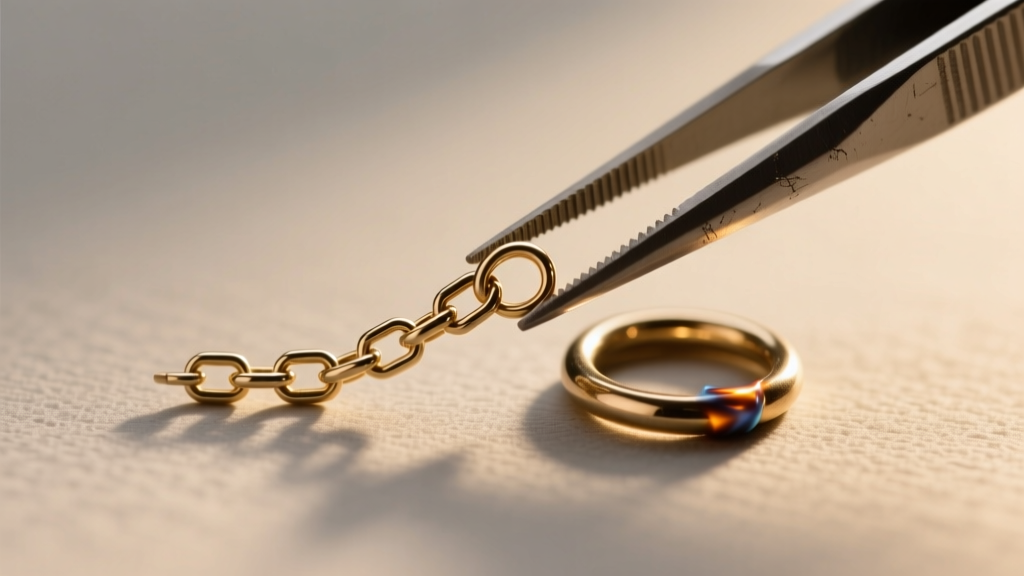
Material Upgrades: Solving Skin Irritation and Breakage
The Y-junction of a lariat necklace bears 100% of the pendant's weight and the kinetic force of the wearer's movements. Base metals like brass or copper alloys will quickly fatigue and snap at this stress point, while also causing contact dermatitis. When selecting or upgrading a heart lariat necklace, refer to the metal standards published by Jewelers of America to ensure longevity.
| Material Grade | Wire Gauge / Thickness | Tensile Strength & Durability | Tarnish & Irritation Profile |
|---|---|---|---|
| Brass / Base Metal | 0.6mm - 0.8mm | Poor. High risk of snapping at the Y-ring. | High tarnish. Frequent cause of green skin and allergic reactions. |
| Sterling Silver (925) | 0.9mm - 1.1mm | Moderate. Soft metal; requires work-hardening. | Moderate tarnish. Hypoallergenic for most wearers. |
| 14k Gold-Filled | 1.0mm - 1.2mm | Good. Brass core provides structural rigidity. | Low tarnish. Safe for sensitive skin if the outer layer is intact. |
| Solid 14k Gold | 0.8mm - 1.0mm | Excellent. Superior fatigue resistance at stress points. | Zero tarnish. Completely hypoallergenic and biocompatible. |
Expert Tip: If you are purchasing a sterling silver lariat, ensure the transition jump ring is soldered closed. An open jump ring in 925 silver will inevitably pull apart under the dynamic weight of the heart drop chain.
How to Convert a Lariat to a Fixed-Length Clasp Necklace
If you love the heart pendant but are entirely fatigued by the lariat mechanics, you can permanently convert the piece into a standard fixed-length necklace. This is a highly recommended troubleshooting step for vintage or heirloom lariats that are too fragile for daily sliding friction.
- Measure the Drop: Determine your preferred drop length (usually 1.5 to 2.5 inches below the collarbone).
- Sever the Collar Chain: Using flush cutters, snip the main collar chain at the exact point where it currently feeds through the Y-junction ring.
- Attach a Lobster Clasp: Solder or attach a 5mm lobster clasp to one side of the newly cut collar chain.
- Attach a Catch Ring: Solder a 4mm closed jump ring to the opposite side of the collar chain.
- Secure the Drop: Solder the Y-junction ring permanently shut so the heart drop chain is fixed in place and can no longer slide.
This conversion eliminates all slipping and tangling issues while preserving the elegant Y-silhouette of the original design.

Expert Styling Frameworks for Y-Necklaces
Once your heart lariat necklace is mechanically sound and tangle-free, proper styling ensures it sits correctly without catching on fabrics. The vertical drop chain acts as a visual arrow, drawing the eye downward. Therefore, it must be paired with necklines that accommodate this geometry.
- Deep V-Necks and Wrap Dresses: The ideal pairing. The lariat's drop chain should sit exactly 0.5 inches above the fabric's V-intersection to create a seamless, elongating line.
- Crew Necks and Turtlenecks: Avoid these entirely. The thick fabric of a crew neck will catch the loose ends of the lariat, pulling the transition ring upward and choking the wearer. If you must wear a high collar, opt for a lariat with a magnetic breakaway clasp at the nape of the neck for safety.
- Layering Constraints: When layering a heart lariat with other chains, the lariat must always be the longest piece. Pair it with a 14-inch choker and a 16-inch pendant necklace, allowing the lariat to drop to 18 or 20 inches. This prevents the chains from crossing over one another, which is the primary catalyst for multi-necklace tangling.
By addressing the mechanical flaws inherent in lariat designs and upgrading to structurally sound materials and weaves, your heart lariat necklace will transition from a frustrating jewelry box hazard to a reliable, everyday statement piece.


