Zoe Saldana Necklace Oscars 2025: Value & Budget Dupes
Analyze the value of the Zoe Saldana necklace Oscars 2025 look. Discover high jewelry pricing, material grades, and the best budget dupes.

The Anatomy of the Zoe Saldana Necklace Oscars 2025 Look
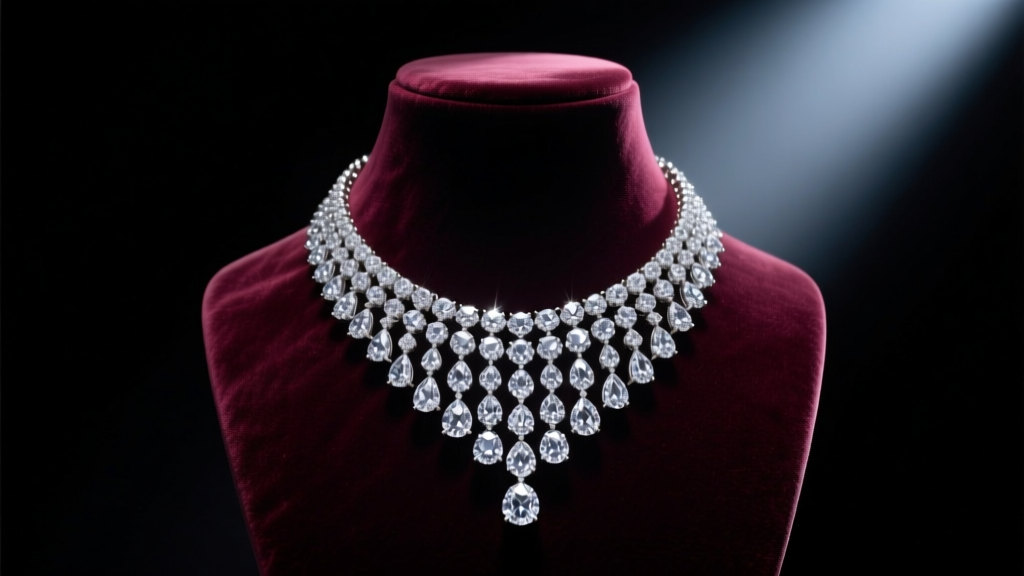
When evaluating the most iconic red carpet moments of the past year, the zoe saldana necklace oscars 2025 appearance remains a masterclass in high jewelry styling. Saldana’s choice to wear a graduated diamond rivière necklace—often referred to as a cascade or fringe style depending on the exact articulation—highlighted a return to classic, light-catching elegance over heavy, opaque gemstones. From our current vantage point in 2026, this specific look has triggered a massive surge in consumer demand for graduated diamond necklaces. However, the original high jewelry piece, valued in the multi-millions, is entirely out of reach for the average consumer. This comprehensive value assessment breaks down the exact anatomy of that red carpet piece, evaluates its intrinsic market value, and provides a highly specific, actionable guide to sourcing budget-friendly dupes without sacrificing optical performance or structural integrity.
Deconstructing the Multimillion-Dollar Valuation
To understand the value of the original piece, we must look at the grading standards required for red carpet high jewelry. The necklace featured an estimated 45 to 50 total carats of natural, earth-mined diamonds. For a piece of this magnitude to perform flawlessly under the harsh, multi-directional lighting of the Dolby Theatre, the stones cannot merely be 'eye-clean.' According to the GIA Diamond Grading standards, high jewelry houses exclusively utilize D-F color grades (colorless) and VVS1 to VS1 clarity grades. More importantly, the cut quality must be 'Ideal' or 'Excellent,' specifically featuring Hearts and Arrows precision symmetry to maximize light return and scintillation.
At current wholesale market rates, a single 2.00-carat round brilliant diamond with D/VVS1/Excellent grading trades at approximately $35,000 to $45,000. When you scale this across 50 carats of graduated stones, the intrinsic raw material value of the diamonds alone sits between $1.5 million and $2.5 million. Once you factor in the brand premium of a heritage house (such as Tiffany & Co., Cartier, or Bulgari), the retail replacement value easily exceeds $4 million.
Metal Purity and Structural Integrity
The setting of the original necklace was crafted from 950 Platinum. Unlike 18k white gold, which is 75% yellow gold alloyed with white metals and requires a rhodium plating to appear bright white, 950 platinum is naturally white and hypoallergenic. The 5% alloy (usually ruthenium or iridium) provides the necessary tensile strength to hold heavy diamond settings securely. Platinum's density ensures that the delicate prongs securing the graduated stones will not wear down over time, a critical factor in preserving a multi-million-dollar asset.
The 2026 Budget Assessment: Achieving the Aesthetic
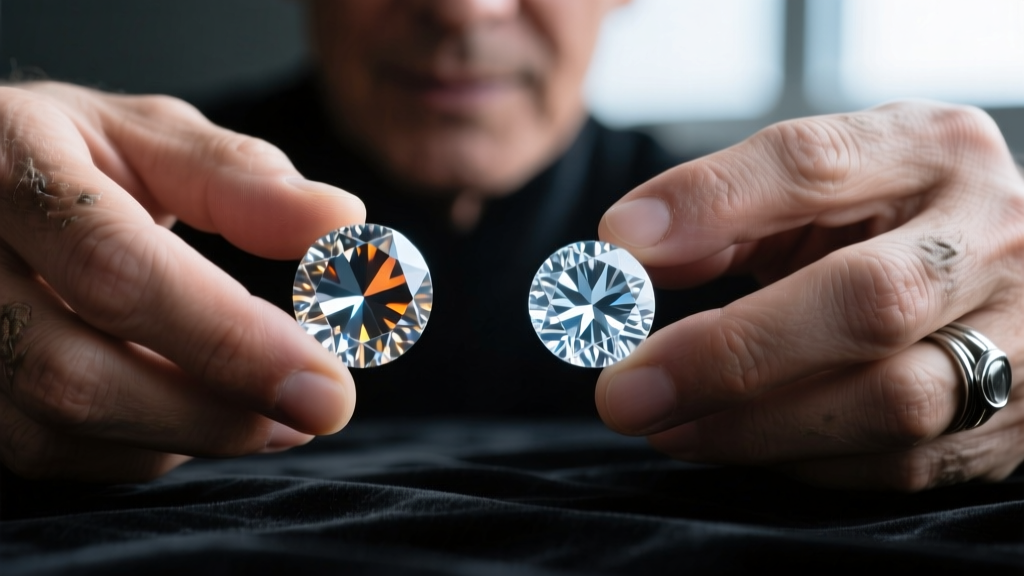
For jewelry enthusiasts looking to replicate the zoe saldana necklace oscars 2025 aesthetic, the market in 2026 offers exceptional alternatives that mimic the optical properties of natural diamonds at a fraction of the cost. The key to a successful dupe is matching the refractive index and the dispersion (fire) of the original stones, while ensuring the metal setting provides adequate security.
Tier 1: Lab-Grown Diamonds (The Investment Alternative)
Lab-grown diamonds (LGDs) share the exact same chemical, physical, and optical properties as natural diamonds. They are pure crystallized carbon with a Mohs hardness of 10 and a refractive index of 2.42. In 2026, the LGD market has stabilized, making a 45-carat graduated rivière in 14k or 18k white gold an accessible luxury. Expect to pay between $12,000 and $22,000 for a high-quality LGD cascade necklace. While this is still a significant investment, it represents a 99% discount from the natural diamond equivalent. When sourcing, insist on IGI or GCAL certification to ensure the stones are not treated with high-pressure high-temperature (HPHT) post-growth processes that can cause unwanted blue nuance in certain lighting.
Tier 2: Moissanite (The Optical Twin)
If your budget is strictly under $5,000, moissanite is the superior choice. Moissanite (silicon carbide) has a Mohs hardness of 9.25, making it highly resistant to scratching and suitable for lifelong daily wear. Optically, it actually outperforms diamond in two metrics: it has a higher refractive index (2.65 vs. 2.42) and more than double the dispersion (0.104 vs. 0.044). This means a moissanite cascade necklace will exhibit intense 'fire' (rainbow flashes). To avoid the 'disco ball' effect that can sometimes make moissanite look artificial, opt for a crushed-ice or antique cut rather than a standard round brilliant. A 45-carat moissanite rivière set in solid 14k white gold will cost between $2,500 and $4,500 from premium bespoke vendors.
Tier 3: Advanced Cubic Zirconia (The Event-Ready Option)
For a one-off red carpet event or a budget under $500, advanced cubic zirconia (CZ) is the only viable option. Standard CZ is porous and clouds over time, but high-end formulas (such as Russian-formula CZ or Swarovski Zirconia) are cut to ideal proportions and coated with a diamond-like carbon (DLC) finish to resist oils and scratching. Set in rhodium-plated sterling silver or brass, a 45-carat CZ cascade necklace costs between $150 and $400. The primary drawback is the Mohs hardness of 8.5; it will eventually accumulate micro-scratches and require replacement every few years.
Comparative Value Matrix
The following table breaks down the specific material properties and estimated 2026 pricing for a 45-carat graduated cascade necklace across different material tiers.
| Material | Mohs Hardness | Refractive Index | Est. Price (45ct in 14k WG) | Maintenance Requirements |
|---|---|---|---|---|
| Natural Diamond | 10 | 2.42 | $2,000,000 - $4,000,000+ | Ultrasonic safe; annual prong check |
| Lab-Grown Diamond | 10 | 2.42 | $12,000 - $22,000 | Ultrasonic safe; annual prong check |
| Moissanite | 9.25 | 2.65 | $2,500 - $4,500 | Warm soapy water; avoid harsh chemicals |
| High-End CZ | 8.0 - 8.5 | 2.15 | $150 - $400 | No ultrasonic; gentle wiping only |
Hardware and Drape Mechanics: Where Budget Pieces Fail
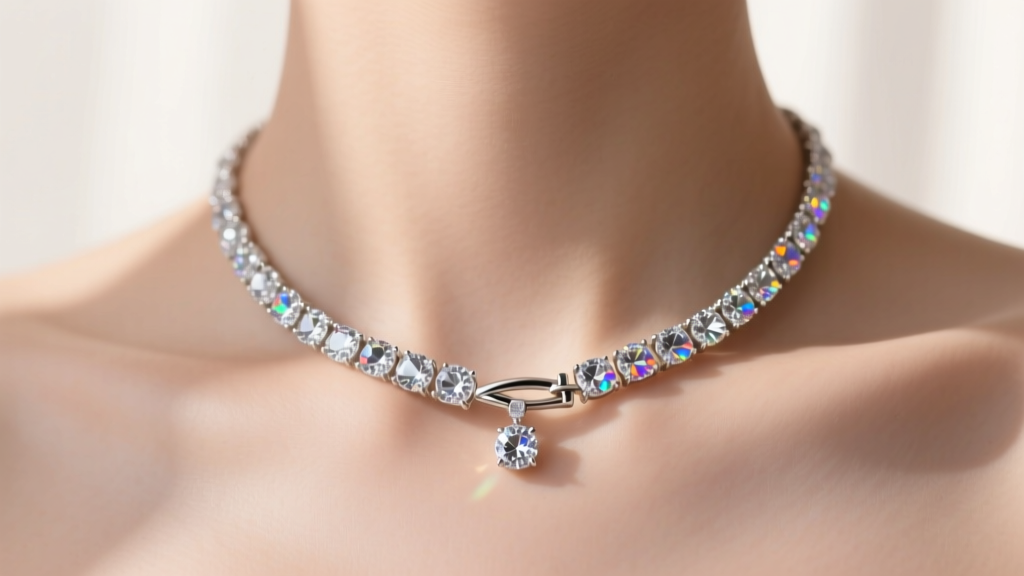
The most common failure point in budget-friendly diamond and moissanite necklaces is not the stones, but the hardware and the articulation. A multi-million-dollar high jewelry rivière is engineered with microscopic hinges between each bezel or prong setting, allowing the necklace to drape like liquid fabric against the collarbone. Budget manufacturers often skip these hinges, linking the settings with rigid jump rings. This results in a stiff necklace that kinks, flips over, and fails to lay flat against the skin.
When commissioning or buying a dupe, explicitly check the articulation. If the piece relies on jump rings, ensure they are soldered closed and that the overall chain gauge is at least 1.2mm to support the weight of a 45-carat stone arrangement. Furthermore, the clasp must be a hidden box clasp with a figure-8 safety wire or a double-latch fold-over mechanism. Standard lobster clasps are entirely inappropriate for heavy cascade necklaces; they create an unsightly bump at the nape of the neck and are prone to spring failure under the dynamic tension of red carpet movement. As noted by industry experts covering Vogue Jewelry trends, the engineering of the clasp is what separates a fine jewelry heirloom from a disposable fashion accessory.
Final Verdict: Allocating Your Jewelry Budget
Replicating the zoe saldana necklace oscars 2025 look requires a strategic approach to budget allocation. If you have $15,000 to spend, a lab-grown diamond rivière in 18k white gold offers the exact optical performance and lifelong durability of the original, minus the heritage brand markup. If your budget is closer to $3,000, prioritize a bespoke moissanite piece set in solid gold with proper hinged articulation and a secure box clasp. Avoid the trap of buying a massive natural diamond necklace with low clarity (I1-I3) and poor cut grades just to boast a natural origin; under the bright lights of an event, poorly cut natural diamonds will look entirely dead and glassy compared to a precision-cut moissanite or LGD. True value in high jewelry aesthetics lies in light performance, structural engineering, and intelligent material selection.


