Troubleshooting Your Kokopelli Necklace: Tarnish, Inlays & Authenticity
Fix common kokopelli necklace issues. Learn to clean tarnished silver, secure loose turquoise inlays, and verify authentic Native American hallmarks.

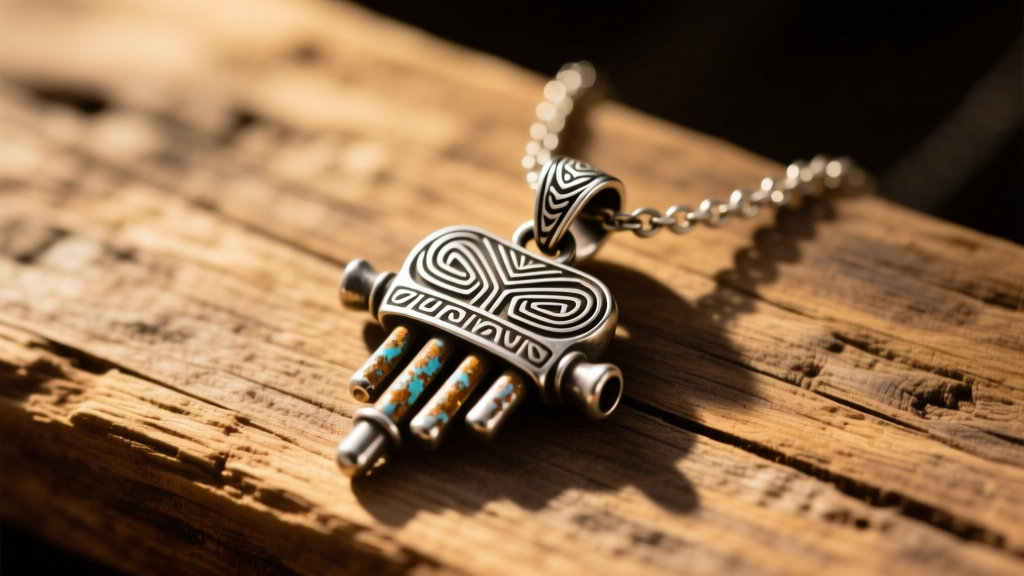
The Kokopelli necklace is more than just a striking piece of Southwestern jewelry; it is a wearable emblem of Native American folklore, representing the humpbacked flute player deity associated with fertility, music, and the harvest. However, whether your pendant is a vintage Navajo stamp-work piece or a modern Zuni inlay masterpiece, these necklaces are highly susceptible to specific structural and material failures. Mass-produced imitations and improper care routines often lead to ruined gemstones, snapped chains, and irreversible silver damage.
If your favorite Kokopelli pendant is showing signs of wear, this comprehensive troubleshooting guide will help you diagnose the root causes of tarnish, loose inlays, and chain breakage, while providing actionable, expert-level solutions to restore and protect your jewelry.
The Anatomy of a Kokopelli Pendant: Where Failures Occur
Before attempting any repairs, it is crucial to understand how your pendant was constructed. Authentic Native American Kokopelli pendants are typically made using one of two techniques, each with distinct failure modes:
- Cast Silver: Molten .925 sterling silver is poured into a mold (often using the lost-wax method). Cast pendants are heavy, thick, and highly detailed. Failure Mode: Porosity (tiny air bubbles trapped during casting) can cause structural weak points, and the heavy weight frequently snaps delicate chains.
- Stamped and Soldered: Sheets of sterling silver are cut, domed, and stamped with decorative motifs, then soldered together. Failure Mode: Solder joints can fracture under stress, and the thinner silver is prone to denting.
Furthermore, many Kokopelli designs incorporate channel inlay or bezel-set turquoise, coral, and lapis lazuli. The intersection of metal and stone is where the majority of environmental damage occurs.
Troubleshooting Sterling Silver Tarnish & Oxidation
Sterling silver (.925) is an alloy containing 92.5% pure silver and 7.5% copper. It is the copper that reacts with sulfur and moisture in the air, creating the black tarnish (silver sulfide) that plagues Southwestern jewelry. While many online guides suggest aggressive cleaning methods, applying the wrong technique to a Kokopelli necklace can destroy its gemstones.
The Danger of Chemical Dips and Boiling Water
Never use commercial liquid silver dips (like Tarn-X) on a Kokopelli necklace featuring turquoise or coral. These chemicals contain thiourea and harsh acids that will strip the natural oils from turquoise, turning it a sickly, pale green and causing irreversible structural degradation. Similarly, the popular "aluminum foil, baking soda, and boiling water" electrochemical bath is a catastrophic mistake for inlaid jewelry. The extreme heat causes thermal shock, which can crack natural stones, while the alkaline solution breaks down the epoxy adhesives holding channel inlays in place.
The Expert Cleaning Protocol
- Dry Brushing: Use a clean, soft-bristled makeup brush to remove dust from deep stamp-work crevices.
- Targeted Polishing: Use a treated microfiber silver polishing cloth (such as a Sunshine Cloth). Fold the cloth to reach into the recessed areas of the Kokopelli figure's flute and hump. Avoid rubbing the polished stones directly, as the mild abrasives in the cloth can scratch softer gems like coral (Mohs hardness 3.5).
- Preserving Patina: If your piece features intentional oxidation (darkened recesses to highlight the stamp-work), polish only the raised, high-friction areas. Stripping the antique patina drastically reduces the value of vintage Native American silver.
Fixing Loose or Discolored Turquoise and Coral Inlays
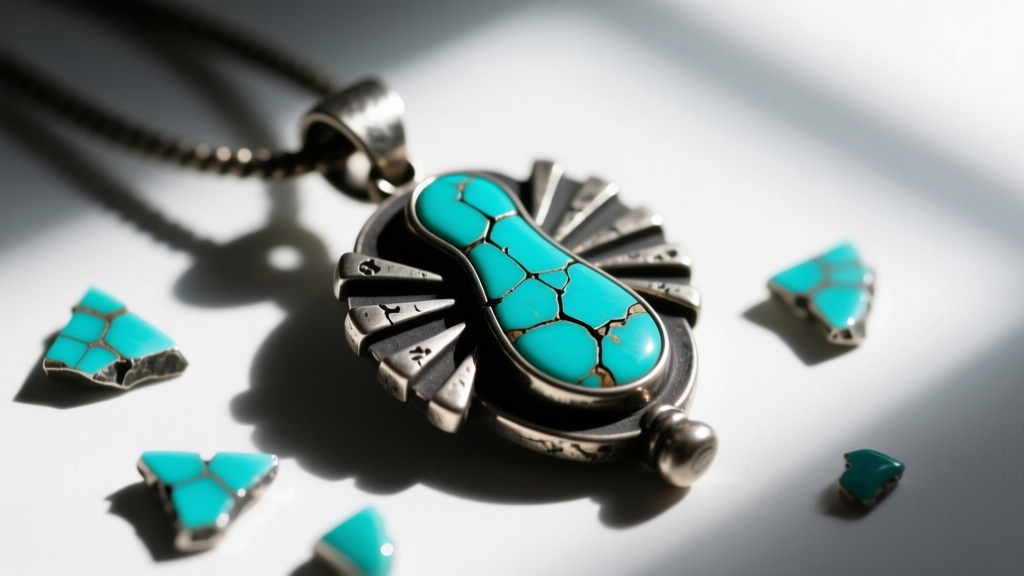
One of the most common issues with Zuni and Navajo Kokopelli inlay necklaces is stones popping out of their silver channels. This happens because sterling silver and turquoise have different coefficients of thermal expansion. Frequent temperature changes cause the silver to expand and contract, eventually breaking the adhesive bond and loosening the bezel walls.
Why Super Glue Ruins Inlays
Never use cyanoacrylate (Super Glue) to reattach a loose turquoise or coral inlay. Cyanoacrylate cures into a brittle, glass-like plastic that yellows over time and can permanently stain porous turquoise. Furthermore, if the repair ever needs to be redone by a professional jeweler, the hardened super glue is nearly impossible to remove without destroying the stone.
The Professional Re-Setting Method
To properly secure a loose inlay fragment, follow these steps:
- Clean the Channel: Use a wooden toothpick and a tiny amount of isopropyl alcohol to gently scrape away old, flaking adhesive from the silver channel. Allow it to dry completely.
- Apply Jeweler's Epoxy: Use a flexible, clear jewelry adhesive like G-S Hypo Cement or a two-part Devcon 5-Minute Clear Epoxy. Apply a microscopic drop to the base of the channel using a pin.
- Seat the Stone: Gently press the turquoise or coral fragment into the channel. Wipe away any squeezed-out epoxy immediately with a cotton swab lightly dampened with alcohol.
- Tighten the Bezel: If the silver wall (bezel) holding the stone is bent outward, use a smooth bezel roller or the rounded back of a silver spoon to gently burnish and push the metal wall back over the edge of the stone. Do not use steel pliers, which will mar the silver.
For comprehensive data on how treatments affect turquoise stability during repairs, refer to the Gemological Institute of America (GIA) turquoise guide, which details the vulnerabilities of stabilized versus natural stones.
Chain Breakage: Matching Gauge to Pendant Weight
A solid cast sterling silver Kokopelli pendant typically weighs between 15 and 30 grams. Suspending this weight on a delicate chain is a recipe for disaster. The bail (the loop the chain passes through) acts as a friction point, slowly sawing through weak chain links over time.
Diagnosing Chain Failure
If your chain repeatedly snaps at the clasp or the bail, the gauge (thickness) is insufficient. Standard 0.8mm to 1.0mm box chains or snake chains are designed for lightweight pendants (under 5 grams). When overloaded, the micro-welds on the links fail.
The Correct Chain Specifications
Upgrade your necklace with a chain that matches the visual weight and physical mass of the pendant. For a medium-to-large Kokopelli pendant, opt for:
- Rope Chain (1.5mm to 2.0mm): The twisted links distribute weight evenly and offer exceptional tensile strength. A 2.0mm sterling silver rope chain can comfortably support up to 40 grams.
- Wheat Chain (1.5mm to 2.5mm): Woven links provide a Southwestern aesthetic that complements the Kokopelli motif while resisting kinking and snapping.
- Leather Cord (2mm to 3mm): For a rustic look, use a genuine leather cord with a sterling silver end-cap clasp. Ensure the silver bail is lined with a smooth interior to prevent the metal from cutting into the leather over time.
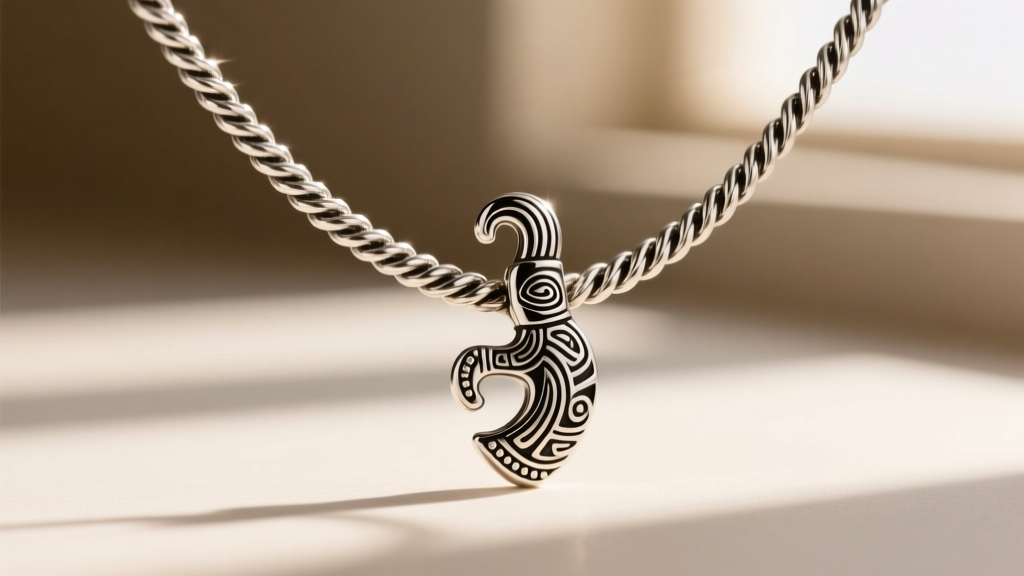
Authenticity Checks: Spotting Fakes vs. Genuine Native Silver
The market is saturated with imported, mass-produced Kokopelli necklaces marketed as "Native American style." Under the Indian Arts and Crafts Act, it is illegal to sell jewelry as Native American made unless it is crafted by a member of a state or federally recognized tribe. Identifying authentic pieces is critical not just for ethical purchasing, but for material safety.
The "Nickel Silver" Allergy Trap
Many cheap tourist-shop Kokopelli pendants are made from "Nickel Silver" or "Alpaca." Despite the name, these alloys contain zero actual silver. They are typically composed of copper, zinc, and nickel. When worn against the skin, the nickel reacts with sweat, causing severe contact dermatitis and leaving a green or black stain on the chest. If your pendant smells faintly metallic or like old pennies, and lacks a proper hallmark, it is likely a base-metal fake.
Verifying Hallmarks and Stamps
Authentic pieces will feature deep, crisp stamps on the back of the pendant. Look for the following indicators of genuine Native American craftsmanship:
- Quality Marks: ".925", "Sterling", or "Coin" (for vintage pieces made from melted US coins).
- Artist Hallmarks: Initials, clan symbols (like a bear paw or sunburst), or full names stamped into the silver. Navajo artists often use heavy stamp-work, while Zuni artists are renowned for intricate petit-point and needle-point stone settings.
- Shop Marks: Stamps from reputable trading posts (e.g., "Bell Trading Post" or "Maisel's").
| Material Indicator | Authentic Native Silver | Mass-Produced Imitation |
|---|---|---|
| Hallmark Depth | Deep, slightly uneven, hand-stamped | Shallow, perfectly uniform, laser-etched or cast |
| Stone Setting | Smooth, hand-burnished bezels; natural stone variations | Glued-in stones; dyed howlite masquerading as turquoise |
| Magnetism | Non-magnetic (Silver is diamagnetic) | May show slight magnetic pull if iron/steel alloys are present |
| Weight | Heavy, dense feel due to solid .925 silver | Hollow, lightweight, or overly bulky due to cheap cast alloys |
Preventative Maintenance Routine
Troubleshooting is only half the battle; preventing damage ensures your Kokopelli necklace survives for generations. Implement this simple maintenance routine:
- The "Last On, First Off" Rule: Always put your necklace on after applying perfumes, hairsprays, and lotions. Chemicals in cosmetics accelerate silver tarnish and can degrade the porous surface of turquoise.
- Anti-Tarnish Storage: Store the necklace in an airtight ziplock bag with a piece of 3M anti-tarnish paper or a silica gel packet to absorb ambient moisture. Never store it loosely in a humid bathroom.
- Annual Bail Inspection: Once a year, use a jeweler's loupe to inspect the inside of the pendant's bail. If you see a deep groove forming from chain friction, take it to a jeweler to have a hardening metal sleeve soldered inside the bail to prevent it from wearing through.
By understanding the metallurgy and gemology behind your Kokopelli necklace, you can confidently troubleshoot common issues, preserve the cultural and material integrity of the piece, and wear it with pride for decades to come.


