Necklace with Crystal Pendant: A Complete Material Guide
Discover how to choose the perfect necklace with crystal pendant. Compare natural quartz, lead glass, and CZ materials for optimal brilliance and wear.

Decoding the "Crystal" in Crystal Pendants
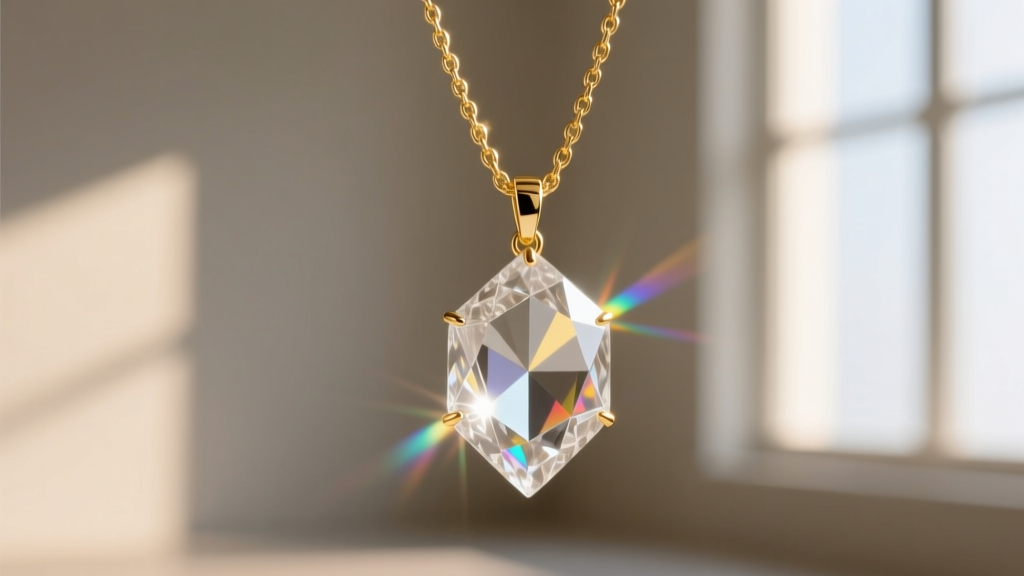
When shopping for a necklace with crystal pendant, the term "crystal" is one of the most heavily overloaded words in the jewelry industry. It can refer to naturally occurring mineral structures, synthetic lab-grown stones, or even lead-infused glass. Understanding the exact material composition of your pendant is not just a matter of semantics; it dictates the optical performance, scratch resistance, and long-term degradation of the piece. As of 2026, advancements in lab-grown synthetics have blurred the lines further, making material literacy essential for both collectors and casual buyers.
According to the Gemological Institute of America (GIA), a true crystal is a solid material whose constituents are arranged in a highly ordered microscopic structure. However, in commercial jewelry, "crystal" often denotes high-refractive-index glass. This guide breaks down the exact material properties of the most common pendants on the market, empowering you to make an informed decision based on hard data rather than marketing jargon.
Material Comparison Chart: Optical and Physical Properties
To evaluate a pendant's potential for brilliance and durability, we must look at two critical metrics: Refractive Index (RI) and Mohs Hardness. The RI measures how much light bends and reflects inside the stone (brilliance), while the Mohs scale dictates its resistance to scratching from daily wear.
| Material Type | Refractive Index (RI) | Mohs Hardness | Dispersion (Fire) | Typical Price Range |
|---|---|---|---|---|
| Natural Quartz | 1.54 - 1.55 | 7.0 | 0.013 | $30 - $150 |
| Lead Glass (e.g., Swarovski) | 1.70 - 1.80 | 5.0 - 6.0 | 0.045 | $20 - $80 |
| Cubic Zirconia (CZ) | 2.15 - 2.18 | 8.0 - 8.5 | 0.058 | $15 - $60 |
| Lab-Grown Moissanite | 2.65 - 2.69 | 9.25 | 0.104 | $100 - $400 |
| Optical Acrylic | 1.49 | 2.0 - 3.0 | 0.015 | $5 - $20 |
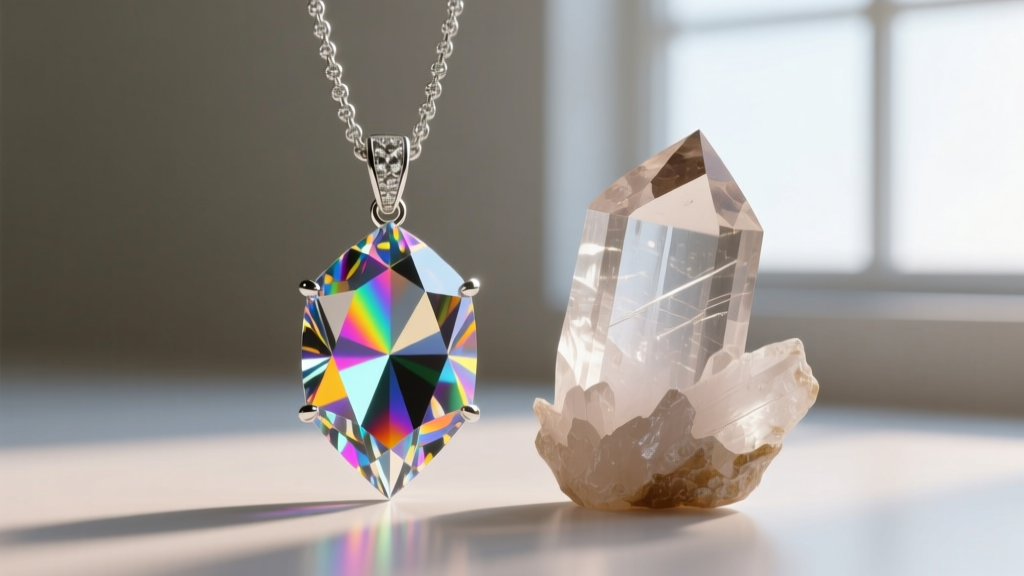
While natural quartz is a true mineral, its relatively low dispersion means it lacks the rainbow "fire" seen in higher-RI materials. Conversely, Cubic Zirconia offers diamond-like brilliance but can become cloudy over time if exposed to harsh chemicals. For a comprehensive breakdown of natural mineral structures, Mindat.org provides extensive crystallographic data on natural quartz formations.
Chain Metallurgy: What Holds Your Crystal Matters
A high-quality necklace with crystal pendant is only as durable as the chain suspending it. The metallurgy of the chain dictates its tensile strength, tarnish resistance, and skin biocompatibility. Here is a deep dive into the three most common chain materials paired with crystal pendants:
925 Sterling Silver and Rhodium Plating
Sterling silver is an alloy of 92.5% silver and 7.5% copper. The copper provides necessary structural integrity but is highly reactive to sulfur in the air and human sweat, forming black copper sulfide (tarnish). To combat this, premium chains are electroplated with a micro-layer of rhodium. However, this plating typically wears off within 12 to 18 months of daily friction, requiring re-plating or frequent polishing with a specialized silver cloth.
Gold Vermeil vs. Standard Gold Plating
Not all gold chains are created equal. The Federal Trade Commission (FTC) strictly regulates the term "vermeil." To qualify, a piece must have a sterling silver base and a gold plating of at least 2.5 microns thick. Standard "gold-plated" jewelry often uses a brass base with a mere 0.5-micron flash of gold, which will wear through to the base metal in a matter of months, potentially causing green skin discoloration and allergic reactions.
316L Surgical Stainless Steel
For heavy daily wear, 316L stainless steel is unmatched. The addition of molybdenum to the steel alloy prevents pitting corrosion from chlorides (found in sweat and swimming pools). While it lacks the prestige of precious metals, a 316L cable chain will not tarnish, bend, or snap under the weight of a heavy, multi-faceted crystal pendant.
Optical Properties: Maximizing Brilliance and Fire
The cut of the pendant dictates how light travels through the material. Machine-cut crystals, often used in high-end glass pendants, feature mathematically perfect facets that align precisely, maximizing light return. Hand-cut natural stones may feature slight asymmetries that, while unique, can create "dead spots" where light leaks out the bottom of the stone rather than reflecting back to the eye.
The Role of Foiling and Coatings
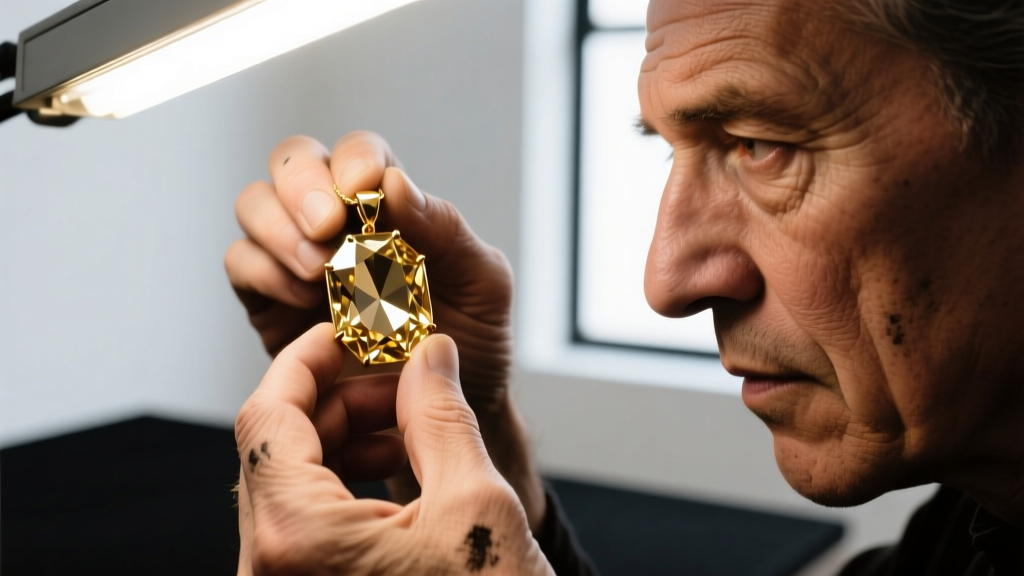
Many vintage-style and fashion crystal pendants utilize a metallic foil backing or a vapor-deposited Aurora Borealis (AB) coating to enhance color and reflectivity. The AB coating, originally developed in collaboration with Christian Dior in the 1950s, creates a microscopic iridescent layer on the surface of the glass. While visually stunning, these surface treatments are highly vulnerable to abrasion and chemical degradation.
"Never use ultrasonic cleaners or alcohol-based solutions on foiled or AB-coated crystal pendants. The cavitation bubbles and solvents will strip the metallic vapor layer in seconds, leaving the stone looking dull and permanently damaged."
Care, Degradation, and Real-World Troubleshooting
Understanding material failure modes is crucial for maintaining your jewelry. Different crystals degrade in vastly different ways when exposed to environmental stressors.
- Crizzling (Glass Sickness): Lead crystal glass is susceptible to a phenomenon called crizzling, where alkali ions leach out of the glass matrix due to high humidity. This leaves a permanent, cloudy network of microscopic fractures on the surface. Store lead glass pendants in a climate-controlled environment with silica gel packets to prevent this irreversible damage.
- Thermal Shock in Natural Quartz: While quartz is hard, it is not immune to thermal shock. If your natural quartz pendant contains internal inclusions (like rutile needles or black tourmaline), sudden temperature changes—such as wearing it into a hot sauna or jumping into a cold pool—can cause the inclusions to expand or contract at different rates, fracturing the stone from the inside out.
- CZ Cloudiness: Cubic Zirconia is porous at a microscopic level. Over years of wear, it absorbs oils from lotions, soaps, and skin sebum. This buildup scatters light, making the once-brilliant pendant look milky. Boiling the pendant in a mild solution of distilled water and dish soap for three minutes can often draw out these trapped oils and restore clarity.
Final Verdict: Matching Material to Lifestyle
Choosing the right necklace with crystal pendant requires aligning the material properties with your lifestyle. If you prioritize heirloom durability and natural origins, a bezel-set natural quartz pendant on a 316L stainless steel or solid 14k gold chain is the superior choice. If you seek maximum optical fire for evening wear and are willing to practice careful maintenance, a precision-cut lead crystal or lab-grown moissanite pendant on a rhodium-plated sterling silver chain will deliver unparalleled brilliance. By looking past the marketing and focusing on refractive indices, Mohs hardness, and chain metallurgy, you can invest in a piece that remains as radiant as the day you bought it.


